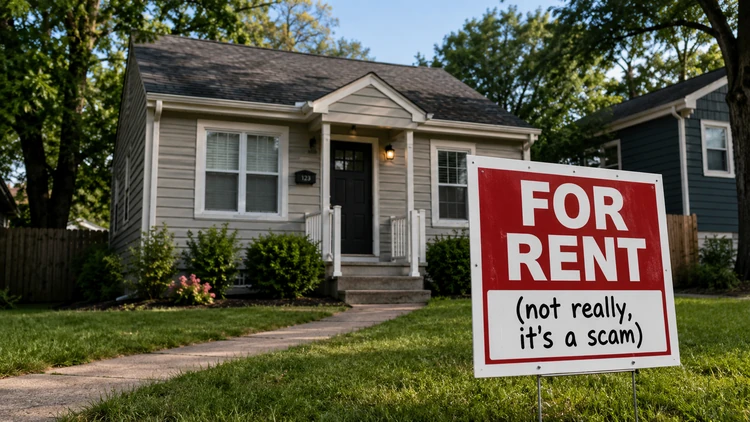

Fake listings often use stolen photos and prices that seem far below market rates to lure renters into sending deposits before seeing a property.
Scammers increasingly impersonate legitimate landlords or property managers, using fake leases and pressure tactics to rush consumers into payments.
Experts say renters can protect themselves by verifying ownership records, touring properties in person or virtually, and never paying with wire transfers, gift cards, or cryptocurrency.
Because of affordability issues and rising economic uncertainty, the spring housing market hasn’t been that active. That means more people are continuing to rent, creating opportunities for scammers and increasing dangers for people looking for a place to rent.
Consumer advocates and law enforcement agencies report a steady stream of complaints involving fake listings, fraudulent landlords, and bogus property management schemes that leave renters out thousands of dollars.
The scams can happen almost anywhere consumers search for housing — online marketplaces, social media groups, classified ads, or even seemingly legitimate rental websites. In many cases, victims only discover the fraud after arriving at a property that either doesn’t exist, isn’t actually for rent, or was never owned by the person collecting the money.
Fake listings remain one of the biggest threats
One of the most common scams involves criminals copying legitimate home or apartment listings and reposting them with altered contact information and lower rental prices designed to attract immediate attention.
The scammer may claim to be out of town, overseas, or unavailable to meet in person. They often request a security deposit or application fee upfront to “hold” the property.
In some cases, scammers use publicly available photos from real estate websites like Zillow or Realtor.com. Unsuspecting renters may believe they are dealing with the actual owner.
Red flags can include:
Rent prices far below comparable properties in the area
Requests for payment before a tour or signed lease
Refusal to meet in person or show the property
Poor grammar or inconsistent communication
Pressure to act immediately because of “high demand”
Fraudsters are impersonating landlords and agents
Another increasingly common tactic involves impersonation scams. Criminals pose as property managers, leasing agents, or homeowners using fake email addresses, spoofed phone numbers, and fabricated lease documents.
Some scammers even gain access to vacant properties and conduct unauthorized tours, convincing renters they are legitimate representatives.
Consumers should independently verify that the person advertising the rental is actually connected to the property. County property tax records, real estate brokerage websites, and direct calls to management companies can help confirm ownership or authorization.
Payment methods can be a huge red flag
Experts say the requested payment method is often a major warning sign.
Scammers frequently ask for money through:
Wire transfers
Peer-to-peer payment apps
Gift cards
Cryptocurrency
These payment methods are difficult or impossible to reverse once funds are sent.
Legitimate landlords and management companies typically use secure payment portals, checks, or traceable banking systems tied to a formal lease agreement.
Consumers should avoid sending money until they have:
Verified the property exists
Confirmed ownership or management credentials
Reviewed and signed a legitimate lease
Toured the property whenever possible
Social media has created new opportunities for fraud
Housing scams have expanded rapidly on Facebook Marketplace, Craigslist, and local community groups, where listings can be posted with little oversight.
Scammers often recycle the same photos and descriptions across multiple cities. Some create fake profiles that appear trustworthy through stolen photos and fabricated reviews.
Fraud investigators recommend reverse-image searching listing photos to determine whether they appear elsewhere online under different addresses or prices.
Consumers should also search the exact address independently to compare listings across multiple platforms.
What to do if you’ve been scammed
Consumers who believe they’ve been targeted should immediately contact their bank or payment provider to attempt to stop or reverse the transaction. Victims should also file reports with local law enforcement, the Federal Trade Commission, and the online platform where the listing appeared.
While recovering lost money can be difficult, reporting scams may help authorities identify repeat offenders and prevent additional victims. As rental fraud continues to evolve, consumer advocates say vigilance remains the best defense.