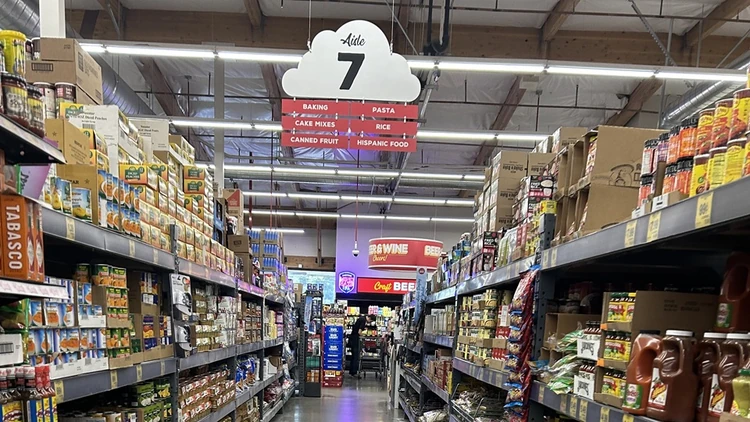

Closures are a reset, not a retreat: Grocery Outlet is cutting weak stores while still expanding elsewhere.
Even discount stores face price pressure: Competition from Walmart, Costco, and grocery promos is forcing everyone to sharpen pricing.
Shoppers who stay flexible win: Split trips, compare unit prices, and only stock up on what you’ll actually use.
A wave of store closures is hitting Grocery Outlet, including nine locations across California, as part of a broader plan to shut down 36 underperforming stores nationwide.
At first glance, that feels backwards in today’s economy.
When shoppers are stretched thin and actively looking for deals, you’d expect discount grocers to be thriving. However, the reality is more complicated than that, and it actually says a lot about how grocery shopping is changing right now.
Here’s how the 36 store closures break down by state:
- California — Nine stores
- Maryland — Eight stores
- New Jersey — Six stores
- Ohio — Six stores
- Pennsylvania — Four stores
- Idaho — Three stores
Why a discount store would close in a 'save money' economy
According to the company, the closures are about cutting weaker locations and focusing on long-term growth. They still plan to open 30+ new stores in 2026, so this isn’t a retreat, but more of a reset.
Here’s what’s really happening behind the scenes:
- Competition is getting more aggressive: Traditional grocery stores are running deeper promotions, and big-box retailers like Walmart and Costco are leaning hard into the perception of low prices across all categories.
- Shoppers are more strategic than ever: People aren’t just going to one store anymore; they’re splitting trips across multiple stores to chase the best deals.
- Value expectations are higher: Even discount chains have to constantly prove they’re the cheapest option, not just the “budget” option.
Translation: Being labeled a discount store isn’t enough anymore. They have to consistently win on price.
Why this matters for shoppers
Store closures don’t mean deals are disappearing. If anything, they signal that price competition is heating up.
That’s good news for shoppers, especially if you know how to take advantage of it.
Here are some smart grocery-saving tips to use right now:
1. Stop relying on just one store.
As mentioned earlier, the biggest shift happening right now is the move away from “one-store shopping.”
Try to use a mix of:
- Discount grocers (like Grocery Outlet)
- Warehouse clubs
- Traditional supermarkets for sales/coupons
This is how smart shoppers are cutting 20–30% off grocery bills.
2. Treat discount stores like a “treasure hunt.”
Grocery Outlet is known for opportunistic inventory, meaning deals change constantly and products rotate in and out all the time.
So, the secret here is to not go in with a rigid list. Instead, go in looking for what’s cheapest right now and be willing to try new brands and products.
That’s how you consistently find the real bargains.
3. Compare price per unit, not just shelf price.
A “discount” item isn’t always cheaper. Take a close look at the weight of the box or package, as sometimes it’s filled with mostly air.
Get in the habit of always checking the following:
- Price per ounce
- Price per item
Sometimes Walmart or a sale at a traditional grocery store still wins on price.
4. Watch for clearance-style grocery deals.
As stores close or reset inventory, you may see:
- Deeper markdowns
- Bulk discounts
- Short-term price drops
This is a good time to stock up on shelf-stable items or things you can freeze for later use.
5. Don’t confuse cheap with smart.
Buying something just because it’s discounted, or seems like a good deal, can backfire.
I actually made this mistake recently at Grocery Outlet. My local store had an 18-count box of protein bars for just $2.99. It was a brand I was familiar with, and the regular price was $24.99 for a box.
In my excitement, I grabbed four boxes only to realize later that the expiration date was just two weeks away. There was no way I could eat 72 bars by then. I ended up giving some away, but I will probably be stuck with a couple dozen stale bars that will end up in the trash.
Only stock up on:
- Items you already use.
- Products with a long shelf life.
It’s pretty easy for your savings to turn into waste if you throw stuff in your cart just because the deal seems too good to pass up.