2022 Electric, Hybrid, and Eco-Friendly Cars

Article Image

Car buyers prefer rebates over tax credits for electric vehicles, study finds

More U.S. automakers have been making strides in recent years to produce electric vehicles, and U.S. officials have encouraged prospective car buyers to choose these vehicles through tax credits. But a recent survey shows that most consumers would prefer another type of incentive. 

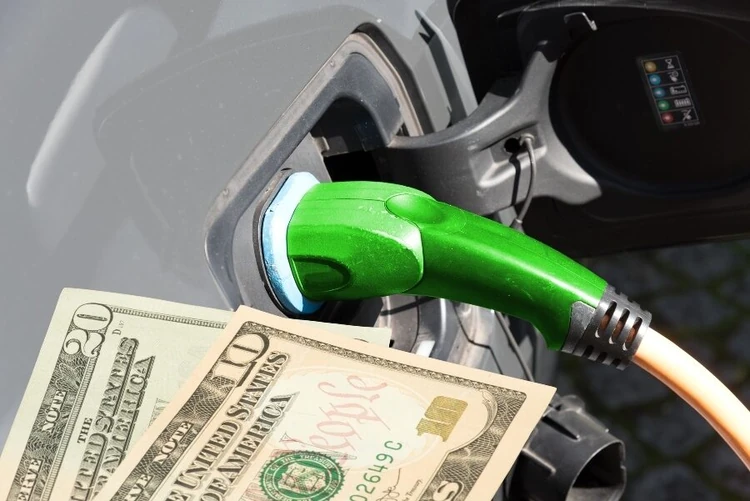
Researchers from George Washington University found that many car buyers would prefer to get an immediate rebate at the point of sale after buying an electric car. 

"The current federal electric vehicle tax scheme is a pain," said study co-author John Helveston. "First of all, you have to have money. You have to be wealthy enough to buy the whole car and then wait for your tax-break kickback in April. But if you're not in that class of buyers, you often need the money when you buy the car or you're not going to buy it. Our study shows that an immediate rebate at the point of sale would be more equitable and potentially more effective in broadening the buying market for electric vehicles."

Immediate rebates over tax credits

The researchers conducted a national survey that asked prospective car buyers if they would prefer a tax credit, a tax deduction, a sales tax exemption, or an immediate rebate for purchasing an electric vehicle. 

They found that respondents "overwhelmingly" preferred the rebate option, valuing it by an average of $1,450 more than a tax credit. While that sounds like a lot, the team found that the valuation was nearly doubled among lower-income households, used vehicle buyers, and buyers with lower budgets. 

"If you gave the incentive to car buyers as cash on the hood, our study found that you could lower the subsidy by almost $1,500. That's how much people value immediacy," said lead author Dr. Laura Roberson. "So $7,500 in April when I file taxes is the same to me as $6,000 if you gave me that money at the point of sale. That's a huge difference in valuation."

The researchers estimate that the federal government could have saved around $2 billion if a federal subsidy had been available for electric vehicles between 2011 and 2019 and it was delivered as a rebate instead of a tax credit. The team believes spurring wider adoption of electric vehicles could be more possible if incentives are aimed at a wider range of consumers. 

"All the incentive money that we've been spending to try to get people to buy electric vehicles, it's mostly gone to the wealthiest car buyers," Helveston said. "Our results suggest that structuring incentives as immediate rebates would deliver a greater value to customers, be more equitable, and accelerate electric vehicle purchases in the United States."

The full study has been published in the journal Environmental Research Letters.
Article Image

Charging and range concerns continue to hold back electric vehicle sales

The idea of owning an electric vehicle (EV) is highly appealing to many people, especially during this period of near record-high gasoline prices. But the logistics of owning and operating a car that runs on electricity are causing hesitation, according to a new survey.

Consumer Reports surveyed around 8,000 Americans and found that about half of the respondents were unaware that federal and state tax incentives would pay for part of the cost of the vehicle. But even that was not sufficient to overcome several perceived challenges.

Only 14% of consumers said they would “definitely” choose an EV if they were purchasing a new car today. Still, that’s considerably higher than the 4% who said the same thing in 2020 when gas prices were considerably lower.

The survey found that consumers’ biggest concerns involve charging the vehicles and the range that the cars can be driven between charges. 

While a gas tank can be filled in five to 10 minutes, fully charging an EV battery can take much longer depending on the charging infrastructure. Using a “Supercharger” system, such as the only one designed by Tesla, can take 30 minutes to an hour.

Cost of gas vs. electricity

If an EV is being charged at home using a household electrical outlet, charging can take several hours, if not days. And while most consumers are keenly aware of the price of gasoline and how much it costs to fill a tank, most people are less aware of the cost of electricity.

EV range was also cited as another reason for hesitation. People who drive only a few miles each day are much more likely to choose an EV because they may need to recharge only once a week or so. 

As we reported last year, many EV owners in California have gone back to an internal combustion engine. A study by researchers at the University of California Davis questioned California consumers who purchased an EV between 2012 and 2018. It found that nearly 20% no longer drove one, having traded it in for a gasoline-powered car.

“For the market share of plug-in electric vehicles (PEVs) to continue to grow and reach 100% of new vehicle sales, adopters of the technology, who initially buy PEVs, will need to continue choosing them in subsequent purchases,” the researchers wrote.

Quinta Warren, Consumer Reports’ associate director of sustainability policy, believes the industry is making progress in addressing these consumer concerns.

“Many of these barriers to owning a battery-electric vehicle EV can be addressed through experience and education,” she said.

Article Image

Consumers in rural states show strong interest in hybrid and electric vehicles

The latest June car sales figures suggest that when consumers are able to buy a new or used vehicle, they tend to choose a hybrid or electric vehicle. Interestingly, a new study from iSeeCars.com shows that demand for these vehicles is the highest in rural America, where EV enthusiasm has traditionally lagged.

“You expect to see strong hybrid and electric vehicle sales in states like California, Oregon, and Washington, or in cities like San Francisco, Los Angeles, or Seattle,” said iSeeCars Executive Analyst Karl Brauer. “While those areas do have the highest percentage of alternative fuel vehicles, the areas with the greatest growth in hybrid and electric vehicle share come from states and cities few would expect.” 

For example, Mississippi has recorded the highest growth in alternative fuel vehicle share since 2014. The state has had a massive 241% percent growth in electrified car market share. The second-highest state is Hawaii, at 116.5%; it's followed by Utah with a 97% share growth.

Gas prices are causing new interest

Consumers everywhere are taking a closer look at alternative fuel vehicles to escape the record-high price of gasoline, which only now has begun to fall from its all-time high of $5.01 a gallon.

Several of the top-ranking states, both in 2014 and 2022, are states that are not traditionally associated with an interest in hybrid or electric vehicles. Brauer says more than half of the states in the top 15 are fairly new to interest in “green” vehicles. 

“It’s pretty amazing that California barely makes the top 10 in terms of hybrid and electric vehicle growth since 2014, even with strong incentives encouraging their purchase,” he said. “Conversely, despite not having any statewide incentives, Mississippi’s EV adoption is growing faster than all other states, and could continue to do so as Nissan has plans to manufacture EVs in its Mississippi plant in the coming years.” 

In June, Toyota reported a sharp drop in auto sales because of an inventory shortage. But customers who did purchase a Toyota last month favored hybrids and EVs. That category made up 23% of total Toyota sales.

Article Image

White House reaffirms charging station pledge for electric vehicles

The Biden administration announced Wednesday that it is renewing its pledge to build out a nationwide network of 500,000 electric vehicle chargers.

But increasing the number of charging stations isn't the only goal. The administration is now bringing in the Department of Energy and Department of Transportation to make charging electric vehicles convenient, reliable, affordable, and adaptable for everyone. 

“The new standards will ensure everyone can use the network – no matter what car you drive or which state you charge in,” White House officials said in a statement. “The proposed standards, along with new coordinated federal actions on EVs, support President Biden’s priorities to lower costs for families, create good-paying jobs, and combat climate change.”

Promoting the pluses

Biden’s goal of having EVs account for half of new vehicles sold by 2030 is rather ambitious, but he feels that tax credits could help make that happen. He said he is pushing Congress to provide tax credit incentives that should make EVs more affordable, not to mention a respite from unstable gas prices.

Another benefit that Biden is pitching is that building out a national charging system will require steelworkers, electrical workers, and laborers to build, install, and maintain the network. He said he’s lined up investment commitments of over $100 billion from private companies to make more EVs and their parts in the U.S. and to cover the cost of hiring workers.

The president feels that making chargers and EVs more attainable for the public will also help address high emissions and lead to cleaner air.

“Everyone deserves a chance to benefit from EVs,” Transportation Secretary Pete Buttigieg said during a call with the media. “We’re paying attention not only to the quantity of EV chargers but also their quality. Everyone should be able to find a working charging station when and where they need it.”

Consumers still need convincing

Even though America’s EV market experienced a major breakthrough in 2021 – selling close to 607,000 vehicles – and the minimum annual average fuel cost of all-electric light-duty vehicles is about $550 cheaper than gasoline vehicles, EV automakers have their work cut out for them. 

Statista’s analysis of a recent EV study found that the savings simply weren't impressive enough to move the needle on sales.

“Around 13 out of 20 consumers perceive the overall cost of electric vehicles to be worse than the cost of gas-powered vehicles, along with reliability and driving experience," the researchers said. "Younger generations—Millennials and Generation Z—were reported most likely to buy an electric vehicle compared to Generation X and Baby Boomers; however, a large amount of U.S. car owners were between 50 and 74 years old, well outside the main demographic interested in EVs.

“Better consumer education could offer a means of overcoming this hurdle: Over half of survey respondents with good previous knowledge of electric vehicles reported being very or somewhat likely to purchase a car from this segment.”

Article Image

Kia EV6 edges out Tesla as ‘Best Electric Vehicle’

Hybrid and electric vehicles are in demand due to gas prices surging this year. For consumers considering buying one, U.S. News and World Report has issued its list of best choices after evaluating 82 vehicles across eight categories.

While Tesla may be synonymous with electric vehicles in many people’s minds, Toyota had the most first-place finishes of any brand. It took home the Best Hybrid Car award, with the Toyota Prius, and the Best Hybrid SUV award, with the RAV4 Hybrid. 

The Kia EV6 won the Best Electric Vehicle award, the Hyundai Tucson Hybrid won the Best Plug-In Hybrid award, and the Volvo S60 took home the award for Best Luxury Plug-In Hybrid.

“The 2022 Kia EV6 has a lengthy driving range, spry handling, many active safety features, and a premium cabin with comfy seats but also a rather small cargo area,” the judges wrote. “The brand-new 2022 Tucson Hybrid features a lively powertrain, a posh interior, two rows of spacious, comfortable seats, and a stellar safety score. For these reasons and more, it stands tall near the top of the hybrid SUV class.”

Tesla did win in one of the categories, with the Tesla Model Y being named the Best Luxury Electric SUV. The Lexus ES Hybrid – another Toyota product – was named the Best Luxury Hybrid.

Increase in demand

U.S. News selected the 2022 Best Hybrid and Electric Car winners based on a combination of the cars' overall score from the U.S. News Best Car Rankings, starting price, Level 2 charging rate, fuel economy, and range data from the Environmental Protection Agency (EPA). 

The judges looked at data for 82 luxury and mainstream hybrid, plug-in hybrid, and electric cars. Within each of the eight categories, the vehicle with the highest composite score won the category.

"There's been a significant increase in the demand for electric vehicles, and they have more appeal than ever as gas prices rise and consumers look for cars with a low carbon footprint," says Jim Sharifi, managing editor of U.S. News Best Cars. "The winners of the Best Hybrid and Electric Car awards deliver a rewarding ownership experience, as well as low emissions and fuel costs."

Good luck finding one to buy

Finding one of these cars may prove difficult because of their sudden popularity and the new car shortage, which may not be ending anytime soon. Jason Puckett, president of Toyota Alabama, said this week that the industry is still being held back by a shortage of computer chips.

Puckett said the shortage of computer chips has been made worse by the war in Ukraine because the country is a major supplier of materials needed for chip production. 

“Supplies are still a challenge, it’s still a struggle with chips,” Puckett said at an event in Huntsville, Ala. “I think it’s going to go on for a while. And it’s not going to be a solution that any automaker finds in the next few months. So it continues to be a challenge.”

Article Image

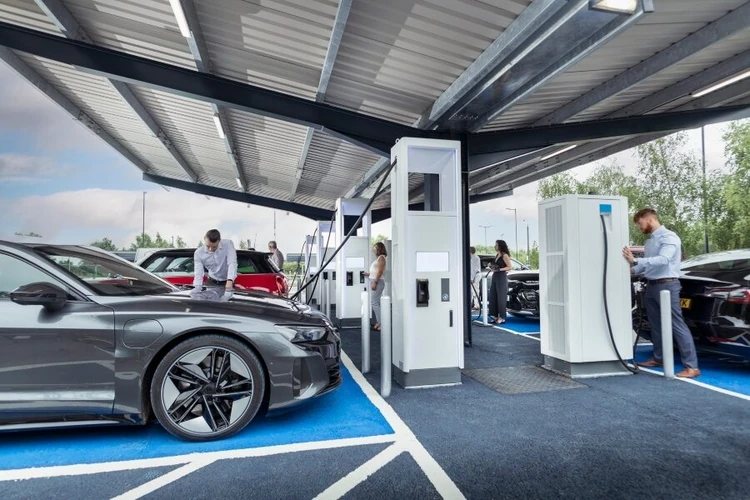
Government officials earmark $5 billion to build electric vehicle charging stations nationwide

The U.S. Departments of Transportation and Energy are making $5 billion available to help states build out a national electric vehicle charging network. The agencies stated that the investment is an important step towards making electric vehicle charging accessible to all Americans. 

The National Electric Vehicle Infrastructure (NEVI) Formula Program was designed to create “Alternative Fuel Corridors,” particularly along the Interstate Highway System. States that want to be part of the plan must submit an EV Infrastructure Deployment Plan before they can access these funds. 

Based on the program’s formula, Texas looks like it will receive the largest amount of the program’s money during the 2022 fiscal year – somewhere in the neighborhood of $60.4 million. It's followed by California ($56.8 million), Florida ($29.3 million), New York ($25.9 million), Pennsylvania ($25.4 million), Illinois ($22 million), and Ohio ($20.7 million).

“A century ago, America ushered in the modern automotive era; now America must lead the electric vehicle revolution,” said U.S. Transportation Secretary Pete Buttigieg. “The President’s Bipartisan Infrastructure Law will help us win the EV race by working with states, labor, and the private sector to deploy a historic nationwide charging network that will make EV charging accessible for more Americans.”

Making EV connections work for the consumer

President Biden has had his foot on the pedal of electric vehicle development for nearly a year. He already committed to putting 500,000 electric chargers on U.S. highways. At a roundtable with CEOs of electric utilities on Wednesday, he touted the newest development as a game changer.

“It’s going to change the dynamic of how — not only how we travel, but the economy along the way as well, because companies are investing in clean energy futures. And the world is betting on American workers to build it and the American people to buy it,” Biden said.

Can the Biden administration make this initiative accessible and worthwhile to consumers? The prospects look promising.

For one thing, automakers are already working towards mass electrification. GM is building 42,000 charging stations of its own, and Ford and others have also committed to building more electric vehicles. As far as buy-in from the public, consumer sales in the electric vehicle segment also continue to grow.

Officials have said they would like to see chargers within at least 50 miles of each other to make using the vehicles more practical. The federal government is encouraging states to place the chargers either in rest areas along interstate highways or near places with food and other services.

People in smaller and underserved communities won't be left for naught either. After the initial layer of charging stations is built, a second competitive grant program will be rolled out to further increase charging access with a special focus on rural and underserved communities.

The rural/underserved part of the plan is based on President Biden's Justice40 initiative, which guarantees that at least 40% of federal investments in climate and clean energy go to disadvantaged communities. 

“The Bipartisan Infrastructure Law is helping states to make electric vehicle charging more accessible by building the necessary infrastructure for drivers across America to save money and go the distance, from coast-to-coast,” said U.S. Secretary of Energy Jennifer M. Granholm.

Article Image

Electric vehicle buyers report improved satisfaction, study finds

As the auto industry continues to put more of its chips into electric vehicles (EV), new research shows that first-time buyers of battery electric vehicles (BEV) are reporting positive experiences.

J.D. Power reports that satisfaction among owners who are new to BEVs averages 754 on a 1,000-point scale, which is comparable to the 766 average score among those who have owned a BEV prior to their current one.

But like anything, there are exceptions. For example, consumers posting reviews at ConsumerAffairs give Tesla an overall 3.8-star rating on a 5-star system. But lately, there have been several 1-star reviews of the EV automaker. Elissar, of Long Beach, Calif., told us that he bought a Tesla Model Y.

“On third day, the battery died,” Elissar wrote. "Tesla said it's not covered, asked for $1,500 to fix battery and coil…If the battery isn't covered on a Tesla, what is covered?

Robert, of La Vernia, Texas, likes his Tesla but is not happy with the company’s service.

“You have to schedule service through the app,” Robert wrote in a ConsumerAffairs review. “You never talk to a real person. You have to wait at least a month for a service date. This resulted in a complete failure of the suspension on our model S.”

Tesla Model 3 ranked highest

In the J.D. Power study, Tesla actually performed very well. The Tesla Model 3 ranked highest overall in satisfaction and highest in the premium BEV segment with a score of 777. The Tesla Model Y ranked second with a score of 770. Overall satisfaction in the premium segment also averages 770.

In the mass market segment, the Kia Niro EV ranked highest for a second straight year with a score of 744. The Ford Mustang Mach-E, with a score of 741, ranked second. Overall satisfaction in the mass market segment averaged 709.

“We know from our research that many consumers have concerns during the purchase consideration process with aspects like battery range and vehicle charging,” said Brent Gruber, senior director of global automotive at J.D. Power. “However, once someone has purchased a BEV, they’re pretty much hooked.”

Gruber said the study found that there have been recent improvements in EV batteries and driving ranges. He estimates that those upgrades have improved satisfaction with the vehicle type, particularly with veteran owners.