2023 Inflation and Cost of Living

Article Image

Uh-oh, ‘eggflation’ is back

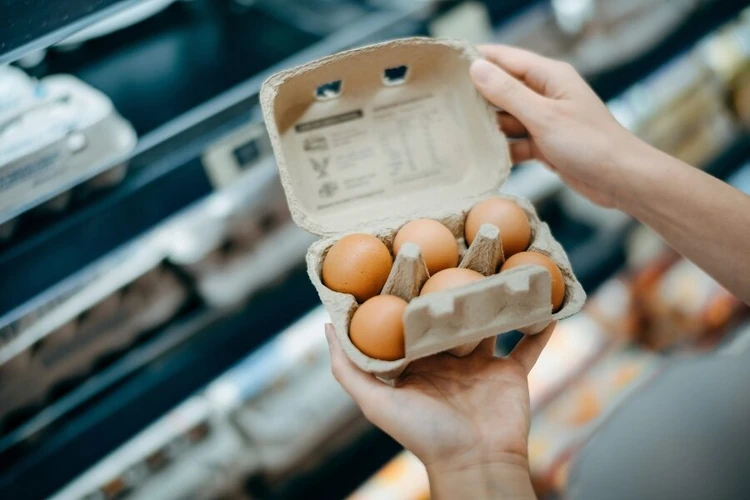
Just in time for holiday baking, “eggflation” is back. The price of eggs, which soared to record highs in 2022 amidst an avian flu outbreak, is climbing once again.

When the Labor Department reported November’s Consumer Price Index (CPI) it noted that the price of eggs jumped 2.2% from October to November after rising just 01.% the month before.

That price move has also been recorded by Datasembly, a company that tracks retail grocery prices in real-time. The company says egg prices were a major influence in rising grocery prices during the month.

“It’s at the local level that we can see the most dramatic changes,” a Datasembly spokesperson told ConsumerAffairs. “This is specifically true with the rapidly changing prices in eggs.  The range of increases varied quite a bit across different major metro areas and states.

For example, consumers in Phoenix, Minneapolis and Des Moines saw the biggest increase in egg prices. South Dakota, Montana and Iowa are the states with the biggest November egg price increase.

The reason?

Egg prices also rose much faster in rural communities than in urban and suburban areas. So why are egg prices on the march again?

It’s much the same reason as the 2022 surge. The U.S. Department of Agriculture reports bird flu seems to be making another appearance at the end of 2023.

As of Dec. 15, 25 states had at least one confirmed infection in at least one flock. Infections peaked in November but have remained high in December, suggesting higher egg prices might be unavoidable in early 2024.

Article Image

Inflation barely increased last month

Inflation was relatively flat last month as the Labor Department’s Consumer Price Index (CPI) rose just 0.1% from October. Over the last 12 months, inflation has averaged 3.1%, down from the June 2022 peak of 9%.

That suggests the Federal Reserve’s policy of hiking interest rates has been effective in bringing down prices. In November, gas prices were down, along with most energy commodities.

Used car prices continued to fall while the increase in grocery prices continued to slow, rising just 01.%, a much slower rate than restaurant prices.

One area where inflation remains fairly hot is in the labor market, which – if you're looking for a job – isn't so bad. But Oliver Rust, head of Product at Truflation, says that can contribute to higher prices

“We expect the strong employment situation will continue to put upward pricing pressure on services,” Rust told ConsumerAffairs. “As a result, we see the headline CPI index rising again to 3.5% by year-end. It will likely remain elevated for longer than anyone anticipates, so bringing the index down to the 2% target will be a difficult task for policymakers.”

If you had money in stocks or Bitcoin in November, you did very well. Wall Street enjoyed a strong rally on the belief that the Fed is getting inflation under control and will stop raising interest rates. 

Bitcoin remains volatile, selling off sharply this week after a huge rally in November that took the price of the digital currency to $43,000.

Hoping for a ‘soft landing’

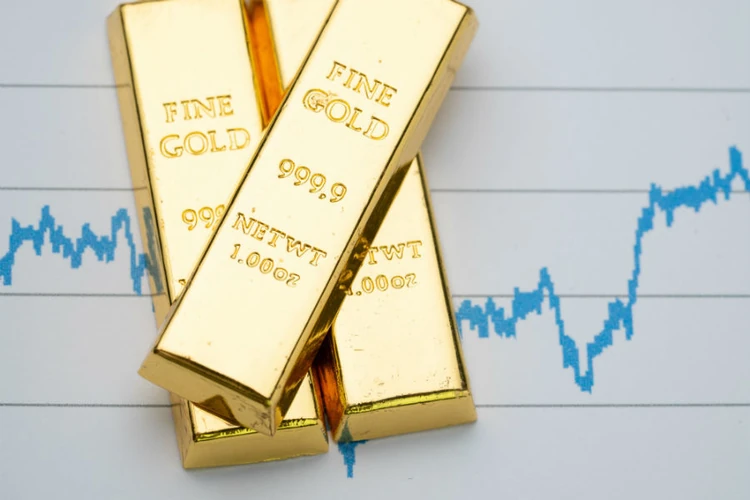
But a “soft landing” – falling inflation without a recession – is far from certain and some traders have hedged their bets by purchasing gold. Though prices are at a three-week low this week, there are plenty of tailwinds that can provide support. For one, central banks and governments around the world have increased their purchases of the precious metal in 2023.

Bond yields are down from their recent highs but savers can still find certificate of deposit (CD) rates above 5%. According to Forbes, this week’s highest CD rate is 5.87% APY for a one-year CD. As an added benefit, the money is insured up to $250,000 by the Federal Deposit Insurance Corporation.

So, as economic conditions begin to reveal themselves, where’s the best place to put your extra cash? It’s advisable to consult an objective and trusted financial adviser before making any major moves.

But one legendary investor has made moves this year that suggest he is erring on the side of caution. Berkshire Hathaway Chairman Warren Buffet got Wall Street’s attention this week when it was disclosed that he sold more than $28 billion in stock in the first three quarters of 2023.

The question marks hanging over the economy may persist for at least another month.

Article Image

Sweet and salty food contributed to November's grocery inflation

Many supermarket prices have leveled off over the last couple of months but the rising cost of sugar and salt contributed to grocery inflation last month.

The ConsumerAffairs-Datasembly Shopping Cart Index, which tracks the prices of 25 commonly-purchased items, rose from $156.55 in October to $157.19 in November. The cost of items in the shopping cost totaled $155.66 in November 2022.

That increase is well below the overall inflation rate, as measured by the Consumer Price Index (CPI), several items rose at a much faster rate. For example, a box of cookies costing $4.51 a year ago increased to $5.67 last month, a 25% jump.

A box of honey nut cereal, which cost $5.31 a year ago, rose to $5.56 last month. A loaf of honey wheat bread rose from $3.39 in November 2022 to $3.79 last month.

The price of paper products is also still rising. Select-A-Size paper towels cost $21.85 last month, up from $21.56 a year ago. Twelve rolls of toilet paper cost $12.84 in November 2022 but sold for $12.92 last month.

Among the items that dropped in price from a year ago were sliced cheese, eggs and whole bean coffee, whose price declined by 14.3%.

The Shopping Cart Index

Product

Nov. 2022

Oct. 2023Nov. 2023
Penne Pasta 16 oz.$1.98$1.92$1.92
Select-a-size paper towels$21.56$21.66$21.85
White Albacore tuna in water 5oz.$2.23$2.24$2.26
Chicken noodle soup 10.75 oz.$1.40$1.41$1.41
Cola 2-liter bottle$2.69$2.87$2.87
Whole milk half-gallon$2.73$2.79$2.73
Whole bean coffee 12 oz.$15.34$14.26$13.14
Organic eggs one dozen$5.92$5.31$5.32
Waffles 10 ct. 12.3 oz.$3.11$3.16$3.16
Frosted donuts 8 ct.$5.25$5.29$5.26
Tomato ketchup 20 oz.$3.39$3.89$3.86
Mayonnaise 30 oz.$5.80$5.84$5.86
Honey Nut cereal 18.8 oz.$5.31$5.56$5.56
American cheese single 24 ct.$5.51$5.42$5.49
Salted butter 1 lb.$6.06$6.11$6.42
Classic potato chips 8 oz. bag$3.89$4.11$4.12
Honey wheat bread 20 oz.$3.49$3.79$3.79
Cookies 14.3 oz.$4.51$5.30$5.67
Bacon 16 oz.$8.67$8.66$8.82
Liquid dish detergent 46 oz.$5.27$5.59$5.59
Spring water 16.9 oz. 32 ct.$7.52$7.56$7.59
1000 sheet toilet paper 12 ct.$12.84$12.18$12.92
Peanut butter 16.3 oz.$2.96$3.33$3.31
White rice 32 oz.$5.14$5.21$5.21
Laundry detergent 96 oz.$13.09$13.09

      $13.06

Cart Totals$155.66$156.55

   $157.19

Article Image

Inflation stalled last month, thanks to gas prices

The overall inflation rate took a breather in October as falling gasoline prices offset other areas of the economy where prices continued to rise. The Labor Department’s Consumer Price Index (CPI) was unchanged last month after rising 0.4% in September.

That puts the inflation rate over the last 12 months at 3.2%, down from 3.7%  in September.

The price of gasoline plunged 5% in October after rising 2.1% in September. The price at the pump is 5.3% lower than October 2022. According to AAA, today’s national average price of regular gasoline is $3.35 a gallon. One year ago, it was $3.77.

The decrease in gas prices cushioned the blow from another increase in the cost of shelter, notably rent. The Shelter Index increased 0.3% last month, on top of a 0.6% rise in September. For the last 12 months, the cost of putting a roof over your head is up 6.7%, the second largest increase behind transportation services.

Food prices still rising

As we reported last week, the ConsumerAffairs Datasembly Shopping Cart Index, which tracks 25 common-purchased items, rose 1.4%. The CPI found the cost of all food categories rose 0.3% in October for a 3.3% annual inflation rate. However, the split between food purchased at grocery stores and food served in restaurants continued to widen.

The price of food consumed at home is up 2.1% over the last 12 months while the price of food consumed away from home is 5.4% higher.

Four of the six major grocery store food group indexes increased over the month. The index for meats, poultry, fish, and eggs rose 0.7% in October as the index for beef increased 1.2% and the index for pork rose 1.3%. 

The other food-at-home index increased 0.3 percent over the month, as did the dairy and related products index. The index for cereals and bakery products rose 0.2% in October, after falling 0.4% in September.

The fruits and vegetables index was unchanged over the month, as it was in September.

Menu prices are rising even faster

The food away from home index rose 0.4% in October, as it did in September. The index for limited-service meals – think fast food – increased 0.5% and the index for full-service meals rose 0.3% over the month. 

Heading into the cold weather months there was good news for consumers heating their homes with oil. The price of heating oil decline by nearly a full percentage point in October and is 21% lower than a year ago.

The cost of a new car or truck dipped 0.1% last month, in spite of an auto workers strike that limited production. On a year-over-year basis, however, the price of a new car is almost 2% higher. Used car prices continued to fall last month and are now 7.1% cheaper than a year ago.

Article Image

Prices were up last month. Here’s what caused the most pain.

Going somewhere, putting a roof over your head and food on the table all continued to be increasingly expensive last month, as the Labor Department’s Consumer Price Index (CPI) rose a hotter-than-expected 0.4% over August.

Over the last 12 months, the CPI has risen 3.7%, the same as the month before. A handful of consumer expenditures caused the most pain.

The cost of shelter was the largest contributor to the monthly all-items increase, accounting for over half of the rise. An increase in the gasoline index was also a major contributor to the all items monthly increase. While the major energy component indexes were mixed in September, the energy index rose 1.5% over the month. 

The food index increased 0.2% in September, as it did in the previous two months. But there was a big difference in the cost of groceries and food consumed at restaurants. The index for food at home increased by 0.1% over the month while the index for food away from home rose by 0.4%.

Overall, the cost of transportation continued to go up. Not only did gasoline prices rise 2.1%, but the cost of keeping vehicles running continued a multi-month rise. The cost of maintaining and repairing cars and trucks rose 10.% last month while the cost of insuring those vehicles surged by nearly 19%.

Here’s what was cheaper

The only break consumers got as far as transportation is concerned is if they traveled by air. In September, airfares dropped by 13.4%.

Paying for a place to live is getting to be increasingly difficult. In September, rents and assorted costs rose 7.4%. It wasn’t much cheaper for homeowners as the owners’ equivalent of rent costs increased by 7.1%.

Among food costs, dairy and related products was the only category to get cheaper in September, falling by 0.2%. Consumers using natural gas also saw relief as the price plunged by 19.1% from August.

The price of used cars and trucks dropped another 8% last month but remain well over their pre-pandemic cost. A lengthy auto workers strike could well reverse that consumer-friendly trend in the months ahead.

Oliver Rust is head of Product at independent inflation data aggregator Truflation, which tracks prices in real-time. He says prices appear to be falling this month.

The increase in [September] inflation was driven by gasoline and housing, with some downward relief coming from utilities, medical care, and used cars,” Rust told ConsumerAffairs. “In comparison, Truflation data puts U.S. CPI at 2.37% as of October 12, as our diverse, real-time data streams show strong declines in the food and beverages, utilities, and health sectors over the last quarter.”

Article Image

Inflation cooled in May but here’s what is still causing consumers the most pain

On its face, the May Consumer Price Index (CPI) shows progress in the fight against inflation. Prices, the way the Labor Department measures them, rose 1% over April and were up 4% compared to May 2022.

In June 2022, the CPI peaked at a 9% inflation rate so officially, inflation has nearly been cut in half over the last 11 months. But consumers are still feeling pain in some important areas.

The index for shelter was the largest contributor to the monthly increase, followed by an increase in the index for used cars and trucks. Those prices are rising again after a brief respite early in the year.

The food index increased 0.2% in May after being unchanged in the previous two months. The index for food purchased at grocery stores and consumed at home rose 0.1% over the month while the index for food away from home – mostly at bars and restaurants – jumped 0.5%.

Housing costs continue to push higher

The cost of shelter – mostly rent – rose 0.6% over April, continuing its steady increase. Year-over-year, the cost of putting a roof over your head is up 8%.

Personal transportation costs also continue to rise. The cost of used cars and trucks jumped 4.4% in May, matching April’s increase. Year-over-year, the cost of used vehicles is 4.2% lower.

New car prices dipped slightly – 0.1% – as inventory levels improved. However, on an annual basis, the cost of a new car is up 4.7%.

When it comes to food, it was much more economical to eat at home last month than go to a restaurant. Food purchased at grocery stores and prepared at home rose 0.1% after two months of declines. For the year, grocery costs are up 5.8%, a significant pain point for consumers.

Grocery prices are still expensive

The index for cereals and bakery products rose 10.7% over the 12 months ending in May. The remaining major grocery store food groups posted increases ranging from 0.3% for meats, poultry, fish, and eggs to 9.2% for other grocery categories.

The cost of eating out rose 8.3% over the last year. Checks at full-service restaurants rose 6.8% year-over-year while the tab for fast-food restaurants rose even higher – 8% over the last 12 months.

Energy was one of the few categories where consumers found relief last month. The energy index dropped by 3.6% in May after rising 0.6% in April. Gasoline prices provided the most relief, falling 5.6% in May and are down more than 19% from May 2022.

Article Image

Has dining out become too expensive? Here's how you can keep those costs down.

The menu prices these days continue to make diners' eyes pop out of their heads. Prices at restaurants are rising faster than those at grocery stores and now, the average menu price is up 15.6% over a year ago.

Among the biggest hikes in the average cost of a popular meal can be found at Panera Bread, with a price of $14.76; Chipotle at $14.34; Shake Shack at $13.50 a meal; Blaze Pizza at $13.72 and Jersey Mike’s at $13.23.

And with "dynamic pricing" being bandied about, consumers might have to play games with menu prices that change depending on how many customers they have at any given hour.

And that’s just in the fast-casual world. To make matters worse, some upline “fancier” restaurants have decided to take a cue from Airbnb hosts and add some extra charges. Consumers are sounding off on social media.

“Looking to [take] my wife out to dinner in SF. On a restaurant's website they list: 20% mandatory tip (they call it an equity fee, whatever that means). 5% San Francisco health care tax. 8.625% sales tax. That's an extra 33% on top of your bill. Looks like I am cooking at home,” John Savage tweeted.

Is this ethical? Restaurants can do whatever they want, but diners are pushing back. A recent study found that only 42% of consumers are willing to cough up and pay full price to eat at their favorite go-to restaurants. 

Insider tips on saving at restaurants

To see how the other 58% can keep the menu price mongrels at bay, ConsumerAffairs asked a group of discount-thinking, food-loving experts for their personal tricks.

Share and share alike: Nina Swasdikiati, owner and founder at Ping Pong Thai in Las Vegas, told ConsumerAffairs that if she were looking for a way to save money on dining out, she would look for restaurants that served “shareable” portions. 

There are lots of restaurants that have family-sized meals for carryout – e.g., Olive Garden and Panera – and the one chain that has built its reputation on shareable, family-sized meals is classic Italian family-style eatery Buca di Beppo.

There are also tons of BBQ joints where platters of ribs or wings can be shared, but other than that, it takes a little work to find dine-in restaurants where a family can get the same thing.

Doing some homework on what options are available, ConsumerAffairs found that Foursquare.com does a version of tracking down where shareable meals can be found city by city. The best search term ConsumerAffairs found to make that happen is “The 15 Best Places for Big Portions in [name of town].”

Googling for discounts: ConsumerAffairs recently did an article about where to find the "cheapest eats," but in updating our research, we found that Eater.com also curates a list of budget-friendly restaurants for major cities. Just search for “[name of city – e.g. “Detroit’s”] Best Budget-Friendly Restaurants” to find recommendations.

Search for restaurant-specific discounts: For example, when we searched “discounts at Outback Steakhouse,” there were bundles, day-of-the-week discounts, happy hour specials, and every day full meal discounts for military veterans, medical professionals, and state or federal service members.

Search for “free meals for kids”: An additional search tip came from Andrea Woroch, a consumer and money saving expert, who told ConsumerAffairs to look for free kids' meals. “If you are dining out with children, check with local restaurants to see which ones offer free kids meals,” she said. And she’s right – ConsumerAffairs found a whole slew of chains that offered that perk, but to each their own. For example, on Tuesdays, if someone orders at least $15 on the Bob Evans app, they’ll get a free kids’ meal (one per customer).

Buy gift cards in bulk: Woroch also suggests that if a family has a favorite restaurant, they should buy a lot of gift cards from there. “Warehouse stores like Costco sell restaurant gift cards in bulk at a discount. You can get $100 worth of gift cards to California Pizza Kitchen for $80,” she said.

Skip the extras: “No, you don't need that extra portion of fries, a diet Coke, or dessert,” says Derek Sall, founder and lead of Life And My Finances​​. “These can add up really quickly, and then you'll end up paying more than you were prepared to. Besides, water is usually free at restaurants; not only is it cost-effective, but it's also healthier.” 

Stick to iced tea: Alcohol can add a lot to the final tab. Since the markup on alcohol at restaurants runs 400-500%, one option may be to pass on the restaurant's wine or cocktail list. If you are going to imbibe, it's much more economical do to so at home.

Stop “splitting” the bill: “If you're tired of always feeling like you're overpaying when you dine out with friends, consider paying for what you order,” UNSTUCKKD CEO Kahlil Dumas suggests. “If you're out at a restaurant or bar with a group of people, don't just split the bill evenly. Instead, pay only for what you consumed. This will ensure that you're not paying for someone else's expensive meal or drinks, which can add up over time.”

Article Image

After cooling in March, inflation heated up in April

The cost of living was significantly higher in April than it was in March. The Bureau of Labor Statistics reports the Consumer Price Index (CPI) rose 0.4% last month after gaining only 0.1% in the previous month.

Consumers paid more for shelter, gasoline, and used cars and trucks. Those increases more than offset the declines in some other sectors.

Areas where consumers paid more

  • Used cars - up 4.4%

  • Energy - 0.6%

  • Medical care commodities - up 0.4%

  • Shelter - up 0.4%

  • Restaurants - up 0.4%

  • Gasoline - up 0.3%

  • Apparel - up 0.3%

Areas where consumers paid less

  • Natural gas - down 4.9%

  • Fuel oil - down 4.5%

  • Electricity - down 1.7%

  • New cars - down 0.2%

  • Transportation - down 0.2%

  • Groceries - down 0.2%

With the winter heating season pretty much over, consumers saw big drops in natural gas and heating oil prices. Food costs, one of the heavier burdens for consumers over the last few months, continued to moderate.

The food index was unchanged in April, with higher menu prices at restaurants but lower prices at the supermarket. When it was averaged out, food costs were flat last month.

Four of the six major grocery store food group indexes decreased over the month. The index for fruits and vegetables fell 0.5% while the index for meats, poultry, fish, and eggs declined 0.3%.

The dairy and related products index decreased by 0.7% percent in April as the milk index fell 2.0%, the largest decline in that index since February 2015.

Over the last 12 months, the nation’s inflation rate is 4.9%. That’s down from June’s peak of 9% and closer to the Federal Reserve’s goal of 2%.

Article Image

The government says inflation is cooling. So why are big companies still raising prices?

In its March Consumer Price Index report, the Labor Department found inflation was continuing to fall. The year-over-year inflation rate was 5%, still high but down significantly from its 9% peak in June.

In recent weeks, as publicly traded corporations have reported their first-quarter earnings, some major brands told investors they were able to raise prices and not see much pushback from their customers.

For example, consumer products giant Procter & Gamble said it raised prices across its entire portfolio of products by 10%. It said consumers more or less accepted the price hikes as sales volumes fell by only 3%.

Consumers paid higher prices for everything from Pampers diapers to Pantene shampoo. The company said sales of Tide detergent went up, even though the product cost more.

A more expensive Coke

It was the same story for Coca-Cola, which this week reported sales and earnings that beat forecasts. During the quarter Coke continued to raise prices of its products to offset the effects of inflation.

But the impact of higher prices on company earnings was small. Coke’s unit case volume actually grew 3% in the quarter, even though sales in North America were flat.

McDonald’s is another major brand that has aggressively hiked prices. Even though company officials told investors that they were seeing some pushback from customers, that wasn’t reflected in the company’s finances. 

Higher prices aren’t keeping people out of McDonald’s

McDonald’s first-quarter earnings and revenue were higher than expected. Store traffic was up for the third straight quarter while some competitors experienced a dip in business.

In response to The Sun newspaper’s report on price increases in the UK, a McDonald’s spokesman said inflation continues to affect the company and its suppliers.

"We carefully review and adjust our prices to ensure that while some prices may change, we maintain great value and quality across our menu," the spokesman said.

In the U.S., McDonald’s has taken some social media heat for its prices. A TikTok video that went viral shows the menu board at a McDonald’s in Connecticut where the price of a Big Mac Combo Meal was $16.89. 

Lisa, of Cocoa, Fla., has also noticed higher prices at McDonald’s.

“My chicken sandwich looked like 2 chicken nuggets thrown on a bun with a pickle nothing else for twice as much as what we use to pay,” Lisa wrote in a ConsumerAffairs review. Disgusting!

Article Image

Inflation cooled last month. Here’s where consumers got the most relief

Consumers continued to pay more to put a roof over their heads in March but food prices appear to have peaked, at least for now. The Labor Department’s Consumer Price Index (CPI) rose just 0.1% last month, for an annual inflation rate of 5%.

The cost of shelter was by far the largest contributor to the monthly all-items increase in inflation. It more than offset a decline in the energy index, which fell 3.5% over the month as all major energy component indexes declined. The food index was unchanged in March.

The shelter index reflects rents as well as home ownership costs. The cost of shelter rose 0.6% from February and is rising at an annual rate of 8.2%.

As noted, energy prices tumbled thanks to the slide in gasoline prices. Gas prices fell 4.6%  in March and are down more than 17% year-over-year. That good news is tempered, however, by sharp increases in prices at the pump so far in April.

Perhaps the best news in the report concerns food prices. In March, overall food prices were unchanged from February, when prices rose 0.4%. For the first time since inflation took hold of the U.S. economy the cost of food purchased at grocery stores and consumed at home went down, falling 0.3%. For the last 12 months, those costs are up 8.4%.

Eating at restaurants, meanwhile, continued to get more expensive. The cost of food consumed away from home increased by 0.6% and is up 8.8% since March 2022.

Egg prices finally fall

Breaking down grocery costs, three of the six major grocery store food group indexes decreased in March. The index for meats, poultry, fish, and eggs fell by 1.4%. Eggs were also a lot cheaper, with prices falling nearly 11%.

The fruits and vegetables index declined by 1.3% over the month, and the dairy and related products index decreased by 0.1%.

The gap continued to widen last month between new and used cars. Used car prices fell another 0.9% while the cost of new cars and trucks rose 0.4%. Over the last 12 months, the price of used vehicles has fallen 11.2% while new car prices have risen 6.1%.

Consumers continued to pay more for car insurance last month with premiums rising 1.2%. Travel also got more expensive with airfares rising by 4%.

Article Image

What’s a better inflation hedge, gold or Bitcoin?

So far in 2023, there has been plenty of economic turmoil. From inflation to layoffs to bank failures, many Americans are on edge.

An early-year stock market rally has faded while gold and Bitcoin prices have surged, as many investors seek a safe haven. But of the two, which is the better hedge against inflation?

While the experts we consulted have well-thought-out views on the subject, investors should never make big financial decisions without doing their own research and consulting with a trusted and objective financial adviser.

Richard Gardner, CEO at Modulus, says gold has a historic record and it has been used as a store of value for thousands of years. That’s his choice.

“It is, reliably, a hedge against inflation because it is a physical commodity that is scarce, meaning that it is difficult to manipulate,” Gardner told ConsumerAffairs. “Because the supply of gold is limited, it has historically held up quite well against fiat currency, which can be printed at will. It is a favorite investment for risk-averse investors.”

Gold is approaching a record high in price, trading this week at around $2,020 an ounce. Gardner said he thinks gold is the better hedge because there isn’t enough data on how cryptocurrencies hold up over time.

Bitcoin, on the other hand...

Marius Grigoras, CEO at BHero, takes the opposite view. While he acknowledges that gold has served as a trusted store of value in the past, he thinks Bitcoin has emerged as a more efficient and accessible alternative.

“Bitcoin offers anonymity, security, and accessibility without physical constraints,” he told us. “Its scarcity, fixed supply, and immunity to government manipulation position it as an attractive deflationary asset. Furthermore, Bitcoin's potential for appreciation, as demonstrated by its remarkable growth over the past decade, outpaces gold's returns, making it an enticing option for wealth protection.”

However, Bitcoin has been more volatile than gold. After soaring to a price above $60,000 the cryptocurrency plunged to below $20,000. In the wake of recent bank failures it has enjoyed a rally, taking the price back to $30,000.

Doesn't like either one

Jack Prenter, CEO of DollarWise, isn’t a fan of either gold or Bitcoin as a hedge against inflation.

“For an asset to be a good hedge against inflation you would want to see decades of data that show strong protection of purchasing power over multiple market cycles and in different rate environments, and we don't have that data for Bitcoin because it's so new,” he told us.

“Gold is often touted as a strong inflation hedge, but the data shows that in the short and medium-term gold doesn't act as a good hedge.”

Prenter notes that from 1980 to 1984, the price of gold fell by about 10% while annual inflation ran at 6.5%. He maintains that over the last  50 years, gold has had a weak correlation to inflation. 

“Only when you look at a timeline of a century or longer is gold a reasonable hedge against inflation,” Prenter said.

Article Image

Inflation slowed again in February thanks to falling energy prices

Consumers paid more for food and shelter last month but the cost of heating homes fell sharply. The Labor Department’s Consumer Price Index (CPI) increased by 0.4% after a 0.5% rise in January.

Natural gas prices plunged 8% last month but are still 14% higher than 12 months ago. The cost of fuel oil dropped 7.9% while remaining 9.2% higher than a year ago.

The cost of electricity rose last month, but not by much. Electric bills were 0.5% higher than in January but consumers are paying 12.9% more for electricity than in February 2022.

Motorists also saw another small increase in prices at the pump. The cost of gasoline was up 1% over January but compared to 12 months ago, gas prices were down 1.2%.

Food costs rose 0.4% in February, perhaps causing consumers the most inflationary pain. It was still cheaper to eat at home last month. The price of food purchased at a store and consumed at home rose 0.3% while food consumed at bars, restaurants and convenience stores rose 0.4%. Overall food costs were 9.5% higher than a year ago.

High cost of shelter

There was also little relief for people renting an apartment or buying a home. Shelter costs rose 0.8%, slightly more than in January. 

Used car prices continued to fall last month, registering a 2.8% decline, and were 13% cheaper than a year ago. New vehicle prices continued to rise as dealers continued to mark up cars and trucks over the sticker price.

Taking everything into consideration, consumer prices are 6% higher than they were a year ago, well off their peak last June.

Article Image

Inflation slowed slightly in January, but shelter, food, and gas prices are still rising

It might not seem like it to many consumers but inflation continues to slow down. Prices went up last month but at a slower rate than in December.

The Labor Department’s Consumer Price Index (CPI) increased 0.5% from December to January, slower than the 1% rise between November and December. On a year-over-year basis, the CPI rose 6.4%.

Americans buying and renting homes felt the biggest impact. The shelter index rose 0.7% and is up 7.9% over the last 12 months. 

According to the Bureau of Labor Statistics, the index for shelter was by far the largest contributor to the monthly all-items increase, accounting for nearly half of the increase.

Gasoline prices, which had fallen during November and December, started going up again last month. Prices at the pump jumped 2.4% last month after falling 7% in December. Over the last 12 months, however, gas prices are only up 1.5%.

Food also fed inflation

Food prices also fed inflation last month. Overall food prices were 0.5% higher in January and were up 10.1% year-over-year. 

The price of food purchased at the grocery store and consumed at home rose 0.4% in January while food consumed away from home – mostly in restaurants – was even more expensive, rising 0.6% from December.

Services were generally more expensive last month – a fact that takes on added significance because the Federal Reserve’s rate-raising policy is aimed at bringing those costs down. The cost of services was up 0.5% and is 7.2% higher than in January 2022.

Medical services proved to be an exception. That cost declined by 0.7% and is up only 3% in the last 12 months.

Used car buyers also caught a break last month. As new car prices continued to rise, the average price of used cars and trucks fell by 1.9% and is 11.6% lower than a year ago.

Article Image

Wholesale egg prices have plunged, but when will consumers see lower retail prices?

If you’ve adjusted your breakfast menu in the last year because of the high cost of eggs, you should soon be able to get back to your regular morning routine. The wholesale price of eggs has plunged in recent weeks.

This week the wholesale price of a dozen eggs dropped to $2.61. That’s more than 50% lower than mid-December’s average price of $5.43. According to the market research firm Urner Barry, egg prices have plunged by 47% so far this year.

Consumers probably haven’t noticed, however. That’s because there is a lag in the time that a wholesale price is reflected in prices at the supermarket. 

In fact, retail egg prices were still extremely high throughout December. According to the Labor Department’s Consumer Price Index (CPI), the price consumers paid for eggs was up over 11% from November. During all of 2022, retail prices soared by 60%.

Last spring a particularly strong form of avian flu decimated domestic chicken flocks. The outbreak flared up again last fall, killing millions of chickens and driving prices even higher.

Egg production is up, but so are producers’ costs

Industry analysts say chicken flocks are rebounding and that’s bringing down prices. However, they point out that producers face higher costs in other areas.

“Everything we buy, from cartons and boxes and freight and fuel, pretty much every input we purchase went up in cost in 2022," John Brunnquell, CEO of Egg Innovations, told Wisconsin Public Radio.

Brunnquell said the avian flu caused the deaths of around 38 million laying hens across the U.S. last year, though government health officials put the number closer to 58 million. Much of 2022’s price surge was simply a supply and demand issue.

Now that wholesale egg prices are on a downward slope, just when will shoppers see lower prices for a carton of eggs at the grocery store? Maybe within weeks, experts say.

How low will egg prices get?

How low will prices fall? That’s less certain. In a way of comparison, a dozen large Grade A eggs cost consumers $4.25 on average in December, more than double the $1.79 retail price a year earlier, according to government data.

While Brunnquell and other egg producers are facing higher costs they may find they must aggressively lower prices to sell eggs to a public that has lately changed its menu to avoid high prices.

“Consumer demand for shell eggs continues to track lower and is below average and below the levels recorded a year ago,” the U.S. Department of Agriculture noted last week. “Resistance to record high prices in grocery outlets across the country continues to slow shell egg movement.”