Best Medical Alert Systems With GPS
Compare our top picks based on costs and features

+1 more


If you enjoy your active lifestyle and want to keep your independence for years to come, you should consider getting a mobile medical alert system with GPS. This will allow quick access to emergency response anywhere there’s a cellular signal.
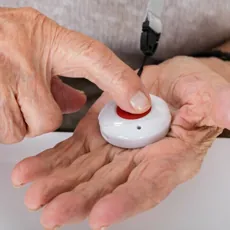
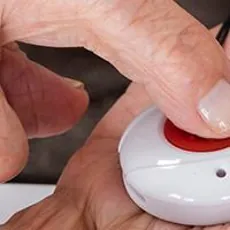
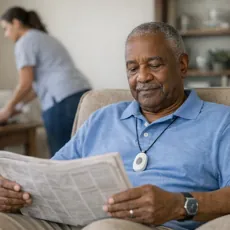
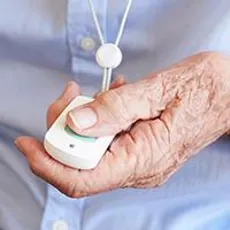
Most personal emergency response services offer medical alert devices with GPS, but they aren’t all equal. Most are small, battery operated and rechargeable, and can be easily clipped to your clothing. Some can be worn around your wrist or neck. Sometimes the device also includes fall detection, which automatically alerts emergency services if you fall and can’t press the emergency button.
What are the best medical alert systems with GPS?
To determine which medical alert systems with GPS are the best, we compared the systems’ designs and aesthetics, features, prices, contracts and reviews by real customers. We only included monitored service systems because they offer the most comprehensive support with a direct line to trained dispatchers who can communicate with the device’s wearer until emergency responders arrive, no matter where you are.
- Our favorite for active older adults:
Active Guardian - Our favorite for caregivers:
MobileElite - Our favorite for style:
Freedom Guardian - Our favorite for battery life:
Voice-In-Necklace - Our favorite for home use:
Mobile Guardian - Our favorite for frequent travelers:
In-Car
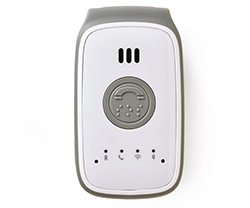
Our favorite for active older adults:Active Guardian by Medical Guardian
Starting at $44.95 per month, the Active Guardian is a portable medical alert device that works both at home and on the go. The water-resistant pendant can be worn around the neck on an adjustable lanyard or on a belt clip. It’s simple to use and lightweight.
Active Guardian has an unlimited range of protection, so if you ever have an accident while in the garden or out running errands, Medical Guardian operators will send help to your exact location.
Help and support: U.S.-based monitoring center with 24/7 support. Wireless provided through Verizon cellular service subscription.
Contracts and fees: No activation, cancellation or equipment fees. You do not need WiFi in your home to use Active Guardian, and there are no additional fees for its Verizon coverage service. Up to $350 fee if you lose or damage equipment.
|
|
Our favorite for caregivers:MobileElite by Medical Alert
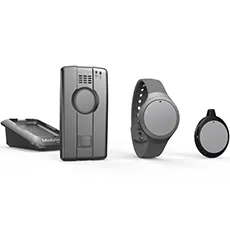
MobileElite starts at $32.04 a month and uses GPS tracking to guarantee it works wherever you are. Pushing the device’s button puts you in touch with Medical Alert’s monitoring center, and a specialist sends help to your exact location.
When combined with Medical Alert’s 365Access Caregiver App, your loved ones can receive notifications about your activity, check your location and communicate with you. Devices can be worn on the wrist or around the neck, and you have the option to switch at any time.
Help and Support: 24/7 emergency monitoring service. Translation services for up to 140 languages.
Contracts and fees: No long-term contracts. No activation, set-up or cancellation fees.
|
|
Our favorite for style:Freedom Guardian by Medical Guardian
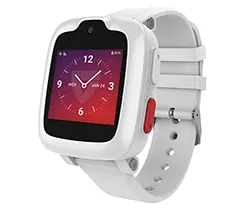
Starting at $44.95 per month, Freedom Guardian is a wearable medical alert watch. It looks like a smartwatch and features a hi-res analog face alternating with an easy-to-push HELP touchscreen button.
Perfect for active adults with a sense of fashion, the Freedom Guardian comes with oversized icons, audible features and integrated two-way communication capabilities. It’s available in multiple colors and includes a companion app for caregivers.
Help and support: Reliable two-way communication capabilities to Medical Guardian’s U.S.-based 24/7 monitoring center. Unlimited number of emergency button pushes.
Contracts and fees: There is a one-time equipment cost of $99. No long-term contract or cancellation fees.
|
|
Our favorite for battery life:Voice-In-Necklace by LifeFone
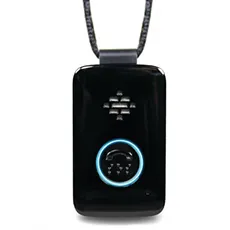
LifeFone’s Voice-In-Necklace has plans starting at $39.95 a month and allows users to be safe at home or on the go. The necklace operates as a two-way speaker and has an easy-touch button for emergencies, which means it’s not necessary to carry a base unit around.
Voice-In-Necklace has a 30-day battery life, which allows active older adults to be safe for long periods without worry. The GPS uses AT&T and Verizon cellular networks to provide a wide coverage area.
Help and Support: 24/7 monitoring station based in the United States. Agents stay on the line with you until the emergency is resolved.
Contracts and fees: No contract, just a service agreement. No equipment, activation or cancellation fees. 30-day money-back guarantee.
|
|
Our favorite for home use:Mobile Guardian by Medical Guardian
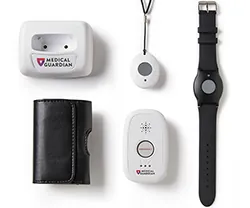
Starting at $44.95 per month, Mobile Guardian is a two-piece medical alert system. The portable device is lightweight and easy to clip on your belt or put into your pocket. Press the emergency help button to connect to the monitoring center, and the device will alert emergency responders of your precise location.
The mobile device works within a range of 350 feet of the base, so you can visit with your neighbors or work in the garage without the worry of a sudden accident or fall. The pendant is also waterproof and safe to use in the bath or shower.
Help and support: Nationwide cellular network. Emergency support available 24/7 via MobileHelp System. Customer service and technical support available Monday through Friday from 9 a.m. to 8 p.m. and Saturday from 9 a.m. to 5 p.m.
Contracts and fees: No activation or cancellation fees. No long-term contract.
|
|
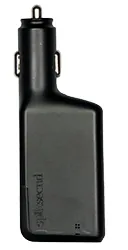
Our favorite for frequent travelers:In-Car by Bay Alarm Medical
Starting at $29.95 per month, Bay Alarm’s In-Car device comes with an automatic crash response, driving status updates, geofencing and a push button to summon help when you need it, plus a caregiver app with vehicle location tracking.
The device works in any vehicle and is equipped with a 12V plug so it plugs into a cigarette lighter. It has a speaker, help button, cellular module, USB port, impact sensor, battery backup and internal GPS. Simply press the button for two-way communication with one of Bay Alarm’s 24/7, U.S.-based monitoring centers. It’s perfect for adults who don’t want to give up the freedom of driving their own car.
Help and support: Emergency support is available 24/7 in multiple languages. Customer support is available Monday–Friday, 6am–6pm, and Saturday–Sunday from 8am–12pm and 12:30pm–4:30pm.
Contracts and fees: No startup cost, cancellation fee or contract requirement. Price-Lock Guarantee means your monthly rates won’t increase.
|
|

- Rates start at $29.95/month
- No activation fee
- Lifetime warranty

How do medical alert systems with GPS work?
- Press the emergency button to signal for help
A single button calls for help, or, if you opt for a device with fall detection, you don’t even need to push the button because the device will automatically detect your fall. Medical alert systems with GPS work by identifying the wearer’s location using satellite-based Global Positioning System (GPS) technology. - Communicate with the operator at the monitoring center
Once you establish communication with the center, they can then dispatch emergency medical help if needed. - Help is on the way
The alert system determines the precise location of the device and connects to a call center when the emergency button is pressed.
Pros and cons of medical alert systems with GPS
Using a medical alert system with GPS has its benefits, but there are some drawbacks to consider. “In weighing the pros and cons of each device, it’s good to first understand the person’s health conditions and the amount of time they’re alone daily,” explains Michelle Rankine, a health care executive specializing in the aging community.
Pros
- Caregivers can see a loved one’s location in an emergency
- Peace of mind for active older adults
- Can be simpler to use than a cell phone
Cons
- Can be more expensive than at-home systems
- May not be as precise if you’re in an urban area due to tall buildings
- Won’t be able to track which floor you’re on in a multilevel apartment or condo
Safety benefits of GPS tracker for older adults
There are many safety benefits of GPS trackers for older adults. They can provide great peace of mind both for the individual and their caregivers or family members.
- Provides precise location tracking at home or on the go. The portability of a mobile medical alert device with GPS is one of the most important safety benefits. No matter where an older adult is, whether at home, socializing with friends or doing some other activity, the GPS locator will provide an exact location if help is needed. Some also have the option of caregiver tracking so loved ones can see the location of the wearer for personal peace of mind.
- 24/7 response when help is needed. Older adults don’t have to worry about not having access to emergency help because help is available any time, day or night. “GPS tracking allows an agent to see their location, which means they can easily direct emergency services,” said Rankine. This sense of security allows people to live fuller lives knowing they have access to trained responders at all times.
- Simple to use. Medical alert bracelets and pendants were created to be extremely simple to use; help can be on the way with the simple push of a button. There is no need to find a telephone or dial numbers, so they are ideal if someone falls or otherwise can’t get to a telephone.
- Easy to carry anywhere. Since these devices are lightweight and very portable, wearers can take them anywhere they go and stay safe. Some are even completely waterproof so they can be worn in the shower.
- Extra safety features. Many mobile medical alert devices with GPS have additional safety features that are included or can be added to the plan for a small additional fee. Other features include caregiver tracking, fall detection, alarms or beacons to connect to the call center if someone is unable to speak, connectivity to home-based medical alert systems, long battery life and personalized emergency action plans.
How much do medical alert systems with GPS cost?
Medical alert systems that have GPS have a monthly fee of about $30 to $45. Activation fees are either no-cost or up to $50. Costs of medical alert systems will vary depending on what features you prefer and any add-ons you want.
Original Medicare doesn’t cover medical alert systems in general because they don’t fall under the category of durable medical equipment. Medicaid may provide some coverage for medical alert systems. Check if your state provides coverage.
Private insurance plans will vary on whether or not they cover medical alert systems. If you’re using a private insurance plan, you might find out if your long-term care policy covers a medical alert system. However, only about 7% of people over age 50 in the United States have long-term care insurance, according to the National Academy of Social Insurance.
Veterans can get a medical alert system free of cost through two approved companies: MedEquip Alert and LiveLife Personal Mobile Alarms (for Canadian Veterans).
FAQs
Do medical alert systems with GPS work in rural areas?
Yes, GPS works in rural areas because there’s less interference from the satellites they communicate with. In more urban areas, you might have trouble with the GPS finding your exact location due to numerous tall buildings that can interfere with the signal.
Do you need WiFi for a medical alert system with GPS to work?
You don’t need a WiFi connection or internet in order for GPS to work. Your medical alert system uses a GPS signal to pinpoint your location and sends an alert to the monitoring company if an emergency arises.
Will insurance pay for my medical alert system with GPS?
Unfortunately, Medicare doesn’t cover medical alert devices. Medicaid is state-dependent and might provide some assistance. Sometimes, long-term care insurance, private policies and the VA might provide some coverage or will pay for a medical alert system in full. Check with your individual policy to find out if you qualify.
Bottom line:Should I get a medical alert system with GPS?
Any active older adult should consider getting a medical alert system with GPS. You might think that your cell phone will be adequate if you need to call for help while out and about. A medical alert with GPS is simpler to use and clips on your person, so it’s easy to get help anywhere, even if your phone is out of reach or broken. GPS medical alerts are easier to operate than cell phones and automatically connect you to trained professionals during an emergency. When you get a medical alert system with GPS, you can go anywhere with the confidence that help will arrive quickly when you need it most.