


How to know if a debt collector is legitimate
Before paying a debt collector, verify both the company and the debt. Legitimate collectors should identify themselves, provide basic information about the debt and explain your rights under the Fair Debt Collection Practices Act (FDCPA).
1. Ask for debt details in writing
“Scammers are depending on you panicking and agreeing to pay before you’ve had the time to think, so the best defense is to slow down, ask for the name of the original creditor and request they send you written validation of the debt,” McAuliffe said.
“Scammers are depending on you panicking and agreeing to pay before you’ve had the time to think, so the best defense is to slow down …”
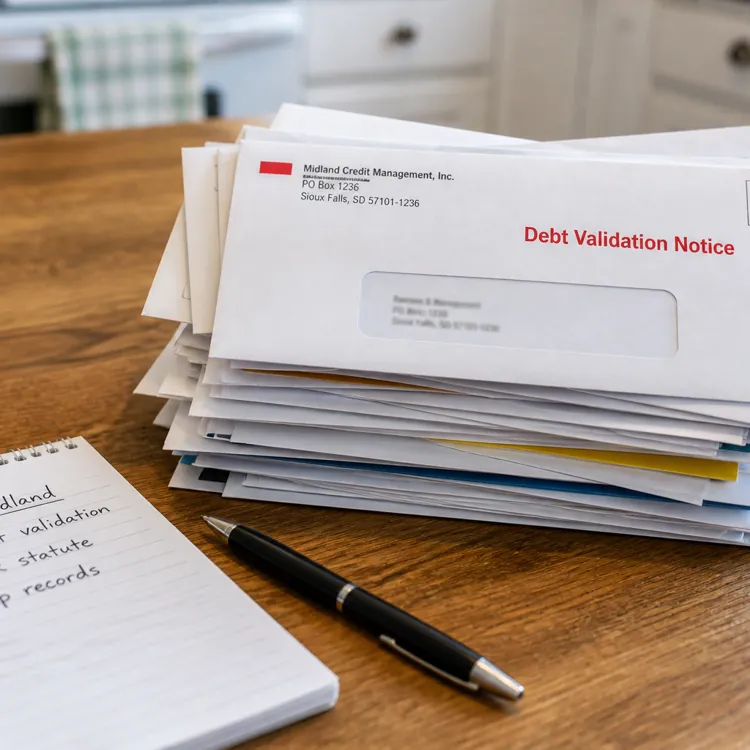
A collector generally must provide required validation information in its initial communication or within five days. If something looks wrong, dispute the debt in writing and request verification.
» FIND OUT: What should a debt validation letter include?
2. Verify the company name, address and license
You’ll also want to get the collector’s legal business name, mailing address and phone number. You can use your state regulator’s licensing database to check if the company is licensed (provided that your state requires collection agencies to be licensed).
3. Confirm the debt with the original creditor
Contact the original creditor and ask if your account was sold or assigned for collection. Confirm that it authorized the named agency to collect your debt.
4. Check your credit reports
Check your credit reports for an account that matches the creditor, balance and other details.
5. Check regulator records and complaints
Search your state regulator’s database to confirm the collector is registered. Check consumer protection resources for complaints against the collector.
6. Review documentation before paying
Don’t rely only on a phone call, text or email. Make sure the collector’s written validation information matches the creditor’s name, debt amount and account details you verified before sharing sensitive financial information.
Debt collector scam red flags
Debt collection scams rely on fear and urgency to pressure you into paying before you can verify the debt. Many of their tactics are actually illegal. Legitimate collectors must follow federal rules, and there are clear limits on what debt collectors can and can’t do.
Watch out for these common debt collector scam red flags:
- Threats of arrest or criminal charges: A collector can’t threaten to arrest you just because you fail to pay a consumer debt.
- Threats involving immigration authorities: Using deportation or your immigration status to threaten you is another big red flag.
- Threats to disclose your debt at work: Debt collectors generally can’t tell your employer or coworkers about your debt, though an employer may receive notice of a lawful wage garnishment.
- Demands for immediate payment: You also want to watch out for debt collectors who say you must pay immediately or won't give you time to verify the debt.
- Unusual payment methods: Be suspicious if a collector insists that you pay with gift cards, cryptocurrency, a wire transfer, a prepaid card or a peer-to-peer payment app such as Cash App or Venmo.
- Requests for sensitive information: Be cautious if a supposed collector asks you to give them your full Social Security number, date of birth or other information, since they should already have it.
- Refusal to provide written details: A collector who refuses to provide information about the debt or verifiable company contact details may not be legit.
- Abusive or harassing behavior: Profanity, harassment and threats of violence are prohibited.
- Refusal to identify themselves: Unexpected texts, social media messages or calls from someone who won't clearly identify themselves or their company are also red flags.
What to do if it seems fake
Here’s what you can do if you think a debt collector is fake and might be scamming you.
Stop sharing personal or banking info
If you’re feeling suspicious, stop all contact with the debt collector immediately. Never confirm your Social Security number, account details or date of birth — and don’t make any payments.
Dispute the debt and request validation
If you don’t recognize the debt, send a dispute letter to the debt collector within 30 days. In this letter, you’ll request proof that you owe the debt and ask for the debt collector’s license number.
Document calls, texts, emails and letters
- Stop communicating: Refuse any calls or messages until you receive written validation.
- Log interaction details: Record call times, dates, phone numbers and caller names.
- Save correspondence: Keep records of all text messages, emails, voicemails and written letters.
- Note violations: Document illegal threats of arrest, profane language or inappropriate contact hours.
- Alert law enforcement: File a police report if callers threaten violence or impersonate police officers.
File a report
If a debt collector’s behavior seems suspicious, deceptive or abusive, report it to the appropriate federal and state agencies. Complaints can help regulators identify patterns of misconduct and take enforcement action.
You can file complaints with the Federal Trade Commission (FTC), Consumer Financial Protection Bureau (CFPB) and your state attorney general’s office.
Where to report a suspicious debt collector
Consider a credit freeze or fraud alert
Place a security freeze or fraud alert with Equifax, Experian and TransUnion to block unauthorized new accounts. Check your free reports at AnnualCreditReport.com for fraudulent entries. If harassment continues, consult a consumer protection attorney specializing in FDCPA violations.
Know your rights under the FDCPA
You have rights as a consumer under the FDCPA. Before making a payment, make sure you understand your full legal protections.
What collectors must disclose
Under the FDCPA, debt collectors are required to provide complete transparency during initial contact. Within five days of first communicating with you, a collector must send a written validation notice detailing:
- The exact amount of the debt, including any fees or interest.
- The debt collector’s name and mailing address (and typically, the name of the original creditor to whom the debt is owed).
- Explicit notice that you have a 30-day window to dispute the validity of the debt.
During every interaction, collectors must also identify themselves and state that they’re attempting to collect a debt.
Limits on threats, harassment and contact
Federal law strictly limits how, when and where debt collectors can reach you to prevent abusive practices:
- Time restrictions: Collectors can only call between 8:00 AM and 9:00 PM in your local time zone.
- Workplace contact: Debt collectors can’t call your place of employment if you’ve already told them (or your employer mandates) that you can’t receive personal calls at work.
- Prohibited harassment: Collectors also can’t use obscene language, threaten arrest, publish lists of consumers who refuse to pay or repeatedly call you to annoy you.
- False statements: It’s also illegal for collectors to misrepresent the debt balance, falsely claim to be attorneys or law enforcement agents or threaten legal action they can’t legally take.
Knowing what debt collectors can do versus what debt collectors cannot do helps you identify statutory violations immediately. You can also read the CFPB’s rules on debt collection communications to learn more about your rights.
How to request no further contact
If you don’t want a debt collector to contact you anymore, write a letter telling them exactly that. The CFPB has sample letters to debt collectors that you can use.
If the collector still contacts you after you’ve sent them a written notice to stop, they’re likely violating the FDCPA. In this case, you can sue the debt collector for violating the FDCPA within one year of the violation to recover statutory damages up to $1,000, actual damages (such as emotional distress or lost wages) and attorney fees.
» NEED HELP? Top-ranked debt relief companies
FAQ
Why are debt collectors calling me when I have no debt?
If debt collectors are calling you when you have no debt, they may have the wrong person or outdated information. It could also mean someone might have used your identity. Make sure to ask the collector for written information about the debt and don’t provide sensitive financial or personal information until you verify who they are.
What should I do if a debt collector threatens to arrest me?
If a debt collector threatens you with arrest, document the calls and messages and consider reporting the collector to the CFPB, FTC or your state attorney general’s office. Threatening arrest for a debt is illegal under the FDCPA.
Can debt collectors contact me on social media?
Yes, in some circumstances, they can. Under federal rules, a collector may use social media to contact you, but all messages about your debt have to be private. They must also give you a way to opt out of receiving further communications from them on that social media platform.
How long does a debt collector have to validate a debt?
Debt collectors must send you a written validation notice within five days of their initial communication with you.
Article sources
ConsumerAffairs writers primarily rely on government data, industry experts and original research from other reputable publications to inform their work. Specific sources for this article include:
- California Department of Financial Protection and Innovation, “Beware of Fake Debt Collectors.” Accessed Aug. 8, 2026.
- Kazerouni Law Group, APC, “What Damages Can I Collect for an FDCPA Violation?” Accessed Aug. 8, 2026.