


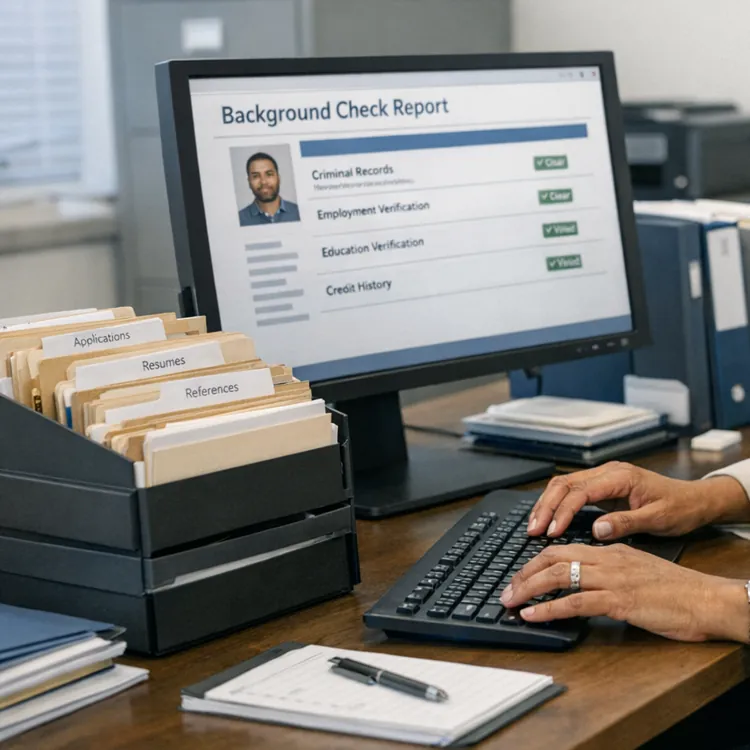
How does employment identity theft occur?
Employment identity theft happens when someone illegally gains access to your personally identifiable information and uses it to apply for a job or collect wages. In 2023, there were 31,207 cases of employment identity theft or wage-related fraud reported to the Federal Trade Commission.
The most common methods used to steal your data include:
- Phishing scams and data breaches: Many thieves get your data through large-scale breaches or phishing emails that look like legitimate bank or government correspondence.
- Document theft: Thieves can also find your SSN and other sensitive information by scavenging through stolen mail or discarded tax documents.
- Fraudulent job applications: Some scammers post fake job listings to trick applicants into providing their SSN and bank details as part of a hiring process.
Thieves often target people who are less likely to monitor their Social Security records regularly. This includes children, senior citizens or individuals who aren’t currently in the workforce. Once they have your information, they can apply for positions in industries ranging from construction to hospitality, all while you remain unaware.
Signs of employment identity theft
Employment identity theft can be difficult to detect since the signs are subtle and you won’t see money coming out of your bank account. That said, if any of the following happens to you, consider it a red flag.
Unexpected IRS notices or tax forms
The most common warning sign is receiving a Form W-2 or 1099 from an employer you never worked for. You might also receive a notice from the IRS (such as Letter CP2000) stating that you didn't report all your income. This happens because the IRS receives an earnings report from the thief’s employer that doesn't match your tax return.
Discrepancies in earnings
Another sign to watch out for is your reported earnings being higher than what you actually made. That means someone else is contributing to your record.
Unfamiliar employers on credit reports
Though employment history isn't the primary focus of a credit report, some reports list "known employers" based on credit applications. If your credit report lists an employer (or employers) you haven't worked for, that could be a sign you’ve fallen victim to employment identity theft.
Soft inquiries
You’ll also want to watch out for random soft inquiries that show up on your credit report. These could come from employers running background checks for someone using your identity to apply for work.
» MORE: How to check for identity theft
How to protect yourself against employment identity theft
Though you can’t control every data breach, you can make yourself a more difficult target. Secure your digital footprint and add layers of friction to discourage thieves from accessing your sensitive information.
- Use strong passwords and two-factor authentication: The most straightforward way to protect yourself against employment identity theft is to use strong passwords and enable two-factor authentication on all your sensitive accounts.
- Avoid public Wi-Fi for sensitive transactions: Never log into your bank or government portals on open Wi-Fi networks. If you must, use a VPN to protect your identity.
- Regularly monitor credit reports: Get free copies of your credit reports from the annualcreditreport.com and check them regularly for unauthorized accounts or unfamiliar employer names.
- Consider identity theft monitoring: Identity monitoring services can alert you to personal data leaks that could be used to commit employment identity theft and other types of identity fraud.
How employers can prevent employment identity theft
Companies also have a responsibility to protect and verify the data it collects. If not, it could increase the chances of hiring unqualified job candidates based on fraudulent credentials.
Here’s what employers can do to protect against employment identity theft.
Implementing data security policies
Besides making sure all Social Security numbers and payroll data are encrypted and stored on secure servers, companies should also restrict access to this information. Only HR and payroll personnel who absolutely need the data to perform their jobs should have access to employee files.
Conducting background checks
Thorough background checks and the use of the E-Verify system can catch many instances of employment fraud. E-Verify compares information from an employee's Form I-9 to records available to the U.S. Department of Homeland Security and the Social Security Administration.
Offering identity theft protection services
Many companies now offer identity theft protection as an employee benefit. When an employer provides these tools, it reduces the risk of an internal data breach caused by employee negligence.
What to do if you’re a victim of employment identity theft
If you realize that someone is using your identity for work, follow these steps to limit the damage and protect yourself from future tax liabilities and potential debt collection.
Reporting to the FTC and IRS
Your first stop should be the Federal Trade Commission (FTC). They have an official reporting portal, IdentityTheft.gov. This site helps you create an identity theft report, which is a legal document you can use to dispute fraudulent activity. You should also file Form 14039, the identity theft affidavit, with the IRS to alert it to the situation.
Placing fraud alerts on credit reports
Contact one of the three major credit bureaus (Equifax, Experian or TransUnion) to place a free fraud alert or freeze your credit on your credit file. Once you notify one bureau, it must notify the other two. This makes it harder for a thief to open new accounts in your name while you are resolving the employment issue.
Contacting involved employers
Reach out to the HR department of the company where the fraud is occurring. Inform it that someone is using your SSN fraudulently and request that it close the records associated with your identity. Make sure to also provide a copy of your FTC Identity Theft Report to prove your claim.
Check your credit reports
You may also want to check your credit reports for signs of non-employment identity theft and incorrect employer information. Though employer listings on your credit report won’t necessarily affect your credit score, it could cause confusion if a prospective employer sees inconsistencies in your work history.
» FIND OUT: How to report identity theft
FAQ
What is an example of employment identity theft?
An example of employment identity theft is when someone uses your Social Security number to pass an E-Verify check and get hired at a firm.
How do I know if someone used my SSN for employment?
You can tell if someone used your SSN for employment by checking your annual Social Security statement at ssa.gov/myaccount for unfamiliar employers. If you receive tax forms like a W-2 from a company you never worked for, that’s also a sign someone is using your SSN for employment.
What are the consequences of employment identity theft?
The consequences of falling victim to employment identity theft include being held liable for taxes on income you never received, losing eligibility for government benefits, damaged credit scores and legal complications.
How can I check if my identity has been stolen for employment purposes?
To check if your identity has been stolen for employment purposes, log in to your “my Social Security” account on the Social Security Administration website. Review your earnings record for unfamiliar employers or work history. You should also keep an eye on your mail for any correspondence from the IRS regarding income discrepancies.
Article sources
ConsumerAffairs writers primarily rely on government data, industry experts and original research from other reputable publications to inform their work. Specific sources for this article include:
- Federal Trade Commission, “Consumer Sentinel Network Data Book 2023.” Accessed Jan. 27, 2026.