

Key insights
You’ll need your car’s VIN and mileage to check your car’s factory warranty coverage.
Jump to insightYou use a VIN lookup tool for free or buy a more comprehensive vehicle history report.
Jump to insightMost manufacturers offer at least a 3-year/36,000-mile bumper-to-bumper warranty and a 5-year/60,000-mile powertrain warranty.
Jump to insightHow to check if your car is still under factory warranty
You can check if your car is still under its factory warranty by looking it up on the manufacturer’s website, contacting the dealership where you bought your car or by referencing your original purchase paperwork.
To see how much time is left on the manufacturer’s warranty, follow these easy steps:
1. Find the VIN
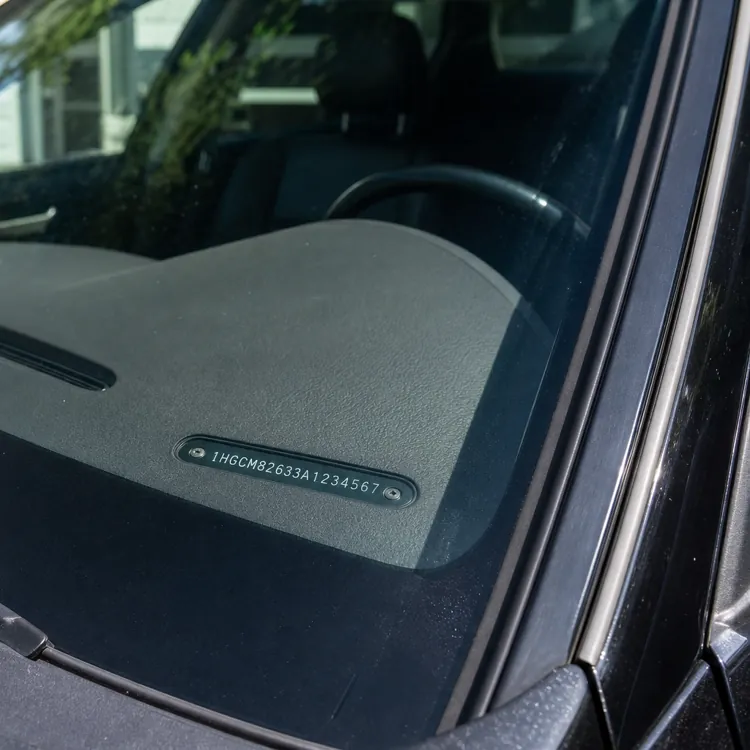
Before you can look up your car’s warranty, you’ll need to locate the VIN. A VIN is composed of 17 characters, with both numbers and capital letters, and it includes the vehicle's serial number and other identifying information.
The VIN can usually be found in several places:
A VIN has 17 characters, including both numbers and capital letters.
On the driver’s side of the dashboard (look through the windshield)
Inside the driver’s side door jamb
In the engine compartment, near the front
On the underside of the hood
Inside the rear wheel well
If you’re having trouble finding the VIN, you can also get it from your car registration, title or insurance paperwork. Some car models may also stamp it on the front frame near the engine.
2. Get the current mileage
Car warranties last for a specified mileage and number of years. To determine if the warranty is still valid, you’ll need to know the current mileage. You can find your car’s current mileage on the instrument cluster behind the steering wheel. Write down the mileage as displayed on your car’s odometer.
Can you look up a car warranty by model year?
Unfortunately, you can’t tell a car’s warranty strictly by the model year since many models are released for sale before the year they’re labeled with. For example, a 2021 model might’ve been purchased in 2020, or it might have sat on the lot until 2022. What matters is when the vehicle was first sold — that’s when the warranty begins.
3. Look up the warranty
Once you have the VIN and mileage, you can look up the warranty by:
Contacting the dealership directly: You can call or email a dealership to see if your car’s warranty is still valid.
Using an online VIN lookup system: Most dealerships provide an online portal to look up service dates, recalls and warranty information. If the dealer doesn’t have one, you can find it on the manufacturer’s website.
Checking purchase paperwork: If you still have the paperwork from when the car was purchased, you can figure out how much time is left on the warranty.
Reading the owner’s manual: There may be warranty information in your owner’s manual. If you don’t have an owner’s manual, you can get one online or through a local dealership.
» RELATED: What is a dealership warranty?
Free vs. paid VIN lookup tools: What’s the difference?
You can use a free or paid VIN lookup tool to learn more information about your vehicle, including your car’s remaining warranty coverage (both year and mileage limits), recalls and more.
Note that the information on VIN lookup tools may vary depending on the manufacturer and whether the vehicle has registered service records. Always verify the details with the manufacturer or your dealership to ensure accuracy.
Free VIN report tools
Free VIN report tools typically provide basic information related to a vehicle’s make, model and year. They also may offer recall information, basic factory warranty information or vehicle specifications.
Most auto manufacturers allow you to look up your warranty coverage for free with your VIN, though you may need to create an online account first. Besides auto manufacturers, you can get a free VIN report from sites like J.D. Power or Edmunds.
Note that some free VIN tools won’t reveal warranty status. For example, the National Highway Traffic Safety Administration's (NHTSA) recall tool will only reveal if a specific vehicle needs repairs related to a safety recall. And its VIN decoder tool only shows basic details like a vehicle’s manufacturer, model, year, class and select specifications.
Which VIN lookup tool should you use?
Use a free VIN lookup tool to check your factory warranty status or for any recalls. If you’re buying a used car, request a paid VIN report from the dealer for a more detailed vehicle history.
Paid VIN report tools
Paid VIN report tools provide more detailed vehicle history, including ownership, service and accident history. They’ll also typically provide more detailed warranty information, including the types of factory warranties included with the vehicle, whether any factory warranties are still active and whether there’s a certified pre-owned (CPO) warranty.
For example, services like Carfax and AutoCheck offer VIN reports for around $30 to $50 per report. You can purchase a single Carfax report for $49.99, two reports for $69.99 or four reports for $119.99 as of publishing. In comparison, AutoCheck provides a single report for $29.99 or five reports for 21 days for $59.99.
How free vs. paid VIN tools compare
When you use a free VIN lookup tool, you’ll generally get basic vehicle information, similar to what’s published about a vehicle on an auto manufacturer’s website. Paid VIN lookup tools focus more on vehicle history, including accident, service and ownership history.
Here’s how free VIN tools from J.D. Power and Edmunds compare to paid VIN tools from AutoCheck and Carfax:
| J.D. Power | Edmunds | AutoCheck | Carfax | |
|---|---|---|---|---|
| Cost | $0 | $0 | $29.99 to $59.99 | $49.99 to $119.99 |
| Year, make, model and trim level | ||||
| Factory warranty type (basic, powertrain or corrosion) | ||||
| Factory warranty status (active or expired) | ||||
| CPO warranty (if applicable) | ||||
| Vehicle cost when new | ||||
| Vehicle specifications (engine type, horsepower, fuel type, transmission and drivetrain) | ||||
| Known accident history | ||||
| Ownership history | ||||
| Service record history | ||||
| Last reported mileage | ||||
| Vehicle use (personal, rental or commercial) | ||||
| Roadside assistance benefits (active or expired) |
What does a car warranty cover?
What your car warranty covers depends on the type of warranty you have. At the least, new cars generally come with bumper-to-bumper coverage and powertrain coverage.
Here are some common types of car warranties and what they cover:
- Bumper-to-bumper: Covers most vehicle parts and systems
- Powertrain: Covers the engine, transmission, drive systems, drive shaft and transaxle
- Rust and corrosion: Covers rust-through on body panels and sometimes surface corrosion caused by a defect
- Battery: Hybrid and electric vehicles (EVs) have a separate warranty for their batteries
Factory warranties by manufacturer
You can find factory warranty information from any automaker by looking at its website. The site should plainly show what kind of protection you’re getting when you buy a vehicle.
The table below shows some popular auto manufacturers and their typical new car warranties.
| Manufacturer | Bumper-to-bumper warranty | Powertrain warranty |
|---|---|---|
| BMW | 4 years/50,000 miles | 4 years/50,000 miles |
| Chevrolet | 3 years/36,000 miles | 5 years/60,000 miles |
| Ford | 3 years/36,000 miles | 5 years/60,000 miles |
| Honda | 3 years/36,000 miles | 5 years/60,000 miles |
| Hyundai | 5 years/60,000 miles | 10 years/100,000 miles |
| Kia | 5 years/60,000 miles | 10 years/100,000 miles |
| Lexus | 4 years/50,000 miles | 6 years/70,000 miles |
| Mazda | 3 years/36,000 miles | 5 years/60,000 miles |
| Mercedes-Benz | 4 years/50,000 miles | 4 years/50,000 miles |
| Nissan | 3 years/36,000 miles | 5 years/60,000 miles |
| Subaru | 3 years/36,000 miles | 5 years/60,000 miles |
| Toyota | 3 years/36,000 miles | 5 years/60,000 miles |
Can you void a car warranty?
You can void a car warranty if you don’t follow the manufacturer's rules. This generally includes:
- Neglect: If you don't take your car in for regular maintenance, the warranty may be voided. The automaker isn't going to pay for a new engine if you haven’t been changing the oil.
- Misuse: This includes racing or going off-road in vehicles that aren’t designed for off-road ventures.
- Salvage title: If the vehicle was totaled in an accident, you won’t get warranty protection.
- Aftermarket modifications: Adding non-factory parts won’t automatically void your warranty, but coverage can be denied if the dealer can prove the modification has caused the problem.
- Odometer tampering: You can’t mess with the odometer in hopes of getting more warranty coverage.
It’s important to read through the warranty paperwork to familiarize yourself with all the rules for keeping your car under warranty.
Should you get an extended warranty?
If you look up your manufacturer’s warranty and it’s already expired, you may be able to purchase an extended warranty from the manufacturer or a third party. These warranties can help cover expensive repairs after your original warranty expires.
An extended warranty can provide peace of mind after a factory warranty expires.
Extended warranties are often offered at the time of purchase, but you can also buy one later from some manufacturers or else from a third-party extended warranty provider. They usually come in various levels of coverage, from basic powertrain protection to more comprehensive bumper-to-bumper plans.
To help you decide if an extended warranty is right for you, compare the cost of a warranty against what you believe you’d pay for repairs without one. Be sure to read the fine print so you know what’s covered, what’s excluded and how to file a claim if something goes wrong.
FAQ
Will a VIN check show if the warranty was voided?
A VIN check typically won’t show if the warranty was voided due to accidents, misuse or aftermarket modifications. For this information, you should contact the manufacturer or your dealership directly, as they maintain records of any warranty disputes or voided claims.
Can you check extended warranty coverage with a VIN?
You generally can’t check extended warranty coverage with a VIN lookup tool since most VIN lookup tools, whether free or paid, only show original factory warranties or CPO warranties. To check extended warranty coverage, you’ll generally need to contact the dealership where you bought the car or the manufacturer to check if there’s any known coverage. If you think you purchased an extended warranty with a third-party provider, you can contact them directly to confirm coverage.
How do I check warranty status on a used car by VIN?
You can check the warranty status on a used car by using a free or paid VIN lookup tool online or by requesting a VIN-based warranty check from the dealer or manufacturer before you buy a used vehicle.
Article sources
ConsumerAffairs writers primarily rely on government data, industry experts and original research from other reputable publications to inform their work. Specific sources for this article include:
Federal Trade Commission, “Magnuson Moss Warranty-Federal Trade Commission Improvements Act.” Accessed Sept. 17, 2026.
National Highway Traffic Safety Administration, “Check for Recalls.” Accessed Sept. 17, 2026.