1. Skip to navigation
  2. Skip to content
  3. Skip to sidebar

Consumer Affairs

Fairness of Class Action Waiver is for Judge to Decide, Court Says

Third Circuit goes on to hold Chase waiver enforceable


By Jon Hood
ConsumerAffairs.com

May 13, 2010
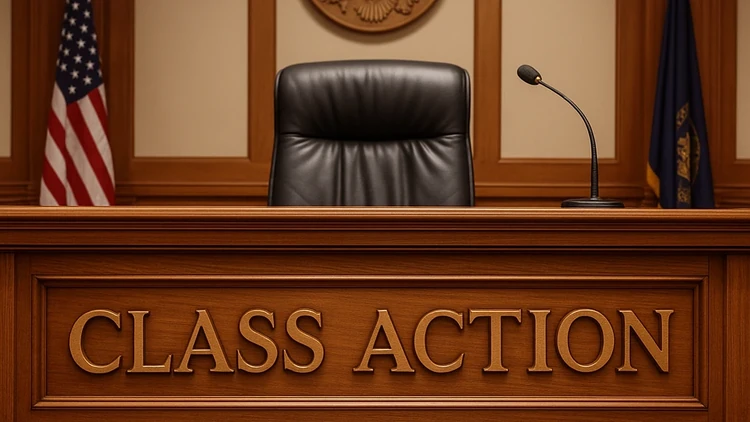
The U.S. Court of Appeals for the Third Circuit issued an important arbitration-related ruling on Monday, holding that the decision whether class action waivers are enforceable is one for judges, not arbitrators, to make.

The ruling came in the case of Puleo v. Chase Bank, brought by a Pennsylvania couple who claimed that Chase retroactively raised interest rates on their credit card accounts, causing them to rack up hundreds of dollars in finance charges. The Puleos' cardholder agreement expressly prohibited class actions, regardless of whether they were brought in court or in an arbitration forum, and barred consumers from participating in other class lawsuits, including private attorney general action[s].

The Puleos brought suit -- appropriately, on behalf of a class -- arguing that the waiver was unconscionable. They further contended that it was up to an arbitrator to decide whether the waiver was enforceable, while Chase said it was a decision for the court.

The court agreed with Chase, and with the U.S. District Court, from which the case was on appeal, that an unconscionability challenge to the provisions of an arbitration agreement is a question of arbitrability that is presumptively for the court, not the arbitrator, to decide.

The court made a distinction between claims involving arbitrability -- whether a certain claim is suitable for arbitration -- with disputes over arbitration procedure, which do not bear upon the validity of an agreement to arbitrate. Questions arising in the latter situation are for a judge to decide, as are questions about contract interpretation and defenses to arbitration, such as a claim that one of the parties waived the arbitration requirement.

The court called the Puelos' position self-contradictory, noting that, under the rules of the American Arbitration Association, the court would have to order an arbitrator to rule on the enforceability of the class action waiver.

We decline to indulge the Puleos' desire to have it both ways -- i.e., to have the District Court compel the parties to arbitrate class claims without first addressing the validity of the class action waiver, the court wrote.

Unfortunately for the Puleos, the court went on to hold that the waiver was not unconscionable, and that, as a result, they wouldn't be allowed to bring a class action. Although the court said that the claims could be arbitrated individually, the Pueblos may decide that such hearings aren't worth the time given the relatively small amount of money involved.

The ruling is the latest twist in the unpredictable maze of arbitration-related law. How long the result will stand depends in part on the outcome of Jackson v. Rent-a-Center, a case involving essentially the same issue that was argued before the Supreme Court last month.

Notably -- and somewhat amazingly -- Chase never denied that it raised the Puelos' interest rates retroactively. Rather, the financial giant said that the increases were legally valid at the time, and that they were consistent with the Puleos' cardholder agreements.

Quantcast