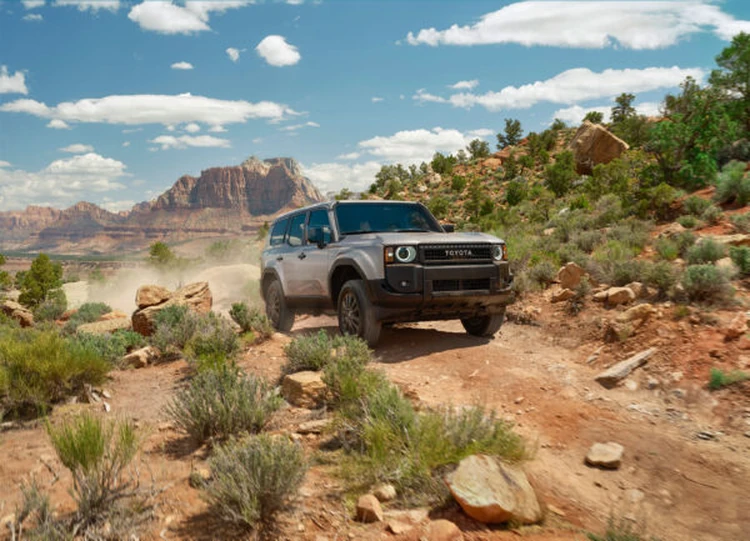
Here’s some good news for off-road enthusiasts who have missed the Land Cruiser since Toyota retired the brand three years ago – it’s back.
Toyota has announced the Land Cruiser will return for the 2024 model year with a significant design refresh. The new version will be slightly smaller than the 2021 model, the last before the model disappeared from the North American market.
The reborn Land Cruiser will also be slightly less expensive. The previous version had a starting price of around $80,000. The price of the 2024 model will start at around $55,000. The first deliveries should arrive in the spring of 2024.
“Since its introduction in the U.S. market in 1958, the Land Cruiser evolved over the years from the legendary two-door models like the 40 Series with its fold-down front windshield, white roof, and rear jump seats to the capable yet fully loaded 200 Series, which was the last generation to be sold in the States and combined Land Cruiser’s unbreakable strength with premium luxury features,” the company said in a press release announcing the Land Cruiser’s return.
The company says Land Cruiser will stay true to its heritage, returning as a “high-quality off-roader at a more accessible price point.”
Good reviews
Before it disappeared from the marketplace, the Land Cruiser was popular with ConsumerAffairs reviewers. It earned an overall 4.1 out of 5-star rating, with 80% of reviewers giving the vehicle either a 4 or 5-star review.
Toyota says the new Land Cruiser will be available with the range-topping i-FORCE MAX hybrid powertrain producing 326 horsepower and 465 lb.-ft. of torque. Toyota is only producing 5,000 units for the first two months of production and will be offered in a First Edition grade that includes two new two-tone paint colors and additional off-road equipment.
“This icon belongs in our lineup,” said Toyota Group Vice President and General Manager Dave Christ. “For 2024, Land Cruiser returns to its origin with a heritage-inspired design paired with the legendary capability and durability Land Cruiser is known for, and it will take even more customers on adventures across the globe as it has done for generations.”