1. Skip to navigation
  2. Skip to content
  3. Skip to sidebar

Consumer Affairs

Kroger Expands Ground Beef Recall

Recall extends beyond Michigan, Ohio stores


Kroger Co. has increased the amount of ground beef included in its voluntary recall of products linked to an E. coli outbreak in Michigan and Ohio. The company acted after the U.S. Department of Agriculture identified Nebraska Beef, in Omaha, as the source of the tainted beef.

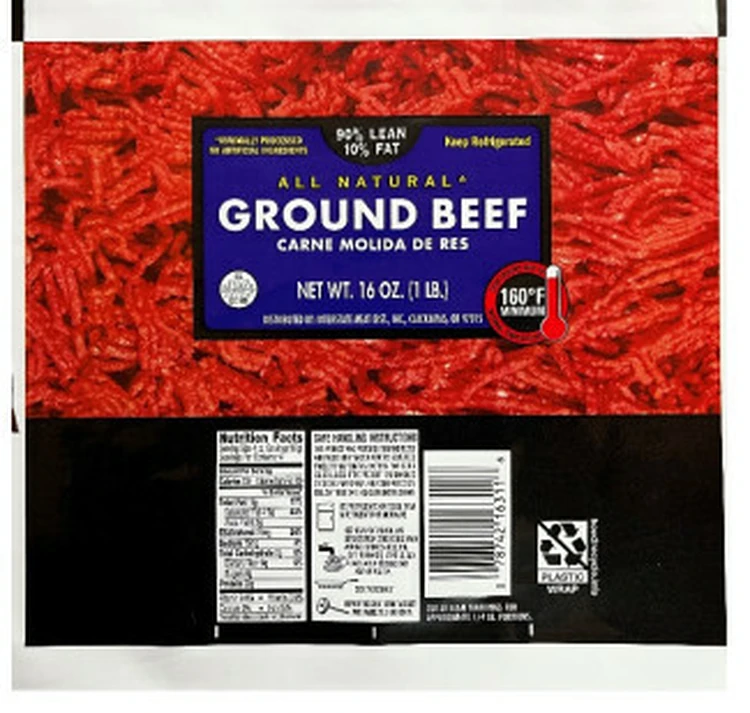
Kroger said it is also recalling ground beef sold in Styrofoam trays with "sell by" dates up to July 5, at its Kroger, QFC, Fred Meyer, Fry's, Ralphs, Smith's, Baker's, King Soopers and City Market outlets in a number of states, beyond those in Ohio and Michigan.

Kroger stores in Georgia, South Carolina, Alabama and Knoxville, Tenn., are not included in the recall.

The recall was expanded after USDA's Food Safety and Inspection Service announced that Nebraska Beef, Ltd.is recalling approximately 531,707 pounds of ground beef components that may be contaminated with E. coli O157:H7. The following products subject to recall include:

• Combo bins of "Coleman 75/25 Trim." The shipping containers bear the case code "38097," and were produced on June 17. These products were sent to an establishment in Colorado for further processing.

• Combo Bins of "Coleman Plate Navel Combo." The shipping containers bear the case code "38044," and were produced on June 17 and 24. These products were sent to an establishment in Texas for further processing.

• 60-pound boxes of "Nebraska Beef, Beef Chuck." The boxes bear the case code "10260," and were produced on May 19. These products were distributed to wholesalers in Illinois, Michigan, New York and Pennsylvania.

• 60-pound boxes of "Nebraska Beef, Beef Chuck." The boxes bear the case code "10263," and were produced on May 19. These products were distributed to wholesalers in New York.

• 60-pound boxes of "Nebraska Beef, Beef Knuckle." The boxes bear the case code "46140," and were produced on June 9. These products were distributed to wholesalers in Illinois and New York.

• 60-pound boxes of "Nebraska Beef, Beef Clod." The boxes bear the case code "13060," and were produced on June 9. These products were distributed to wholesalers in Illinois.

The shipping containers and product labels bear the establishment number "EST. 19336" inside the USDA mark of inspection, however these products were further processed into ground beef and will likely not bear the establishment number "EST. 19336" on products available for direct consumer purchase.

The additional following products subject to recall were sent to establishments in Nebraska for further processing and will likely not bear the establishment number "EST. 19336" on products then made available for direct consumer purchase include:

• Combo bins of "Coleman 85/15 Chuck." The shipping containers bear the case code "63503," and were produced on June 17 and June 24.

• Combo bins of "Coleman 85/15 Shank." The shipping containers bear the case code "26442," and were produced on June 17.

• Combo bins of "Coleman 80/20 Beef Trim." The shipping containers bear the case code "39521," and were produced on June 17.

• Combo bins of "Coleman 91/9 Trim." The shipping containers bear the case code "54674," and were produced on June 17 and June 24.

• Combo bins of "Coleman 85/15 Shank Combo." The shipping containers bear the case code "2644211," and were produced on June 24.

• Combo bins of "Nebraska Beef Front Shank." The shipping containers bear the case code "67200," and were produced on May 16, June 9, June 17 and June 24.

• Combo bins of "Nebraska Beef Hind Shank." The shipping containers bear the case code "67100," and were produced on May 16, June 17 and June 24.

• Combo bins of "Nebraska Beef Rose Meat." The shipping containers bear the case code "58860," and were produced on May 16 and June 24.

• Combo bins of "Nebraska Beef Heel Meat." The shipping containers bear the case code "66800," and were produced on June 24.

• Combo bins of "Nebraska Beef Loin Trimmings." The shipping containers bear the case code "66900," and were produced on June 24.

• Combo bins of "Nebraska Beef Chuck Trim Neck." The shipping containers bear the case code "67300," and were produced on June 24.

• Combo bins of "Nebraska Beef Chuck Trim 70%." The shipping containers bear the case code "67400," and were produced on June 24.

• Combo bins of "Nebraska Beef, Special Trim." The boxes bear the case code "56060," and were produced on May 16.

The agency said the problem was discovered through traceback investigations and ground beef samples collected from two federally inspected establishments positive for E. coli O157:H7, as well as multiple samples of Kroger brand ground beef positive for E. coli O157:H7, with matching pulsed-field gel electrophoresis (PFGE) patterns.

FSIS said it is continuing its investigation into any products that may be contaminated with E. coli O157:H7 or that are associated with illnesses and will take appropriate action when necessary.

Kroger brand ground beef samples were collected by the Michigan and Ohio Departments of Agriculture and Health from patients in Michigan and Ohio. Nebraska Beef, Ltd., was identified as a common supplier to those stores in addition to two federally inspected establishments where FSIS obtained a positive ground beef sample that was matched to the outbreak strain identified in Michigan and Ohio.

E. coli

E. coli 0157:H7 is an especially toxic strain that can cause severe illness, and on occasion, even death. Symptoms can include stomach cramps, diarrhea and vomiting. Most people get better within 15 days, but some cases can lead to kidney failure.

The CDC estimates that there could be about 70,000 infections with E. coli O157:H7 each year in the U.S., but no one knows for use because many of those who get sick don't see a doctor.

The last major E. coli-related beef recall came last October, when Cargill, one of the largest U.S. food producers, recalled 840,000 pounds of ground beef. The previous month Topps Meat Company recalled 22 million pounds of frozen beef patties, forcing the company into bankruptcy.


Quantcast