CONSUMER NEWS    RECALLS    COMPLAINT FORM    SCAM ALERTS  


Complain about a product or service

Small Claims Guide | Class Actions | Lemon Law | FAQ | Resources | Newsletters | Spanish
Automotive    Education    Electronics    Family    Finance    Health    Homeowners    Shopping    Travel   
NEWS   Latest |  Archives |  Auto |  Cells, etc. |  Computers |  Financial |  Health |  Homeowners |  Parents |  Privacy |  Scams |  Seniors |  Travel

Blogger, Journalist, Citizen: Which is Which?

Ailing Traditional Media Resist the Encroaching Hordes


By Martin H. Bosworth
ConsumerAffairs.com

June 4, 2007 
As traditional media outlets struggle with dwindling readership and slash their newsroom staffs to meet profit goals, the strength of the Internet as a source for news increases daily.

Not only have collaborative tools like blogs given ordinary people the ability to spread opinions and information, but they've birthed full-fledged online news sources that perform all the functions of a traditional newspaper or broadcast outlet -- and sometimes do it better.

Freelance reporter Josh Marshall created a stable of news reporters and bloggers under the "Talking Points Memo" (TPM) umbrella, and was instrumental in breaking open the scandal surrounding the purge of U.S. attorneys for political reasons.

"Alternative" news site The Raw Story regularly breaks controversial and sensational stories before its larger, more famous rivals can react. Movie producer Jane Hamsher developed her blog, Firedoglake, into a media powerhouse that was pivotal in covering the trial of former White House aide Lewis "Scooter" Libby for perjury.

And our own ConsumerAffairs.com has been at the forefront of issues that affect millions of readers, such as the nomination and eventual withdrawal of Michael Baroody as head of the CPSC, the pet food recalls, and the battle for net neutrality.

This sort of hard-nosed journalism gets results -- and often comes with a backlash. ConsumerAffairs.com reporter Joseph Enoch was ejected from the Senate press gallery on what editor in chief James R. Hood called "the flimsiest of motives, carried out by a kangaroo court worthy of Joe McCarthy."

The Standing Committee of Journalists -- from such scrappy upstart organizations as AP, the New York Times and Congressional Daily -- take exception to ConsumerAffairs.com's practice of letting class-action attorneys review the tens of thousands of consumer complaints submitted to the Web site each year.

"It's a good thing these people have editors back at the office because they apparently can't read," said Hood, a former AP executive. "They seem innocent of both the Constitution and their own stated guidelines."

Recently, bloggers were barred from recording or videotaping a debate between candidates for a Virginia district supervisor's office, even though the race involved candidates for public office and was open to members of the "legitimate" press, including The Washington Post.

So what makes the difference between a blogger, a journalist (online or otherwise), and an ordinary citizen? Is it credentials? Experience? Is there still a distinction in the Internet age?

An Opinion, A Modem, A Bathrobe

1st Amendment
Craiglist Bites Back, Answers Connecticut AG
Connecticut Wants Craiglist to Pull Prostitution Ads
Craiglist Cleared in Biased-Postings Suit
Ionic Breeze Suit Drives Sharper Image into Bankruptcy
Video Professor Drops Subpoena, Goes After Wikipedia Users
Court Ruling Protects Anonymous Bloggers
AT&T Changes Terms Of Service After Outcry
AT&T Stiffens Language Covering Objectionable Content
Blogger, Journalist, Citizen: Which is Which?
Consumers Revolt Against High-Priced Media
Senate Press Gallery Ejects Consumer Journalist
Report Calls for More 'Transparency' in Congress
Builders, Contractors Hammer Consumer Sites
New York Upholds Consumers' Right to Criticize
Judge Lifts Injunction Against Video Game
Florida Dentists Drop Efforts to Silence Critical Web Site
EFF Files Suit to Protect Journalist From Drug Company Intimidation
Sharper Image Loses First Amendment Case Against Consumers Union
Life Alert Drops 2 of 3 Claims Against ConsumerAffairs.com

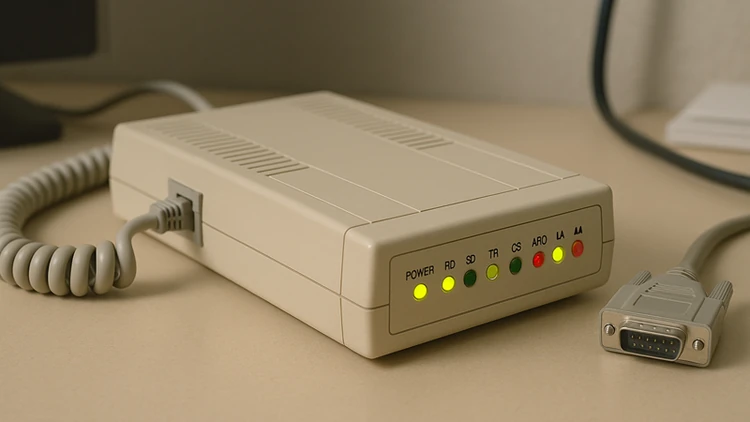
NBC Nightly News anchor Brian Williams recently characterized the news delivery potential of the blogosphere and online news as "people who have an opinion, a modem, and a bathrobe." Addressing New York University journalism students, Williams lamented the increasing competition.

"All of my life, developing credentials to cover my field of work, and now I'm up against a guy named Vinny in an efficiency apartment in the Bronx who hasn't left the efficiency apartment in two years," Williams whined.

Bloggers, writers, and journalists were quick to rebut Williams, pointing out that some of the most widely-heard voices in the new media possess multiple credentials -- some are economists, some are scientists, and some are Pulitzer-Prize winning journalists in their own right.

Rick Calvert, who founded the BlogWorld Expo to showcase new developments in the blog world, thinks that anyone who regularly explores "the who, what, where why, and when [is] practicing journalism."

"Anyone can be holding a video camera when Rodney King just happens to get beaten up by the police right in front of you," Calvert said. "That is a one time incident and something any citizen can do. If you actively search out, investigate, research and report the news, be it general interest or some specific beat, on an ongoing basis then in my book you are in fact a journalist."

Blogger Matt Stoller agrees. As one of the chief writers for Democratic strategy blog MyDD, Stoller helped bring the issue of net neutrality to broader public awareness, and regularly criticizes media coverage of Democratic politicians and candidates.

"If you do journalism you're a journalist," Stoller told ConsumerAffairs.com.

"I don't think that our credential system really reflects that [belief] right now," Stoller said. "It simply reflects whether you're at an institution that claims to be doing journalism."

The Shield

One test of the distinction between "online journalist" and "new media" is in the proposed federal shield law that would immunize journalists from prosecution for failing to reveal their sources. The current version of the bill extends shield protections to those who engage in "gathering, preparing, collecting, photographing, recording, writing, editing, reporting or publishing of news or information that concerns local, national or international events or other matters of public interest for dissemination to the public."

Democratic Congressman Rick Boucher of Virginia said that under that definition, bloggers would indeed be considered journalists.

"The intent is that bloggers who are regularly involved in newsgathering and reporting, within the scope of that definition, would be entitled to the privilege," Boucher told CNet's News.com site.

The revisions to the proposed law were inspired by the case of Joshua Wolf, a freelance journalist and video blogger who recorded footage of violence during an anti-G8 demonstration in San Francisco in 2005. Wolf refused to comply with a Federal subpoena to turn over the footage, and ended up spending 226 days in jail -- the record for any journalist or reporter who refused to divulge sources. Wolf was released on April 3, 2007.

Although Wolf's case might not seem to pass Rick Calvert's example of the difference between recording events and investigating them, Wolf's lawyer, Martin Garbus, believed he was indeed a journalist. "I would define a journalist as someone who brings news to the public," Garbus said in a Washington Post report in March 2007. "It's a definition that might cause journalists some discomfort because it opens up the gates."

Citizens First

Management consultant Dennis McDonald uses his blog to explore technology and project management issues. He believes that the distinctions between bloggers, journalists, and others are "probably too simplistic now" for an era of blogging, vlogging, and podcasting -- "a constantly shifting and overlapping mass of networks and systems with increasingly blurred boundaries."

"In such a complex environment I rather think that 'professionalism' still has great value, but that distinction has less to do with institutional affiliation that with behavior and peer approval," McDonald said.

Referencing Enoch's removal from the Senate press gallery, McDonald said "such distinctions can result in exclusion from certain types of events. Following this logic, some of the talking heads on the local evening news have no qualifications to be called 'professional journalists,' either!"

The phrase "citzen journalist" is often cast about to describe this new wave of reporters and investigators, using innovative new tools to hunt down stories that escape the notice of large media outlets, often while holding down full-time jobs and raising families. Writing for the Minnesota Law Review, Mary-Rose Papandrea, an assistant professor at Boston College Law School, argued that citizen journalists should be entitled to shield law privileges, for they are upholding traditions that go back to the founding of the country.

"The newspapers and pamphlets of the American Revolutionary era were predominantly partisan and became even more so through the turn of the century. They engaged in little newsgathering and instead were predominantly vehicles for opinion," Papandrea wrote. "It was not until the late nineteenth century that the concept of the “press” morphed into a description of individuals and companies engaged in an often competitive commercial media enterprise."

Papandrea argues that even if they are clad in pajamas (or bathrobes, or both) -- and even if there are no network catering trucks, production assistants and security guards at their beck and call -- citizen journalists and bloggers have positively contributed to the free flow of information in the American dialogue.

"With the evolution of the Internet and other technologies, the universe of people who can contribute information to the public debate has greatly expanded. The line between traditional media and citizen journalists continues to blur as both take advantage of all the possibilities the Internet has to offer."


Report Your Experience
If you've had a bad experience -- or a good one -- with a consumer product or service, we'd like to hear about it. All complaints are reviewed by class action attorneys and are considered for publication on our site. Knowledge is power! Help spread the word. File your consumer report now.


Consumer News

May 16 2008

Recent Recalls & Safety Alerts

READER SERVICES

Print, Email & More

Subscribe

Free consumer newsletters
Sign up now!


Back to the top |

Advertisement


Home | Rogues Gallery | Good Guys | Complaint Form | News | Recalls | Search | Video | FAQ |
Consumer Resources | Small Claims Guide | Lemon Law | Newsletter | Contact Us
Advertise With Us | Testimonials | Newsroom | RSS Feeds | Radio | Job Postings


Terms of Use Your use of this site constitutes acceptance of the Terms of Use

Advertisements on this site are placed and controlled by outside advertising networks. ConsumerAffairs.com does not evaluate or endorse the products and services advertised. See the FAQ for more information.

Company Response Welcome If complaints about your company appear on our site, we welcome your response. Please see the Response Form for more information.

For more information, see the FAQ and privacy policy. The information on this Web site is general in nature and is not intended as a substitute for competent legal advice.  ConsumerAffairs.com Inc. makes no representation as to the accuracy of the information herein provided and assumes no liability for any damages or loss arising from the use thereof. 

Copyright © 2003-2008 ConsumerAffairs.com Inc.  All Rights Reserved.