CONSUMER NEWS    RECALLS    COMPLAINT FORM    SCAM ALERTS  


Complain about a product or service

Small Claims Guide | Class Actions | Lemon Law | FAQ | Resources | Newsletters | Spanish
Automotive    Education    Electronics    Family    Finance    Health    Homeowners    Shopping    Travel   
NEWS   Latest |  Archives |  Auto |  Cells, etc. |  Computers |  Financial |  Health |  Homeowners |  Parents |  Privacy |  Scams |  Seniors |  Travel

Experts Concerned about Tamiflu Overuse


January 4, 2007

Bird Flu

Bird Flu Not the Only Animal Disease Threat
Bird Flu Vaccine Trials 'Encouraging'
FDA Frets about Flu Drugs' Side Effects
World Not Ready For Bird Flu
Researchers: Bird Flu Pandemic Inevitable
Bird Flu Scare in Virginia
FDA Issues Flu Vaccine Guidelines
FDA Approves First Bird Flu Vaccine
More Flu Bugs Show Resistance To Anti-Virals
Seasonal Flu Shot Might Offer Some Bird Flu Protection
Experts Concerned about Tamiflu Overuse
Study Finds Much Bird Flu Planning is Misplaced
U.S. Orders More Bird Flu Vaccine
Scientists Identify Genetic Changes That Could Lead to Bird Flu Pandemic
Drug Interaction Can Render Tamiflu Ineffective
New Bird Flu Variant Renews Pandemic Concerns
Researchers Find New Weapon Against Flu Virus
Researchers Test Spreadability of Bird Flu Viruses to Humans
GlaxoSmithKline Claims Bird Flu Breaththrough
Global Corporations Struggle to Plan For Pandemic
Flu Pandemic Is "Inevitable," EU Experts Warn
Bird Flu Virus May Have Mutated In Indonesian Cases
Indonesian Nurse May Have Bird Flu
Study Warns of "Chaos" and "Panic" If Bird Flu Strikes
Investigators Find No Evidence Bird Flu Virus Has Mutated
Scientists Fear Bird Flu Virus May Have Mutated
Airlines Queasy About Quarantining Bird Flu Victims
More ...

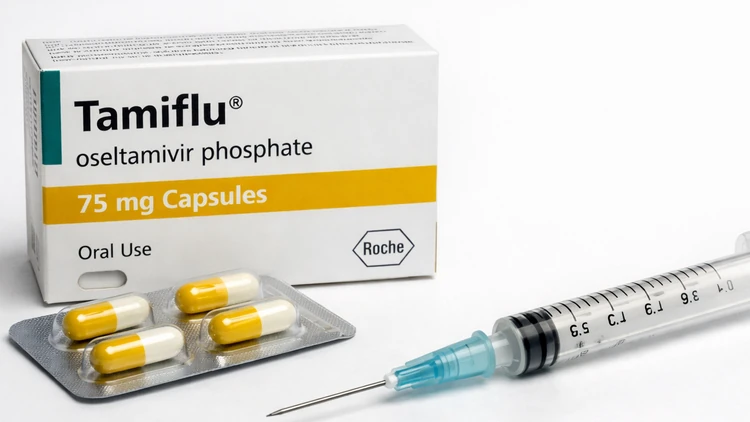
Should Avian flu jump to the human population and create a pandemic, health officials are counting on the antiviral Tamiflu as a major defense.

But increasingly, public health officials are concerned that widespread use of Tamiflu could have a very unwelcome side effect -- development of drug-resistant strains of the virus in wild birds.

British researchers at the Centre for Ecology and Hydrology in Oxford have released findings in the January 2007 issue of Environmental Health Perspectives (EHP) that demonstrate how Tamiflu's persistence in wastewater and river water could affect the waterfowl that drink from those water sources.

Since the World Health Organization's first warning of an avian flu pandemic two years ago, nations worldwide have been stockpiling Tamiflu for treatment and outbreak prevention. The drug, which minimizes flu symptoms and duration, inhibits the movement of the influenza virus from the cells it infects, and also helps uninfected people avoid contracting the flu.

However, Tamiflu's active agent, the metabolite oseltamivir carboxylate (OC) would be excreted into sewers for several weeks during a pandemic and is expected to withstand biodegradation.

According to the researchers in the current study, once birds drink OC-laced water from catchments receiving treated wastewater, they could produce Tamiflu-resistant strains and pass them on to other birds who share the same waters.

The investigators analyzed 11 waterway catchments in the United States and 5 in England using a metabolic pathway prediction system to determine the potential biodegradability of OC. They also measured wastewater discharges into the catchments.

They estimated the number of clinically infected people in each catchment area treated with a full 5-day course of Tamiflu with 100% compliance, assuming that 80% of the ingested Tamiflu was released into sewer systems as OC and that all of the OC entering each catchment was flushed out in one day.

Their estimates showed a maximum concentration well above that required for development of resistance in vitro for 62 consecutive days in the arid Lower Colorado River catchment area.

Overall, the researchers say that because of the lower population density for many of the U.S. catchments, peak concentrations of OC in a pandemic would be approximately 10 times less than the concentrations in British rivers.

All but one of the American catchments studied are larger than those in Britain and, with the exception of the Lower Colorado River flow area, have more available dilution per person in each given population.

There were no specific ecotoxicological risks from Tamiflu identified at the time the drug was submitted for approval to the European Medicines Agency. The authors, however, suggest that the ecotoxicological risk associated with Tamiflu use needs to be reassessed in light of the hundreds of millions of courses that would be consumed globally during a pandemic.

The authors warn that, with the release of the uniquely structured, biochemically resistant OC antiviral into river water, "the range of OC concentrations predicted . . . will have uncharacterized ecotoxicological consequences." They call for more detailed water contamination modeling, especially in high-risk areas of the world such as Southeast Asian countries, where there is more frequent human-to-waterfowl contact and where future use of Tamiflu would be significant.

They also recommend development of methods to minimize the release of OC into wastewater systems, such as biological and chemical pretreatment in the toilet.


Report Your Experience
If you've had a bad experience -- or a good one -- with a consumer product or service, we'd like to hear about it. All complaints are reviewed by class action attorneys and are considered for publication on our site. Knowledge is power! Help spread the word. File your consumer report now.


Consumer News

May 17 2008

Recent Recalls & Safety Alerts

READER SERVICES

Print, Email & More

Subscribe

Free consumer newsletters
Sign up now!


Back to the top |

Advertisement


Home | Rogues Gallery | Good Guys | Complaint Form | News | Recalls | Search | Video | FAQ |
Consumer Resources | Small Claims Guide | Lemon Law | Newsletter | Contact Us
Advertise With Us | Testimonials | Newsroom | RSS Feeds | Radio | Job Postings


Terms of Use Your use of this site constitutes acceptance of the Terms of Use

Advertisements on this site are placed and controlled by outside advertising networks. ConsumerAffairs.com does not evaluate or endorse the products and services advertised. See the FAQ for more information.

Company Response Welcome If complaints about your company appear on our site, we welcome your response. Please see the Response Form for more information.

For more information, see the FAQ and privacy policy. The information on this Web site is general in nature and is not intended as a substitute for competent legal advice.  ConsumerAffairs.com Inc. makes no representation as to the accuracy of the information herein provided and assumes no liability for any damages or loss arising from the use thereof. 

Copyright © 2003-2008 ConsumerAffairs.com Inc.  All Rights Reserved.