NEWS    RECALLS    COMPLAINT FORM    SCAM ALERTS   RESOURCES  
Small Claims Guide   Class Actions   Lemon Laws   FAQ   Newsletters  
Share


Complain about a product or service

Automotive    Education    Employment    Electronics    Family    Finance    Health    Homeowners    Insurance    Pets    Shopping    Travel     Print This     Email This    


NEWS   Latest |  Archives |  Auto |  Cells, etc. |  Computers |  Financial |  Health |  Homeowners |  Parents |  Privacy |  Scams |  Seniors |  Travel

Do Flu Shots Really Help Seniors?

Researchers Suggest Healthy Seniors Are More Likely to Get Flu Shots, Thus Skewing Statistics


December 21, 2005


Flu Shots Not To Be Sneezed At
Tips For Surviving Flu Season
Vaccines Ready for Flu Season
It's Flu Season Again
More Flu Shots for Kids
Record Amount Of Flu Vaccine On Hand
Nasty Flu Year in Store
Nasal Flu Vaccine Approved For Young Children
FDA OKs Relenza for Treatment and Prevention of Flu
Expanded Flu Shot Recommendations for Children
CDC Revises Flu Treatment Guidelines
Flu Outbreak Jams California Emergency Rooms
FDA Approves Tamiflu for Prevention of Flu in Children
Do Flu Shots Really Help Seniors?
No Surprises in Use of Nasal Spray Flu Vaccine
Flu Expert Wants Mandatory Vaccination of Health Care Workers
Like the Flu, Vaccine Shortages Return
Chiron Cleared To Ship Flu Vaccine
Flu Shots' Benefit to Elderly Questioned
---
U.S. Fears Devastating "Bird Flu" Pandemic

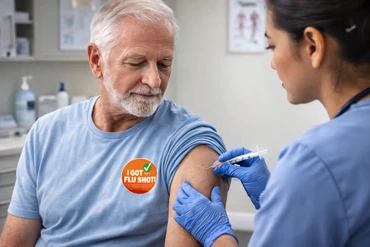
Studies of influenza vaccine effectiveness in elderly people substantially overestimate vaccine benefits, according to new research from the US published in the International Journal of Epidemiology (IJE). The study echoes the findings of research published earlier this year in The Archives of Internal Medicine.

Research by Dr. Lisa Jackson and colleagues at Group Health Co-operative, Seattle, found evidence of serious bias in estimates of influenza vaccine effectiveness in seniors.

Their study suggests that the association between vaccination and risk of death is influenced by the fact that relatively healthy seniors (that is, those already less at risk from dying) are more likely to get vaccinated.

However, the research does not indicate that there is no benefit in vaccinating the elderly, just that the differences in health between seniors who receive vaccine and those who do not make it difficult or impossible to tell what benefit is being derived from the vaccine.

A commentary on the papers also published in the IJE argues that there are reasons to seek ways to augment current vaccination strategy, for example, vaccinating health care workers, nursing home personnel and school children, who are the major spreaders of flu within the community.

This would further decrease flu deaths in the elderly by reducing transmission of the virus. It could be done while better vaccines for the elderly are developed along with the use of new technologies to better evaluate effectiveness.

Dr. Jackson and colleagues studied 73,527 people aged 65 and over during an eight year period. They evaluated the association of flu vaccination and risk of death, and the association of flu vaccination and risk of hospitalization for pneumonia, in periods before, during and after flu season.

Since a protective effect of vaccination should be specific to flu season, they would expect to find reductions in risk of death or hospitalization during the season. However, they found the greatest reductions in the period before flu season when there should be no true vaccine effect.

The reductions in risk before flu season suggest the presence of bias -- due to preferential receipt of vaccine by relatively healthy seniors -- on the estimates of flu vaccine effectiveness observed during flu season.

The researchers then looked at 252 people aged over 65 who had died during a flu season and 572 age-matched controls. Using the subjects' medical records, they identified people with "functional limitations," such as requiring assistance to walk or bathe.

They found that functional limitations were associated with both an increased risk of death and a decreased likelihood of influenza vaccination, and so may confound the association of influenza vaccination and risk of death.

In a commentary on the studies, Professor Paul Glezen of Baylor College of Medicine, Houston said: "During the period from 1989 to 1997 the vaccination rate for people aged over 65 in the US increased from 30 to 67 per cent. Despite this increase, mortality and hospitalization rates continued to increase rather than decline as would be expected if the vaccine were optimally effective.

"The study by Dr Jackson and her colleagues concludes that elderly people who choose to take the vaccine are, contrary to the findings of earlier cohort studies, in better health than those who fail to get the vaccine. This suggests that better studies of the benefits of flu vaccine in elderly and other high-risk groups are necessary to guide strategies for flu control.

"In the meantime, other strategies should be considered in addition to vaccinating the elderly. Many studies have shown that school children have the highest rates of flu infection each year and that they are the major spreaders of flu in the community and introducers into the household. Immunization of school children, therefore, would reduce exposure of vulnerable patients to flu.

"One of the problems with current vaccination strategy is that high-risk persons are relatively inaccessible; no improvement in vaccine coverage has occurred since 1997. School children could be accessible through school-based vaccine clinics allowing rapid administration of vaccine to large numbers, representing all socioeconomic groups, within a short period of time."


Report Your Experience
If you've had a bad experience -- or a good one -- with a consumer product or service, we'd like to hear about it. All complaints are reviewed by class action attorneys and are considered for publication on our site. Knowledge is power! Help spread the word. File your consumer report now.

Share

Follow us on Twitter.

FREE CONSUMER NEWSLETTERS

The Daily Consumer
Afternoons M-F

Sign up now!


Consumer News & Alerts
Every Sunday

Sign up now!


CONSUMER NEWS

SAFETY RECALLS

Back to the top |

Advertisement


Custom Search
AUTOMOTIVE
• Dealers
• Manufacturers
• Service
• Extended Warranties
• Lemon Laws
• Recalls
• Tires
• Transporters

FAMILY
• Aging
• Children, Parenting
• Recalls
• Dating
• Education
• Entertainment
• Pets
• Weddings
FINANCE
• Annuities
• Banks
• Credit Cards
• Debt Collection
• Debt Counseling
• Insurance
• Investing
• Loans
• Mortgages
• Payday Loans
• Student Loans
• Tax Prep

HEALTH
• Doctors
• Drugs, Pharmacies
• Health Clubs
• Hearing Care
• Hospitals
• Nursing Homes
• Nutrition, Diets
• Vision Care
• Weight Loss
HOUSE & HOME
• Appliances
• Cookware
• Furniture
• Home Improvements
• Lawn & Garden
• Movers
• Pools & Spas
• Realtors, Rental Agents
• Recalls
• Utilities

ELECTRONICS
• Cable TV/DBS
• Cameras
• Cell Phones
• Computers
• Home Electronics
• Internet Access
• Local Phone Service
• Long Distance
• VoIP
SHOPPING
• In-Home
• Online
• Retail Stores
• Sporting Goods
• Supermarkets
• Telemarketers

TRAVEL
• Airlines
• Bus Lines
• Car Rental
• Cruises
• Hotels
• Travel Agents
• Trains

RESOURCES
• Class Actions
• Complaint Form
• Small Claims Guide
• Lemon Laws
CONSUMER NEWS
• Latest News
• Automotive
• Telecom
• Financial
• Health
• Homeowners
• Scams
• Seniors
• Travel
• More ...

RECALLS
• Automotive
• Children's Products
• Drugs
• Food
• Household Products
• Sporting Goods

ABOUT US
• FAQ
• Privacy Policy
• Advertise With Us
• Newsroom
• Syndication
• Terms of Use

Terms of Use Your use of this site constitutes acceptance of the Terms of Use

Advertisements on this site are placed and controlled by outside advertising networks. ConsumerAffairs.com does not evaluate or endorse the products and services advertised. See the FAQ for more information.

Company Response Welcome If complaints about your company appear on our site, we welcome your response. Please see the Response Form for more information.

For more information, see the FAQ and privacy policy. The information on this Web site is general in nature and is not intended as a substitute for competent legal advice.  ConsumerAffairs.com Inc. makes no representation as to the accuracy of the information herein provided and assumes no liability for any damages or loss arising from the use thereof. 

Copyright © 2003-2009 ConsumerAffairs.com Inc.  All Rights Reserved.    The contents of this site may not be republished, reprinted, rewritten or recirculated without written permission.