CONSUMER NEWS    RECALLS    COMPLAINT FORM    SCAM ALERTS  
Small Claims Guide   Class Actions   Lemon Laws   FAQ   Newsletters  


Complain about a product or service

Automotive    Education    Electronics    Family    Finance    Health    Homeowners    Shopping    Travel   
NEWS   Latest |  Archives |  Auto |  Cells, etc. |  Computers |  Financial |  Health |  Homeowners |  Parents |  Privacy |  Scams |  Seniors |  Travel

Trans Fat Content Added to Food Labels


July 9, 2003

Trans Fats

Court Rebuffs Burger King in Trans Fat Case
Dunkin’ Donuts to Dump the Trans Fat
Burger King Hit With Trans Fat Lawsuit
KFC Removes Trans Fat From Chicken Fryers
Harvard Study Links Trans Fat To Heart Disease
Burger King Testing Trans Fat-Free Cooking Oils
Starbucks Cuts Trans Fats
Scientists Claim Development Of "Healthy" Trans Fat
Loews Hotels Ban Trans Fat from Menus
New York City Bans Trans Fats in Restaurants
KFC Plans To Cut The Trans Fat
New York City Considers Trans Fat Ban
Researchers: Food Labels Should List All Fats
KFC Sued Over Artery-Clogging Oils
Wendy's Cuts Trans Fats in Fries and Chicken
---
More ...

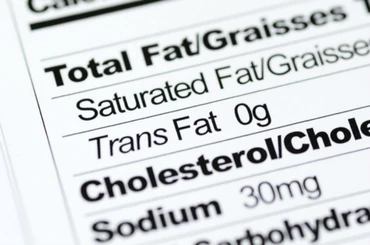
HHS Secretary Tommy G. Thompson announced today that food labels will be required to list the amount of unhealthy trans fatty acids, or trans fat, to give consumers better information when choosing their foods.

The new requirement, issued by HHS' Food and Drug Administration (FDA), will mean that manufacturers of most conventional foods and some dietary supplements will have to list in the Nutrition Facts panel the trans fat content of the product, in addition to the information about its overall fat content and saturated fat content.

The additional information will give consumers a more complete picture of fat content in foods -- allowing them to choose foods low in trans fat, saturated fat and cholesterol, all of which are associated with an increased risk of heart disease. Reducing the intake of trans fat and saturated fats is recommended by the federal Dietary Guidelines for Americans.

However, while the new labels must state how many grams of trans fat a food contains, they won't put this amount in context by stating what percent of the Recommended Daily Value of trans fat you get from the product.

"It will be hard for people to tell if a given number of grams of trans fat is a lot or a little," said Margo Wootan of the Center for Science in the Public Interest, which petitioned the Food and Drug Administration to require trans fat labeling. "Five grams may not seem like a lot, but it is."

Nevertheless, Wootan said, the new label will allow consumers to compare trans fat from product to product, "and that will be a great step forward." The label also will spur food companies to reduce trans fat, she said.

Under the new FDA regulations, by Jan. 1, 2006, consumers will be able to find trans fat listed on food nutrition labels directly under the line for saturated fat. The new information is the first significant change on the Nutrition Facts panel since it was established in 1993.

The new labeling reflects scientific evidence showing that consumption of trans fat, saturated fat and dietary cholesterol raises low-density lipoprotein (LDL) cholesterol ("bad" cholesterol) levels that increase the risk of coronary heart disease. Nearly 13 million Americans suffer from coronary heart disease, and more than 500,000 die each year from causes related to coronary heart disease.

Trans fat occurs in foods when manufacturers use hydrogenation, a process in which hydrogen is added to vegetable oil in order to turn the oil into a more solid fat. Trans fat is often but not always found in the same foods as saturated fat, such as vegetable shortening, some margarines, crackers, candies, cookies, snack foods, fried foods, baked goods, salad dressings, and other processed foods.

"Our choices about our diets are choices about our health, and those choices should be based on the best available scientific information. This label change means that trans fat can no longer lurk, hidden, in our food choices," said Mark B. McClellan, M.D., Ph.D., commissioner of FDA.

"Americans will now be armed with better information to reduce their intake of saturated fat, trans fat and cholesterol - which could significantly lower the risk of heart disease, the leading cause of death in America today."

By providing more useful information to consumers seeking a healthy diet, the new labels are expected to reduce the costs of illness and disease for Americans. The FDA estimates that the changes in regulations will save between $900 million and $1.8 billion each year in medical costs, lost productivity and pain and suffering.

The new label is part of the department's broader efforts to more effectively inform consumers about the health consequences of their dietary choices. The agency hopes to improve the nutrition label to provide clearer, up-to-date guidance on a healthy overall diet. FDA is also working to increase the focus on health in food product development and promotion, as well as encouraging research that would foster greater science-based competition among food producers to improve health.

The National Heart, Lung and Blood Institute (NHLBI) at HHS' National Institutes of Health (NIH) supports the new labeling.

"Trans fat, like saturated fat and dietary cholesterol, raises LDL "bad" cholesterol levels in the blood, which increases the risk for heart disease," said Dr. Claude Lenfant, director of NHLBI. "It is therefore desirable to have food labels display all the information that can help consumers choose foods low in saturated fat, trans fat and cholesterol as part of a healthy diet."

Although some food products already list trans fat on the food label, food manufacturers have until Jan.1, 2006, to add it to the nutrition label. This phase-in period minimizes the need for multiple labeling changes and allows small businesses to use up current label inventories. The FDA will allow manufacturers to implement the change more quickly, and in fact expects many manufacturers to start listing trans fat content soon.

In addition, dietary supplement manufacturers will now need to list trans fat, as well as saturated fat and cholesterol, on the Supplement Facts panel when their products contain more than trace amounts (0.5 gram) of trans fat. Examples of dietary supplements that may contain trans fat are energy and nutrition bars.

The new requirements are included in final FDA regulations to be published in the Friday, July 11, Federal Register.

FDA today also is issuing an advanced notice of proposed rulemaking to solicit information and data that could lead to further changes in nutrition and product labels related to trans fat, saturated fat, and cholesterol.

"While giving consumers accurate information about the trans fat content of their foods is an important step forward, we must do more to help consumers improve their nutrition," said Dr. McClellan. "Consequently, we are also giving notice that we intend to take further steps to increase consumer understanding of the importance of limiting consumption of trans fat, saturated fat, and cholesterol in their diet."

Additional information about today's announcements and broader efforts to improve health by providing information consumers can use to make healthy choices is available on FDA's Web site at www.fda.gov/oc/initiatives/transfat/.


Consumer News

December 3 2008

Recent Recalls & Safety Alerts

PRINT, MAIL, ETC.


FREE CONSUMER NEWSLETTERS

The Daily Consumer
Afternoons M-F

Sign up now!


Consumer News & Alerts
Every Sunday

Sign up now!

MOST-VIEWED PAGES

  • Sharper Image
  • Sears Auto Centers
  • FDA: Some Melamine in Infant Formula is OK
  • Maytag Washers
  • 5 Big Bills You Can Cut Fast
  • Speed Up Your Metabolism
  • GE Money Bank
  • Capital One
  • Whirlpool Water Heaters
  • Mars Extends Pet Food Recall
  • NEW COMPLAINTS

  • Justmyshopping.com
  • Papa John's
  • Privacy Matters
  • Prostate Rx
  • RANDESIGN Baby Products
  • Nationstar Mortgage
  • Saxon Mortgage
  • Software Direct
  • Blue Buffalo
  • Goldfellow
  • Hey there! ConsumerAffairs.com is using Twitter.
    Twitter is a free service that lets you keep in touch throughout the day. Join today to start receiving ConsumerAffairs.com's updates.


    Back to the top | News

    Advertisement


    AUTOMOTIVE
    • Dealers
    • Manufacturers
    • Service
    • Extended Warranties
    • Lemon Laws
    • Recalls
    • Tires
    • Transporters

    FAMILY
    • Aging
    • Children, Parenting
    • Recalls
    • Dating
    • Education
    • Entertainment
    • Pets
    • Weddings
    FINANCE
    • Annuities
    • Banks
    • Credit Cards
    • Debt Collection
    • Debt Counseling
    • Insurance
    • Investing
    • Loans
    • Mortgages
    • Payday Loans
    • Student Loans
    • Tax Prep

    HEALTH
    • Drugs, Pharmacies
    • Health Clubs
    • Hearing Care
    • Hospitals
    • Nursing Homes
    • Nutrition, Diets
    • Vision Care
    • Weight Loss
    HOMEOWNERS & RENTERS
    • Appliances
    • Cookware
    • Furniture
    • Home Improvements
    • Lawn & Garden
    • Movers
    • Pools & Spas
    • Realtors, Rental Agents
    • Recalls
    • Utilities

    ELECTRONICS
    • Cable TV/DBS
    • Cameras
    • Cell Phones
    • Computers
    • Home Electronics
    • Internet Access
    • Local Phone Service
    • Long Distance
    • VoIP
    SHOPPING
    • In-Home
    • Online
    • Retail Stores
    • Sporting Goods
    • Supermarkets
    • Telemarketers

    TRAVEL
    • Airlines
    • Bus Lines
    • Car Rental
    • Cruises
    • Hotels
    • Travel Agents
    • Trains

    RESOURCES
    • Class Actions
    • Complaint Form
    • Small Claims Guide
    • Lemon Laws
    CONSUMER NEWS
    • Latest News
    • Automotive
    • Telecom
    • Financial
    • Health
    • Homeowners
    • Scams
    • Seniors
    • Travel
    • More ...

    RECALLS
    • Automotive
    • Children's Products
    • Drugs
    • Food
    • Household Products
    • Sporting Goods

    ABOUT US
    • FAQ
    • Privacy Policy
    • Advertise With Us
    • Newsroom
    • Syndication
    • Terms of Use

    Terms of Use Your use of this site constitutes acceptance of the Terms of Use

    Advertisements on this site are placed and controlled by outside advertising networks. ConsumerAffairs.com does not evaluate or endorse the products and services advertised. See the FAQ for more information.

    Company Response Welcome If complaints about your company appear on our site, we welcome your response. Please see the Response Form for more information.

    For more information, see the FAQ and privacy policy. The information on this Web site is general in nature and is not intended as a substitute for competent legal advice.  ConsumerAffairs.com Inc. makes no representation as to the accuracy of the information herein provided and assumes no liability for any damages or loss arising from the use thereof. 

    Copyright © 2003-2008 ConsumerAffairs.com Inc.  All Rights Reserved.    The contents of this site may not be republished, reprinted, rewritten or recirculated without written permission.