

What does “in default” mean on your credit report?
A default on your credit report means you’ve neglected to pay a debt, whether it’s a mortgage, auto loan, student loan, credit card or personal loan. And it doesn’t happen after the first missed payment — defaulting usually means missing multiple payments in a row or stopping payment altogether.
Default occurs after 90 days in most cases, like for personal loans, but can mean being 30 days late on a mortgage and 270 days past due on a student loan. Of course, the exact timeline will depend on the lender and the type of loan you have. Once a loan goes into default, the lender figures you’re unlikely to pay the loan.
Default vs. delinquency
Delinquency usually leads to defaulting. A delinquency on your credit report means you’ve missed a payment by at least 30 days. It will then count up in increments of days: 30, 60, and 90. As your late payment advances toward 90 days, it becomes seriously delinquent.
At that point, the lender will report the default to the credit bureaus and then charge off the account, send it to collections or attempt to claim the collateral property, if applicable.
Both delinquency and default will appear on your credit report, but a default is much more serious, lasts longer, and can cause more damage to your credit.
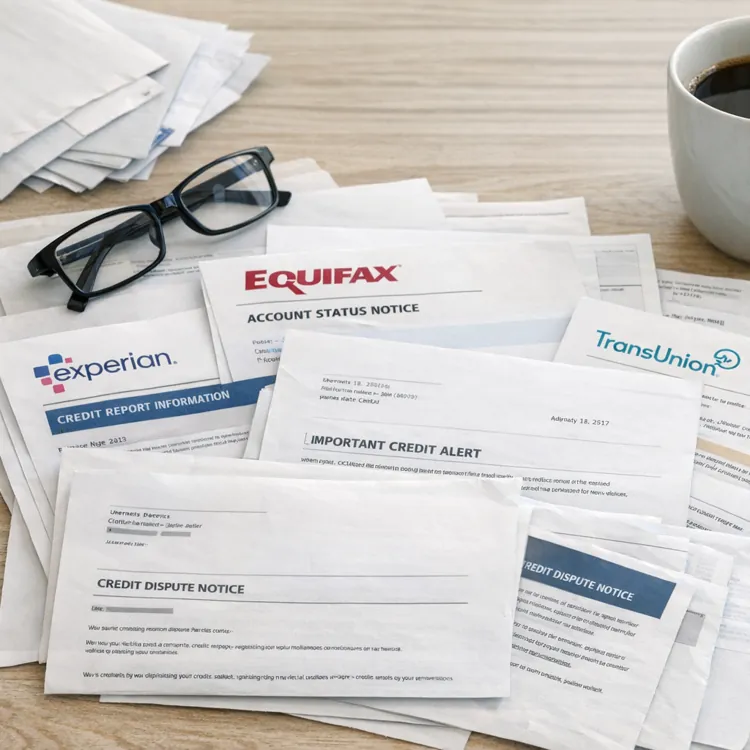
You can pull your credit report from Experian, Equifax, and TransUnion to see if you have any of these entries.
» COMPARE: Best credit report companies
How an account goes into default on your credit report
Default doesn’t happen overnight. Lenders follow a set timeline, and they’ll notify you along the way. The exact process will vary by account type, lender, and even region, but the pattern each will follow is pretty similar:
- You miss a payment on your debt.
- The creditor or lender reports your account as delinquent and how many days past due your payment is.
- It will notify you that your payment is late and usually assess a late fee.
- You miss more payments and your account becomes severely past due.
- The lender declares your account in default and reports it to the credit bureaus.
What triggers a default?
A default is triggered when a lender notes that you haven’t made payments for a long enough period that repayment seems unlikely. This typically happens around the 90-day mark for personal loans and the 180-day mark for credit cards. For mortgages, that timeline is often shorter because the lender can repossess the property.
The Federal Trade Commission (FTC) offers guidance on your rights and your dispute options with creditors.
Once you’ve triggered a default with your lender, they’ll send the status to Experian, Equifax, and TransUnion. All three bureaus will treat a default status as a serious negative mark on your credit report.
| Account type | Days late to default | Consequences |
|---|---|---|
| Credit card | 180 days | Account charged off, sent to collections |
| Mortgage | 30 days | The foreclosure process may begin after 120 days |
| Auto loan | 90 to 120 days | The repossession process may start |
| Student loan | 270 days | Default status applied, collections begin |
How does defaulting affect your credit?
Being in default is an extremely damaging mark on your credit reports and credit scores. It signals to lenders that you’re not creditworthy because you’ve failed to pay your debt.
Credit score impact
A default can decrease your credit score by 100 points or more. Borrowers with higher credit scores will often see the steepest declines.
The impact of this hit will soften over time, but future lenders will still see the default for seven years.
Creditworthiness impact
A default can have a huge impact on your future borrowing. The severity of this impact usually depends on your credit score before the default and the size of the debt you’re defaulting on. It will also matter if you have multiple accounts that are overdue and whether your lender has had to take legal action or send your account to collections.
In terms of future borrowing, a default can:
- Increase interest rates on future loans
- Make future approvals harder for mortgages and auto loans
- Impact prices on insurance
- Affect some job applications
- Limit access to premium credit cards
Expert advice
If the default is less than one year old, focus on correcting any errors on your credit report and negotiating with your lender to pay off the loan. If it’s two years old or older, make rebuilding your credit a priority. You can do this primarily by adding a positive payment history.
How to resolve a default status on your credit report
In most cases, a default will stay on your report for the full seven years, unless a lender reported it in error. But what you can do is resolve the balance, settle the debt or dispute any inaccuracies.
You may be able to remove a default from your credit report if:
- It was reported in error.
- The lender agrees that it was incorrect or misdated.
- The underlying debt wasn’t yours in the first place.
Otherwise, an existing default can only be changed to reflect that it has been “paid” or “settled” if you successfully negotiate with the lender.
Pay off your debt, even if it’s been a long time, because that will update your default status to “paid.” While the original default will remain for seven years, the paid status can soften the blow.
How to rebuild your credit after a default on your record
It’ll take time, but with the right habits, you can see your credit score improve faster than you might think. Most lenders consider the past 12 to 24 months of consistent, on-time payments after a default. For now, here are the best strategies you can use to rebuild your credit:
- Make all your payments on time going forward.
- Open a secured credit card or credit-builder loan once your default is resolved.
- Keep your credit utilization less than 30% of your total available credit.
- Monitor your credit report on a monthly basis for any discrepancies or inaccuracies.
- Consider becoming an authorized user on a responsible borrower’s account.
- Consider a pay for delete agreement.
You’re not stuck with just one pathway to better credit. If you have a stable income and only a few recent late payments, start with a secured credit card. If you’re declined, look into a credit-builder loan. And if both of those fail, and you’re still struggling after 12 months, get help from a nonprofit credit counselor.
You’re not alone. And you can get the help you need to rebuild your credit and get back on top.
FAQ
How long does it take for a default to be removed from my credit report, and can I speed up the process?
Defaults stay on your report for six to seven years. You can typically only speed up removal if it was reported inaccurately and you file a dispute with the credit bureaus.
What’s the difference between being delinquent and being in default?
Delinquency means you are late by 30 to 89 days on a payment. Default happens after a longer period (usually 90 to 180 days) when the lender assumes you will not pay and may charge off or send your account to collections.
Can I negotiate with my lender after a default, and will that improve my credit score?
Yes, you can negotiate settlements or payment plans. While paying off or settling the account changes your status to “paid” or “settled,” the default remains on your report. But future lenders may look more favorably on resolved debts.
Are defaults reported differently by Experian, Equifax and TransUnion?
Yes. Each bureau may use slightly different terminology and reporting codes. Always check all three reports for accuracy, as errors or inconsistencies are common and can be disputed individually.
What are my options if a default is reported in error?
File a formal dispute with the reporting bureau and provide documentation. The bureau has 30 days to investigate and must remove any incorrect information if your claim is validated.
How soon after a default can I qualify for a mortgage or car loan?
Most lenders require at least 12 to 24 months of positive payment history following a default before approving new loans. Higher interest rates are likely until your credit improves.
Does paying off a defaulted account remove the default from my credit report?
No. Paying off the account updates your report to “paid” or “settled,” but the default remains for the full reporting period of six to seven years.
Article sources
ConsumerAffairs writers primarily rely on government data, industry experts and original research from other reputable publications to inform their work. Specific sources for this article include:
- Experian, "Free credit report." Accessed Dec. 12, 2025.
- Equifax, "Free Credit Reports." Accessed Dec. 12, 2025.
- TransUnion, "Get your free credit report." Accessed Dec. 12, 2025.
- Experian, "Can One 30-Day Late Payment Hurt Your Credit?" Accessed Dec. 12, 2025.
- LendingTree, "How Defaulting on a Loan Affects Your Credit." Accessed Dec. 12, 2025.
- The Associated Press, "Here’s what you need to know about credit card defaults." Accessed Dec. 12, 2025.
- Consumer Financial Protection Bureau, "How do I dispute an error on my credit report?" Accessed Dec. 12, 2025.