


2023 Banking Issues and Trends

Article Image

Wells Fargo customers report disappearing direct deposits

Some Wells Fargo customers got a shock when they checked their accounts. Direct deposits they were expecting never showed up. At least in some cases, other deposits disappeared as well.

In a statement to the media, Wells Fargo said the issue affected “a limited number of customers” and that most of the cases were quickly resolved. The bank didn’t elaborate on what caused the problem but some customers had a similar experience earlier this year.

In March, some Wells Fargo customers complained that money disappeared from their accounts before eventually being returned. At the time, the bank blamed the issue on an unspecified “technical issue.”

Some problems with direct deposit may have appeared sporadically before this latest incident. In July ConsumerAffairs heard from David, a business owner from Woodland, Calif., who said his new “Direct Pay” account was suspended for two weeks as a precautionary measure.

“I found out when our payroll and rent didn't go out as scheduled,” David told us. “Missing payroll right after a rocky buyout didn't go over very well with the employees. Two weeks without online banking has been a nightmare in itself. It is mind-boggling that Wells Fargo had absolutely no way to resolve the issue sooner. The local bank manager thought it was absurd, yet couldn't do anything about it.”

Bumpy PR road

Wells Fargo has experienced a bumping public relations road over the last few years. The bank has paid out billions of dollars in fines and reimbursements for opening unauthorized checking and credit card accounts and wrongfully repossessing automobiles.

NBC News has reported that at least one consumer, who has never banked at Wells Fargo, received a statement from the bank for an account he never opened.

“Whoever did that had my name and Social Security number,” Jay Patterson, the consumer, told NBC News. “My date of birth was wrong, the driver's license information was wrong.”

Patterson believes the account was set up by a fraudster, who created a synthetic identity to establish an account to launder money. NBC News quotes security experts as saying Wells Fargo should have flagged the account as fraudulent.
Article Image

What if your bank fails? Here’s how to get your money out

Fears of bank failures have gripped the stock market in recent weeks with the collapse of Silicon Valley Bank (SVB) and struggles at First Republic Bank. In the case of SVB, the bank was taken over by the Federal Deposit Insurance Corporation (FDIC).

Deposits of up to $250,000 are insured by FDIC so depositors with less than that amount in the bank will be made whole. The problem, however, is the average SVB depositor had $2 million in the bank.

So, what if your bank were to fail? Assuming you have $250,000 or less in the bank you should have little to worry about. When a bank can’t meet depositors’ demands for their money, FDIC steps in to close the bank.

One of its first obligations is to protect depositors. Under federal law, the FDIC is required to make payments of insured deposits "as soon as possible" upon the failure of an insured institution. 

Money bank within two business days

“While every bank failure is unique, there are standard policies and procedures that the FDIC follows in making deposit insurance payments,” the agency says. “It is the FDIC's goal to make deposit insurance payments within two business days of the failure of the insured institution.”

In short, if your money in a failed bank is covered by FDIC and your account is less than $250,000, you can expect full reimbursement that is paid by the U.S. government. You don’t really have to do anything to retrieve your money. The money will be transferred to another FDIC bank and you’ll be notified about your new account.

If you have more than $250,000 in a failed bank, you’ll be reimbursed $250,000 but you may or may not get the excess amount. That’s one of the issues regulators are facing with SVB.

Is there a banking crisis and is your bank in danger of failing? It depends, but some banks are in the same situation as SVB. On paper, their deposits are worth less than what they owe depositors.

What banks do with your money

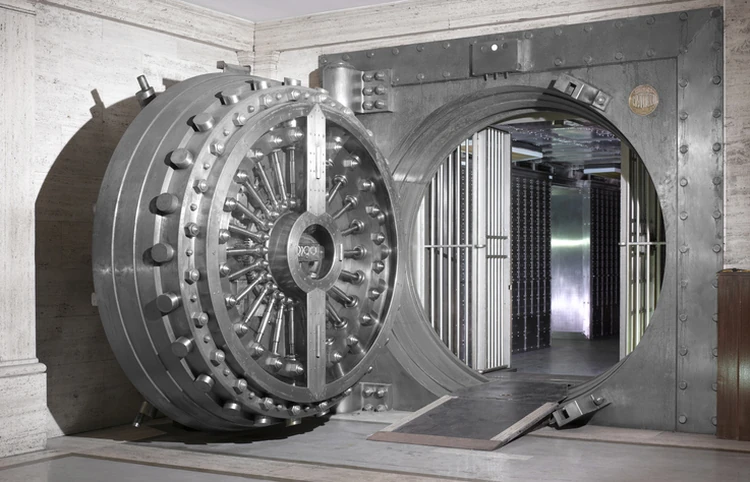
Here’s the reason. When you deposit money in your bank, the cash doesn’t just go into a vault. Some of it is loaned to borrowers but excess cash is usually placed in safe investments such as Treasury bonds.

During the pandemic, when Americans received more than $1 trillion in stimulus benefits, bank deposits grew rapidly. Banks used those deposits to purchase billions of dollars worth of bonds that, at the time were paying about 0.5% or less in interest.

Fast forward to today, when similar Treasury bonds are paying closer to 4%. If the bank needs to cash in the 0.5% bonds before maturity the bonds are worth much less because of the difference in interest rates.

Your bank may hold many of these bonds that are now worth less. If they don’t have to sell them, however, it isn’t a problem. 

It became a problem for SVB when its business customers needed access to their money to pay higher operating expenses. SVB was forced to sell many bonds at a huge loss and still didn’t have enough money to meet customers’ demands for withdrawals.