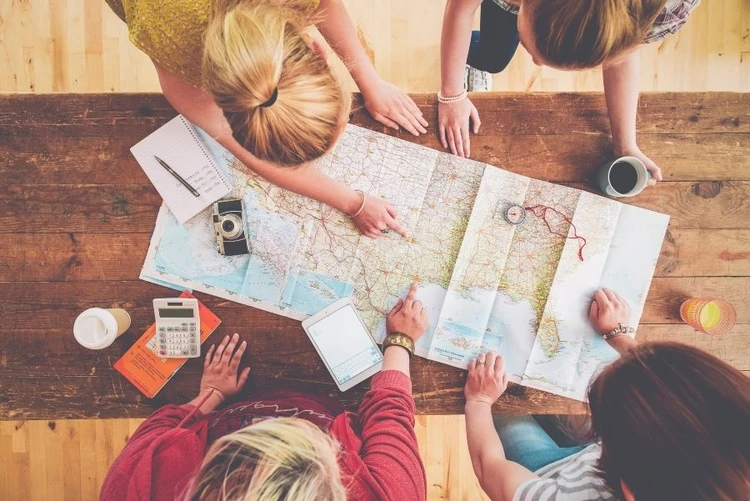
2021 Travel Tools and Technology

Article Image

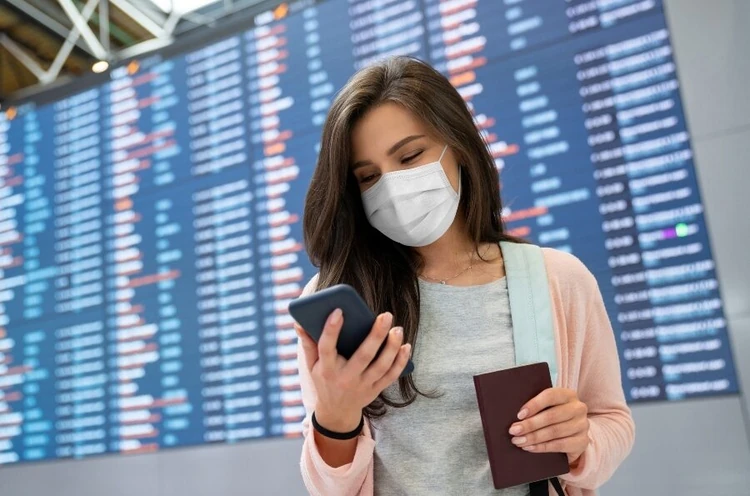
U.S. gives vaccinated foreign travelers green light to enter the country

The U.S. is throwing its doors wide open to fully vaccinated foreign travelers. The White House announced that it will be easing restrictions for both international air travel and land travel effective November 8.

"This announcement and date applies to both international air travel and land travel. This policy is guided by public health, stringent, and consistent,” said White House assistant press secretary in a Twitter post.

The Biden administration had hinted at this shift in late September when it relaxed restrictions on travel to Great Britain. That resulted in a surge in bookings for transatlantic flights, with Virgin Atlantic reporting a 91% increase.

Travel industry breathes sigh of relief

The move couldn’t have come at a better time. According to the International Air Transport Association (IATA), air travelers were becoming increasingly frustrated with the COVID-19 travel restrictions. Nearly 70% of the respondents in a survey commissioned by IATA felt that most country borders should be opened now -- up 12% from a June 2021, survey.

The whole travel industry has to be happy too. It tried to reason with the Centers for Disease Control and Prevention (CDC) earlier this year, claiming that the agency’s guidelines that fully vaccinated people should continue to avoid travel were unreasonable. 

“U.S. Travel has long urged a reopening of the U.S. land borders, and we applaud the Biden administration’s plan to ease entry restrictions for vaccinated visitors. This action will bring a welcome surge in travel from our two top source markets of inbound travel,” U.S. Travel Association President and CEO Roger Dow said in a statement emailed to ConsumerAffairs. 

Dow said that the declines in international visitation since the start of the pandemic have cost the U.S. dearly. According to his organization’s data, there was upwards of $250 billion lost in export income and more than a million U.S. jobs. He said the closed Canadian and Mexican land borders alone cost the U.S. economy nearly $700 million per month.

“The full reopening of international travel to the United States to fully vaccinated individuals is overdue and will provide a jolt to the U.S. economy, travel businesses large and small, and to destinations across America,” Dow stated.

What kind of deals will international travelers find when they come?

After car rental prices spiked earlier this year, one industry analyst says they’re back to normal again. That’s due to there being less demand since the summer travel season is over and children being, for the most part, back in school.

Scott Keyes at Scott’s Cheap Flights told ConsumerAffairs that a recent search for car rental prices included daily deals in Denver and Nashville for $43, $32 in Honolulu, $26 in Los Angeles, and $11 in Miami. 

Keyes said that even Thanksgiving rates were relatively cheap. Christmas and New Year’s were generally double or triple the price, but he said that happens every year.

Hotels, however, are a different story. In comments to TravelPulse, Twiddy & Company CEO Ross Twiddy said reservations in August were up 165% for the Christmas and New Year periods when compared to 2017-2019 averages. 

Naturally, the laws of supply and demand are causing hotel prices to climb. A spokesperson for Priceline told CNBC that the average daily rate at hotels has increased by 14% over the pre-pandemic 2019 holiday season, and they expect that the increased demand will cause prices to continue to scale upward.
Article Image

Consumers face growing delays for passport registrations

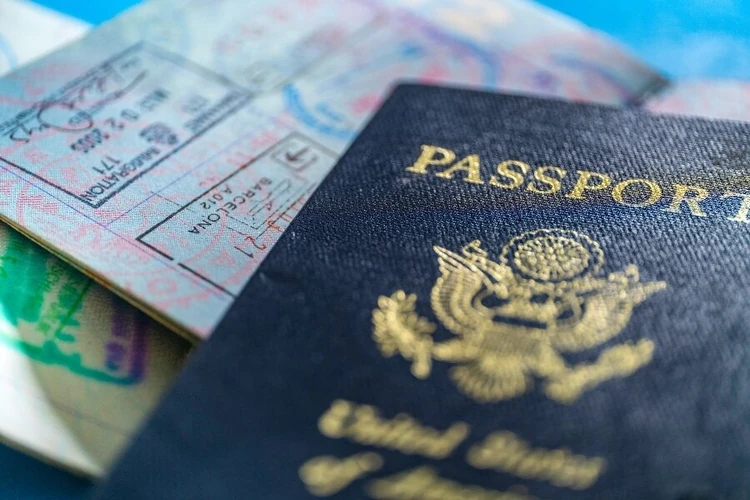
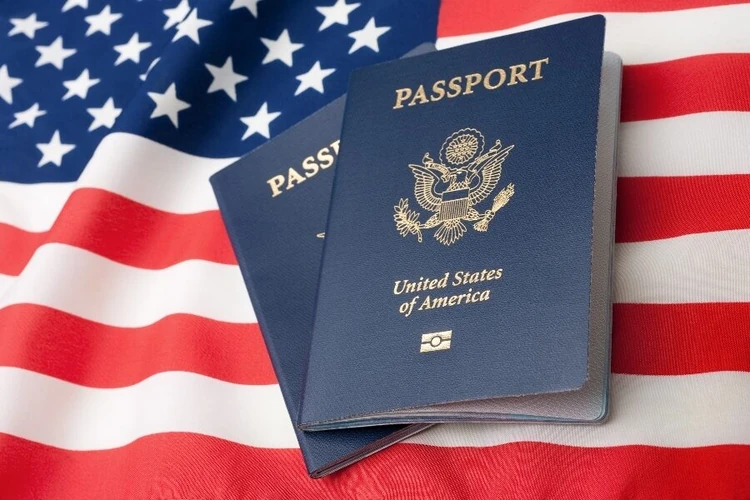
Are you planning on going out of the country anytime soon? If you don’t have an updated passport, get ready to wait a while because there’s a serious backlog of applications at the passport office.

How long is the waiting period? The agency says applicants need to allow at least six months before any planned international travel. It says some of the backlog is a result of prioritizing customers with life-or-death emergencies. 

The first recommended steps

According to a passport application guide published by Scott’s Cheap Flights, anyone planning to fly out of the U.S. should first check their current passport if they have one. Passports are good for 10 years for those over the age of 16; they’re good for 5 years for those under 16. Scott Keyes, founder of the airfare deal service, says there’s more to check than the expiration date though. 

“Many countries require that your passport be valid for 3-6 months beyond your travel dates, and that you have at least one blank page (it varies by country, some require more),” Keyes told ConsumerAffairs.

“For example, if you roll up to the airport for a trip to any of the countries in Europe’s Schengen Area and your passport isn’t valid for at least three months beyond your trip, you’re gonna get some bad news.”

The Department of State Travel says appointments must be scheduled by phone: Call 1-877-487-2778 or 1-888-874-7793 TDD/TTY from 8:00 a.m. to 10:00 p.m. ET, Mondays through Fridays. The agency’s appointment line is closed on weekends and federal holidays. 

What to expect after that

The U.S. Passport office says applicants should expect delays of up to 18 weeks (4 ½) months from the day an application is submitted to the day a new passport is received by the applicant. Mind you, it might not take that long, but the agency is playing it safe. 

It says the 18-week timeframe includes up to 12 weeks for processing and up to 6 weeks for mailing times on the front and back end. Regarding those mailing times, the agency says processing times begin the day it receives your application, not the day you mail it. If you’re in a hurry, an additional $60 will get you expedited service, but it won’t save you much time -- only about six weeks. 

“If that’s still not soon enough, there are two dozen passport agencies around the US where you can get an Urgent Travel or Life-or-Death Emergency appointment,” Keyes suggested. “To cast the widest net, visit the USPS passport site and look for available appointments within 100 miles of your zip code.” 

Here are some other suggestions the Passport office offers:

  • Send your application via trackable mail so you can track your application before it enters the office’s system. The agency said that can be done regardless of whether you apply at an acceptance facility or by mail.

  • Pay an extra $17.56 for 1-2 day delivery for the return of your completed passport.

  • Use the agency’s Self-Service Tools Online. This will allow you to get immediate answers to your questions, and you can check online for your passport status. However, consumers should note that customer service representatives do not give status updates over the phone. 

Article Image

U.K. government drops quarantine requirement for fully vaccinated U.S. travelers

The U.K. government announced Wednesday that fully vaccinated travelers from the United States and European Union will no longer have to quarantine in order to visit the country. However, visitors will still be subject to COVID-19 testing requirements.

"We're helping reunite people living in the US and European countries with their family and friends in the UK,'' Transport Secretary Grant Shapps announced on Twitter.

The U.K. still requires a pre-departure test and a test upon arrival, and those returning from the country to the U.S. will be required to show a negative COVID-19 test or proof of recent recovery from COVID-19 in order to board a flight.

U.S. doesn’t plan to reciprocate 

At this time, the U.S. government says it doesn’t plan to drop travel restrictions because of the rise of the Delta variant. 

“Given where we are today … with the delta variant, we will maintain existing travel restrictions at this point for a few reasons," White House press secretary Jen Psaki said at a press briefing Monday. "The more transmissible delta variant is spreading both here and around the world. Driven by the delta variant, cases are rising here at home, particularly among those who are unvaccinated and appear likely to continue in the weeks ahead.”

The U.K.’s lifting of the quarantine requirement comes at a time of change to U.S. mask recommendations. The Centers for Disease Control and Prevention (CDC) said Tuesday that it now believes that some vaccinated people should wear masks in indoor public spaces, at least in some parts of the country. 

“This pandemic continues to pose a serious threat to the health of all Americans,” CDC Director Rochelle Walensky told reporters. “Today, we have new science related to the delta variant that requires us to update the guidance regarding what you can do when you are fully vaccinated.”

Article Image

Pandemic travel -- your mobile device is now an essential travel companion

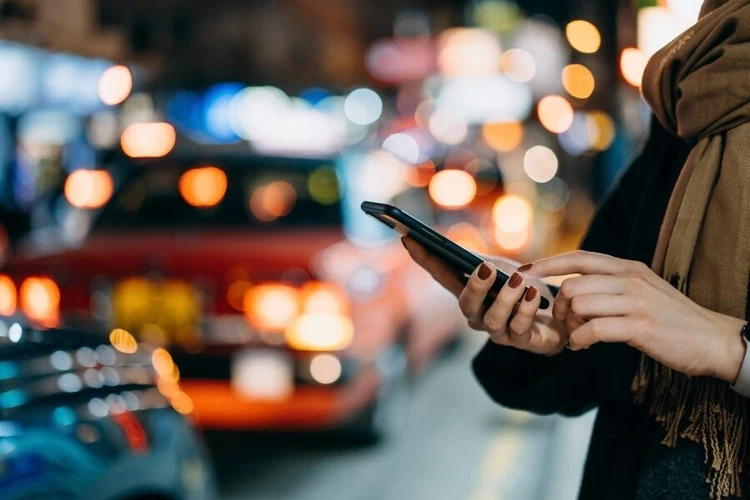
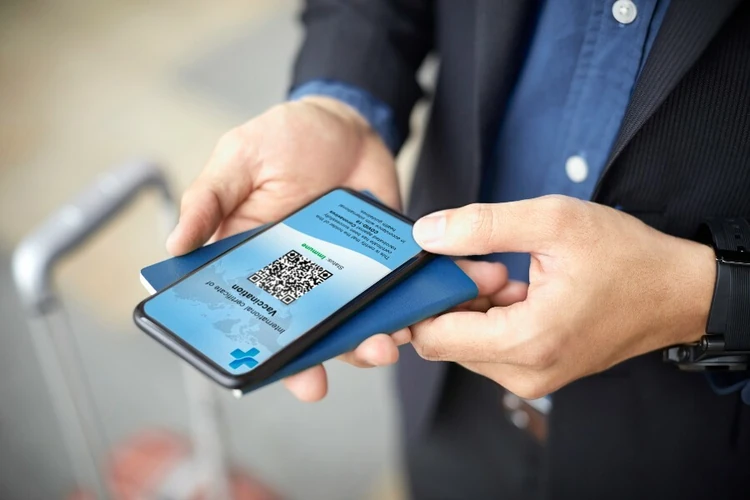
If you’re someone who has mocked others for seemingly having their heads buried in their phone, you might find yourself more attached to yours, too, before long. In the post-pandemic world, you can expect a lot less human interaction, especially when doing things like dining out, going to events, or traveling on a plane or local transportation.

If my recent COVID-19 revenge tour taught me anything, it was that I need to be app-ready at every corner.

Apps become a bigger part of life

The pandemic has spurred more businesses to deploy digital payment options. That, in turn, has forced consumers to do the same. Many apps are touch-free like Apple Pay, Google Pay, and PayPal’s QR code-driven payment. The number of contactless-enabled merchants is growing, according to a recent study by MasterCard, as is the consumer demand for touch-free payments. 

Where else might you need an app? Here are just a few examples.

Events: How about buying a ticket to see a San Francisco Giants baseball game. When I went to the ticket window, I was told that I had to use an app. When I did that and tried to buy a single ticket, I couldn’t because tickets were only sold in “pods” of two or more. Luckily, one kind soul overheard me asking a Giants representative how I could buy just one ticket and offered to sell me one of his. 

Transportation: The same was true when I wanted to ride on public transportation. I had to buy tickets via my phone and scan those tickets when I got on a bus or subway. Airlines have been pushing people to use their check-in apps for a while, but the industry is moving quickly to everything digital -- from checking in at the gate to ordering onboard food. 

Dining out: Restaurants are largely doing away with physical menus and forcing diners to scan a QR code to see what food and drink options are available.

Museums: At the museums I visited, there were apps that essentially curated my visit -- from where to find a certain exhibit to the background of certain pieces.

Apping up means powering up too

I have a Google 4 5G phone that served me well before my trip. Having a battery life that lasted more than a day and a flexible Google Fi data plan allowed me to easily manage day-to-day tasks without racking up added costs.

But that all went away during my trip because more app usage means more drain on the battery. I found my phone battery on its last legs before the day was done two times during my trip. Because I had an extra reliance on apps -- especially GoogleMaps to help guide me around places I was unfamiliar with -- my data usage soared and cost me some extra money.

The fix -- for me anyway -- was to get a power bank. Once a power bank is fully charged, it has enough juice to quickly repower a mobile device -- sometimes up to two times depending on the product you have -- before it has to be recharged.

A quick suggestion list

If you’re going on vacation anytime soon, think about adding these apps and tools to your mobile device’s arsenal. It could save you some time and hassle, especially if you’re somewhere that requires interfacing or using an app to make a purchase.

QR code reader: There are plenty of available QR code reader apps, and they all work pretty much the same. My choice was Google Lens, which is available on the Play Store and Apple’s App Store.

Payment app: If your mobile device isn’t ready for touch-free buying, it’s easy to set up and simpler than swiping a credit card. If techy things stress you out, your local bank might be willing to help you set up not only their banking app but connect it to something like Google Pay, PayPal, or Apple Pay. 

Events: If you’re going to a sporting event or concert, it’s likely that you will have to use your mobile device to buy tickets. Some venues even allow you to buy food via the same app. For sporting events, Major League Baseball and the NBA both have their own. If you’re going to a concert, you’ll need to show your ticket via an app (most likely Ticketmaster or the platform you purchased your tickets from) to get in.

Power bank: There are plenty to choose from that are available on Amazon, at Best Buy, and through other vendors. Most are in the $25-$50 range.

Airline app: Each airline has its own app, and they’re getting smarter and more integrated by the day. Some allow you to order snacks, and some even track your luggage. I also strongly recommend the MyTSA app. It provides airline passengers with 24/7 access to the most frequently requested airport security information.

Language app: Going somewhere where they speak a different language? With Google Translate, you can hit the microphone button, ask a question, and a translation will automatically appear. 

Going with others: If you’re going somewhere with friends and think you’ll be splitting up at times to take separate mini-adventures, I’ve read that Apple’s exclusive Find My Friends app might help if you get separated and need to find out how to get back to the same place.

Banking app: Make sure you have the latest version of your bank’s app so that you don’t run into any unforeseen problems while away from home. 

Rideshare apps: If you’re not driving and don’t plan on getting around on foot, you’ll probably need either the Uber or Lyft app. I suggest both since there may be times when one will be busier -- and more expensive -- than the other.

AirHelp: You may never use this app, but it can be a lifesaver if you ever get stuck in a position where your flight has been delayed or canceled -- or, worse yet, you’ve been denied boarding a flight because it was oversold. The AirHelp app has all the laws that regulators in the U.S. and EU mandate for compensation in such cases. 

All your travel information in one place: While I depended more on my Google suite of apps to get me through my trip, I recently installed the TripIt app to keep track of all travel-related information -- flights, hotel reservations, COVID-19 guidance, important travel documents, etc.

Accommodations app: If you think you’ll be making hotel or vacation rental reservations during your trip, having an app like Hotels.com or Airbnb might come in handy. The Airbnb app can be particularly helpful because it allows guests and Hosts to stay in touch.

Article Image

CDC clears Royal Caribbean to start test sailing in June

The Centers for Disease Control and Prevention (CDC) has given Royal Caribbean the go-ahead to begin testing one of its ships in U.S. waters. 

Starting in June, Royal Caribbean's “Freedom of the Seas” ship will be allowed to sail with volunteer passengers in preparation for regular sailings. It’s the first cruise ship to receive CDC approval to begin sailing on a provisional basis following more than a year of being out of service due to the pandemic. 

“After 15 months and so much work by so many during very challenging times, to all our colleagues, loyal guests and supporters all over the world, I am proud and pleased to share some bright and wonderful news,” CEO and President Michael Bayley wrote on Facebook. “We look forward to welcoming our crew, loyal guests and supporters from around the world this summer.”

Conditional sailing order

The ship will sail out of Port Miami starting June 20. All volunteer passengers must be 18 years of age or older and commit to following a number of pandemic precautions while sailing. 

Under the CDC’s Framework for Conditional Sailing Order, vaccine requirements are not mandatory for test sailings. Volunteers who aren’t vaccinated against COVID-19 must have written documentation from a health care provider that they aren’t at high risk of contracting a severe illness if they are exposed to the virus. 

Additional safety precautions that will be in effect include social distancing, mask requirements, and testing for COVID-19 before and after the trip. The test cruises are only for a limited number of unpaid volunteers invited by the cruise line.

The CDC said it discussed the safety of allowing simulation cruises at length prior to approving it. Health officials ultimately decided that it will be a safe step closer to pre-pandemic normalcy for the cruise industry. 

“Over the past month, senior leadership from CDC have met multiple times a week with cruise line senior executives to discuss the Framework for Conditional Sailing Order (CSO),” CDC spokesman Benjamin Haynes said in a statement. “During these meetings, participants asked questions and discussed the fastest path back to sailing without compromising safety. CDC and the cruise industry agree that the industry has what it needs to move forward and no additional roadblocks exist for resuming sailing by mid-summer.”

Article Image

State Department to allow travelers stuck overseas with expired passports to travel home

Travelers who are stuck overseas and holding a recently expired U.S. passport are being rescued by the State Department. The agency announced on Tuesday that it is working with the Department of Homeland Security to facilitate their return home. The agency says the move will help reduce travel difficulties and unprecedented appointment backlogs created by the COVID-19 pandemic.

Any U.S. citizen currently stranded overseas with a passport that expired on or after January 1, 2020, can use that passport anytime through December 31, 2021. There are certain criteria that apply, but the agencies ask that those travelers get in touch ahead of their trip home so that their eligibility for traveling can be confirmed and the paperwork can be processed before finalizing travel arrangements.

The agencies want travelers with expired passports to know that those documents cannot be used to travel from the U.S. to an international destination for any length of stay longer than an airport connection en route to the U.S. or to a U.S. territory (e.g. American Samoa, Guam, the Northern Mariana Islands, Puerto Rico, and the U.S. Virgin Islands).

For those wishing to renew their passport upon their return to the U.S., current processing times can be found on the U.S. Passports website.

Reconsider travel abroad

Even though international travel is starting to trend upward as the pandemic trends downward domestically, the State Department continues to strongly recommend that Americans think twice about traveling abroad — especially to places where COVID-19 levels remain high.

“We also remind U.S. citizens who wish to return to the United States that proof of a negative COVID-19 test result, taken within 72 hours of their flight’s departure, is required for air travel to the United States,” the agency said. 

The agency also reminds travelers that processing times for passports are currently running at about 10-12 weeks — a timeline that could push international travel back to mid-to-late August. 

Article Image

Lyft launches new feature to give rides for non-emergency medical appointments

Lyft has introduced a new feature that allows patients to schedule their own non-emergency medical rides via the Lyft app. 

The "Lyft Pass for Healthcare" service is designed to make it easier for patients to book their own medical transportation while still having it covered by a payer or provider. Lyft says patients currently have to go through their payers or providers to arrange a non-emergency transportation (NEMT) -- a process that can take several days. 

The ride-hailing company is hoping its app can help streamline the process by enabling health care providers to share a ride pass with eligible patients, which can be redeemed in the Lyft app. The patient can then enter the location and time for their ride

One limitation of the service is that health care organizations or social services agencies are in charge of setting a budget and approving pickup and drop-off locations. Still, eligible patients can enjoy not having to wait for the health system to schedule a medical ride. 

Gives patients more control

Lyft is hoping its new feature will be used to book rides to and from recurring appointments, public transportation, vaccinations, checkups, prescription pickups, and more. 

"We're inserting a world-class technology many are already familiar with into patients' care journey," Megan Callahan, VP of Lyft Healthcare, said in a statement. "By leveraging our superpower in consumer tech, we've automated an important piece of health access that allows patients to be self-sufficient and in control, while allowing our partners to focus on the services they provide, rather than on administrative processes."

In 2018, Uber launched a similar medical transportation program that also lets health care providers arrange rides for patients.

Article Image

Uber rebounds from pandemic lows with huge surge in ride requests during March

Consumers are apparently becoming more comfortable with ride-sharing. Uber Technologies, an industry leader in that service niche, says it doesn’t have enough drivers to make up for the surge in ride requests it’s receiving. Only a year ago, the pandemic had a sizable negative impact on sharing economy services because of social distancing measures that made people less inclined to share a ride with someone else.

In its latest filing with the Securities and Exchange Commission (SEC), Uber announced that total company bookings reached the highest monthly level ever in March 2021. The new high water mark could mean as much as $30 billion in annual bookings. 

The company’s Delivery business -- represented by UberEats and Uber Connect -- crossed another all-time threshold and is headed toward an estimated annual gross of $52 billion in March, growing more than 150 percent from March 2020 to March 2021.  

“As vaccination rates increase in the United States, we are observing that consumer demand for Mobility is recovering faster than driver availability, and consumer demand for Delivery continues to exceed courier availability,” Uber said in the filing.

More drivers are needed

On April 7, Uber announced that it is increasing investments in driver incentives to improve driver availability in the short-term. Its $250 million driver stimulus plan is designed to not only enhance earnings for its current fleet of drivers, but bring back drivers who pulled back on their availability during the COVID-19 pandemic. The company also hopes to attract new drivers to meet increased demand. 

“We want drivers to take advantage of higher earnings now because this is likely a temporary situation. As the recovery continues, we expect more drivers will be hitting the road, which means that over time earnings will come back to pre-Covid levels,” the company said last week.

The money’s pretty good, too. Uber reports that drivers in Philadelphia are earning $31.03 an hour, on average. In Chicago, the hourly earnings per driver are at $28.73. In Austin, Miami, and Phoenix, Uber drivers are taking in around $26 an hour. 

The company noted that those figures represent median hourly earnings, after Uber’s service fee, for all time on the Uber app (not just engaged time) for drivers spending 20 hours online per week. 

New fund gives rides to vaccination sites

The post-pandemic world got even rosier on Monday when it was announced that Uber, PayPal, and Walgreens are launching an $11 million Vaccine Access Fund -- thanks in great part to a notion recently floated by the White House.

When the Biden administration called on corporations to join in the effort to fight the pandemic and promote the use of vaccines, Uber, PayPal, and Walgreens were listening and came together to create the fund. The Vaccine Access Fund got an $11 million infusion to kickstart the fund for rides to vaccination sites. Consumers can also support the program by donating on PayPal, through the Uber app, or on the UberEats app. 

What happens to the donations when rides to vaccine sites aren’t needed anymore? “Any remaining funds will be used to advance health equity in underserved communities including helping to provide rides to medical appointments,” Uber said in a statement.

Article Image

Traveling more often makes consumers happier, study finds

While travel plans have looked a lot different recently because of COVID-19, a new study conducted by researchers from Washington State University could have many consumers getting their suitcases ready. 

According to the findings, consumers are likely to be happier the more often they travel. The researchers found that talking about and researching trips, and then ultimately going on those trips, contributed to better overall well-being. 

“While things like work, family life, and friends play a bigger role in overall reports of well-being, the accumulation of travel experiences does appear to have a small yet noticeable effect on self-reported life satisfaction,” said researcher Chun-Chu (Bamboo) Chen. “It really illustrates the importance of being able to get out of your routine and experience new things.”  

Several benefits to more travel

To better understand how travel can impact consumers’ happiness and well-being, the researchers surveyed 500 people on their typical travel habits, including how often they travel in a year, why they travel, and their overall life satisfaction. 

The researchers learned that more than 50 percent of the respondents traveled for leisure at least four times a year -- and the more trips they took, the happier they were. The study also revealed that rather than just daydreaming about a vacation, participants were most likely to follow through with travel plans when they discussed their intentions with other people or actively spent time researching their desired destination. These participants were also more likely to make travel a regular part of their yearly plans. 

Ultimately, participants who traveled the most often were nearly 10 percent happier than those who put traveling on the back burner. 

Getting ready for travel

As consumers anxiously anticipate travel restrictions to be loosened in the coming months, it could be a good idea to start doing the research for an upcoming trip as soon as possible. Even if the trip is months away, getting in the travel mindset could help boost consumers’ moods. 

“This research shows the more people talk about and plan vacations the more likely they are to take them,” Chen said. “If you are like me and chomping at the bit to get out of dodge and see someplace new, this research will hopefully be some additional good motivation to start planning your next vacation.”