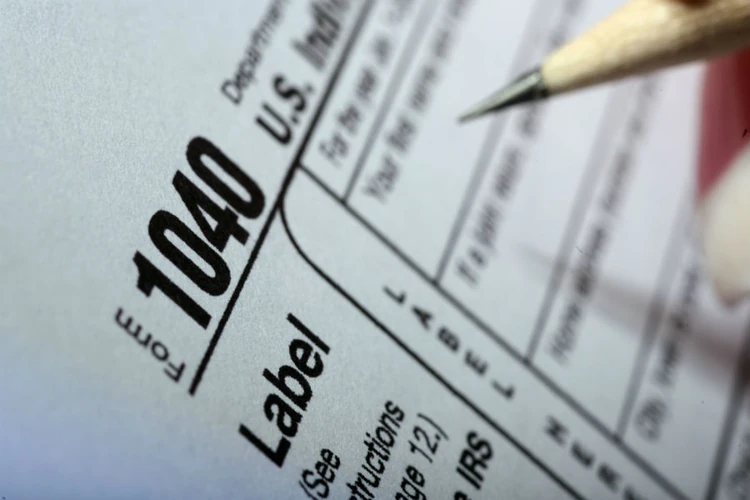


2022 IRS Regulations and Scam Alerts

Article Image

Benchmark mortgage rate exceeds 6% for first time since 2008

Buying a home just got even more expensive.

Freddie Mac reports that by its measure, the average fixed-rate 30-year mortgage rate is above 6% for the first time in 14 years, at the start of the financial crisis. Freddie Mac’s Primary Mortgage Survey puts the average rate this week at 6.02, double what it was a year ago.

“Mortgage rates continued to rise alongside hotter-than-expected inflation numbers this week, exceeding 6% for the first time since late 2008,” said Sam Khater, Freddie Mac’s chief economist. 

According to Mortgage News Daily, other interest rate monitors have tracked mortgage rates above 6% earlier this year. Most recently, the publication put the average rate at 6.26% on September 1. Before that, the average rate rose well over 6% in June before settling slightly lower in July.

High rates make homes less affordable

The rise in mortgage rates this year is the main reason for a huge decline in home affordability. Last year, when the average rate was 3%, the monthly principal and interest payment on a $300,000 loan was $1,265. Today, at 6% the monthly payment is $1,799.

Khater says that will affect the housing market in many ways but maybe not the way many would-be buyers hope.

“Although the increase in rates will continue to dampen demand and put downward pressure on home prices, inventory remains inadequate,” Khater said. “This indicates that while home price declines will likely continue, they should not be large.”

Home prices may have to fall significantly to improve affordability with a mortgage rate north of 6%. In August the National Association of Realtors reported the median existing-home sales price was $403,800 – a decline of $10,000 from the month before. However, it was still nearly 11% higher than in July 2021.


Article Image

Economic growth fell by 1.4% in the first quarter

The U.S. economy slowed in the first quarter of the year. The Commerce Department reports that Gross Domestic Product (GDP), the measure of all the goods and services in the U.S. economy, fell 1.4% between January and the end of March.

It took Wall Street by surprise since analysts expected growth of 1%. It also set off alarm bells in some quarters since the definition of a recession is two consecutive quarters in which the economy shrinks instead of grows.

So does that mean consumers should brace for a recession? Economist Joel Naroff, of Naroff Economics, doesn’t think so.

“The negative number is not greatly surprising, given growth since spring 2020,” Naroff told ConsumerAffairs. “What we had was an adjustment to the ending of stimulus and some belt-tightening due to inflation soaring.”

The trade deficit is a big factor

In fact, Naroff says the report actually underscores how well the U.S. economy is doing in comparison to the rest of the world.

“The most important fact is that the level of activity was so strong that the trade deficit soared, reducing growth by over 3 percentage points,” Naroff said. “The U.S. is doing a lot better than any other major country and that is showing in the import and export numbers.”

Naroff said the GDP might have been a positive number if the U.S. economy grew at a slower rate and the U.S. didn’t import as much. Faster growth by the rest of the world would have also made the GDP number look better.

Government spending also went down as the U.S. phased out some pandemic spending. That alone, Naroff says, reduced GDP by 0.5%. While many would say reducing government deficit spending is a good thing, it has the effect of slowing economic growth. 

However, defense spending is rising with the war in Ukraine, so government spending will likely be back up when the Commerce Department reports second-quarter GDP in July. In the meantime, Naroff says there isn’t a lot to be concerned about.

“The point is, the details don’t say the economy is in trouble,” he said. “Only that we are doing better than everywhere else, and that is not a negative.”  

Article Image

Women's salaries are likely to drop after their first child, study finds

A new study conducted by researchers from Cornell University looked at what women should expect from their paychecks after having their first child. According to the findings, women’s salaries are likely to take a hit after giving birth. However, the team found that men don't experience the same loss in pay.

“The gender revolution has stalled, and women remain economically vulnerable,” said researcher Kelly Musick. 

Women’s earnings are subject to change

To better understand salary trends between men and women, the researchers analyzed tax data and information from the U.S. Census Bureau's Survey of Income and Program Participation Synthetic Beta group from the 1980s through the 2000s. 

In the earliest years of the dataset, women’s earnings dropped 13% after giving birth to their first children. While there was some improvement by the 2000s, the researchers said women experienced a 10% drop in pay by that time. The team explained that this trend was true regardless of how much money either women or men were earning prior to giving birth, as well as their level of education. 

“Across groups, wives become more financially dependent on their husbands after parenthood,” the researchers wrote. 

The team worries about what these findings mean for women’s financial freedom, especially after the COVID-19 pandemic and work and home responsibilities changed across the country. 

“The pandemic puts into sharp relief the pitfalls of our fend-for-yourself approach to managing work and family,” Musick said. “The pandemic also creates an opening for policymakers to build a stronger infrastructure of care and the success of that effort will shape gender inequalities in work and family in the decades to come.”