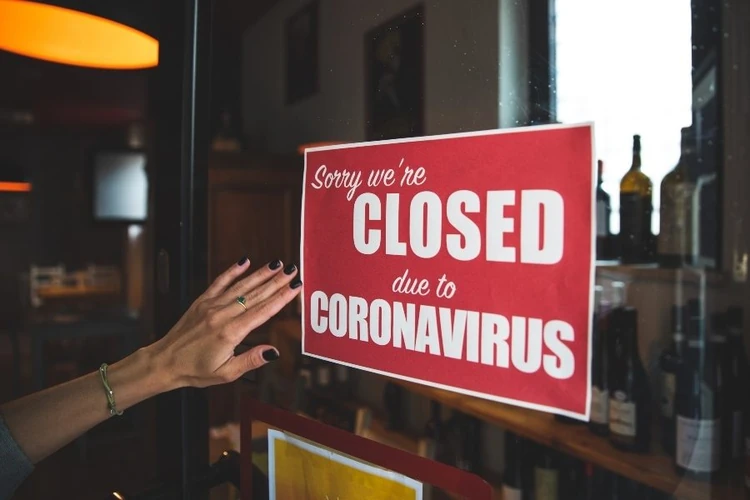
2022 Retail Bankruptcy and Closures

Article Image

All Sears Hometown stores are closing and that means big savings for shoppers

Over 100 Sears Hometown stores across the country are closing for good, and this translates into major savings for shoppers. 

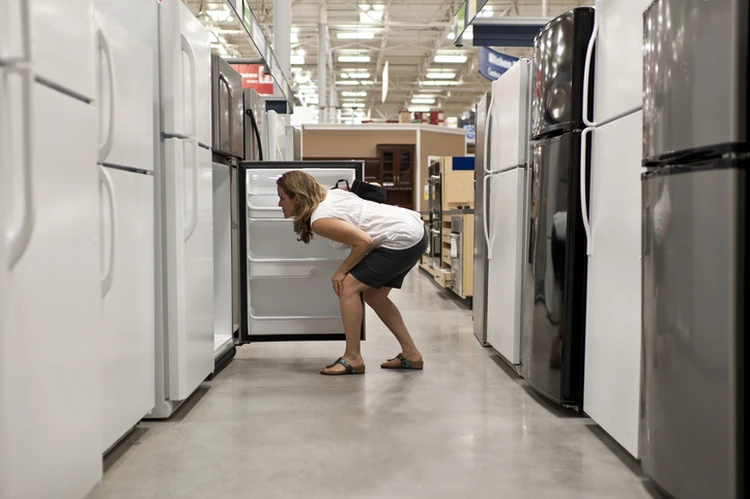
Consumers who have been thinking about making any big home appliance purchases may want to head to their closest Sears Hometown store to compare prices as company officials have said that there is nearly $40 million in inventory that needs to be sold – all at a significant discount. 

“This truly is an extraordinary buying opportunity for communities across America,” said Arnold L. Jacobs, executive managing director at Tiger Capital Group, one of the companies working on the final sales for Sears Hometown stores. “These 8,000 to 10,000 square-foot stores are filled with in-demand tools and home appliances. 

“It’s everything from Craftsman socket sets, Workpro power tools, and Kenmore washing machines to Honda riding lawnmowers, Eureka vacuum cleaners, and DieHard tool cabinets. As compared to the original price, the discounts are as high as 40 percent. That can go even higher in the case of floor models and scratch-and-dent models.” 

Making big purchases for less

There are currently 115 Sears Hometown stores still open across 36 states and Puerto Rico. Arkansas tops the list of states with the greatest number of such stores with a dozen. 

However, other states with Sears Hometown stores – and these liquidation sales – include: Alabama, Arizona, California, Colorado, Delaware, Florida, Georgia, Iowa, Idaho, Illinois, Indiana, Kansas, Kentucky, Louisiana, Maryland, Maine, Michigan, Minnesota, Missouri, Mississippi, Montana, North Carolina, Nebraska, New Mexico, New York, Ohio, Oklahoma, Oregon, Pennsylvania, Puerto Rico, Tennessee, Texas, Vermont, Washington, Wisconsin, and Wyoming. A full list of stores is available here. 

While three companies are handling the final sales at Sears Hometown stores – Tiger Capital Group, SB360 Capital Partners, and B. Riley Solutions -- consumers can expect to have all of their appliance questions answered by local store associates. In addition, shoppers can protect their purchases with warranties from outside companies. 

“These sales also come at a time of high inflation and continuing supply-chain disruptions, making them all the more relevant for American consumers,” said Siegried A. Schaffer, COO of SB360. “The home appliances, tools, and other products by Sears Hometown are everyday necessities for most households, and with today’s economic environment, every bit helps.” 
Article Image

Restaurant industry asks for more federal relief from Congress

As COVID-19’s Omicron variant continues to impact nearly every aspect of American life, small restaurant operators are headed back to Capitol Hill to ask for financial help. Industry officials say they need help dealing with higher costs and less revenue from diners who are nervous about dining out. 

Things are so bad that more than 3,000 restaurant owners wrote U.S. lawmakers to say they were in danger of closing down for good if the Restaurant Revitalization Fund (RRF) isn't refilled soon.

"I can't go into further debt to salvage this restaurant," Dwayne Allen, owner of the Breadfruit & Rum Bar in Phoenix, told FoodMarket. Allen said he had to close his restaurant for long stretches during the pandemic, which forced him to fall behind on paying his rent. When his landlord left him with no other option, Allen said he had to take out a $48,000 loan to keep the doors open.

Hoping that their support adds some validation and muscle to the situation, the mayors of 27 U.S. cities have come out in full support of small restaurant operators to urge Congress to refill the Restaurant Revitalization Fund.

In a new letter sent just last week, the mayors – who represent over 16 million Americans from Boston to Seattle – argue that not giving restaurants relief would be “catastrophic.” They emphasized that the Omicron variant is “causing more strife for restaurants and bars in such peril that they might not survive the winter.”

The consequence for consumers

As restaurateurs try to find ways to make ends meet, consumers are getting caught in the pinch. Customers are encountering issues ranging from missing menu items to long waits to get their meals.

In Knoxville, Tenn., one DoorDash driver told Reuters that he’s been sitting in drive-thru lines at fast-food chains for as long as 30 minutes since December. He noted that McDonald’s, Taco  Bell, and Chick-fil-A all recently started putting up signs warning customers and delivery drivers of longer wait times because of labor shortages. Diners shouldn’t be surprised if some of their favorite menu items go missing.

“We took our sampler off the menu at many locations because it became a bottleneck for the kitchen,” said Brandon Wright, co-owner of Hamburger Mary’s International. “Some of the items on the platter had different cooking times, which took a lot of effort to coordinate. This often resulted in longer ticket times.” 

But the National Restaurant Association (NRA) says the main reason why menu items go missing is due to supply chain issues. In a recent survey, 75% of restaurants stated that they have had to change menu items in recent months as a result of supply chain challenges. 

The biggest hit is being felt by indoor dining operators. The study found that 88% of fine dining operators and 81% of casual dining operators said they had to change their menus because of food supply delays or shortages.