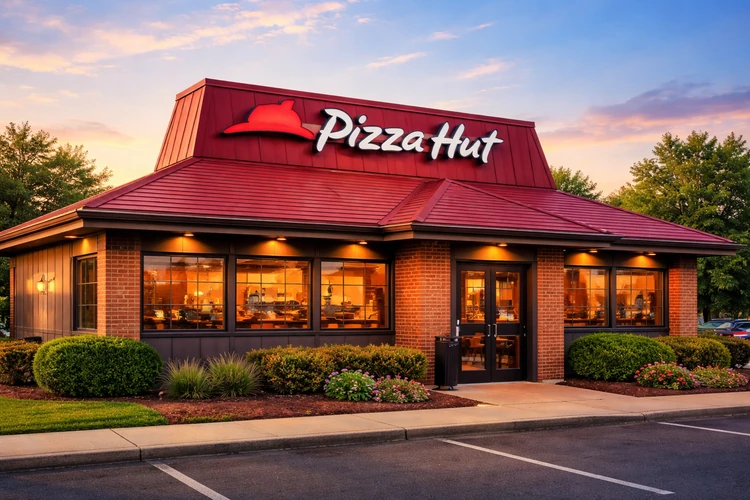

Pizza Hut plans to close roughly 250 restaurants across the United States as it reshapes its footprint and focuses on delivery-first locations.
The closures will primarily affect underperforming dine-in stores, with jobs and local franchise operators likely to feel the impact.
Company executives say the move is part of a broader strategy to adapt to changing consumer habits and rising operating costs.
Pizza Hut is preparing to close approximately 250 restaurants across the United States, marking one of the brand’s largest domestic contractions in recent years as it adjusts to shifting consumer preferences and mounting cost pressures.
The closures are expected to focus largely on traditional dine-in locations that have struggled with declining traffic, according to people familiar with the company’s plans. While Pizza Hut has not released a full list of affected locations, the move will be spread across multiple states and carried out over the coming months.
Owned by Yum Brands, Pizza Hut has been steadily reworking its U.S. business model, placing greater emphasis on delivery, carryout, and smaller-format stores known as “Pizza Hut Express” units. The pandemic-era surge in off-premise dining accelerated a trend that had already been challenging large, sit-down pizza restaurants for years.
A high-profile TV ad campaign featuring former NFL quarterback Tom Brady promotes the company’s delivery service, not its dine-in restaurants.
Changing consumer behavior
Industry analysts point out that consumer behavior has changed dramatically, with the economics of big dining rooms much harder to justify when most customers are ordering through apps and expecting fast delivery.
Rising labor costs, higher rents, and food inflation have also weighed on franchise operators, many of whom run multiple locations. For some franchisees, closing underperforming stores may be a way to stabilize finances and reinvest in more profitable formats.
Pizza Hut said it remains committed to the U.S. market and continues to open new locations that better align with current demand. The company has emphasized that the closures do not signal a retreat, but rather a recalibration aimed at long-term growth.
For employees and communities tied to the affected restaurants, however, the closures may bring uncertainty. Workers at closing locations could face layoffs or transfers, depending on nearby store availability and franchise decisions.
The planned shutdowns underscore a broader reckoning underway in the casual dining sector, as legacy brands rethink decades-old models in an era defined by convenience, speed, and digital ordering.