2021 Internet News

Article Image

Earthlink rolls out wireless internet service

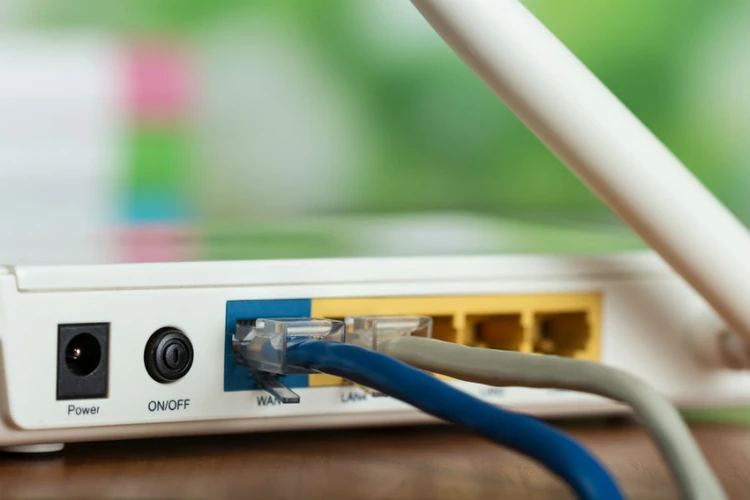
Earthlink is rolling out a new wireless internet service – EarthLink Wireless Home Internet – that it says will provide high-speed coverage to rural communities and other underserved areas. 

It works by connecting to the strongest signal from nearby cell phone towers. It then connects the user's computer or network to the internet at 5G or 4G speeds. The service, however, is limited to certain areas of the U.S.

The company says consumers who sign up for the service will get a high-speed Wi-Fi router to enable easy and secure connections for dozens of devices in the home.

The company says the new service will provide an alternative for people who don’t have access to wired services at their homes. For example, many rural consumers often have to connect to the internet via satellite, which can be costly. Some of these services are “metered,” so a user gets access to a set amount of data each month.

Earthlink says the new wireless service is affordable – starting at $54.95 a month – and utilizes new technology to enhance speed.

"As we expand our business, our priority continues to be creating the right connection for all our customers," said Glenn Goad, EarthLink’s CEO. "We know that millions of people in underserved areas are dissatisfied with the internet options available to them and millions of others are frustrated with the service level of their current internet service provider. Now, there's a great new alternative. EarthLink Wireless Home Internet changes everything for them."

The company was an early arrival on the internet scene, established in 1994. It currently offers internet service through DSL, cable, satellite, and even dial-up.

Consumer reviews

Some reviews posted at ConsumerAffairs have complained that Earthlink blocks emails without warning. Cal, from San Francisco, says it might have to do with storage limits.

“Their limit of data storage is so small that you are constantly deleting and clearing important emails,” Cal wrote in a ConsumerAffairs review. “But you don't know that you are out of storage because the account doesn't show you are. EARTHLINK just blocks emails coming to you so you have no idea what email you aren't getting.”

Consumers posting positive reviews say the company is easy to work with and that its plans are affordable. Overall, reviewers give the company 3.5 out of 5 stars.

Earthlink says its new service expands the company's coverage by adding internet service on a mobile network to its existing high-speed fiber internet offerings. The service offers plug-and-play installation. 

Article Image

Senators demand changes to consumer laws to prevent counterfeit and harmful products

Now that we’re in December and the holiday shopping season has started to pick up, a group of bipartisan U.S. senators has decided to bear down on the grinches that produce counterfeit products -- the kind that are not only rip-offs of famous brands but are also potentially hazardous to consumers. 

At a Senate Commerce subcommittee hearing on Tuesday, Sen. Marsha Blackburn (R-TN) denounced the growing number of unscrupulous third-party online retailers who bombard social media with ads and posts for the things they sell. She said these ads make it difficult for consumers to tell the difference between an authentic and a counterfeit product.

“We’re very concerned about what we see happening with some of the infiltration of counterfeit products,” Blackburn said.

How bad is it? In 2020, the total estimated merchandise value of counterfeited commodity products the U.S. seized due to intellectual property rights infringement for watches and jewelry alone came to $435.25 million.

Consumer protection laws called into question

Across the aisle, Sen. Richard Blumenthal (D-CT) -- who Blackburn has partnered with on issues like Instagram’s effect on teenage girls and Google and Apple app market dominance -- said it’s easy for dishonest sellers to portray themselves as legitimate and skirt regulations. He added that loopholes in consumer protection laws that allow this kind of behavior need to be tied off.

Specifically, Blumenthal says Section 6B of the Consumer Protection Act needs to be changed. In it, the Consumer Product Safety Commission (CPSC) is banned from publicly sharing information about specific manufacturers until ”reasonable steps” have been taken to certify that information is fair and correct. 

Blumenthal’s gripe with 6B is that it delays the CPSC from disclosing hazards that put consumers at risk.

Added concern over counterfeit toys

Members of the subcommittee and witnesses also sounded the alarm on unsafe products that consumers might give as gifts during the holiday season. Everything from counterfeit toys to malfunctioning decorations were discussed at the hearing.

“Unfortunately, the burden is on consumers to identify counterfeit, knockoff and mislabeled products — which can be difficult for those who are not familiar with lab testing certification, age warning labels and what the manufacturer’s brand logo looks like,” said Hannah Rhodes, the author of the U.S. PIRG’s recently released 36th annual Trouble in Toyland report.

Proof can be found in the statistics. The CPSC estimates that emergency rooms treated 198,000 toy-related injuries last year. “The best way to keep a child safe from injury from a toy is to keep an eye on them, look out for any broken toys and to ensure the toys are age appropriate,” Rhodes’ report suggests.

Parents need to look out for dangerous toys

Besides counterfeit toys, the U.S. PIRG’s report states that parents should pay attention to these types of toys:

  • Second-hand toys. The group notes that the person getting rid of the toy, as well as the person buying the toy, may not have checked to see if it had been recalled. 

  • Noisy toys. The organization said four of the five toys it tested made so much noise that they could hurt children’s hearing.

  • Toys that could be ingested. As an example, the U.S. PIRG pointed out that Zen Magnets were recalled in August after years of controversy and injuries. However, there are still similar magnets available for sale that also cause problems.

Article Image

Chick-fil-A customers sue the chain over claims of deceitful delivery costs

Unhappy Chick-fil-A customers have filed a class action lawsuit against the chain, claiming that the food chain’s vow of only charging customers a flat, low-priced delivery charge is an empty promise. 

The plaintiffs claim that Chick-fil-A “deceives consumers into making online food purchases they otherwise would not make” and “gains an unfair upper hand on competitors that fairly disclose their true delivery charges.”

The complaint tries to make the point that Chick-fil-A promised its customers low-price delivery -- usually $2.99 or $3.99. But they say that promise was only made to make Chick-Fil-A delivery appealing for consumers in a crowded food delivery marketplace. The group claims the chain’s food prices on its website and app are 25% to 30% higher than in-store prices -- adding $1.10 to, say, a chicken sandwich for delivery. 

That markup makes "Chick-fil-A's promise of a low-cost delivery patently false,” the lawsuit alleges. “In fact, Chick-fil-A imposes hidden delivery charges on its customers in addition to the low ‘Delivery Fee’ represented in its app and on its website.”

To its credit, Chick-Fil-A does note that its menu prices for delivery are higher than at restaurants and that “additional fees may apply.” However, that clarification is an asterisk in small type at the bottom of the ordering webpage.

Chick-Fil-A is not alone in delivery price markup 

In a market study conducted by Gordon Haskett Research Advisors, researchers found that Chick-fil-A isn’t the only food chain marking up the price of its food when consumers go the delivery route. Starbucks, Chipotle, McDonald's, and others keep it hush, but list menu prices are 15.3% higher on average for delivery orders compared to pick-up orders, according to the Haskett analysis.

Who’s the worst? Chick-fil-A indeed had the highest delivery pricing premium of the 25 chains analyzed by Gordon Haskett, with menu prices that are 29.8% higher for delivery compared to pick-up. At Starbucks, delivery menu prices are 20.3% higher than pick-up; they were 19.6% higher at McDonald's. 

Restaurants say they’re just trying to stay afloat

The whole restaurant delivery situation is becoming complex. When the pandemic set in, consumers fell in love with food delivery mostly because of convenience and safety. At that point, third-party companies like DoorDash, GrubHub, and UberEats came to the rescue. 

That was good for everyone at first; but as restaurants saw how much delivery services were eating into their profits, chains had little choice but to try to make up that lost revenue.

Laying things out from a consumer’s perspective, the Haskett team broke down just how much a restaurant chain is likely to earn from a pick-up order versus a delivery order. In laying out a real-life example, analyst Jeff Farmer ran the numbers on a $20 Chipotle order using a delivery commission of 15%. 

Farmer estimated that once you take the cost of food, labor, and other variables out of the equation, Chipotle’s net profit on a $20 in-store or pick-up order is $4.10. If you subtract a 15% delivery fee,  Chipotle ekes out just $1.10 on a $20 order. Farmer notes that if Chipotle used a delivery provider that charged a $6 commission — which is in the 30% range typical of Grubhub or UberEats — it would actually lose $1.90 on a $20 order. 

For a Chipotle delivery order to net the restaurant as much money as a pick-up order would, Chipotle would have to raise menu prices by 15%, according to Gordon Haskett's model. That would mean a $9 burrito would cost $10.35 on the delivery menu. 

Article Image

J.D. Power finds AT&T and Verizon lead in internet customer satisfaction

The internet took on added importance with last year’s arrival of the COVID-19 pandemic and resulting lockdowns. Over the last year, customers have had a chance to critically evaluate how their internet service provider (ISP) performed.

In its latest internet customer satisfaction survey, J.D. Power found two-thirds of customer satisfaction is driven by the quality and speed of the internet connection. The research firm said the pandemic has raised the bar in terms of expectations.

“The internet essentially became as or more important than other home utilities when the world nearly came to a halt in early 2020, and its importance has remained as businesses and schools have adjusted to new working environments,” said Ian Greenblatt, managing director at J.D. Power. “While overall satisfaction had been increasing since 2018, it has declined since last year, showing that as the necessity of internet service has increased, so have the expectations of customers.”

Results varied by region

J.D. Power broke down the results regionally. Verizon had the highest score in the East region — 758 out of 1,000 —followed by Xfinity, with a score of 725.

AT&T ranked highest in the North Central region, with a score of 732, followed by WOW!, with a score of 730. AT&T also ranked highest among customers in the South region, with a score of 753, followed by Xfinity, at 740.

Midcontinent was the top choice in the West region, with a score of 754, followed by AT&T, at 728.

Those results are roughly in line with how ConsumerAffairs reviewers rate the companies on a national scale. On a 5-star system, Verizon is rated at 3.9, AT&T is at 3.8, and Xfinity is at 3.7.

ConsumerAffairs reviewers weigh in

Nathan, of Georgetown, Kentucky, gave AT&T a 5-star rating last December, saying his family relied on its internet connection during the pandemic.

“We have several children that have been attending school remotely and have not overloaded the service yet,” Nathan wrote in a ConsumerAffairs post. "Another benefit of having AT&T internet is complimentary HBO Max — a fantastic perk that really adds value and entertainment to the mix.”

A number of Verizon reviewers criticized Verizon’s customer service, but for Cecelia, a ConsumerAffairs reviewer from Sayreville, New Jersey, Verizon seems to check all the boxes.

“Choices are limited in this area, and I've tried them all,” Cecelia told us. “So far, Verizon is much better overall — connectivity, reliability, service, and pricing.”

Article Image

Elon Musk says Starlink internet service now has 90,000 users in 12 countries

Elon Musk’s Starlink service continues to fire on all cylinders. Musk-owned SpaceX says its Starlink satellite internet company has grown to 90,000 users in 12 countries and continues to pick up more. If it maintains the growth rate of 20,000 subscribers it added in the past month, it would have close to a quarter-million users by the end of the year.

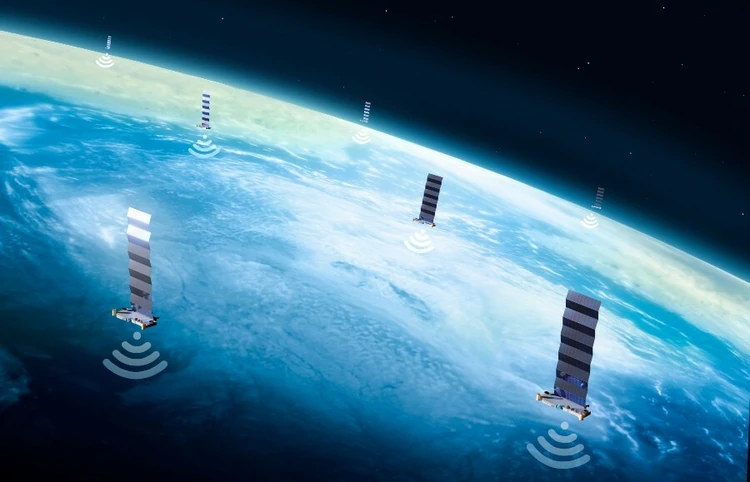
Starlink is a bit late to the game in the world of internet service providers, but its idea is novel. The service plans to build out a constellation with thousands of internet-beaming satellites that can bring high-speed internet to consumers no matter where they live around the world. To date, the company says it has launched 1,700 satellites into orbit.

In addition to delivering internet service to homes, the company has asked for regulators to give it permission to test out the possibilities for in-flight service and overseas/overland transportation like cargo ships and trucks.

Still to come

In its report to the FCC, SpaceX said its plans also include the rollout of “next-generation satellites” that will feature “faster speeds,” “lower latency,” and “more backhaul capacity” to greatly expand its user base. Latency is a key hurdle for the company and a negative for most satellite internet providers that are trying to compete with land-based cable or fiber delivery services.

However, the bigger hurdle for Starlink will be finding a price point that most consumers consider affordable. When ConsumerAffairs looked into what Starlink was charging for service, the hardware was $499, plus $99 a month for service, not to mention taxes and shipping. 

Compared to the $60 monthly average most people are paying, Starlink has a ways to go. It’s a hurdle that even Musk agrees is the company’s biggest challenge.

Article Image

Consumers are less satisfied with their internet connection in 2021

A new study suggests that internet users aren’t getting what they want. The team at HighSpeedInternet.com asked around 2,000 Americans just how happy they are with the speed, price, and reliability of their internet connections this year. 

The study concluded that consumers are less satisfied with their internet connections this year, stemming mostly from experiencing frustrations related to the pandemic. For more than a year, COVID-19 forced many people to count on internet service more than ever -- to work remotely and for families with school-aged children to do their classwork virtually. 

The winners

On the positive side, EarthLink, AT&T, and Verizon came in as the top 3 providers for customer satisfaction this year. The researchers said all three of these providers offer fiber internet connections, which ranked higher in every category compared to other connection types. 

Each of those internet providers is also neck and neck in the good score department with ConsumerAffairs reviewers. Earthlink earns 3.8/5 stars, AT&T earns 3.8/5 stars, Verizon earns 3.9/5 stars.

One of the reasons Daniel from Cleveland, Ohio, gave Earthlink 5 stars was because, rather than own and operate its own infrastructure, the company has partnership agreements in place with local ISPs like Spectrum and AT&T to install internet service on the ISP's network. 

“That's not a problem because for some reason the Internet service costs less when you go through Earthlink to get it,” Daniel wrote in his review. “Any installation problems that you have are therefore caused by the ISP (Spectrum or AT&T) technician, not Earthlink,” he said.

Good but not great

The researchers say it’s important to note that customer satisfaction ratings reflect customer sentiment but are not an exact representation of actual quantitative internet performance. That proved to be the case for Xfinity and Spectrum.

The study’s researchers said those two cable providers dropped “significantly” in this year’s ratings compared to 2020. However, while “significantly” sounds like the bottom completely fell out for those companies, it’s not that bad. In all actuality, 87% of Xfinity and Spectrum customers in the study -- as well as Xfinity and Spectrum reviewers on ConsumerAffairs -- said their speeds meet the needs of their household.

If there's any particular knock on Xfinity and Spectrum, it’s price. As an example, Helix of Farmington, N.Y., said Spectrum is generally “very good, however they raised the rates significantly in the past 2 years. $80 a month for internet service is too high.” 

Cedrick of Lilburn, Ga., feels the same about Xfinity. “I have been with [the service] for now for four years. I have enjoyed the speed, the price is a little on the high side but we don’t have too many choices,” he wrote in his review.

Fiber lovers and bundlers love their services

When it comes to DSL, cable, or fiber internet, the fiber customers are the happiest internet users. They feel they get a better bang for their buck on speed, price, reliability, and customer service than those who use DSL or Cable internet connections. 

The researchers also found that internet customers are prone to bundling services when they can. The team found that customers who bundle have a significantly higher satisfaction rating compared to those who don’t. The majority of those surveyed (58%) say they bundle their internet with TV service from the same provider. 

Article Image

SpaceX could offer global Starlink internet coverage by this September

Space X’s satellite internet service, Starlink, could be providing high-speed internet to users in every country before the end of this year, Reuters reported. 

At a web conference on Tuesday, SpaceX president Gwynne Shotwell said the company could offer global coverage as soon as September once all 1,800 satellites reach their operational orbit. That will be contingent on securing regulatory approvals. 

"We've successfully deployed 1,800 or so satellites, and once all those satellites reach their operational orbit we will have continuous global coverage so that should be like [the] September timeframe," Shotwell said, speaking as part of the virtual Macquarie Technology Summit.

The launch will follow a beta testing program through which SpaceX generated significant interest. The company offered interested consumers the option to pay a $99 deposit in exchange for the promise of coverage sometime this year or next. 

"We've got almost 100,000 users. Half a million people want to be users, but we need the electronic piece part situation to settle down so that we can actually build the user terminals for the folks that want the service," Shotwell said.

Last December, SpaceX received $885 million in grant funding from the Federal Communications Commission (FCC) to bring its satellite broadband service to consumers in 35 U.S. states. Starlink internet is currently available as a beta service in only a handful of countries, including the U.S., the U.K., and Canada. 

Article Image

FTC sues Frontier Communications over failure to deliver promised internet speeds

Internet service provider Frontier Communications had been hit with a one-two punch from the Federal Trade Commission (FTC) and the law enforcement agencies of six states. 

The FTC, Arizona, California, Indiana, Michigan, North Carolina, and Wisconsin have collectively sued Frontier for not delivering internet service at the speeds it advertised.

The company currently provides residential DSL internet service to approximately 1.3 million consumers across 25 states. The FTC says Frontier promoted various internet tiers to consumers using a variety of methods -- including mail and online ads -- and sold them to consumers both online and over the phone. 

The complaints piled up

Dating back to January 2015, the FTC said its complaints desk has been piling up with thousands of consumers complaining about Frontier’s failure to make good on its internet speed pitches. At the top of the list were complaints that things requiring larger transfers of data, such as streaming video and gaming, were impossible when they shouldn’t have been. Many customers complained that the speeds were so slow that they couldn’t even perform typical online activities that should have been possible at the speed tiers Frontier had sold to them.

People also raised plenty of red flags in ConsumerAffairs reviews.

“The slowest high speed internet on the planet. But that doesn't deter Frontier from charging me 110 dollars a month for phone I don't need (can't get internet without it) and internet speed of .4 mps. A call is usually 30 mins or way more. Stay away if you can. Unhappy in Arizona,” said Robert of Yucca, Arizona. 

Another reviewer in Tennessee pointed out that he lives in a rural area and that Frontier is his only option for internet service. Of course, that makes dealing with service problems much more difficult. While it may be a bitter pill to swallow right now, the Federal Communications Commission is currently working to close the digital divide in rural America.

Article Image

FCC announces new program to provide funding to schools and libraries

The Federal Communications Commission (FCC) has announced two new developments that will help more consumers get connected to the internet. 

First, the agency has reminded consumers that it will begin taking applications for its $3.2 billion Emergency Broadband Benefit program starting Wednesday, May 12. The program gives low-income consumers discounts of up to $50 a month for broadband service and up to $75 a month if the household is on tribal lands. A one-time discount of up to $100 on a computer or tablet will also be given to eligible households. 

Next, the FCC has announced its unanimous adoption of a $7.17 billion program that aims to get more Americans high-speed internet at home. The program was established to enable schools and libraries to purchase computers, tablets, Wi-Fi hotspots, and broadband connectivity during the COVID-19 pandemic. 

“Far too often, students, teachers, and library patrons lack the access they need to broadband

and connected devices. This need has become even more apparent during these unprecedented times,” said Jessica Rosenworcel, Acting Chairwoman of the FCC. “Between this Emergency Connectivity Fund Program and the Emergency Broadband Benefit Program, we are investing more than $10 billion in American students and households.” 

The FCC noted that as many as 17 million children in the U.S. -- particularly those from communities of color and low-income households -- don't have access to broadband, which stands in the way of remote learning during the pandemic. 

Rosenworcel noted that these investments will help close the “Homework Gap” for students across the country and give “so many more households the ability to connect, communicate, and more fully participate in modern life.”

Article Image

FCC’s broadband subsidies program set to start May 12

The FCC has announced that enrollment in its emergency broadband benefit program will begin May 12. 

The program gives eligible consumers discounts of up to $50 a month for broadband service and up to $75 a month if the household is on Tribal lands. A one-time discount of up to $100 on a computer or tablet will also be given to eligible households, the FCC said.

"As of May 12, 2021, eligible households will be able to enroll in the program to receive a monthly discount off the cost of broadband service from an approved provider,” the FCC said. The agency added that consumers can also sign up for the subsidies at this website. 

In the announcement, FCC Acting Chairwoman Jessica Rosenworcel said the program is intended to help close the digital divide. During the pandemic, a lack of internet access has been a barrier to opportunities for a number of Americans. 

“Families in every corner of the country have been struggling to get online throughout this pandemic, Rosenworcel said. “For those families, we now say help is around the corner.” 

The subsidies will pave the way for more Americans to “access the internet to carry out their day-to-day life, so they can reach the virtual classroom, take advantage of telehealth, and seek new employment opportunities,” she added. 

Helping disconnected Americans get online

Congress approved the subsidies back in December. Although it took several months to set up, the discount program is now set to roll out in less than two weeks. The program is open to: 

  • Households that participate in an existing low-income or pandemic relief program offered by a broadband provider; 

  • Lifeline subscribers, including those that are on Medicaid or accept SNAP benefits; 

  • Households with kids receiving free and reduced-price lunch or school breakfast; 

  • Pell grant recipients; and 

  • Those who have lost jobs and seen their income reduced in the last year.  

A list of ISP providers participating in the program can be viewed here. The FCC is also launching a "Companies Near Me" tool closer to the May 12 start date.

Article Image

FCC calls on consumers to share their broadband speeds

The Federal Communications Commission is encouraging consumers to test their broadband internet speeds using its speed test app. The agency’s Acting Chair Jessica Rosenworcel says doing so will help bolster the FCC's mission of collecting more accurate information on broadband speeds in different parts of the U.S. 

“To close the gap between digital haves and have nots, we are working to build a comprehensive, user-friendly dataset on broadband availability,” Rosenworcel said in a statement. 

“Expanding the base of consumers who use the FCC Speed Test app will enable us to provide improved coverage information to the public and add to the measurement tools we’re developing to show where broadband is truly available throughout the United States.” 

Crowdsourcing speed test data

Closing the digital divide has been a top priority for the FCC in recent years. The agency is currently striving to improve the accuracy of its coverage maps in order to paint a clearer picture of where improvements are needed. 

Currently, these maps primarily feature data from ISPs like Comcast and Verizon. Studies have found that the FCC’s estimates of how many Americans lack access to a broadband connection starkly contrast other data. 

A 2019 study from Microsoft found that around 163 million people could not access the internet at or above broadband speeds. At the time, the FCC had put that number at an estimated 25 million people. The agency is now asking consumers to share their broadband speeds to help enhance the accuracy of its broadband maps. 

Using the FCC’s Speed Test app “helps crowdsource data about broadband across the country that we can use to build better maps showing where service is and is not,” Rosenworcel tweeted. 

The FCC’s Speed Test App can be downloaded from the Google Play Store for Android devices or the Apple App Store for iOS devices. The FCC says it will protect the privacy and confidentiality of consumers who decide to share their speed test results. 

Article Image

FTC sending out $6.5 million refunds to Fashion Nova customers

Consumers who were affected by online retailer Fashion Nova’s violations of the Federal Trade Commission’s rules regarding shipping notifications will soon receive refunds. 

The FTC said it’s sending out $6.5 million in payments to more than half a million consumers impacted by the retailer’s violations of its Mail, Internet, or Telephone Order Merchandise Rule.

The agency said Fashion Nova violated the rule in several ways, including by promising consumers fast shipping of their orders by including phrases like “Fast Shipping,” “2-Day Shipping,” and “Expect Your Items Quick!” However, the agency says it regularly failed to deliver on those promises.

Fashion Nova also violated the FTC’s rules by never giving consumers the opportunity to cancel their orders and receive refunds. Finally, the company used gift cards to compensate consumers for items that did not ship instead of providing refunds, which isn’t permitted under FTC’s Mail Order Rule. 

“The same rules that we have enforced for nearly 50 years against catalogers and other mail-order companies also apply to online sellers,” said Andrew Smith, Director of the FTC’s Bureau of Consumer Protection, in a statement. “Online retailers need to know that our Mail Order Rule requires them to notify customers in the event of shipping delays and offer the right to cancel with a full refund—not just a gift card or a store credit.”

Millions in refunds

All told, 518,552 consumers will receive a refund of $12.60 each from the FTC. Most of the payments will be sent via PayPal to the email addresses of affected customers, but a small number of consumers will receive mailed checks. 

The FTC’s order also requires Fashion Nova to refund some customers directly. The retailer has agreed to send out direct refunds totalling $2.26 million to customers affected by its shortcomings. 

Consumers with further questions can contact the refund administrator -- Rust Consulting, Inc. -- at 1-866-483-0376.

Article Image

FCC asks for consumer feedback on their internet service

The Federal Communications Commission (FCC) says it wants to hear directly from consumers about their broadband experiences as the agency attempts to extend high-speed service across the country. 

Specifically, the FCC wants consumers to tell it whether service is even available where they live, and if so what kind of speed it offers. It’s part of an effort to extend internet service to underserved areas such as inner cities and the rural countryside.

“Far too many Americans are left behind in access to jobs, education, and healthcare if they do not have access to broadband,” said Acting FCC Chairwoman Jessica Rosenworcel.  “Collecting data from consumers who are directly affected by the lack of access to broadband will help inform the FCC’s mapping efforts and future decisions about where service is needed.”

Currently, the FCC relies on internet service providers (ISP) for this information. Officials say tapping into consumer feedback may provide a more comprehensive picture of which areas have good service and which ones do not.

A webpage to collect the data

Consumers are asked to go to this FCC webpage where they can detail their experience, both positive and negative. 

“Your experience with the availability and quality of broadband services at your location will help to inform the FCC’s efforts to close the digital divide,” the agency said. “We may also send you additional information by email in the future as we develop tools for consumers to share data with the FCC. You can also follow our efforts to improve the accuracy of these maps at www.fcc.gov/BroadbandData .”

Agency officials have complained that relying solely on information from the ISPs was inadequate and could in fact be misleading. For example, for a 50 square mile area to be considered as having broadband access, only one customer in the area had to have 25 Mbps download and 3 Mbps upload speeds.

Impact of COVID-19

The issue has taken on added urgency over the last 12 months of the coronavirus (COVID-19) pandemic. When schools closed last year, students had to attend class online, an issue in areas where service was spotty.

In a speech this week, Rosenworcel said nearly 17 million children in the U.S. fall into what she called the “homework gap,” meaning they lacked adequate access to the internet. Worldwide, she noted 67 percent of children are in that category.

“I believe this is the cruelest part of the digital divide,” she said. “We need to make it a priority to fix this homework gap and connect every student so they can have a fair shot at continuing their education.”

Article Image

FCC announces discounted internet service program for low-income households during pandemic

To help low-income households afford internet service during the COVID-19 pandemic, the Federal Communications Commission (FCC) has set up a program that allows qualifying households to get internet service for as little as $50 a month, as well as an opportunity to buy a computer or tablet at a discount.

The $3.2 billion Emergency Broadband Benefit Program will be made available within 60 days (by April 27, 2021) as providers sign up and program systems are put in place. FCC Acting Chairwoman Jessica Rosenworcel called the move historic. 

“This is a program that will help those at risk of digital disconnection. It will help those sitting in cars in parking lots just to catch a Wi-Fi signal to go online for work. It will help those lingering outside the library with a laptop just to get a wireless signal for remote learning,” she said.

“It will help those who worry about choosing between paying a broadband bill and paying rent or buying groceries. In short, this program can make a meaningful difference in the lives of people across the country. I have confidence in our staff that we will do this carefully, swiftly and the right way.”

Eligibility and what’s available

To get the broadband service discount for up to $50 -- and up to $75 a month if the household is on Tribal lands -- applicants will have to prove that they fit at least one of the following criteria:

  • Existing participation in a low-income or pandemic relief program offered by a broadband provider;

  • Lifeline subscribers, including those that are on Medicaid or accept SNAP benefits;

  • Households with children receiving free and reduced-price lunch or school breakfast;

  • Pell grant recipients; and/or

  • Those who have lost jobs or seen their income substantially reduced in the last year. 

Additional details on household eligibility can be found in this document on page 20. As for the discount on a computer or tablet, the program will provide a one-time discount of up to $100 on either of those devices for eligible households.

Article Image

Loneliness could make teens more susceptible to internet addiction

A new study conducted by researchers from the University of Helsinki has found that young people who experience higher levels of loneliness could have an increased risk for internet addiction.

These findings come nearly a year into the COVID-19 pandemic, a time during which adolescents have missed out on a great deal of socializing. Instead, they have spent more time home by themselves, which the researchers say could ultimately lead to extensive time on the internet. 

“In the coronavirus period, loneliness has increased markedly among adolescents,” said researcher Katarina Salmela-Aro. “They look for a sense of belonging from the internet. Lonely adolescents head to the internet and are at risk of becoming addicted. Internet addiction can further aggravate their malaise, which can cause depression.” 

Compulsive internet use can turn problematic

For the study, the researchers monitored 1,750 study participants’ internet use from the time they were 16 through the time they turned 18. In addition to time spent on the internet, the researchers evaluated the teens’ social and home lives and analyzed how these factors ultimately impacted their mental health. 

The study found that loneliness played a big role in how the teens utilized the internet; those who felt isolated on a regular basis were more likely to spend excessive amounts of time in front of screens. 

It’s also important to note that loneliness didn’t just stem from not seeing friends. The researchers found that kids who came from homes with inattentive parents were also more likely to turn to the internet to pass a large majority of their time. 

The biggest concern with compulsive time spent on the internet was the impact it had on the participants’ mental health. Teens who spent a large portion of their time on the internet were also more likely to struggle with depression than those who spent less time online. 

Teens can grow past internet addiction

The researchers found that a lot of internet time during the teenage years doesn’t always correlate to the same patterns during adulthood. While this is true in some cases, they explained that once teens grow beyond their adolescent years, their internet habits tend to grow and evolve with them. 

“It’s comforting to know that problematic internet use is adaptive and often changes in late adolescence and during the transition to adulthood,” said Salmela-Aro. “Consequently, attention should be paid to the matter both in school and at home. Addressing loneliness too serves as a significant channel for preventing excessive internet use.” 

Article Image

Starlink internet speeds ‘will double’ this year, Elon Musk says

SpaceX CEO Elon Musk says consumers’ Starlink internet speeds “will double” later this year. In a tweet on Monday, Musk said the network’s latency is poised to decrease and that Starlink’s coverage will continue to expand. 

“Speed will double to ~300Mb/s & latency will drop to ~20ms later this year,” Musk said in response to a user who showed speed tests ranging between 77 and 130 Mbps. 

He added that Starlink is on track to reach customers in “most” parts of the world by the end of the year and achieve complete global coverage “by next year.” Musk stressed that Starlink is geared toward customers in “low to medium population density areas.” He said cellular service “will always have the advantage in dense urban areas.”

User base growing

Last week, SpaceX launched another 60 Starlink satellites into orbit, bringing the mission’s total up to 1,145. The company’s goal is to eventually launch a total of 12,000 internet-providing satellites.

In a recent filing with the Federal Communications Commission (FCC), SpaceX said that “over 10,000 users” started using Starlink’s internet service in the U.S. and other parts of the world in just three months following the expansion of the public beta program.

“Starlink’s performance is not theoretical or experimental ... [and] is rapidly accelerating in real time as part of its public beta program,” SpaceX wrote in the FCC filing. 

The company added that Starlink’s service is “meeting and exceeding 100/20 megabits per second (‘Mbps’) throughput to individual users.” Most users have seen latency “at or below 31 milliseconds,” according to the filing.

Service is priced at $99 a month, plus a $499 initial cost for the hardware required to connect to the network. 

Article Image

Congress holds hearing into last month’s GameStop volatility

Last month’s extreme stock market volatility in GameStop stock was the focus of lawmakers’ attention Thursday when some of the principals involved in the volatility were summoned before the House Financial Services Committee.

In the hot seat were Vlad Tenev, chief executive of online brokerage Robinhood Markets Inc.; Gabe Plotkin, the founder of hedge fund Melvin Capital Management LP; Steve Huffman, the CEO of the social-media platform Reddit and host to the WallStreetBets forum; Ken Griffin, the billionaire founder of the hedge fund Citadel LLC; and Keith Gill, an individual investor who acquired big positions in GameStop stock and options and called it to the attention to others on Reddit.

Members of the committee said they were trying to determine what exactly happened in late January when the stock price of GameStop and other struggling companies surged in value because traders using the Robinhood trading platform and posting messages on Reddit pushed the stock far beyond its fundamental value.

Part of the hearing focused on Robinhood’s move, in the wake of GameStop’s meteoric rise, to limit trading in the stock. Tenev used his time with lawmakers to apologize to customers for the restrictions Robinhood introduced in late January but said it was due to conditions beyond the company’s control -- specifically, that it had to comply with federal regulations.

‘Unacceptable’

"Despite the unprecedented market conditions in January, at the end of the day, what happened is unacceptable to us," Tenev said. He said it was important for customers to know that Robinhood is "doing everything we can to make sure this won’t happen again."

In the face of pointed questions from lawmakers, the Robinhood CEO insisted that Robinhood is helping its customers to build wealth and get their financial lives under control. He said the total value of Robinhood's customers' assets exceeded the amount of money they deposited on the platform by more than $35 billion.

"While markets fluctuate, this tells me that our business model is working for everyday Americans," Tenev told the committee.

Roaring Kitty

Gill, who goes by the Reddit name of “Roaring Kitty,” told the committee he based all of his investments in GameStop on a fundamental analysis of what appeared to be the company’s declining business, carried out over at least two years.

“I continued analyzing stocks on my own time and investing my family’s funds,” he told the committee. In early June of 2019, the price of GameStop’s stock declined on worse than expected earnings, and it began trading at a deep discount, below what I thought was its fair value. I was aware from public reports that a well-known investor, Michael Burry, was interested in GameStop. Because I thought the stock was undervalued, I purchased call options on June 7, 2019.”

Lawmakers repeatedly pressed Griffin and Plotkin about their hedge funds’ relationship with Robinhood and whether institutional investors have a better deal with Robinhood than individual investors.

Article Image

SpaceX’s Starlink satellite internet service hits the 10,000 user mark

In a petition to the Federal Communications System (FCC), asking for designation as an Eligible Telecommunications Carrier (“ETC”), Elon Musk’s SpaceX said that its Starlink satellite internet service is showing some positive growth, with upwards of 10,000 users.

SpaceX is asking for an ETC designation in an effort to prove that it’s meeting all the requirements pursuant to the $900 million in federal aid it received for the Rural Digital Opportunities Fund (RDOF). The Rural Digital Opportunity Fund is an FCC program that’s investing billions of dollars in the construction of rural broadband networks in an effort to narrow the digital divide in the U.S. 

“Designating Starlink Services as an ETC is in the public interest because it will enable the company to receive support that will facilitate rapid deployment of broadband and voice service to the Service Areas at speeds and latency comparable to terrestrial systems in urban locations,” SpaceX wrote in the filing.

Starting small with its eyes on a bigger prize

SpaceX isn’t trying to bring broadband to everyone right away. It’s only pursuing ETC in the census blocks of Alabama, Connecticut, New Hampshire, New York, Tennessee, Virginia, and West Virginia.

Nonetheless, SpaceX’s long-term plan is to build a “constellation” -- an internet network with thousands of satellites -- in hopes of delivering high-speed internet to anyone in the world. The numbers don’t lie about SpaceX’s desire. In 2019, regulators approved SpaceX’s proposal to launch 11,943 satellites, with 4,425 of those satellites planned to go into orbit by 2024.

Comparing prices and service

While satellite speeds top out at 150 Mbps compared to cable speeds, which reach up to 1,000 megabits per second (Mbps), the national average speed is 42.86 Mbps. That’s sufficient for streaming HD video on a few devices, multiplayer online gaming, or downloading large files.

In the filing, SpaceX noted that Starlink’s service is “meeting and exceeding 100/20 Mbps throughput to individual users.” At that rate, the internet-of-things just moves quicker with less latency, allowing users to stream video in ultra high-definition (UHD) on multiple screens.

SpaceX began a public beta phase program of Starlink in October 2020, with service priced out at $99 a month compared to the average advertised internet package in the U.S. of around $50–$60 per month. Signing up for Starlink service will also cost another $499 upfront to order the Starlink Kit that gives the end-user a terminal, mounting tripod, and Wi-Fi router necessary to connect to the satellites.

Article Image

Verizon suffers a major internet outage in the Northeast

If you’re a Verizon customer and had trouble getting online Tuesday afternoon, the problem wasn’t your device or your Wi-Fi. The carrier said it suffered an outage that affected customers in the Northeast.

Most of the outage occurred between Boston and Washington, DC, which covers millions of Verizon customers. The company said its network suffered “degraded service,” causing some applications requiring high bandwidth to stop working. 

Verizon said its engineers and techs began responding to trouble reports during the late morning on Tuesday, with issues lasting into the early afternoon. This left employees working from home and students attending online classes in the dark. Customers like “Flight’s Burner” took to Twitter to express their frustration.

“Why does Verizon want to have a major outage when I have class?” he posted.

Twitter users also reported that they were also having issues with Zoom, Slack, Gmail, and Amazon Web Services (AWS). A graph on Zoom’s status page shows a huge spike in trouble reports peaking around noon on Tuesday.

"We are aware of an issue impacting the quality of Fios service throughout the Northeast corridor," Rich Young, a spokesman for Verizon told CNN. "Our network team is fully engaged. We are working through the root cause and have already seen service levels start to restore."

FCC takes notice

While Verizon engineers worked to figure out the cause of the outage, it caught the attention of the Federal Communications Commission. Acting Chairwoman Jessica Rosenworcel wrote on Twitter that both her agency and the Department of Homeland Security were investigating because the outage interfered with Americans attending class and working remotely.

The Wall Street Journal reports that Kentik, an internet measurement company, tracked a 12 percent drop in data traffic to Verizon during the three hours or so that service was interrupted. At this point, all indications suggest the issue was limited to the Northeast region.