2023 Hyundai Recalls and Safety Alerts

Article Image

Hyundai recalls nearly 38,000 model year 2021-2023 Elantra HEVs

Hyundai Motor America is recalling 37,997 model year 2021-2023 Elantra HEVs.

A software error in the motor control unit may cause unintended vehicle acceleration after the brake pedal is released.

Unintended vehicle acceleration can increase the risk of a crash.

What to do

Dealers will update the motor control unit software free of charge.

Owner notification letters are expected to be mailed October 17, 2023.

Owners may contact Hyundai customer service at (855) 371-9460. Hyundai's number for this recall is 248.

Article Image

Hyundai recalls 52,000 Palisades, Tucsons, Sonatas, Elantras and Konas

Hyundai Motor America is recalling 52,008 model year 2023-2024 Palisades, and model year 2023 Tucsons, Sonatas, Elantras & Konas.

The electronic controller for the Idle Stop & Go oil pump assembly may contain damaged electrical components that can cause the pump controller to overheat.

An electric oil pump assembly that overheats increases the risk of a vehicle fire.

What to do

Owners are advised to park outside and away from structures until the recall repair is complete.

Dealers will inspect and replace the electric oil pump controller -- as necessary -- free of charge. Notification letters are expected to be mailed to owners September 25, 2023.

Owners may contact Hyundai customer service at (855) 371-9460. Hyundai's number for this recall is 246.

Article Image

Some Hyundai and Kia owners still have trouble getting insurance

Almost a year ago, a TikTok video showing how easy it is to steal some Kia and Hyundai models went viral, leading to a wave of car thefts. It wasn’t long before owners of these particular models were finding it more difficult to obtain car insurance.

In January, CNN reported that both State Farm and Progressive were shying away from issuing policies. Now apparently, other insurance carriers have taken that position.

NPR reports a Colorado woman purchased a used Kia Forte but was unable to find any insurance company that would cover it. According to the report, the woman used an insurance broker to help her but was turned down a dozen times.

A Kia model belonging to Trice, of Warren, Mich., is one of the hundreds that have been stolen. The car is still insured but it costs a lot more.

“Car insurance shot up after paying the same amount for three years,” Trice wrote in a ConsumerAffairs review. “Nobody else will insure this car for under $300 a month as a new customer.”

Why they are so easy to steal

According to the Insurance Institute for Highway Safety (IIHS), many 2015-19 Hyundai and Kia vehicles lack electronic immobilizers that prevent thieves from simply breaking in and bypassing the ignition. The feature is standard equipment on nearly all vehicles of that vintage made by other manufacturers. 

Both Kia and Hyundai have the problem because they are made by the same company. The brands have developed a fix but it may take time to apply it to all the affected vehicles.

Hugh Allen, principal product strategist at Hi Marley, a communication platform for the insurance industry, says carriers are simply reacting to the numbers as they analyze risk.

"While it may not seem fair to consumers, carriers rely on hard facts and historical trending data to change their rules, he told us. “The fix marketed by Hyundai and Kia must be proven. I’m not sure that a necessary amount of time has transpired for data to be collected and change the risk results.”

Karl Brauer, executive analyst at iSeeCars.com, believes the insurance industry is being shortsighted and is unnecessarily punishing consumers. He offers the following analysis:

You happen to live in an area where there are 100 registered Hyundais or Kias. In an average year, one gets stolen. But after the TikTok video, maybe seven of the models were stolen in the following 12 months.

“The insurance company looks at that and sees a 700% increase,” Brauer told ConsumerAffairs. “But another way to look at that is 93 Kias weren’t stolen. There’s a lot going on with these cars being stolen, compared to what was going on before. But it’s not that most of them are being stolen, or even half. It’s a tiny percentage.”

Official pressure

Meanwhile, pressure is growing for the automaker to do something to resolve the issue. In March, 23 state attorneys general called on Hyundai-Kia to take “swift and comprehensive action to help remedy the crisis of car thefts that has occurred due to the companies’ failure to equip vehicles with anti-theft immobilizers.” 

In a letter to the automaker, the state officials pointed out that Kia and Hyundai chose not to include anti-theft immobilizers as standard equipment on several vehicle models sold in the U.S. during a period when every other car manufacturer was doing so.

“Kia and Hyundai failed to equip their vehicles with industry-standard anti-theft technology, and customers are now paying a steep price,” said Connecticut Attorney General William Tong. “These cars are now disproportionately targeted by thieves at rates so high some insurers are refusing to cover them. Kia and Hyundai need to make this right—quickly, and without nickel and diming their customers.”
Article Image

States ask feds to recall easy-to-steal Hyundais and Kias

At least eight deaths and numerous injuries and property damage have prompted attorneys general from 17 states and the District of Columbia to call on the National Highway Traffic Safety Administration (NHTSA) to recall model year 2011 through 2022 Hyundai and Kia vehicles.

In a letter to the agency the officials, led by California Attorney General Rob Bonta, say easily-bypassed ignition switches and lack of engine immobilizers make the vehicles particularly vulnerable to theft.

The letter notes that videos uploaded to the social media platform TikTok show how easy it is to steal the vehicles.

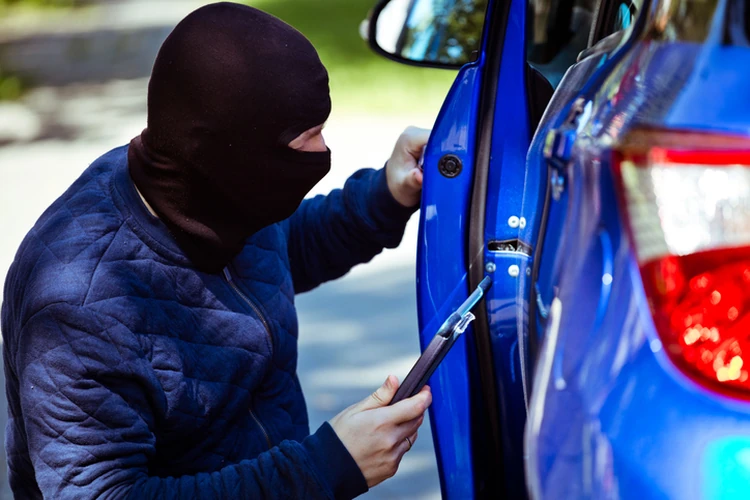
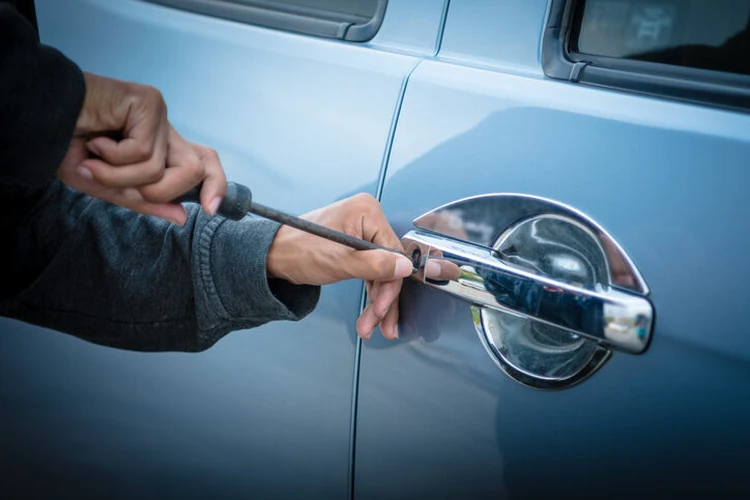
Using only a USB cable and a screwdriver, thieves bypassed the keyed ignition by prying off the steering wheel column, accessing the ignition switch, and starting the vehicle without a key in as little as 20 to 30 seconds.

In addition to Bonta, the letter was signed by attorneys general from Arizona, Colorado, Connecticut, Illinois, Massachusetts, Maryland, Michigan, Minnesota, New Jersey, New Mexico, New York, Oregon, Pennsylvania, Rhode Island, Vermont, Washington and the District of Columbia.

Not all agree

Among those who did not sign the letter was Georgia Attorney General Chris Carr. In a statement released last week and reported by Fox 5 Atlanta, he puts the blame on criminals, not the consumers or corporations.

"This approach is completely backward,” Car said. “The State of Georgia will not blame companies for the actions of criminals. We also refuse to put additional burden on companies in order to coddle criminals, as we are seeing being done in far too many cities and states around the country."

Fix or no fix?

Hyundai spokesman Ira Gabriel says the automaker has taken "comprehensive action" to assist its customers.

These actions, he told ConsumerAffairs, include making engine immobilizers standard on all vehicles produced as of November 2021 and reimbursing customers for their purchase of steering wheel locks.

But, as far as the AGs are concerned, the response doesn't go far enough and “ does not adequately remedy the safety concerns facing vehicle owners and the public.”

In short, they say, the starting systems are not in compliance with federal standards and pose an unreasonable risk to public safety.

The preferred solution, according to the letter, is for NHTSA to “exercise its authority to order a mandatory recall or ensure Hyundai and Kia institute a voluntary recall.”

Article Image

Hyundai-Kia faces growing pressure over car thefts

Last month’s announcement from Hyundai-Kia that there is now a fix for the vehicle’s vulnerability to theft hasn’t lessened the pressure on the automaker. 

Twenty-three state attorneys general are calling on Hyundai-Kia to take “swift and comprehensive action to help remedy the crisis of car thefts that has occurred due to the companies’ failure to equip vehicles with anti-theft immobilizers.”

Thefts accelerated in the middle of last year when a TikTok video showing how easy it is to steal the cars went viral. Thefts surged because the particular models identified in the video lacked the anti-theft equipment.

Immobilizers prevent a car or truck from being started without a key that contains an embedded chip. The TikTok video showed how some Hyundai and Kia cars could be started using a USB cable.

In a letter to the automaker, the state officials pointed out that Kia and Hyundai chose not to include anti-theft immobilizers as standard equipment on several vehicle models sold in the U.S. during a period when every other car manufacturer was doing so.

“Kia and Hyundai failed to equip their vehicles with industry-standard anti-theft technology, and customers are now paying a steep price,” said Connecticut Attorney General William Tong. “These cars are now disproportionately targeted by thieves at rates so high some insurers are refusing to cover them. Kia and Hyundai need to make this right—quickly, and without nickel and diming their customers.” 
The fix

Last month the automaker, which produces both brands, announced a software update that it said would solve the problem. It has begun installing the update on the models considered most vulnerable to theft.

While that’s a step in the right direction, the attorneys general say it isn’t enough and has come too late. The attorneys general urge the companies “to do everything in your power to accelerate the implementation of the software upgrade and to provide free alternative protective measures for all those owners whose cars cannot support the software upgrade.”

The attorneys' general request has not turned into legal action, at least not yet. In February, however, the company was named in a class-action lawsuit. Sebastian Cole of Milwaukee filed the complaint in Wisconsin’s Eastern District Court, seeking class-action status. The suit says Cole was a car theft victim in July 2021 when his 2018 Kia Forte was stolen.

More recently, the City of San Diego sued the automaker over the lack of immobilizers on older models. The San Diego City Attorney's Office alleges that 146 Hyundai and Kia cars were stolen in San Diego during the first six months of 2022, and 369 cars were taken in the last six months of the year.

Article Image

Kia and Hyundai owners can rejoice that the automakers have a solution for their theft issues

There’s finally some good news for Hyundai and Kia owners worried about their cars being stolen.

After a Tik Tok social media challenge last year show that those brands’ vehicles were easy to steal and, therefore, an insurance risk, the automakers have developed theft deterrent software for the millions of their vehicles that lack an immobilizer. The extra good news is that Hyundai and Kia will provide it free of charge to vehicle owners. 

The companies also got brownie points from the National Highway Traffic Safety Administration because the new software updates the theft alarm software logic to extend the length of the alarm sound from 30 seconds to one minute and requires the key to be in the ignition switch to turn the vehicle on.

NHTSA urges owners of these vehicles to contact Hyundai (toll-free at 800-633-5151) or Kia (toll-free at 800-333-4542) for information on the free update.

What Kia and Hyundai owners can expect

The Hyundai rollout begins with model year 2017-2020 Elantra, 2015-2019 Sonata and 2020-2021Venue vehicles.

Randy Parker, CEO, Hyundai Motor America, said that those were priortized because they are the company's biggest-selling vehicles and those most targeted by thieves. Details on distribution to other models and model years can be found on Hyundai's website.

A spokesperson for Kia told ConsumerAffairs that the automaker has already begun offering and installing the software, and will continue to do so in phases. Kia owners with questions may contact our Customer Care team directly at 1-800-333-4542.

The NHTSA acknowledged that Hyundai owners should be on the lookout for a window sticker alerting would-be thieves that the vehicle is equipped with anti-theft protection. The company will begin sending out the stickers in a phased approach beginning later this month, with subsequent phases over the next several months. The same holds true for software updates.

As a bonus, the companies have also been working with law enforcement agencies to provide steering wheel locks. However, the distribution of those locks has been limited so far according to the agency and to date those locks have been available from 77 law enforcement agencies in 12 states. NHTSA encourages interested vehicle owners to contact local law enforcement to see if a wheel lock is available.

Article Image

Buying a used Kia or Hyundai? You might have trouble getting insurance

Used car shoppers need to keep several factors in mind as they make a decision – things like maintenance costs and insurance. In the case of certain Kia and Hyundai models, you may need to consider whether you can even get insurance.

CNN has reported that both State Farm and Progressive have quietly decided they will no longer issue policies for some 2015 through 2019 Kia and Hyundai models. The reason? They’re too easy to steal.

As we reported in August, thefts of Kias and Hyundais – they’re made by the same company – surged in the wake of a viral TikTok video showing how to easily steal the cars with only a screwdriver and a USB cable.

The following month, the Insurance Institute for Highway Safety (IIHS) explained why it was so easy. According to IIHS, many 2015-19 Hyundai and Kia vehicles lack electronic immobilizers that prevent thieves from simply breaking in and bypassing the ignition. The feature is standard equipment on nearly all vehicles of that vintage made by other manufacturers.

Highway Loss Data Institute (HLDI) Senior Vice President Matt Moore said at the time that the lack of an immobilizer makes any vehicle a tempting target.

An effective deterrent

“Our earlier studies show that vehicle theft losses plunged after immobilizers were introduced,” Moore said. “Unfortunately, Hyundai and Kia have lagged behind other automakers in making them standard equipment.”

Immobilizers were already standard on 62% of models from other manufacturers in the model year 2000. But even in the model year 2015, when immobilizers were standard on 96% of other manufacturers’ vehicles, they were standard on only 26% of Hyundai and Kia vehicle models.

How do immobilizers work? According to cybersecurity firm Kaspersky, it’s a simple electronic system consisting of two parts –  a transponder in the ignition key and a receiver in the car itself.

“When someone attempts to start the engine, the vehicle sends a request to the key,” the company explains. “If the key returns the correct predefined signal, the immobilizer sends a command to the engine control unit to start. Without the right signal, you can’t start the car.”

Progressive and State Farm are not exactly boasting about their new policy and have not responded to queries from other media outlets. But in a statement to CNN, State Farm confirmed it is not writing new policies on the affected models, at least temporarily. Progressive said has changed the criteria for some models and raised premiums for others.

According to the New York Post, Kia and Hyundai vehicle thefts are up as much as 300% over the past two years in some cities.