2022 Energy Costs and Sustainability

Article Image

Winter heating bills may not break the bank after all

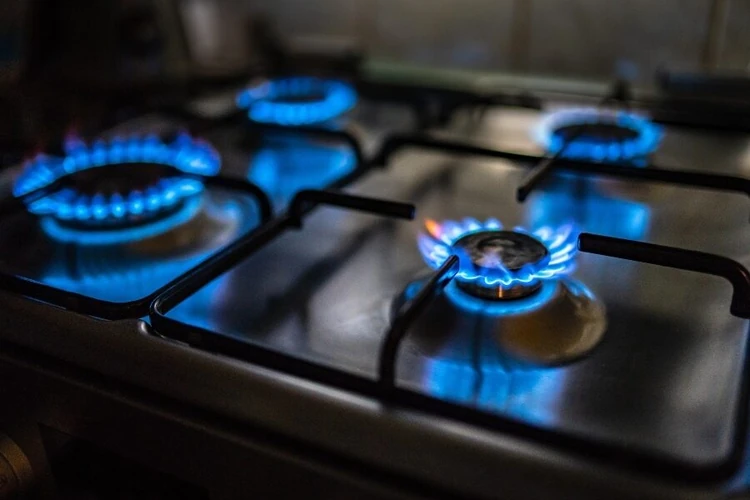
Not long ago the headlines were filled with dire warnings about skyrocketing home heating bills this winter. It could still happen, but industry experts say a sudden and unexpected drop in natural gas prices could help consumers cope.

The market price of natural gas is now down 40% from the record highs it hit in August, which set off alarm bells. High gas prices, brought on by shortages in Europe and caused by the Russian-Ukraine war, raised the possibility that millions of Americans, already struggling with inflation, might be faced with difficult choices this winter.

Then, it got warmer – especially in Europe, which needed less gas from the U.S. Here at home, mild weather also prevailed in much of the country during October. 

At the same time, producers have racked up record production levels. The Wall Street Journal reports gas storage facilities are filled to the brim.

Of course, we’re still in the fall months. Winter still lies ahead but industry analysts have revised their forecasts, saying natural gas prices in 2023 might even be lower than their 2022 average.

Nearly half of U.S. homes heat with gas

Nearly half of U.S. homes are heated with natural gas, according to the U.S. Energy Information Administration (EIA). But even consumers heating with electricity could catch a break since many electric power plants are fueled by natural gas.

Besides a surge in domestic production, other factors may be weighing down natural gas prices as we head into the home heating season. Economic concerns, including the possibility of a global recession next year, have tempered demand and prices.

Whether the natural gas price break extends into the depths of winter will likely depend on the weather. The Old Farmer’s Almanac, which has been remarkably prescient over the years, advises Americans to bundle up.

“We believe that most of the U.S. will be colder than normal this winter, although summer will be mostly warmer than usual,” the authors write. In addition to a neutral to perhaps weak El Niño, important weather influences will include a continued warm phase of the Atlantic Multidecadal Oscillation (AMO), a neutral to positive North Atlantic Oscillation (NAO), and a negative Pacific Decadal Oscillation (PDO). Oscillations are linked ocean-atmosphere patterns that can have long-term effects on the weather.”

But at the National Oceanic and Atmospheric Administration (NOAA), forecasters are expecting the U.S. will generally have a mild winter. The agency said it expects warmer-than-average temperatures for the Southwest and along the Gulf Coast and eastern seaboard.
Article Image

Cuddle up or pay up, America. Your utility bill could bite you where it hurts this winter.

Might as well start with the bad news. In the last year, the cost of heating your home with gas has gone up 33.5%; with electricity, 15.9%.

But, with a colder-than-average winter forecast for much of the country and the impact of the Ukraine-Russia conflict on the cost of energy, the winter 2022-23 outlook is raising the temperature on consumers’ wallets. 

This winter, the Energy Information Administration’s (EIA) outlook estimates that natural gas users could pay 51% more than last year; heating oil users, 37%; propane users, 36%; and electric users, 20%.

The COVID-19 pandemic wasn't good for much, but for heating oil consumers, the pandemic cut down on global oil demand, said Katharina Buchholz, in Statista’s calculation of the impact. But the pandemic's gone and it's Russia taking its place. 

“As the invasion of Ukraine and embargoes against Russian energy products have caused turmoil on global markets, oil price fluctuations are being more immediately passed on to consumers, for example through gasoline or heating oil prices rising quickly,” Buchholz said.

Ways to cut your utility bills

ConsumerAffairs did a bit of research to see what the energy-saving options in 2022 look like. Here’s what we found:

Wouldn't you know it?

Is there a way you can fend off the chill that energy prices could put on your budget? According to EfficiencyMaine’s cost of energy calculator, firewood is the least expensive way to go. 

Based on the current price of a cord of wood ($296), the calculator estimates it would cost an average $1,259 per year to use firewood to heat your home. That’s about $700 less than using a geothermal heat pump; $400 less than a conventional heat pump; and about $1,300 less than a natural gas furnace.

Get “smart”

If you don't have a fireplace but you love technology, the newest utility-saving idea comes from all the “smart devices” and “smart plugs” that consumers can buy to control the utility-sucking items in their home. 

And they’re fairly inexpensive, too. For example, ConsumerAffairs found plenty of smart plugs on Amazon for as little as $25 for a pack of two with two outlets each. That would cover a coffee maker and toaster in the kitchen, and a table light or two in the bedroom. 

There are also smart water leak and freeze detectors, thermostats, light bulbs, appliances, sprinkler systems, and garage door openers – all of which can be operated remotely via a smartphone app.

Time-based utility rates enter the picture

One way that consumers might be able to curb their utility cost is by signing up for time-based utility rates.

The Department of Energy (DOE) says that many utilities are introducing innovative programs to encourage customers to use electricity during off-peak hours – usually ranging from 8 a.m. to 5 p.m. when the kids are at school and people are at work, times when electricity demand is at its lowest.

“Smart meters and home energy management systems allow customers to program how and when their home uses energy. If you are able to shift your power use to off-peak times -- such as running your dishwasher late in the evening -- these programs can save you money,” the DOE says.

Time-based utility rates aren’t everywhere, but the list of states where they’re available is growing. Local utilities in California, Arizona, Massachusetts, and other states have adopted the pricing alternative. It may be worth some Googling to find out if your state or local utility company offers the same.

Article Image

Renters can build credit through new Fannie Mae rent reporting program

While the prices of homes have made purchasing harder, and rent prices are also on the rise, the housing market seems to be a lose-lose situation for many consumers. 

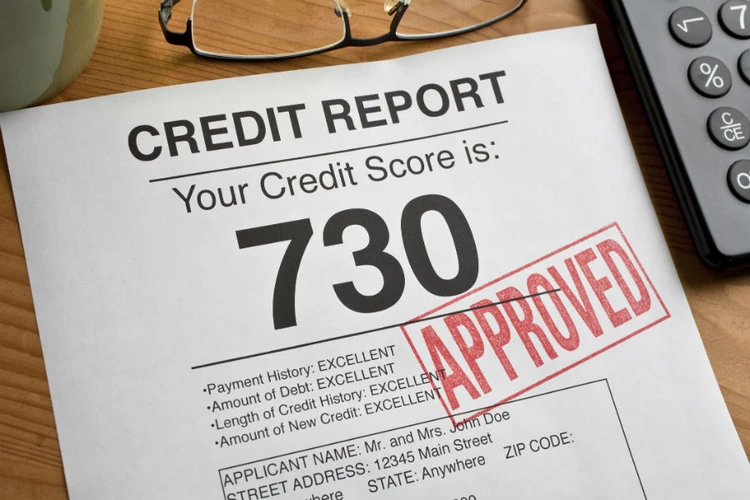
To help ease the burden for renters, and improve their credit long-term, Fannie Mae has created a new program – the Multifamily Positive Rent Payment Reporting program. Under the program, owners of multifamily homes have the opportunity to record on-time rent payments through third-party vendors, which can in turn help bolster their renters’ credit scores. 

The program was designed to help renters who may be trying to buy their own homes or who are just trying to build up their credit. Previously, paying rent on time was never calculated in consumers’ credit scores. Now, keeping up with their rent payments will help them build a stronger financial standing for themselves. 

“Around 20% of the U.S. population has little to no established credit history, a group in which Black and Latino/Hispanic people are disproportionately represented,” said Michele Evans, executive vice president and head of Multifamily at Fannie Mae. “Of the consumers who do have a credit score, a disproportionate number of Black consumers have a subprime credit score.

“These imbalances reinforce racial disparities in access to credit and quality affordable housing among renters and homeowners. The absence of sufficient credit history reduces a renter’s ability to access housing in higher-opportunity neighborhoods, obtain a mortgage, and attain lower-cost credit, such as auto loans and education financing. By enabling easier and more expansive adoption of positive rent payment reporting, we can knock down this longstanding barrier to building credit and help more consumers begin to establish a strong financial and credit foundation.”   

Benefits for renters and landlords

Participating in Fannie Mae’s new rent payment reporting program provides benefits for both landlords and renters. For starters, by knowing that rent payments can positively impact credit, many renters may be more motivated to be timely with their monthly payments; it’s a win-win for renters and landlords. 

Other benefits for renters are:

  • Improving the likelihood of getting qualified for a mortgage
  • Access to better credit for car loans, mall business loans, or education loans
  • The ability to create credit profiles
  • The ability to secure housing in better areas
  • Land a lower security deposit in the future. 

Additionally, should renters be late with their payments, they won’t have to worry about their credit scores taking a hit – the program will automatically cancel enrollment if renters are late with their payment. The program will also be optional – renters won’t be required to be involved in it. 

For landlords, being involved in the program comes at no cost. It can help attract more serious renters and ultimately help improve their renters’ credit long-term. 

“Launching this pilot program is the latest step on Fannie Mae’s journey to make the housing system work better for everyone,” said Evans. “By accelerating the adoption of positive rent reporting across the multifamily industry, we will help ensure renter households get the credit they deserve for paying on time each month.” 

Article Image

Consumers face much higher natural gas prices this winter

Natural gas prices are surging and with winter approaching, consumers who heat with the fuel can expect rising bills. Even electric bills could rise since many utilities generate electricity with natural gas.

For years, natural gas has been plentiful and relatively cheap, but no more. Like many things in the economy, GasBuddy’s Patrick DeHaan says the move in natural gas prices is tied to Russia, which has interrupted its supplies going to Western Europe. 

“Russia is one of the top suppliers of natural gas, and with them shutting down exports to Europe and limiting flows, natural gas prices have exploded,” DeHaan told ConsumerAffairs. “In addition, with economies reopening after COVID and power demand very high, demand for natural gas has been significant.”

Within days, Russia plans to close off one of Europe’s most vital fuel pipelines for an indefinite period of unplanned maintenance. Many industry sources see it as a retaliatory move in response to NATO’s support for Ukraine.

But the move will affect U.S. consumers. U.S. producers are stepping in to fill some of the void created by the Russian shutdown. At the same time, demand for natural gas in the U.S. rose over the summer in response to hot, dry weather in much of the Western U.S. The fuel wasn’t needed to heat homes but to meet additional electricity demand.

Consumers are using more electricity

The U.S. Energy Information Administration (EIA) reported Tuesday that electric power generated by natural gas-fired power plants in the lower 48 states reached 6.37 million megawatt-hours in mid-July. The agency reported demand remained strong despite rising prices. Making matters even more precarious for U.S. consumers, EIA reported that producers have cut back on their natural gas storage for the winter months.

“We are beginning to see a lag in storage builds that could lead to a precarious situation during the draw season in the event of a harsher-than-expected winter,” Neal Dingmann, an energy equities analyst at Truist Securities,” told the Wall Street Journal. “There is potential for a winter U.S. super spike.”

Natural gas is a widely-used fuel in American homes. In addition to operating furnaces, some households use the fuel to cook, heat water, and dry clothes.

According to the American Gas Association, the average U.S. household using natural gas paid a total of $670 a year for the fuel, an average of more than $55 a month. Industry experts say those bills are bound to rise this winter.

Article Image

White House announces additional funding to help consumers pay energy bills

With inflation, gas prices, and rising home costs on Americans' minds already, the White House says it is trying to get ahead of a possible increase to home energy costs.

On Thursday, President Biden announced that the U.S. Department of Health and Human Services (HHS) will release more than $385 million to states to help Americans with their home energy costs – both summer and winter – through the Low Income Home Energy Assistance Program (LIHEAP). 

The new cash infusion is in addition to the billions that the American Rescue Plan provided to LIHEAP last year. It also represents the first $100 million installment of a five-year, $500 million investment in LIHEAP from President Biden’s Bipartisan Infrastructure Law. Added together, that makes $8.3 billion in LIHEAP assistance that the Biden administration has invested in reducing heating and cooling costs for low-income Americans.

What’s included in the plan

All told, there are four components to Biden’s action plan. They include:

Record LIHEAP Funding for States: The allocation of the LIHEAP funding will be handled state-by-state. As an example, the White House gave Oregon an additional $3.8 million in funding. The state of Washington received a little more, with a $6.5 million infusion.

The American Rescue Plan’s Resources and Relief for Homeowners: While the American Rescue Plan already provides critical resources that states and localities can use to address home energy costs, White House officials say the new addition is "historic" in scope. Now included in relief efforts is the Emergency Rental Assistance (ERA) program – which the Biden administration used to provide relief to consumers who struggle to pay rent during the pandemic.

Under the program, consumers will receive an additional $21.5 billion in funding to help with past-due utility bills or threats of having their utilities turned off. The White House said the ERA is already proving its value and that jurisdictions across the country are already helping households eliminate threats and reduce their energy bills.

The Bipartisan Infrastructure Law’s Investments to Reduce Home Energy Costs: The White House said the Department of Energy’s Weatherization Assistance Program will further reduce energy costs for hundreds of thousands of low-income households by increasing their homes’ energy efficiency.

Saving Families Money with Energy Efficiency Standards: If everything goes according to plan, a series of 100 energy-related actions that the Biden administration put into effect could save families $100 every year with more efficient home appliances and equipment. The Department of Energy recently proposed new standards for appliances, like air conditioners, to help consumers save on their electric bills. The White House considers this assistance “critical as communities cope with increasingly common and extreme heat events.”

Biden administration officials say they won't just stop at making homes more energy-efficient. They also want to do the same for the nation's offices and schools. 

Households that are in need of help with their energy bills can identify resources in their area at EnergyHelp.us or by calling the National Energy Assistance Referral hotline at 1-866-674-6327.