2025 IIHS Safety Tests and Awards

Article Image

Could Canada teach the U.S. about traffic safety?

  • Stronger distracted driving, seat belt, and speed camera laws helped Canada reduce road fatalities while U.S. deaths surged.

  • From 2011 to 2021, U.S. road deaths rose 33% while Canada’s fell 18%, despite more Canadians driving farther.

  • Study calls for U.S. adoption of “Safe System” policies to reverse fatality trends and meet IIHS’s 30x30 target.


A new study comparing road safety in the United States and Canada reveals a striking divergence in fatal crash trends over the past decade—one driven largely by differing policies and enforcement approaches. Researchers from the Insurance Institute for Highway Safety (IIHS) and Canada’s Traffic Injury Research Foundation (TIRF) say the U.S. could substantially reduce road deaths by adopting the kind of evidence-based laws that have proven effective in Canada.

“The U.S. could learn a lot from our northern neighbor,” said IIHS President David Harkey. “Our countries are culturally very similar, so there is reason to believe that many policies that work there could help the U.S. get back on the right track when it comes to road safety.”

Fatalities rising in U.S., falling in Canada

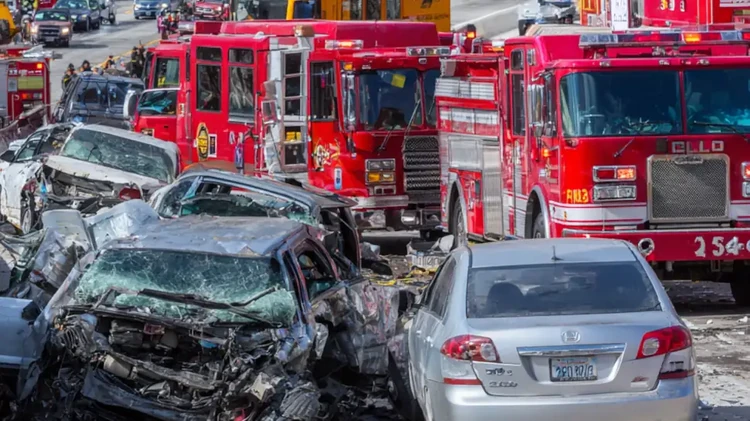
Between 2011 and 2021, the number of traffic fatalities in the U.S. surged 33%, from 32,479 to 43,230. Meanwhile, Canada recorded an 18% drop in road deaths, from 2,166 to 1,776 between 2011 and 2020, the last year for which Canadian data was available. This progress came even as Canada experienced greater increases in population, licensed drivers, and vehicle miles traveled compared to the U.S.

Researchers noted that per capita crash deaths in the U.S. are more than twice the average of 28 other high-income countries surveyed. In contrast, Canada ranks 14th among those nations in road safety performance.

Key differences in policy and enforcement

The study found that Canadian laws governing distracted driving, seat belt use, and speed safety cameras were more comprehensive and broadly enforced than in the U.S. While several U.S. states have enacted similar laws, they apply to a smaller proportion of the population.

Notably, statistical models used in the study demonstrated that these policy differences contributed significantly to the divergent fatality trends. Researchers emphasized that if the U.S. had laws as widely implemented as Canada’s in these three areas, road deaths would have been lower—though still rising—suggesting that additional interventions are necessary.

Specific Crash Trends Tell a Story

The report highlighted several crash categories where the contrast between countries was especially stark:

  • Pedestrian and cyclist deaths rose 64% in the U.S. but fell 17% in Canada.

  • Large truck-related fatalities increased 54% in the U.S. and declined 24% in Canada.

  • Crash deaths among young drivers dropped 52% in Canada but rose 17% in the U.S.

  • Alcohol- and speed-related fatalities both increased in the U.S. while decreasing in Canada.

The findings point to deeper systemic differences in how the two countries address road safety. For instance, Canada imposes administrative penalties for drivers with blood alcohol levels as low as 0.05% — a threshold that carries no penalties in most U.S. states. Canadian police can also require breath tests at roadside stops without needing reasonable suspicion, and refusal to comply is a criminal offense, measures that do not exist in the U.S.

“Safe System” approach needed?

IIHS has recently launched its 30x30 Initiative, a plan to reduce U.S. road fatalities by 30% by 2030, reversing the more than 30% increase seen in recent years. Achieving this goal will require a multifaceted policy shift, researchers say, inspired in part by the “Safe System” approach adopted by Canada and other nations.

“Many of the countries that managed to improve road safety in recent years have leaned into the Safe System framework, which approaches risks from all angles to create overlapping layers of protection and ensure that no single mistake is fatal,” said IIHS Senior Research Scientist Becca Weast.

Craig Lyon, lead author of the study and director of road safety engineering at TIRF, stressed that laws alone aren’t enough. “Thoughtful implementation combined with stakeholder consultation are critical elements of success,” Lyon said. “Equally important, public education and transparency with respect to implementation are necessary to combat misinformation and establish widespread support.”
Article Image

Fewer cars and trucks earned IIHS Top Safety Awards

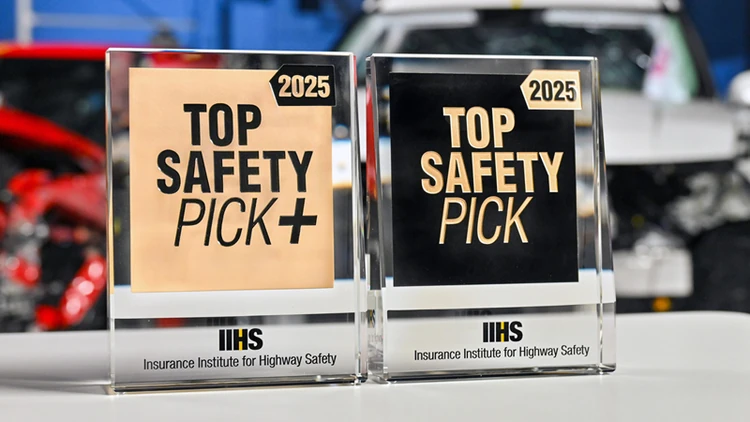
The Insurance Institute for Highway Safety is out with its 2025 safety awards. This year, the bar is set significantly higher because ratings emphasize protecting second-row occupants. 

As a result, there has been a dramatic drop in the number of vehicles earning the coveted Top Safety Pick and Top Safety Pick+ awards.

The IIHS’s revised moderate overlap front test, now featuring a second dummy in the back seat, has become a critical hurdle for automakers. For 2025, vehicles must achieve at least an "acceptable" rating in this updated test to earn the base Top Safety Pick, while a "good" rating is now required for the higher-tier Top Safety Pick+ award.

"We’re once again challenging automakers to make their new models even safer than those they were building a year ago," IIHS President David Harkey said in a statement. "Every vehicle that earns a 2025 award offers a high level of safety in both the front seat and the second row."

Only 48 models made the cut

This stricter approach has led to a sharp decrease in award recipients. Only 48 models have qualified so far, compared to 71 at the same time last year. Of the 2025 winners, 36 achieved Top Safety Pick+ and 12 earned Top Safety Pick.

The updated moderate overlap front test, which simulates a head-on collision, is designed to address the disparity in safety between front and rear seats. The IIHS found that despite advancements in front-seat safety, the risk of fatal injury for belted adults in the rear remains higher.

SUVs dominate the list of winners, reflecting their popularity in the market. However, minivans, large cars, minicars, and small pickups are notably absent. Only two large pickups, the Rivian R1T and Toyota Tundra, qualified for an award.

"The new emphasis on back seat protection appears to have winnowed minivans and pickups from the winners’ ranks," Harkey said. "That’s unfortunate, considering that minivans are marketed as family haulers and extended cab and crew cab pickups are often used for that purpose."

To earn an award, vehicles must also achieve good ratings in the small overlap front and updated side tests, as well as an acceptable or good rating in pedestrian front crash prevention evaluations. All trims must also feature acceptable or good-rated headlights.

Despite the stricter criteria, the IIHS notes that substantial progress has been made in back seat safety, with around 60% of 2025 models tested achieving acceptable or good ratings in the updated test.

"There’s still progress to be made, but these results show that manufacturers are working hard to make their vehicles as safe for back seat passengers as they are for those up front," Harkey said. "Consumers looking for a new vehicle offering the highest level of protection for their families should put these award winners at the top of their list."

The IIHS emphasizes that regardless of test results, the second row remains the safest position for children under 13.

Below are the vehicles that earned a Top Safety Pick + Award:

  • Small cars

  • Honda Civic hatchback

  • Mazda 3 hatchback

  • Mazda 3 sedan

  • Midsize cars

  • Honda Accord

  • Hyundai Ioniq 6

  • Toyota Camry

  • Midsize luxury car

  • Mercedes-Benz C-Class

  • Small SUVs

  • Genesis GV60

  • Honda HR-V

  • Hyundai Ioniq 5

  • Hyundai Kona

  • Hyundai Tucson

  • Mazda CX-30

  • Mazda CX-50

  • Subaru Solterra

  • Midsize SUVs

  • Ford Mustang Mach-E

  • Hyundai Santa Fe built after November 2024

  • Kia EV9

  • Kia Telluride

  • Mazda CX-70

  • Mazda CX-70 PHEV

  • Mazda CX-90

  • Mazda CX-90 PHEV

  • Nissan Pathfinder

  • Midsize luxury SUVs

  • BMW X5

  • Genesis Electrified GV70

  • Genesis GV70 built after April 2024

  • Genesis GV80

  • Lincoln Nautilus

  • Mercedes-Benz GLC

  • Mercedes-Benz GLE-Class with optional front crash prevention

  • Volvo XC90 built before December 2024

  • Large SUVs

  • Audi Q7

  • Infiniti QX80

  • Rivian R1S built after August 2024

  • Large pickup

  • Toyota Tundra crew cab

Article Image

Pedestrians who wear reflective clothing might not be as safe as they think

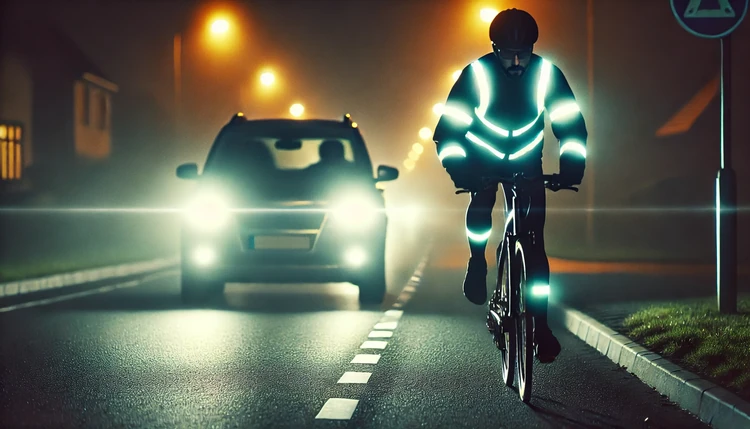
It’s long been advisable to wear reflective clothing at night when walking or riding a bike. You are much more visible to drivers.

On the other hand, it might not be such a good idea. A study by the Insurance Institute for Highway Safety has uncovered a significant issue with automated crash prevention systems in vehicles, suggesting that clothing designed to enhance pedestrian visibility to human drivers may, paradoxically, render them invisible to these systems. 

This revelation has prompted calls for automakers to refine their pedestrian automatic emergency braking (AEB) systems.

IIHS President David Harkey emphasized the gravity of the findings, saying it is untenable that the clothes that pedestrians, cyclists, and roadway workers wear to be safe may make them harder for crash avoidance technology to recognize.

Daytime and nighttime yield different results

Historically, pedestrian AEB systems have been shown to reduce pedestrian crash rates by 27% during daylight. However, their effectiveness diminishes significantly on dark roads, where most fatal pedestrian accidents occur. Automakers are already working to address these shortcomings, especially as IIHS ratings now prioritize nighttime performance.

The study evaluated the impact of conspicuous clothing and enhanced roadway lighting on the pedestrian AEB systems of three 2023 vehicle models: the Honda CR-V, Mazda CX-5, and Subaru Forester. Prior to 2024, IIHS provided separate ratings for daytime and nighttime pedestrian crash prevention, with the Forester earning the highest nighttime rating of superior.

Researchers conducted trials using an adult-sized dummy dressed in various outfits, including a black sweatshirt and pants, a retroreflective jacket, and a white outfit. The tests were conducted at 25 mph under different lighting conditions, including no lighting, 10 lux, and the federally recommended 20 lux.

Concerning results

The results were concerning. The CR-V and CX-5 collided with the dummy in 84% and 88% of the tests, respectively, while the Forester avoided collisions in all but one scenario. The CR-V and CX-5 failed to slow down when the dummy wore clothing with reflective strips, which are typically used by roadway workers.

David Kidd, a senior research scientist at IIHS, said the placement and motion of reflective strips on the joints and limbs of pants and jackets allows drivers to quickly recognize the pattern of movement as a person but doesn’t have the same effect for the pedestrian AEB systems. 

IIHS said the study highlights a critical gap in the technology, particularly concerning the safety of roadway workers and emergency personnel who rely on reflective clothing.

Article Image

These 22 vehicles are best at avoiding collisions

The Insurance Institute for Highway Safety regularly tests vehicles for how they perform in a crash. Now, IIHS is measuring how well cars and trucks avoid crashes.

The analysis focuses on the significant strides automakers have made in enhancing automatic emergency braking (AEB) systems, following the introduction of a more rigorous front crash prevention evaluation in 2024. This advancement is expected to save lives by addressing the most dangerous types of front-to-rear crashes, according to IIHS President David Harkey.

The latest evaluation saw 22 out of 30 vehicles earn a good or acceptable rating, a notable improvement from April when only three of the first 10 small SUVs tested met this standard. Vehicles that excel in this new test are required to prevent or substantially mitigate crashes at higher speeds.

Among the vehicles receiving good ratings for their standard systems are:

  • Acura ZDX

  • BMW X5 and X6

  • Cadillac Lyriq

  • Chevrolet Blazer EV

  • Genesis GV80

  • Honda Prologue

  • Hyundai Santa Fe

  • Kia EV9

  • Kia Sorento

  • Lexus NX

  • Subaru Forester

  • Toyota Camry

  • Toyota Crown Signia

  • Toyota Tacoma. 

The Mercedes-Benz E-Class, with an optional system, also earned a good rating. 

Acceptable ratings

Acceptable ratings were given to the standard systems on the Genesis G80, Honda HR-V, Hyundai Sonata, Jeep Wagoneer, and Mazda CX-50, as well as an optional system on the Acura MDX.

The Ford Expedition received a marginal rating, while the Audi Q7, Audi Q8, Buick Envista, Chevrolet Tahoe, Chevrolet Trax, Kia Seltos, and Nissan Altima were rated poor.

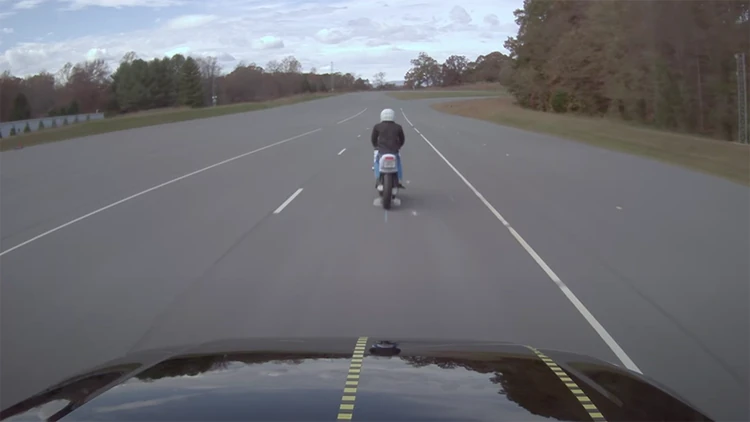
The updated IIHS test includes trials at speeds of 31, 37, and 43 mph, and evaluates performance with a motorcycle target and a semitrailer, in addition to a passenger car. This reflects a broader range of real-world crash scenarios, including those resulting in serious injuries or fatalities. Annually, over 400 people die in rear-end crashes with semitrailers, and more than 200 motorcyclists are killed in rear impacts.

Good-rated systems provided timely forward collision warnings and stopped completely before impact in trials with passenger car targets. They also performed well in most motorcycle scenarios and issued timely warnings in semitrailer trials. However, some vehicles struggled to stop before hitting the motorcycle target, though they did slow significantly.

Acceptable-rated systems generally stopped before impact and issued timely warnings in most trials, but their performance was less effective at higher speeds, particularly with motorcycle targets. Poor-rated vehicles failed to prevent collisions with motorcycle targets even at the lowest test speeds and struggled with timely warnings.

Email Mark Huffman mhuffman@consumeraffairs.com