

Steps to pack picture frames for moving
Packing a picture frame properly takes 10 to 15 minutes. Work through these steps in order.
1. Organize frames and gather packing supplies
First, group frames by size. You need packing paper, bubble wrap, painter’s tape, corner guards, sturdy boxes and packing tape.
“Pack smaller pieces together, and box larger or heavier frames individually to avoid pressure damage,” advised Nick Friedman, co-founder of College HUNKS Hauling Junk & Moving in Tampa, Florida.
» RELATED: How to Pack Paintings for Moving
2. Prep glass and frame corners
Apply painter’s tape in an X pattern across any glass before anything else. “This doesn’t prevent breakage, but it helps contain shards and reduce the risk of shattered glass shifting inside the frame,” Friedman noted.
After taping, add foam or cardboard corner guards to prevent dents and chips. Steven Efman, founder of Groove Moving, a nationwide full-service moving company headquartered in Kearny, New Jersey, pointed out that corners are the most vulnerable points of any frame and the first place damage shows up during loading and transport.
3. Wrap frames in protective layers
Don’t use newspaper.
Efman recommended wrapping the way professional art handlers do, in three layers. The first is acid-free packing paper, which protects the frame’s finish from scratching during transport.
From there, add bubble wrap for cushioning, and kraft paper or stretch wrap on the outside to keep the whole thing from unraveling. “Tape should secure the wrapping itself, never the frame surface,” he said.
4. Box frames snugly and label
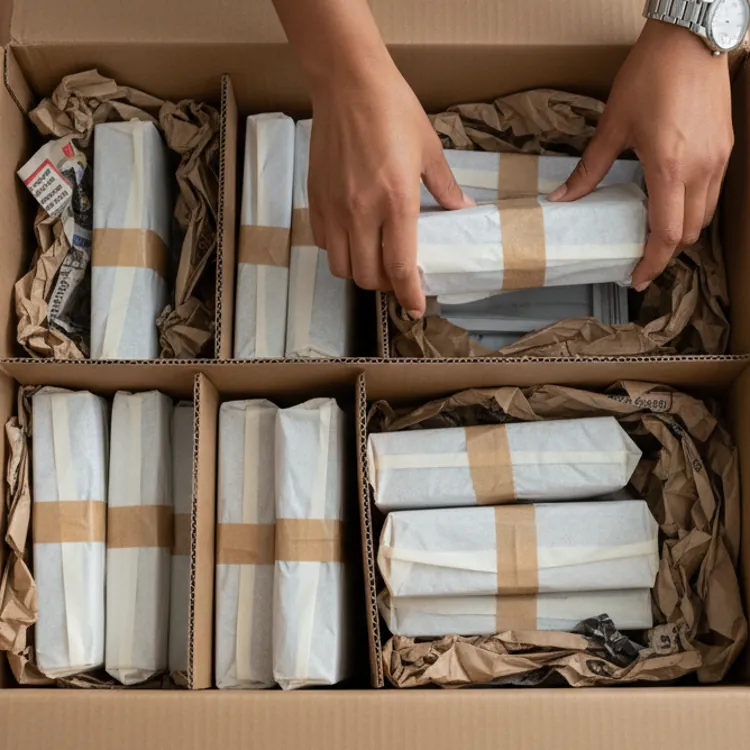
Before any frames go in, line the bottom of the box with crumpled packing paper or foam. Separate frames with cardboard dividers and pack them in tight — if anything shifts when you shake the box, add more padding.
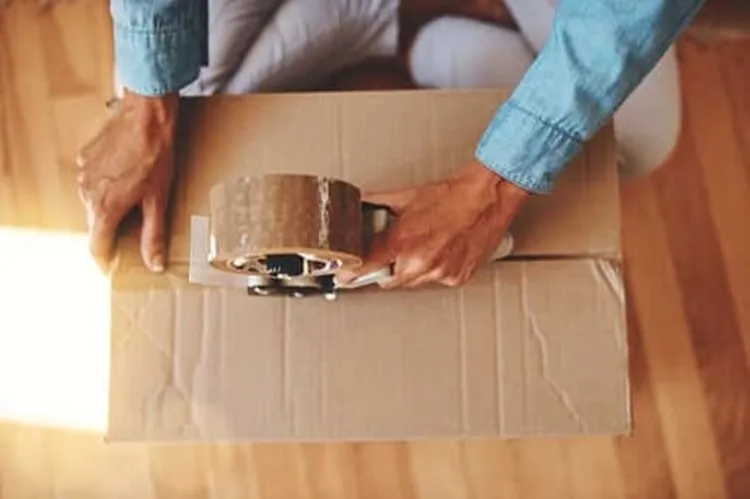
“A properly packed box should feel snug with no internal movement when gently shaken,” Efman said. Seal all seams and mark every side with “FRAGILE” and “THIS SIDE UP.”
5. Load and transport frames
Frames should always travel upright, never flat. And “if something is irreplaceable (e.g., valuable and sentimental pieces), keep it with you to remove the uncertainty of shifting loads, stacking pressure or temperature fluctuations inside a truck,” Friedman said.
For everything else going into a moving truck, load frame boxes last and keep them away from heavier items.
Packing supplies for picture frames
When it comes to packing supplies for picture frames, “There are a few things you shouldn’t skip — and a few things you can get creative with if you have to,” said David Robinson, CEO and co-founder of LXD Logistics, an Elizabeth, New Jersey-based white-glove services company.
One material to avoid is newspaper. “Ink transfer is real, especially on white mats or canvas edges. And once it happens, there’s no fixing it,” Robinson cautioned. Use clean, ink-free packing paper instead. White packing paper is sometimes labeled “newsprint” — that refers to the paper type, not actual newspaper.
» MORE: How to Pack Wall Pictures for Moving on a Budget
Moving supplies to get
Here are the moving supplies to get before packing.
- Packing paper: The first layer, which goes against the frame to prevent scratches
- Bubble wrap: Wraps snugly around the frame for impact absorption
- Corner protectors: Foam or cardboard guards for the most vulnerable points on any frame
- Painter’s tape: Cross it over the glass in an X before wrapping
- Specialty picture or mirror boxes: Two-piece telescoping cartons that adjust to fit the frame
- Packing tape: For sealing boxes and securing wrapping
- Cardboard sheets: Double as dividers between frames and added reinforcement inside the box
- Markers: Every side of the box needs “FRAGILE” and “THIS SIDE UP” labels
- Foam peanuts or foam sheets: Optional, but worth having for oddly shaped frames or extra-tight packing
Best boxes for picture frames
For boxes, specialty picture boxes are the best option for most frames. “The box should be slightly larger than the frame to allow room for cushioning, but not so large that the frame shifts inside,” Friedman said. Standard moving boxes work for smaller frames if packed tightly.
Not everyone has specialty packing supplies on hand — and that’s fine
Clean towels or blankets work well in place of bubble wrap, and most retail stores will hand over free cardboard if you ask.
Efman also pointed out that standard TV boxes from home improvement stores are worth grabbing — they come with foam corners built in, which takes care of some of the wrapping work for you.
Tips to pack large picture frames
Large frames have one vulnerability that smaller ones don’t — they can bend. “Even slight bending while lifting or during transport can cause stress cracks in the glass,” Robinson said. Here’s how professionals handle it:
Use picture boxes or TV boxes
For oversized frames, adjustable multi-piece picture boxes are worth tracking down. They slide together to build a snug enclosure around the frame rather than forcing it into something too small.
No specialty box available? Large TV boxes — the kind used for flat screens — work just as well and usually include foam inserts.
Build a cardboard sandwich for added rigidity
Take two rigid cardboard sheets or foam boards and place one on each side of the wrapped frame, then tape or stretch wrap everything together.
Robinson relies on this cardboard sandwich technique for oversized pieces that need more than padding alone. “The added stiffness prevents the piece from bowing,” he explained.
Wrap with blankets and stretch wrap
Some frames are simply too big to box. In that case, start with a layer of packing paper, then wrap the whole piece in one or more moving blankets. Pull everything tight with plastic stretch wrap so nothing shifts in transit. “The key is eliminating movement and preventing any flex,” Robinson said.
How to avoid picture frame damage
“Frames don’t usually break because someone drops them,” Robinson explained. “They break because they move, get pressure on them or aren’t set up right in the box. If you fix those three things, 95% of the time they stay in good shape.”
Most damage comes down to these avoidable mistakes:
- Using newspaper: Ink transfers onto mats, frames and canvas edges (and it’s permanent).
- Leaving space in the box: Slight movement causes corners to rub and glass to weaken.
- Packing frames flat: On a truck, bumps and vibrations push down on the glass and eventually crack it.
- Stacking heavy boxes on top: Constant weight is enough to damage a frame.
- Skipping corner protection: Corners are the first point of impact during loading and unloading.
- Taping onto the frame: Adhesive can leave residue or damage the finish when removed.
- Under-labeling boxes: Writing “fragile” on one side isn’t enough (every side needs it).
Positioning, labeling and cushioning
The importance of positioning, labeling and cushioning deserves extra attention.
- Positioning: Efman highlighted that frames should remain upright, similar to records on a shelf. Load frame boxes last, keep them separate and never stack anything on top.
- Labeling: Robinson noted that once a box leaves your hands, the markings are the only instructions the next person has. That’s why every side should read “FRAGILE” and “THIS SIDE UP.”
- Cushioning: Efman’s rule of thumb is that if you think you need more padding, you do.
FAQ
How do you pack a picture frame with glass?
To pack a picture frame with glass, start by applying painter’s tape in an X across the surface to contain shards if it breaks. Wrap the frame in packing paper, add corner guards and cover it in bubble wrap. Place it upright in a snug box, fill any gaps and label it “Fragile.”
Can you pack multiple picture frames in one box?
Yes, you can pack multiple picture frames in one box as long as you wrap each one and separate them with cardboard dividers or bubble wrap. Always position frames upright, never flat, to reduce pressure on the glass. Fill every gap so nothing shifts in transit.
» MORE: How to pack for a move
What size box do you need for picture frames?
The box size you need depends on your picture frame. But professionals recommend using a specialty picture or mirror box — it’s adjustable and designed for flat, fragile items. For oversized frames, telescoping two-piece cartons create a custom fit.
How do you protect picture frame corners during a move?
To protect picture frame corners during a move, use foam or cardboard corner guards since corners take the most impact during loading and handling. Secure them with tape, but never let adhesive touch the frame. Then wrap the whole frame in bubble wrap and pack it upright in a cushioned box.
Article sources
ConsumerAffairs writers primarily rely on government data, industry experts and original research from other reputable publications to inform their work. Specific sources for this article include:
- Pack It Up Moving, “How to Pack Picture Frames for Moving Safely.” Accessed March 3, 2026.
- U-Haul International, Inc., “How to Pack Pictures, Mirrors, Framed Art & Paintings for Moving.” Accessed March 3, 2026.
- The Home Depot, “How to Pack Pictures and Mirrors.” Accessed March 3, 2026.