

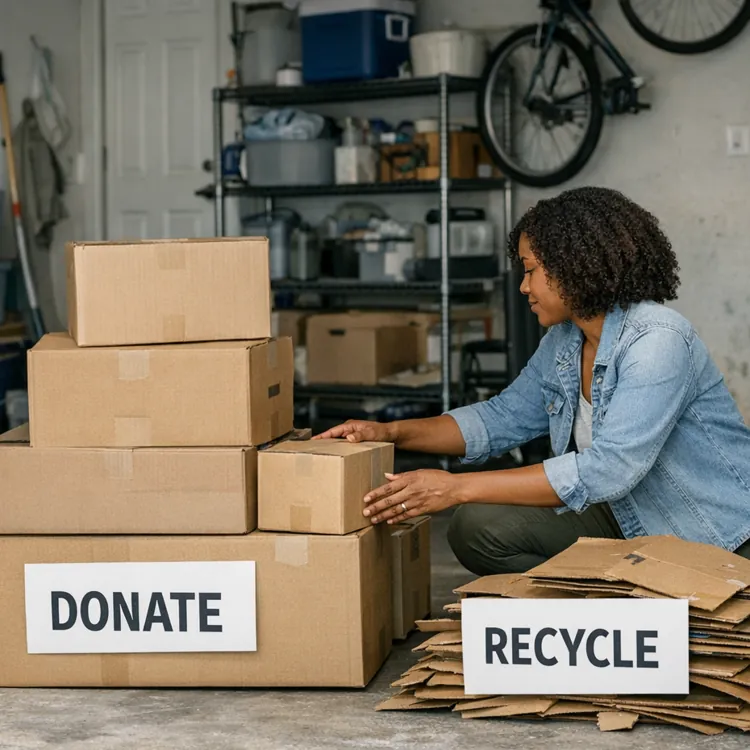
How to get rid of moving boxes
You have a few options for getting rid of moving boxes after use, including saving them for future moves, repurposing them for storage, selling them, donating them or recycling them. Moving boxes can accumulate quickly, so disposal should be part of your moving checklist.
All of these options can reduce clutter in your space and potentially reduce the risk of mold growth and pest issues, so it’s important to find a solution that works for you as you settle in.
You can use the following options to reuse or dispose of your cardboard boxes responsibly.
1. Sort boxes by condition
Start by sorting the boxes, determining which ones are in good enough shape to reuse. Boxes that are badly damaged or have gotten wet aren’t reusable, so set those aside for recycling. Be sure to let them dry first.
Boxes that have started growing mold or have food debris or chemicals on them aren’t suitable for reuse or recycling, so dispose of them in the trash.
2. Give away or donate boxes
If you know a family member or friend who’s planning to move in the near future, offer your clean, dry boxes to help them save on their moving costs and repurpose the materials. You can also advertise them on online marketplaces such as Facebook Marketplace or Craigslist.
3. Sell boxes locally
You can use those same online resources, as well as sites like eBay, to sell cardboard boxes that are in good condition. Take pictures of the boxes in their assembled and broken-down states, and make a list of sizes to help prospective buyers decide if you have what they need.
4. Recycle boxes the right way
If you’re not going to repurpose moving boxes, the best option is to recycle them. Separate soiled boxes and put them in the trash, then check local recycling regulations to see what to do with the rest. Most municipalities collect cardboard for recycling, but you may need to find a local recycling center if yours doesn’t.
5. Use junk removal for large piles
If you have a large number of boxes that would take a lot of time and effort to recycle or donate, you may want to contact a junk removal service and have professionals collect the cardboard. Many paid services even sort the cardboard for you and recycle what’s suitable for recycling.
Alternatively, if you hire professional movers for your relocation, they may offer to reuse, recycle or donate the boxes on your behalf. Ask your mover if this is an option before hiring a separate service.
You can use the table below to determine the best course of action and how to prepare your moving boxes accordingly.
| Disposal option | Ideal for | How to prep |
|---|---|---|
| Donate | Sustainability and fast disposal | Separate clean boxes in good condition for donation |
| Sell | Recuperating some moving costs | Separate clean boxes in good condition for sale |
| Recycle | Minimizing strain on the environment | Toss soiled and moldy boxes; recycle dry, clean cardboard |
| Reuse | Saving on storage solutions | Recycle damaged boxes; repurpose boxes in good condition as needed |
| Trash | Fast disposal when boxes are soiled | Set aside clean, dry cardboard for recycling; trash the rest |
Where to donate or sell boxes
There are plenty of places online to sell or donate moving boxes, and many homeowners also have local options for donating boxes for reuse. Below are some of the most common places you can look if you want to donate boxes online or in person.
- Facebook Marketplace
- Craigslist
- Nextdoor
- Ring Doorbell app (community section)
- Freecycle
- BoxCycle
- Salvation Army
- Local schools, animal shelters or food banks
- Thrift stores
- U-Haul’s online box exchange
- Sanitation department
If your boxes are in like-new condition, you may consider selling them using the following resources.
- Facebook Marketplace
- Craigslist
- BoxCycle
- U-Haul’s online box exchange
- Local moving companies
- Local shipping facilities
If you plan on selling your boxes, you can price them how you want, but you’ll likely need to price them well under the retail value to make these used items worthwhile. Check prices for new cardboard boxes at local retailers and price your used boxes between 50% and 75% of that cost. Price them even lower if you hope for a faster turnaround or if some boxes are lightly damaged.
When selling boxes, you’ll probably see the best results if you have photos of the boxes assembled and broken down, and if you have a complete list of available box sizes.
Getting moving boxes for free or at discounted rates
Of course, since all of these resources are available for getting rid of boxes, you can also use them to get cheap or free moving boxes when you’re ready to move. U-Haul’s online box exchange can be especially useful for getting boxes for your move, as the company may be able to coordinate the boxes being ready for you when you pick up your moving truck.
If you’re hiring professional movers, you may want to ask if they can supply previously-used boxes at a discounted rate. They may also be able to take your used boxes and reuse them or dispose of them for you, making this a convenient option.
Moving box recycling rules and prep
If you can’t find a place to donate or sell your moving boxes, recycling is the best option. However, not all cardboard is recyclable, and rules and regulations about what you can and can’t recycle vary based on where you live.
Even for cardboard that in theory should be recyclable, you should follow these guidelines to prep the materials, especially when it comes to mixing moving materials:
- Remove any cardboard that is soiled with food debris or chemicals.
- Trash coated cardboard or cardboard that has mold growth.
- Allow any damp cardboard to dry.
- Remove tape, staples, plastic windows and other noncardboard materials.
- Flatten boxes for easier transportation.
Food debris and mold can contaminate entire batches of recycled cardboard, so you should make every effort to avoid introducing these contaminants. Many recycling facilities have equipment that can remove and sort non-cardboard components, including tape, plastic windows and staples, but this isn’t always the case. Even when it is, it’s best to remove these materials before recycling.
These guidelines are general; rules and regulations in your area can vary. Always verify with your local sanitation department or a local recycling center before recycling your cardboard boxes.
Reusable moving boxes to avoid waste
You can opt for reusable moving boxes made of plastic instead of cardboard boxes, which have some benefits and drawbacks. Plastic is a less eco-friendly material than cardboard, but since plastic moving bins stand up better to wear and moisture, they could end up placing less strain on the environment in the long run. Plus, you can reuse them for storage or future moves.
Plastic moving bins are more expensive than cardboard boxes, and disposing of them could be more challenging because they usually aren’t collapsible and may not be recyclable. However, there are options for renting plastic moving boxes to reduce costs, including from:
- U-Haul
- Boxbee
- Local moving companies
- Some plastic bin retailers
Some companies that rent plastic moving bins may even include delivery to help streamline packing for your move, as well as pick-up afterward. You’ll pay more than you would for cardboard boxes, but you get the convenience of not having to sell, donate or recycle the bins after your move.
Plastic moving bins also come with the benefit of offering better protection against moisture and water. So while they’re more expensive to rent or buy than cardboard boxes, you could end up saving money if they prevent you from having to replace damaged belongings.
FAQ
Does Home Depot take cardboard boxes?
Home Depot itself does not take cardboard boxes for recycling, though your local store may opt to. You can call your store to ask about recycling programs. Home Depot does have consumer recycling programs for plastic bags, plastic plant pots, fluorescent light bulbs and rechargeable batteries, and it recycles the cardboard it uses for shipping and storage.
Does Walmart accept cardboard boxes for recycling?
Walmart does not universally accept cardboard boxes for recycling, though some individual stores might. The company has Community Recycling Units at some of its locations, which provide a space to recycle items such as plastic bags, aluminum, clear plastic containers, bottles from cleaners and beauty products, general plastic bottles and rigid food containers. However, cardboard is not accepted.
Can I recycle boxes with tape on them?
Many, but not all, municipal recycling centers have equipment that removes tape and staples before recycling cardboard boxes. You can check with your sanitation department to learn if yours does, but even if it does, it’s best to remove tape, staples, plastic windows and other noncardboard materials before recycling.
How should I prepare boxes for curbside recycling?
Start by removing any cardboard that’s soiled with chemicals or food debris, and place it in the trash. Allow any damp cardboard to dry before placing it out for collection, and remove pieces that have mold or mildew on them. It’s also best to flatten the boxes and remove staples, tape and other noncardboard materials. Check with your local sanitation department to see if there are other (or different) recycling guidelines where you live.
Article sources
ConsumerAffairs writers primarily rely on government data, industry experts and original research from other reputable publications to inform their work. Specific sources for this article include:
- Scarsdale, NY, “Paper & Cardboard: What Can (and Cannot) Be Recycled.” Accessed Feb. 26, 2026.
- The Home Depot, “Recycling to Reduce Our Environmental Impact.” Accessed Feb. 26, 2026.
- Walmart, "Community Recycling Unit." Accessed Feb. 26, 2026.