
7 steps for hiring a bathroom remodeling contractor
Nearly every bathroom remodeling project starts with a vision — and a budget to match. As you evaluate contractor qualifications, past work, reviews and written estimates, consider how clearly and consistently each candidate communicates. Before signing a contract, make sure you understand all the terms and conditions.
1. Define your vision, budget and goals
Start by determining your primary motivation for the remodel: Are you modernizing the space, adding a new feature or making it safer and more accessible? Anchor your remodel goals to a specific timeline, even if it’s a rough estimate.
Next, decide if you want to make the design decisions or need a professional eye for guidance. For example, are you set on installing a walk-in bathtub, or would you prefer to explore your options based on layout? It may be helpful to assemble a physical or digital vision board with specific products and materials.
As you set your budget, maximizing your return on investment is just as important as determining a tentative cost range. Consider the cost versus value of your selected improvements, especially if you plan on selling your home in the near future. It’s also wise to add a slight buffer in case you run into unforeseen supply chain issues or price fluctuations.
2. Research potential candidates
Now that you’ve clarified what bathroom projects you want to tackle, it’s time to find qualified contractors who’ve completed similar work.
You may need to seek specialized contractors if you want to replace your bathroom’s lighting (an electrician) or relocate a showerhead for your new walk-in shower (a plumber or general contractor). Here are the most common resources for finding bathroom remodel contractors:
- Referrals: Family, friends and neighbors can show you their results firsthand.
- Trade associations: The National Association of the Remodeling Industry (NARI) and the National Kitchen + Bath Association (NKBA) vet a small pool of contractors with strong professional reputations that often come with higher rates.
- Local home improvement stores: Finding a contractor through a local home improvement store can be easy and feel reassuring. But you should still do your own research. The store’s referral system may not guarantee the best, most thoroughly screened or widest range of options.
Why real reviews are important
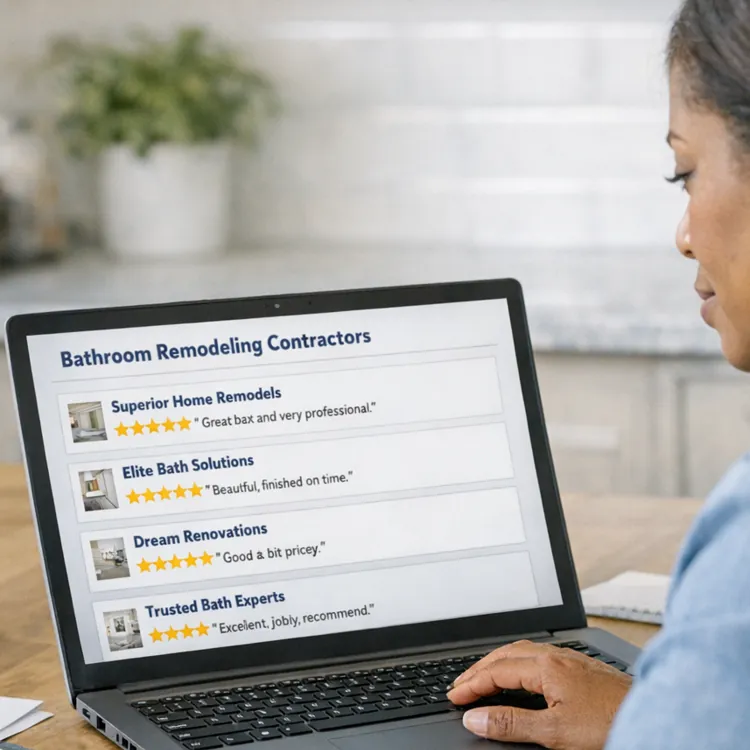
Online review platforms cast a wide net for feedback. However, fake reviews and the overwhelming number of options can make navigation challenging.
Common complaints in verified bathroom remodeling company reviews relate to high prices, poor quality materials, substandard workmanship, and lack of responsiveness to issues. Overall, there is a lack of transparency, misleading sales tactics and unmet expectations in the industry.
Pro tip: Interview at least three bathroom remodel contractors
Evaluate their portfolios, communication style, project compatibility, pricing and availability. Pay close attention to how comfortable you feel sharing your goals and how well they understand your vision.
» RELATED: Tips to choose a home remodeling contractor
3. Verify licenses, insurance and credentials
Checking a bathroom remodel contractor’s credentials can save you from scams and code violations. Verify the license number with your state or local board. For example, in California, you do this through the Contractors State License Board (CSLB). New York City has this online license lookup tool.
Contractors should also carry general liability and workers’ compensation insurance.
Bonded contractors offer extra peace of mind by guaranteeing the work gets done and that subcontractors and suppliers get paid. NARI and NKBA certifications also demonstrate a contractor’s experience and dedication to quality.
4. Compare proposals and cost estimates
Request a detailed, written estimate to compare the cost of materials used, labor rates, any required permitting and related fees, the anticipated timeline and when contractors expect payment.
Compare quotes based on the full cost breakdown, not just on contractors’ final prices. For example, the cost estimate should include specific line items for each project aspect. Replacing your bathtub or toilet should be separate from removing existing shower tiles or repairing leaky plumbing.
Timelines and schedules show how realistic contractors are about completing work, especially when broken down into milestones or stages.
5. Ask the right questions
When you ask contractors the right questions, you not only contribute to your bathroom remodel’s success but also gain confidence in your ultimate hiring decision.
Here are a few to get started:
- Who will manage the project on-site, and how often will progress be checked?
- How is the payment schedule structured, and what triggers each payment?
- How do you handle change orders if plans or costs need to be adjusted?
- What warranties or post-project support do you offer?
- Are you open to reusing parts of my existing bathroom where it makes sense?
Although easy to overlook, cleanup and disposal are just as important as the skilled work your chosen contractor completes. Inquire about how contractors will keep your home tidy throughout the project and arrange debris removal.
6. Review the contract carefully
Your bathroom remodeling contract should include a detailed scope of work that outlines exactly what the contractor will accomplish, the timeframe (start and end dates) and the materials and brands they’ll use.
A detailed breakdown of the total cost by payment schedule and corresponding milestones should also incorporate any associated warranties or guarantees. The contract should also clarify the change order process, who will handle any required permits and how to address unforeseen circumstances.
7. Trust your gut and make a decision
Once your research is complete, choosing between qualified contractors comes down to evaluating your full experience with each one.
The right contractor communicates clearly, sets realistic timelines, respects your budget and leaves you feeling confident and comfortable moving forward.
Reflect on who was responsive, clear and thorough during the estimate process and who provided the most detailed proposal without the added pressure.
FAQ
How long does a bathroom remodel usually take?
A bathroom remodel can take anywhere from a couple of days to several weeks, depending on the scope of work. Custom materials, permitting and unexpected conditions behind walls can affect timelines, so ensure your contract includes clear start and end dates before signing.
Do I need a licensed contractor for a bathroom remodel?
Yes, you need a licensed and insured contractor to complete your bathroom remodel if you plan on hiring someone. Licensing helps ensure the work meets local building codes, while insurance protects you from liability if something goes wrong.
How do I address unexpected problems during my bathroom remodel?
When unexpected problems arise during a bathroom remodel, assess the issue and communicate it to the contractor immediately. A professional contractor should explain your options, document any changes in writing and confirm cost or timeline adjustments before moving forward.
What are red flags when hiring a bathroom contractor?
When hiring a bathroom contractor, watch out for red flags such as vague estimates, a lack of a license or insurance, high-pressure sales tactics and an unwillingness to provide a written contract. Evasive answers and poor communication early on often signal bigger issues later.
Should I pay a bathroom contractor hourly or a flat fee?
Pay a bathroom contractor hourly for smaller projects that take less than a day to complete. Agree on a flat fee for full remodels that require multiple days of work to help secure financing and make costs more predictable.
Article sources
ConsumerAffairs writers primarily rely on government data, industry experts and original research from reputable publications to inform their work. Specific sources for this article include:
- National Association of the Remodeling Industry, “Certifications.” Accessed Jan. 27, 2026.
- National Kitchen & Bath Association, “NKBA Certifications.” Accessed Jan. 27, 2026.