
Key insights
Most home warranty plans cover water softeners with an add-on plan.
Jump to insightThere’s typically a claim limit on repairs.
Jump to insightYour claim can be denied if there’s a preexisting condition or if you don’t properly maintain your water softener.
Jump to insightHome warranty coverage for water softeners
As with most appliances, home warranty coverage for a water softener includes vital internal mechanical parts and issues resulting from normal wear and tear. The softener unit may be covered separately from shutoff valves, water supply connections, dedicated outlets and other related components. It’s a good idea to verify whether these fall under plumbing or electrical system coverage instead.
Water softeners are typically covered as add-ons to home warranties.
The coverage limit for a water softener depends on your home warranty provider, but maximum limits typically range from $500 to $1,000.
Coverage limits refer to how much a home warranty company is willing to pay to diagnose, repair or replace a covered appliance. These rates vary by company and can refer to the item covered or an annual limit covering all claims.
A home warranty company will often approve covered repairs first and may only agree to replace a covered appliance when repair isn’t possible or exceeds the coverage cap.
What parts of a water softener unit are covered?
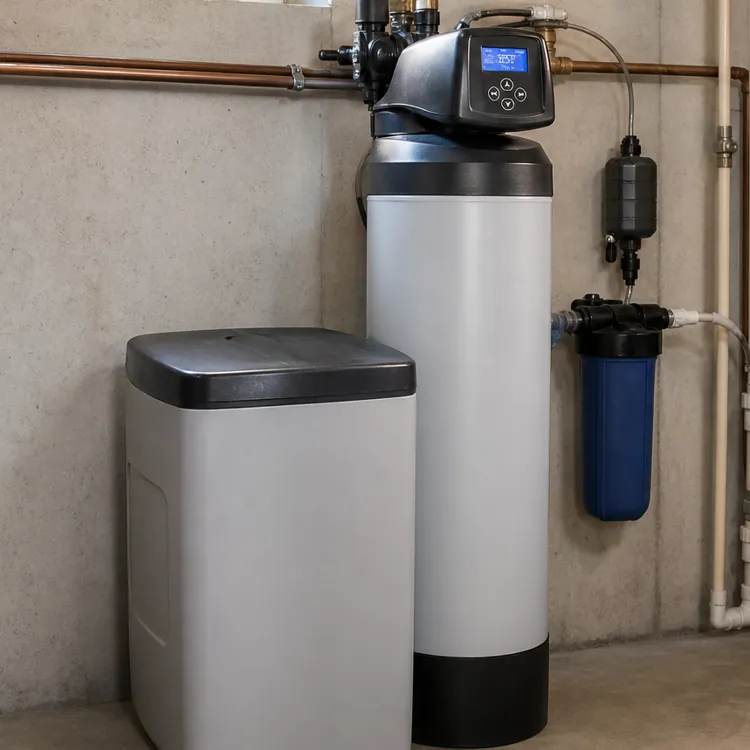
A water softener has mechanical, electrical, and filtration components. Some home warranty companies service all of those parts, but others may cover only the unit’s mechanical components. To learn if your provider’s coverage includes the brine tank, resin tank, control valve or electronics, you may need to read your contract’s fine print.
What home warranties don’t cover for water softeners
Home warranties may specify that they only cover water softeners that are owned outright, excluding leased or rented units. To be eligible for coverage, the water softener should have been properly installed and working on the effective date of your warranty contract.
Components like water filters, reverse osmosis filters and water purification systems aren’t typically included in home warranty coverage for water softeners. Neither is damage due to an insufficient or excessive water supply.
Your claim may also be denied if the problem is determined to be a preexisting condition or if it’s a result of improper water softener maintenance.
Some high-end water softener brands may also be excluded if the unit needs to be replaced, so it’s important to verify coverage for your brand of water softener before seeking coverage. You can refer to your service contract’s terms and conditions for a full rundown of your plan’s coverage details, covered components and exclusions.
What to do if your home warranty doesn’t cover water softeners
Typically, a water softener replacement costs anywhere from $400 to $6,000, according to our research. If your current home warranty coverage doesn’t include your water softener, you may be able to add it to your plan. Some companies only allow you to add extra coverage within 30 days of your initial purchase, but others let you add coverage at any time.
Adding an appliance to your plan at a later time may require an inspection or a waiting period. This will also increase your home warranty cost, but it may be worth it if the add-on plan covers your repair or replacement costs.
If you’re already having trouble with your water softener and want to get coverage to help alleviate the cost of repairs, it may be denied due to a preexisting problem. If you’re worried about a preexisting condition, be sure to check to see if the manufacturer’s warranty still covers your water softener.
» MORE: Is a home warranty worth it?
Tips for water softener maintenance
Here are tips to keep your water softener in top shape:
- Check salt levels: Check levels every four to six weeks.
- Use the right salt: Rock salt is cheaper but it may contain impurities that will clog the water softener. It’s typically recommended to use cubes or crystal salt, but it’s best to use whatever your owner’s manual recommends.
- Clean on schedule: Regularly clean the brine tank.
- Look for salt bridges: Watch for salt bridges and remove them if found.
- Monitor performance: Keep an eye on water softener resin if water isn’t as soft as it should be.
- Add a prefilter: This can help with sediment that can build up and clog the softener.
FAQ
What is the life expectancy of a water softener?
Water softeners typically last between 10 and 15 years. You can ensure the full life expectancy of your water softener by using pure salt and conducting regular maintenance.
How often do water softeners need maintenance?
Most manufacturers recommend having a professional service your water softener once per year.
How can I tell if my water softener isn’t working properly?
You can typically tell that something’s wrong with your water softener if you see signs of hard water when you wash dishes or shower. Look for mineral deposits that leave a film on glasses and other dishes. You may also have lower water pressure than usual.
Do home warranty plans cover water softener salt?
Home warranty plans don’t cover water softener salt, so you’ll need to purchase that separately. You should purchase the type of salt that’s recommended by your water softener’s owner’s manual.
Bottom line
While you can get water softener coverage in a home warranty plan, it’s rarely included in standard coverage. However, most home warranty companies give you the option to add coverage for a water softener. Keep in mind that claims can be denied if the company determines an issue is due to a preexisting condition or improper maintenance.
Article sources
ConsumerAffairs writers primarily rely on government data, industry experts and original research from other reputable publications to inform their work. Specific sources for this article include:
- U.S. Department of Energy, “Water Softeners.” Accessed July 20, 2026.