

How a notice of default works
A notice of default is a public notice filed with the court or the county recorder’s office declaring a borrower is in default on their mortgage. At this point, the borrower has already exceeded the number of delinquent payments permitted on the account. This is typically considered part of preforeclosure and is one of the first steps of formal foreclosure.
Lenders must wait at least 120 days after a missed payment before the foreclosure process can begin.
Because a mortgage is a secured loan, your home serves as collateral. This means it can be seized if you fail to honor the terms of the loan contract. Your loan contract will stipulate the total number of delinquent payments that are permitted before legal recourse is taken. For most loans, this is typically 120 days of missed payments.
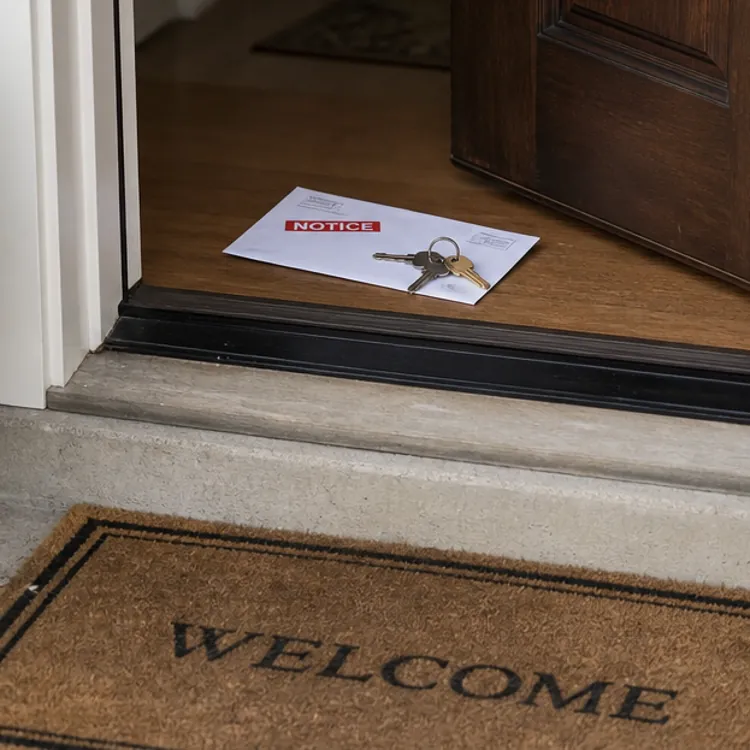
A notice of default can be delivered in multiple ways. In some states, a notice of default may be placed on the front door or a window of the property. Otherwise, it's typically delivered to the borrower via mail. Depending on your state, the notice may also be published publicly on a county website or in a local newspaper.
What does a notice of default include?
A notice of default includes:
- Borrower’s name and address
- Lender’s name and address
- Trustee’s name and address
- Property’s legal address and description
- Details of the loan default
- Actions required to resolve the debt
- Deadline to resolve the default
- Consequences of missing the deadline
What happens after a notice of default is filed
In states with a judicial foreclosure process, a hearing is scheduled to consider a foreclosure judgment. During the hearing, the borrower might be given more time to pay off the balance to avoid losing the home. Once the lender obtains a court order for property seizure, it can request that the borrower vacate the property.
In states with a nonjudicial foreclosure process, there is a legally defined waiting period before the lender can proceed with sale of the property. As a borrower, it's critical that you avoid foreclosure by working with your lender to resolve your balance so you don’t risk losing your home.
How to respond to a notice of default
If you receive a notice of default, first verify its legitimacy. Then, contact your mortgage lender immediately to work out a repayment plan or request forbearance so you can catch up.
Carefully review the notice
If you receive a notice of default, it’s important to review it carefully and note the specific timeline for resolving the issue, since this varies by state.
Make sure you understand the full terms and consequences as well as remedial options so you can take appropriate action. If you fail to resolve the issue with your lender within the allotted time period, the lender is free to cancel the mortgage, activate the lien and pursue foreclosure. The property can then be sold by the lender at a public auction.
Request debt validation
Once you read the notice, the next step you should take is to make sure the notice is legitimate by requesting validation of the debt.
“Under the Fair Debt Collection Practices Act, you have the right to request written validation of the debt. If it’s not accurate, dispute it immediately in writing.” — Michael Boggiano, managing partner, Wealthcare Financial
“Unfortunately, there are a lot of scams circulating today, so I always advise people to verify that the debt is legitimate and actually belongs to you,” said Michael Boggiano, managing partner at Wealthcare Financial. “Under the Fair Debt Collection Practices Act, you have the right to request written validation of the debt. If it’s not accurate, dispute it immediately in writing.”
Contact your lender to discuss options
Next, contact your lender to discuss your options.
- Loan modification: If you can't pay your outstanding balance, a mortgage loan modification could help adjust your loan agreement to better suit your finances.
- Forbearance: Another option may be mortgage forbearance, which temporarily pauses or reduces loan payments in light of financial hardship.
- Pay or negotiate the balance: If you're able to pay the outstanding balance or negotiate a debt settlement with your lender, your lender will take no further legal action.
“[R]eceiving the notice of debt may be rather shocking, [but] it does not have to define your financial situation,” said Ryan McCallister, founder of F5 Mortgage. “I have observed many individuals that have experienced a similar experience, and I can assure you that this can be reversed [when] the right steps are being made.”
If you’re not sure what to do, it can help to speak to a financial advisor or a lawyer.
“I always believe in talking to a financial advisor or a lawyer so that you are well informed of what is in store,” McCallister said. “With these, you will be in a position to protect your credit, and you will be on track of regaining control of your money.”
Does a notice of default affect your credit?
A notice of default can negatively affect your credit since delinquent payments are reported to the credit bureaus. A default can stay on your credit report for up to seven years, making it much harder to get a new loan or line of credit in the future. Also, lenders will be able to see past delinquent payments on your credit report, making it less likely that you’ll be approved for a loan.
“If you receive a notice of debt, your credit score will likely be impacted once it is reported to credit bureaus,” said Michael Boggiano. “Having a lower credit score means that any loan you need will likely come with a higher interest rate until your credit improves.”
Also, make sure to resolve your outstanding payments as soon as possible to stop foreclosure, which can damage your credit score even more.
» MORE: How to stop foreclosure
FAQ
Should I ignore a notice of default?
No, you should not ignore a notice of default. If you do, you could lose your home and hurt your credit.
“The first thing you should do is make sure it’s not junk or a mistake,” said Lisbeth Ardalic, a loan originator with First Option Mortgage. “If it’s real, you should either pay it or set up a payment plan. If you don’t do anything, they could send it to collections, and that could hurt your credit.”
Is default the same as foreclosure?
No, default is when you fail to meet the terms of your loan contract. It can be the first step to foreclosure, but not all notices of default lead to foreclosure. The borrower may be able to work out an arrangement with their lender before the official foreclosure process begins.
How long after notice of default until foreclosure?
The time between a notice of default and a foreclosure sale varies by state and depends on local laws. After that period lapses, the lender can pursue foreclosure.
Article sources
ConsumerAffairs writers primarily rely on government data, industry experts and original research from other reputable publications to inform their work. Specific sources for this article include:
- Federal Trade Commission, “Trouble Paying Your Mortgage or Facing Foreclosure?” Accessed June 23, 2026.
- Consumer Financial Protection Bureau, “How Does Foreclosure Work?” Accessed June 23, 2026.