2021 Toyota Recalls and Safety Alerts

Article Image

Toyota recalls Sequoias and Tundras

Toyota Motor Engineering & Manufacturing is recalling 22,462 model year 2021-2022 Sequoias and model year 2021 Tundras.

The power steering gear assembly may have been manufactured incorrectly, which can result in an oil leak.

An oil leak may cause a sudden loss of power steering assist, increasing the risk of a crash.

What to do

Dealers will inspect and replace the power steering gear assembly -- as necessary -- free of charge.

Owner notification letters are expected to be mailed on January 22, 2022.

Owners may contact Toyota customer service at (800) 331-4331. Toyota's numbers for this recall are 21TB10 and 21TA10.

Article Image

Toyota earned the most Kelley Blue Book Awards in 2021

With new cars being hard to come by, and with prices at record highs, you don’t want to make a mistake when you buy one. Considering the recognition and praise that a particular make and model has received from the industry might help you make a good choice.

In 2021, Kelley Blue Book singled out cars and trucks as the best in breed in certain categories. This month, the editors boiled down their list and named the 10 Most Awarded Cars of 2021 and 10 Most Awarded Brands of 2021.

Automotive experts reviewed this year’s various awards programs and looked for vehicles that tended to land on multiple lists across a range of categories. They factored in the vehicles and brands featured most on lists like the Best Family Cars, Best Luxury Cars Under $35,000, and Best Hybrid Cars Under $40,000, to name a few.

"There are many noteworthy automotive brands and vehicles in the marketplace, but ultimately Toyota and its RAV4 won the most Kelley Blue Book awards and accolades in 2021," said Jason Allan, director of editorial for Kelley Blue Book. 

Premium price

If a RAV4 is on your holiday shopping list, be prepared to pay a premium. Not surprisingly, the SUV is highly popular with consumers. Last month, automotive publisher Torque News reported that a 2021 Toyota RAV4 Prime XSE was being sold at one specific Toyota dealership with a $40,000 “Dealer Added Markup.”

The 2021 Toyota RAV4 is KBB’s most awarded car of the year. The 5-passenger compact SUV won points for being spacious and comfortable, with a wide range of trims and engine options. 

“The RAV4 Prime plug-in hybrid earned a 2021 Best Buy Award and a spot on the 14 Best New and Redesigned SUVs list. The RAV4 also was a 2021 Best Buy Award winner and one of the 12 Best Family Cars of 2021,” KBB stated in a news release.

Toyota was also KBB’s most awarded brand of 2021, with a total of 41 accolades. Hyundai was second with 22, and Ford was third with 18.

"Our team works year-round testing and reviewing vehicles, along with examining all kinds of relevant data, to compile our recommendations for the best cars in a wide range of categories – all with the ultimate goal to help car shoppers as they navigate their journey,” Allan said. “The standout vehicles are strong enough that they often appear on multiple lists, and the top brands boast lineups full of award winners."

Article Image

Toyota recalls model year 2022 Sienna

Toyota Motor Engineering & Manufacturing is recalling 2,259 model year 2022 Siennas with seating for eight passengers.

An incorrect seat belt webbing guide may have been installed on the outboard second-row seat belt assemblies.

During seat belt pre-tensioner deployment, the incorrect webbing guide may damage the seat belt webbing, causing it to tear and increasing the risk of injury in a crash.

What to do

Dealers will replace the outboard second-row seat belt assemblies free of charge.

Owner notification letters are expected to be mailed on January 13, 2022.

Owners may contact Toyota customer service at (800) 331-4331. Toyota's numbers for this recall are 21TB08 and 21TA08.

Article Image

Toyota to spend $35 billion on electric cars over next eight years

Toyota has decided it wants to be in the electric vehicle market conversation and is prepared to spend $35 billion to make its voice heard.

At a press conference in Tokyo on Tuesday, Toyota President Akio Toyoda said the company plans to build as many as 30 new models in the next eight years, with a goal of putting 3.5 million a year in the hands of car buyers by 2030. If Toyota can pull that off, its EVs would equal slightly more than a third of the company's total sales last year.

That $35 billion investment and timeframe match efforts made by General Motors, Tesla, Volkswagen, Ford, and others. VW may not be too happy about the news because Toyota overtook it as the largest carmaker in 2020. Earlier this year, Toyota announced that it was planning to invest $13.5 billion toward developing electric vehicle battery tech. VW responded by saying it would also increase its investment in electric vehicles.

Consumers praise Toyota's vehicles

Although Toyota has lost ground in recent customer satisfaction surveys, many Toyota owners continue to praise the company’s vehicles for their durability and long-term value.

“In my life I've had Chevys, Fords, AMC and Nissan along with Toyota. Today's cars and trucks are not made to last. You would be lucky to get 75,000 to 100,000 miles of trouble free use out of America[n] cars. Very sad. Seem we made them for the masses,” Lawrence of Florence, Ariz., wrote in a ConsumerAffairs review.

Lawrence said he found that as long as you take care of your Toyota, your Toyota will take care of you. “You can very easily run it for 300,000 to 500,000 miles. Which is why I buy them. I got 350,000 mile out of my last Corolla and now I have a Tacoma that has 130,000 miles and still runs great and along with that everything still works on the truck.”

Article Image

Toyota to start charging owners who want to start their vehicles remotely

If you never thought you’d see the day when you would have to pay to start your car, then brace yourself. Toyota has announced that car owners will have to sign up for a subscription service if they want to start their car with a key fob. 

The news – originally reported by The Drive and confirmed by a Toyota spokesperson – reveals that if a consumer has a 2018 model year or later Toyota vehicle equipped with Toyota's Remote Connect functions, then the vehicle must be enrolled in a subscription program if the owner wants to use the key fob to start their car remotely. The subscription rate is $8 per month or $80 per year.

“To be clear, what we're talking about is the proximity-based RF remote start system, where you press a button on the fob to start the car while outside of it within a certain distance—say, from your front door to warm up your vehicle in the driveway on a cold morning before you get in,” The Drive reported. “Your fob uses radio waves to communicate with the car, and no connection back to Toyota's servers is needed. But the function will not work without a larger Remote Connect subscription.”

Subscription is needed after trial ends

Anytime someone buys a new Toyota, they’re offered the option of signing up for a trial of Toyota's Connected Services. Those services include emergency assistance, hot spot connectivity, and a feature that allows owners to unlock and start the vehicle from a phone app. 

The catch is that owners who want to continue having access to those services will need to sign up for a subscription after their trial ends. The trial periods reportedly vary based on what features and packages the car owner purchased when they got their vehicle. 

Toyota isn’t the only company that is turning to a subscription model. Car and Driver reports that Cadillac requires a subscription if someone wants to use its hands-free Super Cruise driver assistance. Audi also requires a subscription for its Wi-Fi-enabled navigation system, and Tesla drivers must pay $200 per month for access to the company’s Full Self-Driving option. 

Subscriptions – no matter what they’re for – are here to stay, and they will likely continue to move from one product category to another. 

Article Image

Toyota recalls model year 2018-2019 Camrys

Toyota Motor Engineering & Manufacturing is recalling 227,490 model year 2018-2019 Camrys.

The vane cap inside the vacuum pump may break, causing the pump to fail. This could result in a sudden loss of braking assist.

A sudden loss of braking assist can increase the risk of a crash.

What to do

Dealers will repair or replace the vacuum pump -- as necessary -- free of charge.

Owner notification letters are expected to be mailed on December 16, 2021.

Owners may contact Toyota customer service at (800) 331-4331.

Article Image

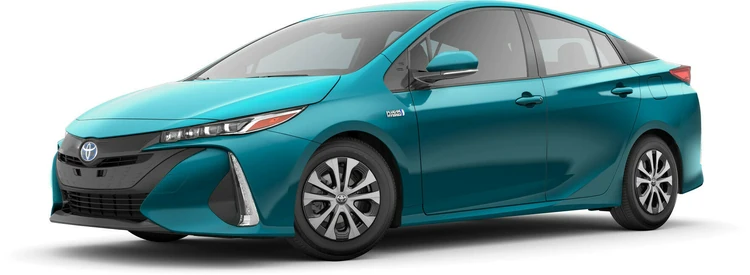
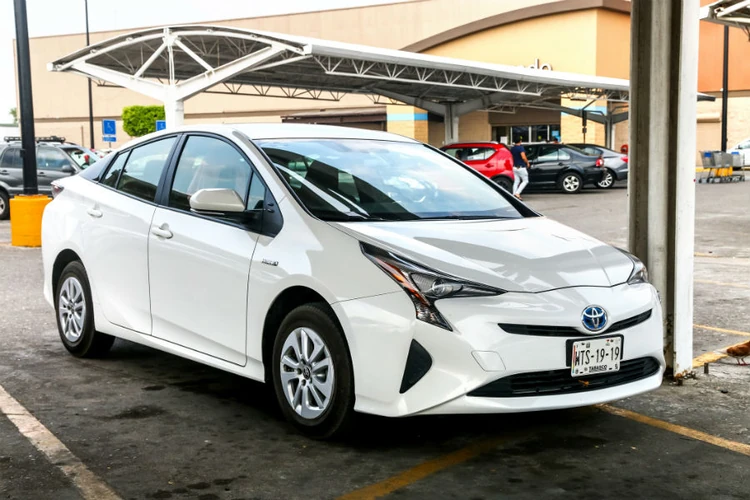
Toyota recalls model year 2022 Prius and Prius Prime vehicles

Toyota Motor Engineering & Manufacturing is recalling 8,411 model year 2022 Prius and Prius Prime vehicles.

The Engine Control Unit (ECU) software may falsely detect an error and shut down the hybrid system, causing a loss of drive power and increasing the risk of a crash.

What to do

Dealers will update the ECU software free of charge. Owner notification letters are expected to be mailed on November 20, 2021.

Owners may contact Toyota customer service at (800) 331-4331. Toyota's number for this recall is 21TB07/21TA07.

Article Image

Toyota announces major investment in electric car technology

Tesla, General Motors, and Ford have grabbed all the electric vehicle (EV) headlines lately, but Toyota is staking out its claim to a piece of the action.

The Japanese automaker has announced an investment of approximately $3.4 billion in U.S. production of EV batteries between now and 2030. The funds will be used to develop and localize the production of batteries to power EVs.

One component of the plan is the establishment of a new company that will partner with Toyota Tsusho to build a new plant in the U.S. that will employ about 1,750 people. Production could start in 2025.

"Toyota's commitment to electrification is about achieving long-term sustainability for the environment, American jobs, and consumers," said Ted Ogawa, the CEO of Toyota Motor North America. "This investment will help usher in more affordable electrified vehicles for U.S. consumers, significantly reduce carbon emissions, and importantly, create even more American jobs tied to the future of mobility."

Toyota continues to invest in electric vehicles

Toyota is no newcomer to EVs. To date, the automaker has turned out 18.7 million EVs worldwide and 4.5 million in the U.S. While electrified vehicles already account for nearly 25% of Toyota's U.S. sales volume, that number is expected to rise to nearly 70% by 2030.

Toyota produced an EV version of its popular SUV, the RAV4, until it was discontinued in 2014. The first generation of the RAV4 EV was sold to consumers in California. The second generation was limited to fleet sales within the U.S.

Toyota also pioneered the hybrid engine, introducing the Toyota Prius in 1997. The electric motor that is recharged by a small gasoline engine while being driven circumvents the range limitations of all-electric vehicles and has proven popular with consumers.

Jolanda, of Sioux Falls, S.D., bought her Prius because of Toyota’s reputation and believes the car has saved her money over the last five years.

“The amount of money that you save on gas alone definitely justifies the slightly higher price point,” Jolanda wrote in a ConsumerAffairs post. “And for me, that was really important. Although it can obviously fluctuate a bit on driving habits, amount of miles driven, etc., the fuel efficiency is really good.”

Toyota isn’t the only carmaker investing in EV technology. Stellantis -- the parent company of Jeep, Dodge, and Ram -- is partnering with LG to produce lithium-ion battery cells and modules. The plant will be in the U.S. at a yet-to-be-determined location. It will produce batteries to power U.S-built EVs beginning in 2024.

Article Image

Toyota recalls model year 2018-2021 Tundras

Toyota Motor Engineering & Manufacturing is recalling 158,489 model year 2018-2021 Tundras.

The headlight electrical circuits may power the high and low beams simultaneously, which could overheat the electrical connector.

An overheated electrical connector can increase the risk of a fire.

What to do

Dealers will modify the engine wire harness assembly and replace any damaged bulb, bulb connector, and/or headlight assembly -- as necessary -- free of charge.

Owner notification letters are expected to be mailed October 4, 2021.

Owners may contact Toyota customer service at (800) 331-4331. Toyota's numbers for this recall are 21TB06 and 21TA06.

Article Image

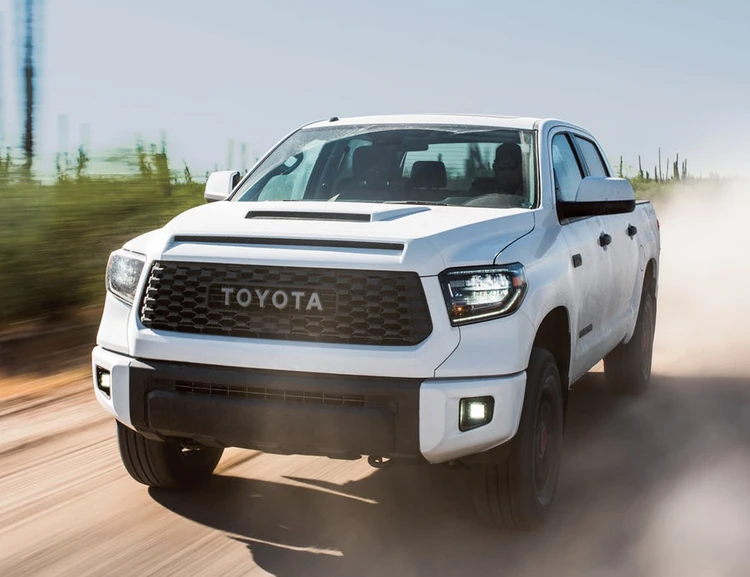
Toyota unveils the all-new Tundra pickup

Ford has gotten a lot of attention lately by previewing its all-electric F-150 Lightning pickup, but Toyota is reminding consumers it has no intention of bowing out of the pickup competition.

The company this week introduced the 2022 Toyota Tundra pickup with a major redesign — the third generation of Tundra pickups. It debuted its TV commercial for the truck during NBC’s Sunday Night Football telecast.

Toyota says its engineers focused on enhancing the performance, capability, multimedia, and creature comforts for drivers and passengers.

New features include a high-strength boxed, steel-ladder frame, aluminum-reinforced composite bed, and fully redesigned multi-link rear suspension. The result gives the new Tundra a maximum towing capacity of up to 12,000 pounds and a maximum payload capacity of 1,940 pounds.

“Our design goal from the beginning was to create the most powerful, rugged and sophisticated looking full-size pickup that will take Tundra to a whole new level,” said Kevin Hunter, president of Calty Design Research. “Because recreation and an outdoor lifestyle are at the core of Toyota truck identity, we set out to create a muscular, chiseled and athletic design that also looks like it could handle the toughest towing demands.”

Consumers like its durability

The Tundra is a popular model with ConsumerAffairs reviewers, who give the model a 4-star review. Many have commented on the vehicle’s durability.

“Great truck. minimal care,” wrote Will of Massena, New York, in a ConsumerAffairs review. “It is a workhorse, going through snow like a hot knife through butter. Overall I love this truck. Only drawback is parts can be a bit high but if you shop around you can keep that cost down.”

The new Tundra has a bolder look than previous models and offers upgraded technologies and additional power. But in a change from the past, the 2022 Tundra will offer two versions of a 3.5-liter twin-turbo V-6 engine as well as a V-8. One of the V-6 engines is a hybrid producing up to 437 horsepower.

Interior changes

Past Tundra owners will also notice some changes in the cab. Designers chose a horizontal layout theme instead of the vertical layout on most other trucks in the market. Part of the goal was to integrate the instrument panel and center stack to flow with the interior layout. 

Toyota says the Tundra boasts some upgraded interior materials as well. High-contact areas like armrests and pads across the dash feature highly durable materials designed to keep the truck looking new.

Toyota has yet to release fuel economy ratings for the 2022 Tundra. When the truck goes on sale before the end of the year, it’s expected to carry a sticker price of between $34,000 and $50,000.

Article Image

Juratoys recalls children’s shaving toys

Juratoys US of Millersburg, Pa., is recalling about 13,600 Janod Children’s Shaving Kits.

The brown trim of the shaving kit bags contains levels of a regulated phthalate that exceed the prohibition of specific phthalates.

Banned phthalates are toxic if ingested by young children and can cause adverse health issues.

No incidents or injuries are reported.

This recall involves Janod Shaving Kit toys.

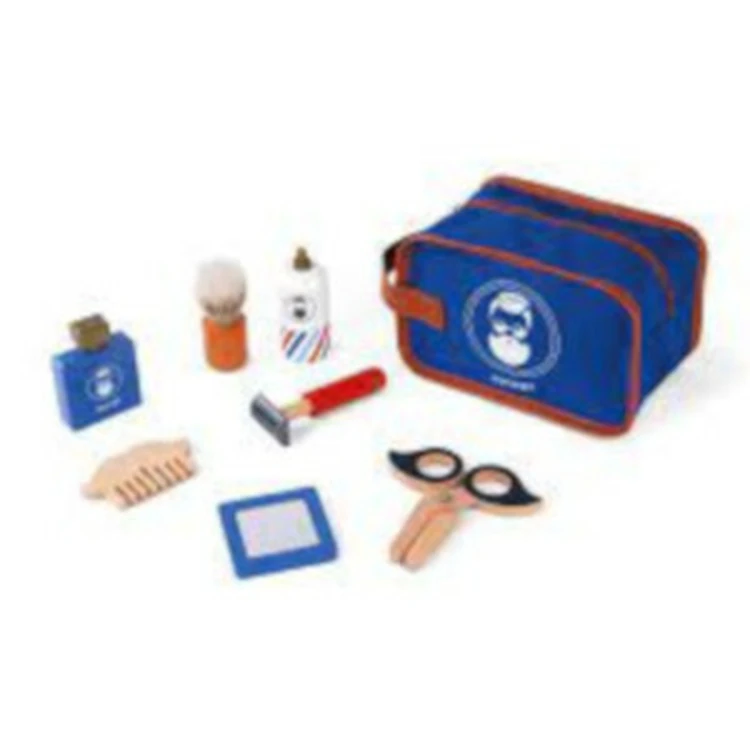
The kit’s blue fabric zippered bag with brown trim and imitation leather handle holds the following wood components: mustache-shaped scissors, mirror, mustache-shaped comb, cologne bottle, shaving brush, shaving cream bottle and shaver.

The batch number is found on the bottom of the cologne bottle and on the packaging wrap.

The following six batches are included in this recall:

  • 10084/ J06548/ 052020
  • 10024/ J06548/ 062020
  • 10166/ J06548/ 072020
  • 10279/ J06548/ 092020
  • 10460/ J06548/ 112020
  • 10551/ J06548/ 022021

The shaving kits, manufactured in China, were sold at Nordstrom, Crate and Barrel, and Barnes and Noble stores nationwide; online at Amazon.com, Maisonnette.com, Nordstrom.com, CrateandBarrel.com, and Bn.com; both in store and online at other specialty toy, gift and books stores nationwide; and in select catalogs from July 2020, through July 2021, for about $30.

What to do

Consumers should immediately stop using the recalled children’s shaving kit and return it to the place of purchase for a full refund.

Consumers may contact Juratoys US toll-free at (855) 665-9287 from 8:30 a.m. to 5:00 p.m. (ET) Monday through Friday, by email recall@juratoysus.com, or online at www.janod.us and click on “Recall Information – Shaving Set” at the bottom of the page for more information.

Article Image

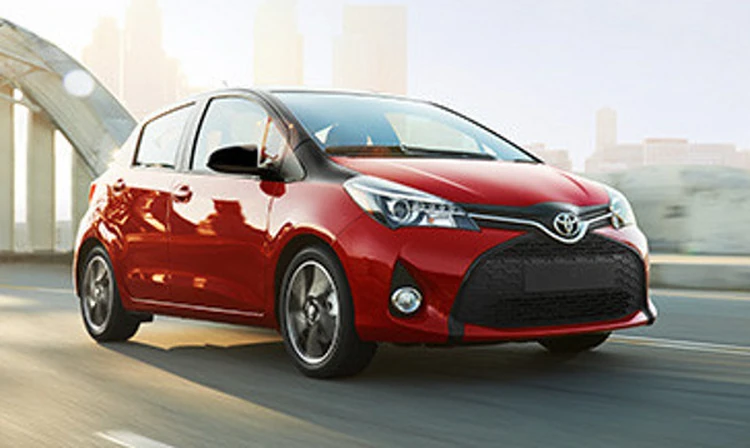
Toyota recalls Yaris, Yaris Hatchback and Yaris Sedan vehicles

Toyota Motor Engineering & Manufacturing is recalling 31,307 model year 2019-2020 Yaris, Yaris Hatchback and Yaris Sedan vehicles.

An impeller within the low-pressure fuel pump may crack and deform, potentially causing the fuel pump to fail.

A fuel pump failure may cause an engine stall, increasing the risk of a crash.

What to do

Dealers will replace the low-pressure fuel pump assembly free of charge.

Owner notification letters are expected to be mailed September 30, 2021.

Owners may contact Toyota customer service at (800) 331-4331. Toyota's numbers for this recall are 21TB05 and 21TA05.

Article Image

Toyota to invest $13.5 billion on developing electric vehicle battery tech

Toyota has long been a leader in the development of hybrid vehicles, dating back to 1997 when it first introduced the Prius. Now, it looks like it's trying to continue leading the way when it comes to these technologies.

On Tuesday, the automaker said it intends to invest more than $13.5 billion by the year 2030 to develop electric and hybrid vehicle batteries for its vehicles.

Toyota’s push for electric vehicle supremacy couldn’t come at a better time. Electric and hybrid vehicle sales jumped 81% in the first quarter of 2021. In 2022, the company plans to deliver its first all-electric line-up. 

What we can expect from Toyota

The first thing Toyota plans on doing is slashing the cost of its batteries. It said it plans on making that happen by reexamining the materials used in the batteries and the structure of the power cells -- most likely an effort to extend the service life of the batteries. The company may also eventually choose to replace liquid lithium-ion batteries.

"Then, for the vehicle, we aim to improve power consumption, which is an indicator of the amount of electricity used per kilometer, by 30%, starting with the Toyota bZ4X," Chief Technology Officer Masahiko Maeda told a press briefing. "We are still searching for the best materials to use," he said.

VW says it’s in it to win it, too

If successful, Toyota’s investment in electric vehicle batteries could put it ahead of the competition. The competitor that most industry watchers pit against Toyota is Volkswagen (VW). Not to be outdone by Toyota’s announcement, the world's second-largest automaker also said on Tuesday that it’s possible it will also increase its investment in electric vehicles.

Rather than try to go head-to-head with the bigger EV wannabes like Ford and GM to try and win an entire continent, VW’s battle plan seems to be set on conquering the EV market starting with smaller countries. The company’s first conquests? Sweden and Switzerland. 

“The short story in both markets is that Volkswagen Group is now king of the market,” said CleanTechnica’s Zachary Shahan.

“Its various fully electric offerings across several brands -- several of the models built electric from the ground up -- have quickly shot the automaker into a strong leadership position, as many Volkswagen fans and staff have long said would happen, and as many Tesla fans and overall Volkswagen skeptics have questioned or said would not happen.”

Article Image

Toyota to cut production by another 40% due to the computer chip shortage

The pandemic-induced computer chip shortage is continuing to wreak havoc on the automotive industry. After taking a bite out of Ford and GM’s plans, it’s now laying waste to Toyota’s production.

The world’s largest automaker says it is being forced to reduce its global production by 40% in September -- meaning it will produce 360,000 fewer vehicles than it planned. While Toyota says the rise in COVID-19 cases in Vietnam and Malaysia made the semiconductor shortage worse, the effect is being felt across almost all of its plants, including ones in Japan, North America, China, and Europe.

“It became difficult to secure the necessary volume for several parts, which led to this sudden and large-scale production cut,” said Kazunari Kumakura, Toyota’s global procurement chief. 

Being felt on the bottom line

Until now, Toyota has been able to withstand the pandemic’s impact in areas where many of its peers haven’t; in fact, it was able to record profits. But this news is already taking a toll. By midday on Thursday, shares of Toyota stock had fallen by 7.44 points (-4.24%).

“The new cuts could mean rougher seas ahead for all global automakers -- and their shareholders,” said The Motley Fool’s John Rosevear, suggesting that the global shortage of new vehicles won't end anytime soon or possibly by the end of 2021.

“I think this Toyota news suggests that we should expect automakers' shipments and revenue to remain well below pre-pandemic levels for a while longer -- certainly beyond the end of 2021.”

Impact on consumers

The chip shortage is causing a yin and yang effect that’s comparable to what we’re seeing in the housing market. It’s a good time to be a seller, but it’s not great if you’re a buyer. 

“In short, waiting lists are getting longer, and some vehicles are being built with different electronic systems in order to keep production lines running. If you're looking to jump waiting lists by buying used, prices are on the rise as the used car market becomes stronger,” said automobile valuation analyst Curtis Moldrich.

Prices are on the rise for used cars as the chip shortage rages on, especially for low-mileage, recent model cars in good condition. According to the U.S. Bureau of Labor Statistics, the cost of used cars and trucks rose 41% from July 2020, to July 2021.

Article Image

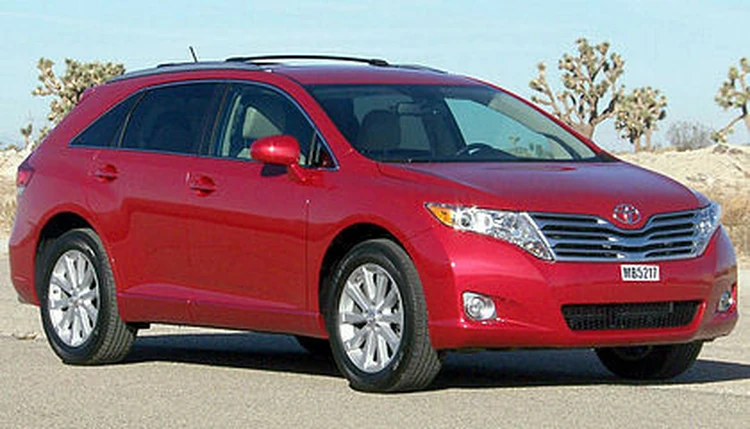
Toyota recalls model year 2009-2015 Venzas

Toyota Motor Engineering & Manufacturing is recalling 279,040 model year 2009-2015 Venzas.

The Supplemental Restraint System (SRS) wiring may become damaged with regular use of the driver-side door.

Damaged wires may cause the airbag sensor to become inoperable, preventing the deployment of the side and curtain airbags on the driver side and increasing the risk of injury in a crash.

What to do

Toyota will notify owners, and dealers will inspect and -- if necessary -- replace the driver-side front door wire harness free of charge.

The recall is expected to begin May 31, 2021.

Owners may contact Toyota customer service at (800) 331-4331. Toyota's number for this recall is 21TB01/21TA01.

Article Image

Toyota and Honda claim top honors in Best Family Car competition

The average transaction price (ATP) of a new car or truck is near an all-time high, hitting more than $41,000 in February, according to Kelley Blue Book. So families in the market for a new vehicle should choose carefully.

To help with that, U.S. News and World Report has just issued its annual list of Best New Cars for Families in 2021. The cars, SUVs, and vans were judged on a combination of safety, reliability, space, convenience, and connectivity.

Judges evaluated a total of 86 vehicles and named winners across nine categories.

Toyota was the biggest winner for the 2021 model year, driving off with four awards. Honda was close behind with three.

Eight-time winner

The Toyota Highlander Hybrid was named Best Hybrid SUV for Families for the eighth time. The gas-only RAV4 won Best Compact SUV for Families, and the Avalon Hybrid won Best Hybrid and Electric Car for Families for the second straight year. The gas-only Avalon won Best Large Car for Families, its third award in that category. 

The Honda Passport placed first in the category of 2-Row SUV for Families, the second time it has earned that distinction. The Honda Accord was also a second-time winner in the category of Best Midsize Sedan for Families. The Honda Odyssey won Best Minivan for Families for the 11th consecutive year – marking the longest winning streak in the history of the awards.

Kia and Chevrolet each collected an award. The Kia Telluride was named the Best 3-Row SUV for Families, the second straight year for that honor. The Chevrolet Suburban was named Best Large SUV for Families, finding its way back to the winner’s circle for the first time since 2015.

"Families come in many forms, and with nine different categories to choose from, there's a Best Cars for Families award winner that will work for any family," said Jamie Page Deaton, executive editor of U.S. News Best Cars. "The award winners have the space, safety, and features to satisfy any family, from new parents to parents with new drivers to households that may be welcoming grandparents."

Used vehicles may be a lot less

Families that don’t have a budget for one of these 2021 models might find good value if they consider a recent model of the same brand from the used car lot. The Honda Accord, for example, has a four out of five-star rating from ConsumerAffairs readers.

“Very good overall family sedan,” Ralph, of Pittsburgh wrote in a December 2019 post. “A few defects but overall quality is good except seats are not exactly designed for comfort. Ride is fair but road noise heard. Could be better by adding more insulation. Honda engines last forever.”

Previously-owned Toyota Highlanders also get a four-star rating from our readers. David, of Randolph, Mass., purchased a 2019 Highlander last year and is pretty pleased with his ride.

“No defects or mechanical issues,” David wrote in his post. “Very smooth ride. I find the seats comfortable. They do not hurt as others say after long rides. Maybe because everyone's body is different. I have no rattle or wind noises in the cabin.”
Article Image

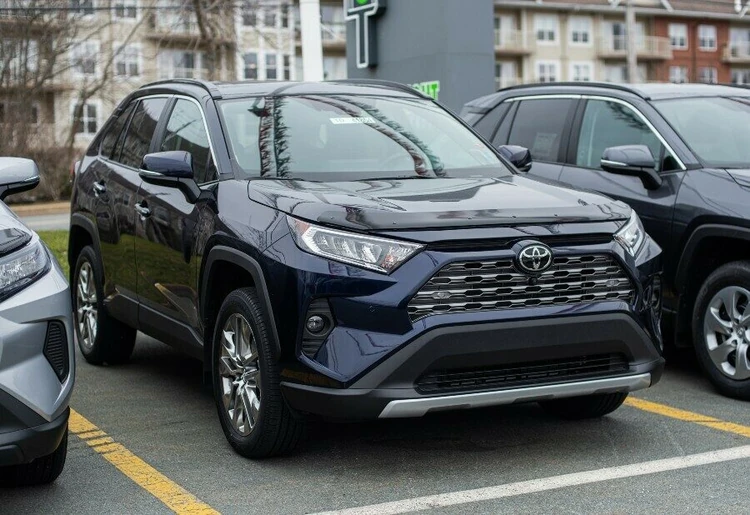
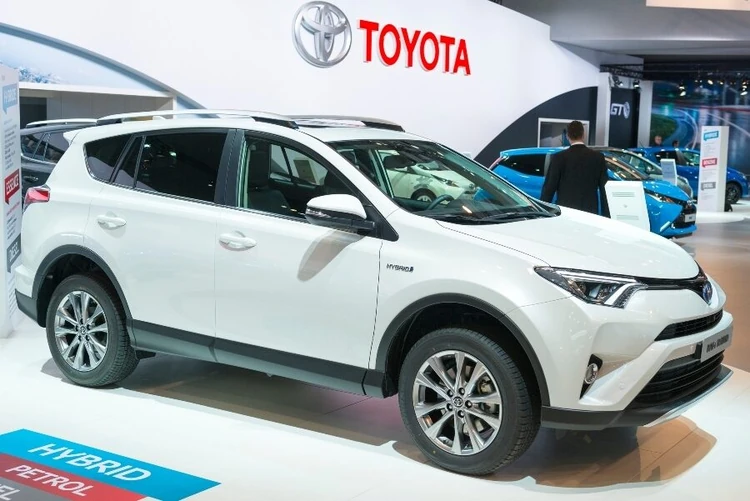
NHTSA launches investigation into Toyota RAV4 engine fires

The National Highway Traffic Safety Administration (NHTSA) announced Monday that it has launched an investigation into Toyota’s RAV4 vehicles. Regulators said there have been 11 reports of fires in 2013-2018 RAV4 vehicles. 

Toyota said it’s aware of the investigation and is cooperating with the NHTSA’s probe, which involves more than 1.86 million vehicles.

In a filing, the NHTSA alleged that “a non-crash thermal event” originated in the left side of the SUVs engine compartment. The auto safety agency said the vehicle’s 12-volt battery appears to be the “area of origin” in a majority of incidents reviewed. 

Investigators suspect that the issue may be caused by improper battery installation. Specifically, they say it involves a short on the battery’s hold-down frame by the positive terminal of the 12-volt battery. The agency said the problem “may result in the sudden loss of electrical power, vehicle stalling, and/or a fire originating in the engine compartment.” 

Stalling reported before fires

Most drivers said the incidents happened while they were driving their RAV4, but four fires started while the ignition was off. Investigators said “stalling” was reported in the run up to several incidents. 

"Drivers experienced stalling prior to the thermal event in half of the instances where the vehicle was in motion," the NHTSA said. 

The agency said it’s opened the investigation to “better understand the contributing factors and frequency of vehicle fires originating from the battery region of the subject vehicles.” So far, no injuries or accidents have occured in connection to the issue. 

The vehicles under investigation haven't been recalled, but they eventually could be depending on what the investigation reveals. 

Article Image

Toyota overtakes Volkswagen as largest carmaker in 2020

Toyota is once again the world’s largest automaker, having sold 9.5 million vehicles globally last year. 

For five consecutive years, the Japanese automaker lost the title of best-selling automaker to its German rival Volkswagen. But the company said Thursday that it topped Volkswagen’s sales in 2020 in spite of the COVID-19 pandemic. 

The pandemic had a major impact on the auto industry as a whole, but Toyota ended up coming out ahead. The Toyota group, which owns Daihatsu and Hino subsidiaries, said it sold 9.5 million vehicles last year -- slightly more than Volkwagen, which sold 9.3 million. 

Volkswagen -- which owns brands that include Audi, Skoda and Porsche -- was hit harder by pandemic-related disruptions in sales. The company’s passenger car sales in Europe fell 24 percent last year to fewer than 10 million units, according to the European Automobile Manufacturers Association. Last week, however, Volkswagen said that profits for 2020 hit $12 billion, suggesting a recovery in the second half of the year. 

Strong sales

Toyota has a larger U.S. presence compared to Volkswagen, and U.S. residents weren’t on lockdown as often as consumers in Europe. Toyota spokeswoman Chisato Yoshifuji said the company was able to stave off pandemic-related financial losses due to virus-control measures. 

“Naturally the number of units sold was lower than in the previous year because of the spread of coronavirus,” Yoshifuji told Bloomberg. “But because Toyota and its partners were able to thoroughly implement measures to combat the spread of the virus, we were able to continue our corporate activities and keep yearly declines at the level they were.” 

Although it fared well in 2020, industry analysts say Toyota will have to continue dealing with a global chip shortage that has prompted automakers to close factories and furlough workers. Analyst Yoshiaki Kawano expects Toyota to “put up a good fight” in the coming year by putting out more electric vehicles and SUVs.