2022 Honda Recalls and Safety Alerts

Article Image

Honda recalls model year 2006-2014 Ridgeline vehicles

American Honda Motor Co. is recalling 112,060 model year 2006-2014 Ridgeline vehicles that were sold or ever registered in Connecticut, Delaware, Illinois, Indiana, Iowa, Kentucky, Maine, Maryland, Massachusetts, Michigan, Minnesota, Missouri, New Hampshire, New Jersey, New York, Ohio, Pennsylvania, Rhode Island, Vermont, Virginia, West Virginia, Washington D.C., and Wisconsin.

An accumulation of road salt may cause the frame mounting surface, where the fuel tank mounting bands are attached, to corrode and possibly detach from the fuel tank. This problem could result in a fuel leak.

A fuel leak in the presence of an ignition source can increase the risk of a fire.

What to do

Dealers will inspect and repair the rear frame -- as necessary -- free of charge.

Depending on the extent of any corrosion damage, Honda may offer to repurchase the vehicle.

Owner notification letters are expected to be mailed on August 1, 2022. Owners may contact Honda customer service at (888) 234-2138.

Article Image

Honda recalls CR-Vs with inaccurate fuel gauges

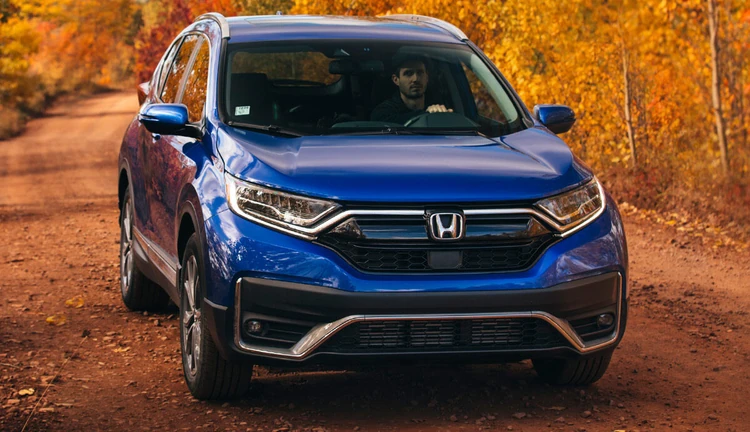
American Honda Motor Co. has issued a recall for 212 model year 2020 CR-V vehicles. 

The company says a clip for the absorber inside the fuel tank was not properly secured and may detach. This could cause an inaccurate fuel gauge reading that results in drivers unexpectedly running out of fuel or stalling, increasing the risk of a crash. 

What to do

Honda says dealers will replace the fuel tank in affected vehicles free of charge. Owner notification letters are expected to be mailed on July 5, 2022. 

Consumers may contact Honda customer service by phone at 1-888-234-2138 for more information. The automaker’s number for this recall is RCB. 

Article Image

NHTSA to investigate 1.7 million Honda vehicles over phantom braking concerns

Tesla isn’t the only automaker giving regulators concern when it comes to “phantom braking.” A new report suggests that 1.7 million Honda Accord and CR-V models are the subject of a separate investigation being conducted by the National Highway Transportation Safety Administration (NHTSA).

The NHTSA’s Office of Defects Investigation (ODI) announced that it has received 278 reports (107 Honda Accord; 171 Honda CR-V) and several Early Warning Reports claiming “inadvertent activation of the collision mitigation braking system” (CMBS) in 2017-2019 Honda CR-V and 2018-2019 Honda Accords. 

Issue could cause rear-end collisions

The major issue that Honda owners raise is that the braking incidents happen when there are large speed changes, and they occur with nothing obstructing the vehicle's path of travel. Of the 278 reports, six allege a collision with minor injuries.

“Inadvertent or unexpected braking activation while driving can cause unexpected speed reductions that can lead to increased vulnerability to rear end impact collisions,” the ODI said. “The complaints allege that the inadvertent braking events occur without warning and randomly.”

ODI officials said they are opening this Preliminary Evaluation to gauge the “scope and severity” of the situation and any safety-related issues.

ConsumerAffairs reviewer shares their experience

One ConsumerAffairs reviewer – Jen, from Newburgh, N.Y. – wrote about her experience about similar braking issues with a 2018 Honda Fit that had Honda Sensing enabled. 

“Within a week, I discovered that the sensors are so flaky as to render the car unsafe to drive - while I was unable to trigger them at all during the test drive (as they sometimes fail to detect anything), the opposite problem (seeing something that isn't there) is where the car becomes unsafe. 3 times in 60 miles of highway driving, the car applied maximum brakes without warning,” she wrote in her review. 

Jen said the issue seemed to always trigger just as she was about to finish passing another car.

“This compounded the risk of brake checking - had someone been behind me, they absolutely would have rear-ended me, as they would have had no place to go to dodge my vehicle, and absolutely no way to anticipate my car applying the brakes at maximum for several seconds.”

Jen offered a word to the wise – stay away from buying a car with the “sensing” add-on.

“I would strongly recommend that no one buy a car with this 'feature', think twice before riding in a newer Honda, and be aware of their potentially erratic performance if you see one on the road - frankly these cars are a danger to others as much as to themselves,” she said in her review.

Article Image

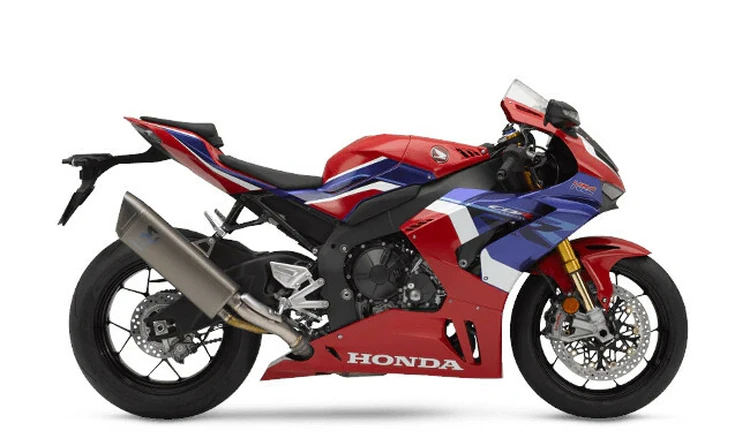
Honda recalls model year 2021 Fireblade SP motorcycles

American Honda Motor Co. is recalling 331 model year 2021 CBR1000RR-R Fireblade SP motorcycles.

Under certain driving conditions, the exhaust pipe may overheat, which could melt the oil cooler pipe and cause it to rupture.

A ruptured oil cooler pipe can leak oil onto the exhaust pipe or rear tires, increasing the risk of a fire, crash, or injury.

What to do

Owners are advised not to ride their motorcycle above 5,000 RPM in 1st gear until the recall repair is complete.

Dealers will replace the oil cooler pipe and install a heat guard between the exhaust pipe and oil cooler pipe free of charge.

Letters notifying owners of the safety risk are expected to be mailed on March 1, 2022. A second letter will be sent once the remedy is available.

Owners may contact Honda customer service at (866) 784-1870. Honda's number for this recall is KN3.

Article Image

Honda Civic named North American Car of the Year

The Honda Civic, newly redesigned for the 2022 model year, has been named North American Car of the Year by automotive journalists.

"The Honda Civic has long set the standard by which other compact cars are measured and this all-new Civic raised that bar in every conceivable way," said Michael Kistemaker, assistant vice president of Honda national sales, American Honda Motor Co., Inc.

The car of the year award, given annually, recognizes excellence in innovation, design, safety features, performance, technology, driver satisfaction, and value. Launched in 1994, the annual vehicle competition is judged by 50 professional automotive journalists from the U.S. and Canada who work for independent magazines, television, radio, newspapers, and industry websites. 

Some complaints about the air conditioner

The Honda Civic is popular with consumers, placing in the top three in terms of U.S. sales, along with the Toyota Corolla and Hyundai Elantra. However, some Civic owners posting reviews on ConsumerAffairs have reported problems with the vehicle’s air conditioner.

Julio, of Whittier, Calif., tells us he had problems with the Civic he purchased in 2016.     

“After 40k miles a/c start fail(ing) and blow hot air only,” Julio wrote in a ConsumerAffairs review. “Try to fix myself because warranty expires, went to a/c shop but they told me a/c condenser maybe or compressor, about $2500 out of my pocket!”

Kenny, of San Francisco, reports that both the condenser and compressor failed in his 2018 Civic with 13,000 miles. 

“Honda acknowledges faulty part with their A/C condenser that could cause refrigerant to leak but failed to take responsibility of the compressor,” Kenny wrote in his post. “The leak could cause other A/C components to fail such as the compressor, clutch, and coil.”

A top seller in 2021

Despite several complaints involving the air conditioner, the Honda Civic is still fairly popular with ConsumerAffairs reviewers. On a 5-star system, it earns an overall rating of 4.0.

The 2022 Civic has been redesigned from the wheels up. The company says the Honda Civic Sedan, Hatchback, and Si models feature a more rigid body structure, an advanced chassis, and interior upgrades.

The drivetrain options include a high-torque turbo engine and a six-speed manual transmission. New safety features include several driver-assistive and connected-car technologies.
Article Image

Honda recalls Acura RDXs and CR-V Hybrids

American Honda Motor Co. is recalling 279 model year 2021 Acura RDXs and model year 2022 CR-V Hybrids.

A component in the right or left front driveshaft may have been improperly heat-treated, which could result in driveshaft failure.

Driveshaft failure can cause a sudden loss of drive power or cause the vehicle to roll away when parked if the parking brake is not applied. Either condition can increase the risk of a crash or injury.

What to do

Dealers will replace the right or left front driveshaft -- as necessary -- free of charge.

Owner notification letters are expected to be mailed on January 24, 2022.

Owners may contact Honda customer service (888) 234-2138. Honda's numbers for this recall are BBY, NBW, and OBX.