2022 Home Prices

Article Image

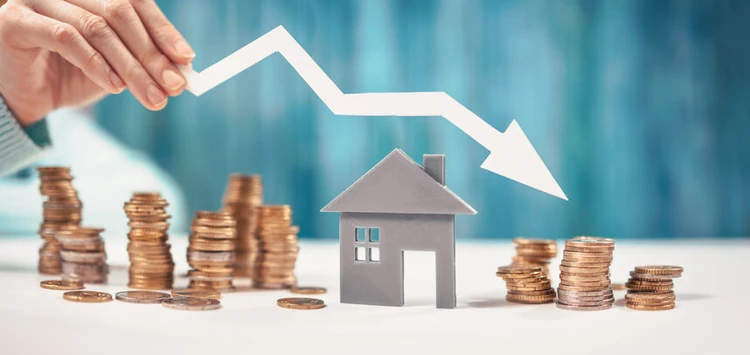
How much value has your home lost? Maybe more than you think

Maybe you have no intention of selling your home anytime soon so a decline in home prices is not a big concern. At the same time, the equity in your home probably makes up a big piece of your net worth.

The good news? The decline in home values has slowed from the summer months. But the bad news is that homeowners nationwide lost $1.3 trillion in home equity in the third quarter of this year, according to a report by Black Knight, a property data firm. It’s the largest quarterly dollar decline on record and the largest on a percentage basis since 2009.

“As we reported at the time, while hitting a record high in Q2, total homeowner equity peaked mid-quarter in May and has been pulling back ever since,” said  Ben Graboske, president of Data & Analytics at Black Knight. Equity among mortgaged properties is now down nearly $1.5 trillion since that point.”

For most homeowners who purchased their homes five or more years ago, the decline in values may not be all that concerning. But the report shows the number of mortgage holders who are now underwater more than doubled during that time. Still, Graboske says that’s hardly cause for alarm.

“It's important to note that -- even with 275 thousand falling underwater since May -- fewer than half a million homeowners owe more on their homes than their current values,” he said. Historically speaking, that is still extremely low.

Recent buyers are feeling the most pain

Most underwater borrowers purchased homes in 2020 and 2021, as prices were reaching record highs during the pandemic. Most obtained low fixed-rate mortgage rates, meaning their payments haven’t changed, even though they have lost equity.

Many housing experts say home prices are simply returning to earth after the massive increase since the start of the COVID-19 pandemic. According to the Federal Reserve, the U.S. median home value in the first quarter of 2019 was $313,000. In the third quarter of this year, it was $454,000.

Your home may not have lost much value at all, depending on where you live. Prices have suffered the sharpest declines in the nation’s most expensive markets. According to the Knock Buyer-Seller Market Index, homes in 98 of the 100 hottest housing markets have seen steep price declines. 

But the same report projects that homes in 13 U.S. housing markets are still rising in price. They include Winston-Salem, N.C., Fayetteville, Ark., and Seattle.

Article Image

Home prices are falling at the fastest rate on record

Consumers hoping home prices will fall enough for them to buy a house are seeing their wish come true. By one metric, prices fell from July to August at the fastest pace on record.

Make no mistake, prices are still sky-high. But the S&P CoreLogic Case-Shiller Indices, which tracks U.S. home prices, showed a 2.6% decline in annual home price appreciation when compared to the previous month.

The median home price in August was 13% higher than in August 2021. But July’s median price was 15.6% higher year-over-year. The 2.6% difference was the biggest one-month drop-off since the survey began 27 years ago.

The index breaks the country down by market size, with 10 and 20-city averages. Miami, Tampa, and Charlotte reported the highest year-over-year gains among the 20 cities in August. 

Prices fell the least in the South

Miami led the way with a 28.6% year-over-year price increase, followed by Tampa in second with a 28.0% increase, and Charlotte in third with a 21.3% increase. All 20 cities reported lower price increases in the year ending August 2022 versus the year ending July 2022. But that doesn’t mean it’s getting any easier to buy a home.

"Despite the ongoing deceleration, August's housing prices remain well above year-ago levels in all 20 cities,” said Craig Lazzara, managing director at S&P Dow Jones.  Florida continues to hold the top two spots, with Miami taking the lead over Tampa. Price growth continued strongest in the Southeast and South.

While a slowdown in prices helps, many would-be buyers face strong headwinds in the form of higher interest rates that have sharply reduced home affordability. The decline in home prices can be linked to higher mortgage rates that average more than 7%, more than double last year’s 3% average rate.

Article Image

August home prices record biggest drop in 13 years

Home prices are dropping like a rock.  The most recent data from the Black Knight Home Price Index, a national measure of home prices, show the median home price declined in August for the second straight month.

But it’s the size of those price declines that’s worth noting. July and August's month-over-month declines mark the sharpest contractions seen in more than 13 years. Black Knight Data & Analytics President Ben Graboske says the market entered September with the median price down 2% just since the June peak.

"Only marginally better than July's revised 1.05% monthly decline, home prices were down an additional 0.98% in August,” Graboske said. “Either one of them would have been the largest single-month price decline since January 2009. Together they represent two straight months of significant pullbacks after more than two years of record-breaking growth.”

That is likely music to the ears of would-be home buyers who have been priced out of the housing market by high prices and mortgage rates that are approaching 7%. But celebrations may be premature.

Affordability is still falling

Even though home prices are falling from their all-time high, the experts at Black Knight say housing remains historically unaffordable, all because of rising mortgage rates. 

After improving slightly in July and early August, surging 30-year mortgage rates have pushed home affordability to its worst point in 38 years.

With rates at 6.7% as of Sept. 29, 38.2% of the median household income is needed to make the principal and interest (P&I) payment on the median-priced home purchase, the largest share since December 1984, when mortgage rates were at 13.2%. 

The monthly P&I payment on the median home is up $930 from the same time last year – a 73% increase. The situation is geographically widespread as well, with 84 of the 100 largest U.S. markets now at more than three-decade lows in terms of home affordability.

Black Knight also suggests there is a limit to how far home prices will fall, even in a rising interest rate environment. Analysts note inventory levels are still near historic lows as many sellers are now waiting for lower interest rates before listing their homes.

What about the huge inventory of unsold newly constructed homes? Won't those prices be slashed to the bone?

Yes and no. The Wall Street Journal reports some builders are offering entire subdivisions to investors at a discount. Those homes won’t be sold to owner occupants but will be maintained as single-family rentals.

Article Image

Homebuyers are balking at high prices and high rates

When it comes to the economy, consumers have learned to distrust the phrase “But it’s different this time." However, when it comes to the housing market, many real estate professionals say the current market is unlike anything they’ve seen.

After a record runup in median home prices in 2020 and 2021, a surge in mortgage rates early this year has slammed the brakes on home sales, which is beginning to have an impact on prices.

Prices haven't backed down that much from their record highs but the rate of increase has moved into reverse. In its latest report this week, property data firm CoreLogic found the median U.S. home price posted a 0.3% decline from June to July. 

The 10-City and 20-City Composites, which measure prices in the nation’s top housing markets, both posted decreases of 0.8%. In July, only seven cities reported increases before and after seasonal adjustments.

Before potential home buyers start popping the champagne corks, consider this: Prices may have stopped going up but they are still very high compared to where they were at the beginning of the pandemic.

And the increase in the average 30-year fixed-rate mortgage interest rate from about 2.8% 12 months ago to today’s 6.7% rate has severely eroded affordability. However, there are beginning to be signs that if buyers are patient and willing to wait while the market corrects, there could be opportunities in the future.

64,000 canceled contracts

Real estate broker Redfin reports that nationwide, around 64,000 home-purchase agreements fell through in August, equal to 15.2% of homes that went under contract that month. That’s up from 12.1% a year earlier and is comparable with July’s revised rate of 15.5%.

That suggests the combination of high prices and high mortgage rates has caused buyers to have second thoughts. As these homes go back on the market, along with new inventory, prices could soften even more.

The Redfin report shows homebuyers were most likely to back out of deals in Sun Belt cities that surged in sales and price during the pandemic. The Phoenix, Tampa, and Las Vegas markets were among those seeing the highest numbers of canceled deals. 

“House hunters today are taking their time and exploring their options, whereas six months ago, they had to act quickly and pull out every stop to compete because homes were selling almost immediately,” said Tzahi Arbeli, a Redfin real estate agent in Las Vegas.

“Homebuyers now will agree to buy a house and be doing the inspection, and then back out because they found another home they love more.”

Interest rates are another story

But with the good news on prices comes the bad news on interest rates. Mortgage rates are still going up, not backing off from their recent highs. According to Fortune, the average mortgage rate is quickly closing in on 7%.

On a historical basis, 7% is not all that high. In the 1990s, when you could buy a nice house for $150,000, 7% was not a deal-breaker. However, when the house costs $400,000 or more, it’s a different story.

How long will buyers have to wait for lower mortgage rates? Maybe fewer than 12 months.

A recent report from Fannie Mae predicts mortgage rates will average 4.5% in 2023. In fact, the report suggests qualified buyers may be able to snag a 4.7% mortgage rate in the first quarter of next year.

Article Image

Home prices fell in July for the first time in nearly three years

The median U.S. home price declined slightly in July, the first time in years that prices have fallen. Black Knight, a housing data firm, reports the median home price fell 0.77% from June, the largest single-month decline since January 2011.

Over the last few months, Black Knight’s data shows prices were still rising but at a slower pace each month. The drop, while small, could be good news for buyers if the trend continues.

"Annual home price appreciation still came in at over 14%, but in a market characterized by as much volatility and rapid change as today's, such backward-looking metrics can be misleading as they can mask more current, pressing realities,” said Black Knight Data & Analytics President Ben Graboske. 

Graboske says the slowdown in the market has been showing up in the data over the last several months. He says that in January, prices rose at 28 times their normal monthly rate before slowing to five times average in February. That, he notes, was when interest rates began to move higher.

“Even May was still about two times normal before June growth came in 70% below the long-run average,” he said. “Without timely, granular data, market-moving trends don't become apparent until they're right in front of you – like a sudden shift to the largest single-month decline in home prices in more than a decade.”

Embracing renting

Rising interest rates have simply made today’s expensive homes unaffordable for many Americans. Rather than buy a small, entry-level home they will quickly outgrow, real estate expert Kurt Carlton, president of investor support firm New Western, says many younger consumers have embraced renting as a way to obtain more living space.

“(The) desire for rental homes has increased as millennials are having children and seeking flexibility,” Carlton told ConsumerAffairs. “This demand vacuum has drawn in institutions who have continued to standardize the single-family rental market.

According to the Black Knight report, prices are not easing in a uniform pattern, with price cuts occurring most frequently in the most expensive markets.

But the report shows that more than 85% of the 50 largest U.S. markets are at least marginally off their peak prices through July, with home prices down by less than 1% in a third of the market, and more than one in 10 seeing prices fall by 4% or more.

Article Image

Typical home sold for less than the asking price in August

In another sign of a softening housing market, real estate broker Redfin reports the typical home sold in August at a price that was less than the listing price.

That’s a sharp reversal from 2021 when homes in many areas sold for well above the asking price and would-be buyers engaged in bidding wars. It’s the first time in over 17 months that a typical seller has accepted less than the list price.

Redfin reports the home price surge began in March 2021, as the market produced an average sale-to-list ratio of over 100%, meaning that the average home has sold for more than its final asking price, after all price reductions. 

While the decline in prices is good news for buyers, Redfin says there has been no rush to take advantage of it. Mortgage purchase applications and pending sales are both lower compared to 12 months ago.

The market may continue to slow

"While the cooldown appears to be tapering off, there are signs that there is more room for the market to ease," said Redfin Chief Economist Daryl Fairweather. "The post-Labor Day slowdown will likely be a little more intense this year than in previous years when the market was super tight.”

Fairweather expects homes to stay on the market for longer than they did in 2021 when some homes went under contract within hours of their listing. She says that could be a sign that home prices will continue to drift lower.

“Homebuyers’ budgets are increasingly stretched thin by rising rates and ongoing inflation, so sellers need to make their homes and their prices attractive to get buyers’ attention during this busy time of year,” Fairweather said.

Rising mortgage rates have reduced home affordability, raising the cost of a monthly mortgage. For the week ending September 1, the average 30-year mortgage rate rose to 5.66%. In January, the average mortgage rate was just 3.22%.

Waiting for a bargain may take a while

It remains to be seen just how quickly home prices will fall. Buyers hoping for a large adjustment may have a long wait or be prepared to buy in the nation’s most expensive housing markets. By all indications, prices are falling fastest in markets where they went up the fastest.

In some markets, prices are rising, albeit at a much slower pace. Redfin’s median home sale price in August was $370,000, up 6% year over year. 

Prices have declined 6% from the record high of $393,725 hit during the four-week period ending June 19. A year ago, they rose 0.4% during the same period.

Only three metro areas in the Redfin survey saw a year-over-year decline in their median home-sale price: Honolulu, Oakland, and San Francisco, where median sale prices were between $600,000 and $1.4 million. 

Article Image

ConsumerAffairs ranks the large cities where buying or renting a home is most affordable

When the COVID-19 pandemic introduced widespread remote work, people took advantage of that to find larger and more affordable homes, often in other states. Now that rising mortgage rates have made many housing markets even less affordable, evidence suggests that Americans are on the move once again.

Kristina Morales, Realtor at eXp Realty in New York, said she saw people migrating to more affordable markets early in the pandemic, and she doesn’t think that’s going to end anytime soon.

“I actually think with rising interest rates and inflation, we may see this increase,” Morales told ConsumerAffairs. “As long as people are able to continue to work remotely, this gives them flexibility on where they live. Areas with more affordable housing markets will certainly attract these people.”

The 10 most affordable large cities

Employees who are able to work from just about everywhere would do well to consider less expensive cities where home prices remain well below the national median. The ConsumerAffairs Research Team has crunched Census Bureau numbers on America’s most affordable cities with a population of at least 500,000. We identified the most expensive housing markets as well as the least expensive.

We ranked major U.S. cities based exclusively on how much residents spend each month on their housing, whether they own or rent their homes, arriving at a monthly “median housing cost.” 

We arrived at that number based on multiyear census estimates covering monthly housing costs for residents—spending on mortgages, rent, real estate taxes, property insurance, utilities, and other recurring housing expenses.

Here are the top 10 most affordable big cities:

  1. Detroit

  2. El Paso

  3. Memphis

  4. Milwaukee

  5. Tuscon

  6. Louisville

  7. Indianapolis

  8. Oklahoma City

  9. Albuquerque

  10. San Antonio

Detroit

Population: 672,351 

Median housing cost: $734

Median home value: $52,700

Median rent: $850

Once a major industrial center, Detroit is now part of the Rust Belt. However, the city has spent the last few years redefining itself. National Geographic recently reported that “Detroit is Cool Again.” It attributes the city’s rebound to energetic leadership, both among elected officials and citizens.

Detroit native Dan Gilbert, who founded Quicken Loans, moved his company to Detroit. He bought dozens of properties for rehab, fueled dozens of start-ups, and employs more than 12,000 people.

The city offers several neighborhoods with homes priced below the national median. For sports fans, Detroit has Major League Baseball, NFL, and NBA franchises.

El Paso

Population: 679,879

Median housing cost: $877

Median home value: $132,800

Median rent: $857

El Paso, Texas, which is located on the U.S./Mexico border, is America’s 23rd largest city, but it ranks second in affordability. The City of El Paso’s emphasis on the formation of neighborhood associations has resulted in strong communities and active citizens.

Jobs are plentiful, especially in energy production and health care. El Paso is home to Marathon Petroleum and the Medical Center of the Americas, the only medical research and care provider in West Texas. 

The University of Texas at El Paso has an enrollment of more than 23,000 and offers 169 bachelor’s, master’s, and doctoral programs in 10 colleges and schools. 

Memphis

Population: 650,910

Median housing cost: $913

Median home value: $107,100

Median rent: $915

Memphis’ status as an affordable housing market is underscored by one statistic: Realtor.com reports that the Tennessee city on the Mississippi River is the nation’s number one housing market, where first-time buyers are competing with investors for the best homes.

Besides affordable housing, Memphis boasts a strengthening job market. It’s the home of Fed Ex, Auto Zone, and International Paper. It’s ranked number one in the nation by Bloomberg for job creation when compared to the average area employment rate over the past 10 years.

Culturally, Beale Street celebrates the blues, while Elvis Presley’s Graceland draws rock music fans from around the world. In fact, music is an important force in a city considered by many to be the birthplace of rock and roll.

Milwaukee

Population: 592,649

Median housing cost: $906

Median home value: $128,300

Median rent: $866

Milwaukee’s affordable housing market has drawn lots of interest since the COVID-19 pandemic. Despite strong sales activity, the market still remains within reach for many people who have been priced out of larger, more expensive cities. However, buyers may face more competition here than in the other markets on our list.

Milwaukee is the largest city in Wisconsin and sits on the western shore of Lake Michigan. It’s less than a two-hour drive from Chicago, where homes go for a lot more. The city’s health care facilities include two major hospitals –St. Luke’s Medical Center and the Wisconsin Heart Hospital – as well as Ronald McDonald House.

Milwaukee entered 2022 with a robust job market. According to the Metropolitan Milwaukee Association of Commerce (MMAC), the manufacturing sector is particularly strong and has increased the number of jobs to well above pre-pandemic levels.

Tucson

Population: 545,340

Median housing cost: $890

Median home value: $165,900

Median rent: $861

Tucson is ranked by Realtor.com as one of the nation’s hottest housing markets, but it has been able to retain its affordability. It’s Arizona’s second-largest city behind Phoenix, which is one of the nation’s more expensive places to live. Tucson has attracted remote workers from all over the country with a near-perfect climate and high quality of life.

The city boasts a strong economy that has a diverse blend of private and public business sectors, including education, aerospace, biotech, defense, information technology, and international trade. Tucson is home to the University of Arizona, which is ranked among the top 20 public research universities nationwide.

While homes in the Tucson metro are affordable now, buyers should prepare for some stiff competition. According to the Tucson Business Journal, bidding wars in 2022 have increased faster than in Pheonix, where rising mortgage rates have slowed sales. People considering a move to Tucson shouldn’t wait too long, as market conditions could change quickly.

Louisville

Population: 618,733

Median housing cost: $929

Median home value: $165,400

Median rent: $878

Louisville is the largest city in Kentucky and sits along the Ohio River. It’s connected to Cincinnati via I-71 and to Nashville and Indianapolis by I-65. It includes aspects of both the South and Midwest and offers plenty of Southern charm. Home to the Kentucky Derby, it exudes a graceful way of life and a very affordable housing market. In fact, WalletHub recently named it one of the top cities for renters.

Jobs are plentiful at major employers like Papa John’s Pizza, UPS, KFC, Louisville Slugger, and Brown Forman distillery. Ford Motor Company operates a large assembly plant in the city.

Pandemic buying pushed home prices higher, but there are still plenty of affordable homes. Homes sell quickly, but Redfin reports that Louisville home sales are recently down nearly 6%, offering an opportunity for buyers.

Indianapolis

Population: 869,387

Median housing cost: $939

Median home value: $145,200

Median rent: $911

Although Indianapolis is on our list of affordable housing markets, prices in the capital of Indiana are rising. Redfin reports that prices were up nearly 14% in June. That said, its median home value is the lowest of any city on our list.

To find the cities with the best deals, it sometimes pays to follow the investors. HousingWire has reported that Indianapolis has drawn the most attention from out-of-state investors, who are scooping up single-family homes and converting them to rental properties.

Indianapolis has a strong job market and is home to a number of major health care employers, including pharmaceutical manufacturer Eli Lilly, Anthem, and Community Health Network. On the industrial side, it's also home to Cummins.

Oklahoma City

Population: 649,821

Median housing cost: $937

Median home value: $161,800

Median rent: $884

Oklahoma City is yet another housing market that’s attracting attention from investors. For that reason alone, it might be enough for a first-time buyer to check it out. Other reasons include the strong economy and job market.

The energy industry is a major player, with OGE Energy, Love’s Travel Stops, Chesapeake Energy, and Sandridge Energy based there. In addition, Baker Hughes has a strong presence. But the economy is not a one-trick pony, as Oklahoma City is home to a diverse assortment of enterprises in aviation and aerospace, bioscience, and financial services.

The Oklahoma City Museum of Art is a cornerstone of the city’s cultural landscape, while the Bricktown Entertainment District is a major part of its revitalized downtown area. 

Albuquerque

Population: 560,447

Median housing cost: $968

Median home value: $204,100

Median rent: $889

Albuquerque remains a very competitive housing market, but fortunately for buyers who are willing to move, home prices are considerably lower than in many other metropolitan areas. Albuquerque is the largest city in New Mexico and is the center of business and economic activity.

Albuquerque is another affordable city that offers plenty of jobs in health care. In recent years, it has also added high-tech manufacturing capacity. The state and federal governments are also major employers.

Now may be a good time to go house hunting in Albuquerque and its surrounding areas. KRQE-TV recently reported that the red-hot pace of home sales has slowed considerably. Local realtor Jesse Garcia told the station that the market is experiencing a slowdown, with a higher supply of homes on the market but less demand.

San Antonio

Population: 1,529,133

Median housing cost: $1,012

Median home value: $156,700

Median rent: $1,025

San Antonio is the only city on our list with a population of over 1 million, putting it in the top 10 U.S. metro areas. But despite its size, it is still affordable, with a median home value of $156,700. In fact, the National Association of Realtors (NAR) ranked San Antonio as one of the nation’s “hidden gems” when it comes to real estate.

The city is located in South Central Texas, about a one-hour drive from Austin and three hours from Houston. It’s home to the Alamo and was a Spanish colonial outpost dating back to 1718.

It offers a diverse economy with an especially strong job market. Industries include health care, the military, financial services, and energy. The city has won praise for its quality of life and rich Hispanic heritage. 

Opportunity for remote workers

Bob Bilbruck, CEO at Captjur, says these 10 housing markets, and others like them, will see more activity in the months ahead. He says it might be wise for people who can work remotely to consider a move.

“The migration to more fluid markets will keep happening as these areas are pro-growth and have less regulatory hurdles for people to build new homes or for builders to build new homes and sell to these people,” Bilbruck said.

Jeb Smith, a broker at Coldwell Banker Realty in Huntington Beach, Calif., says today’s real estate market is shifting back to more “normal” times, reducing the demand for homes and eliminating some of the competition. He says that can create opportunities for buyers, especially in America’s more affordable housing markets.
Article Image

Existing home sales and prices fell in July

The housing market entered a recession in July. That's bad news for people who are planning to sell their homes, but it's some long-anticipated good news for would-be buyers. Sales of existing homes fell for a sixth straight month, declining by 5.9% from June. They're down more than 20% from July 2021.

The median sale price dropped by $10,000 in one month, declining to $403,800. In the previous five months of declining home sales, the median price kept rising to a record $413,800 in June.

"The ongoing sales decline reflects the impact of the mortgage rate peak of 6% in early June," said NAR Chief Economist Lawrence Yun. "Home sales may soon stabilize since mortgage rates have fallen to near 5%, thereby giving an additional boost of purchasing power to home buyers."

There was more good news for people who want to buy a home. Total housing inventory at the end of July was 1,310,000 units, an increase of 4.8% from June and unchanged from the previous year. That’s still historically low, but at least it’s moving toward a more balanced market. Unsold inventory sits at a 3.3-month supply at the current sales pace, up from 2.9 months in June and 2.6 months in July 2021.

Getting back to normal

Jeb Smith, a Coldwell Banker agent in Huntington Beach, Calif., says the housing market has been moving back to more normal inventory levels for the last couple of months.

“That means buyers are having to do less of the crazy stuff they were having to do during the pandemic to get their offer accepted,” Smith told ConsumerAffairs. “On top of the shift due to rates, we are now past the busiest point in real estate, the spring selling season, which means that demand should continue to decline due to the time of year giving homebuyers more opportunities with less competition and more homes to choose from as we transition through the rest of 2022.”

Despite the slowdown in sales and the drop in prices, the housing market appears to be remaining healthy for now. Distressed sales – foreclosures and short sales – represented approximately 1% of sales in July, which is essentially unchanged from June 2022, and July 2021.

People who were selling their homes had little difficulty doing so in July. Homes typically remained on the market for 14 days in July, the same as in June and down from 17 days in July 2021.  In fact, the 14 days on market are the fewest since NAR began tracking that stat in May 2011. 

Eighty-two percent of homes sold in July 2022 were on the market for less than a month.

Article Image

Four out of five major metros posted double-digit home price increases

Rising mortgage rates and falling home sales failed to bring down home prices in the second quarter, according to a new report from the National Association of Realtors (NAR). In fact, four out of five of the largest metro areas recorded year-over-year double-digit price increases.

On a nationwide basis, the NAR puts the median price of a single-family home at $413,000, a 14.2% increase over the second quarter of 2021. NAR Chief Economist Lawrence Yun worries that these types of gains are pricing millions out of the housing market.

"Home prices have increased at a pace that far exceeds wage gains, especially for low- and middle-income workers," Yun said. 

Sales and prices increase most in South

Homes in the South led the nation, both in sales and price increases. The report found that 44% of second-quarter home sales occurred in southern states, and prices rose 18.2%. 

Florida was a major contributor to the South’s numbers. The 10 largest metro areas recorded price appreciation of at least 25%, and seven of those markets are in the Sunshine State.

Lakeland-Winter Haven home prices were up 31.4% in 12 months. Home prices were up 28.9% in Naples-Immokalee-Marco Island; North Port-Sarasota-Bradenton recorded a 28.8% increase; Tampa-St. Petersburg-Clearwater posted a 28.0% price increase; and Cape Coral-Fort Myers home prices increased by 27.8%.

In comparison, prices increased by 12.7% in the West, 10.1% in the Northeast, and 9.7% in the Midwest.

Barriers to home ownership

Yun said the local job market performance and supply availability are two factors that are driving local home price growth. 

"Job growth is positive and should be applauded, but supply restraints are creating unnecessary barriers to ownership opportunities," he noted.

Mortgage rates present another barrier. When rates were around 3%, more people could afford the monthly payments on homes at these prices. According to Bankrate.com, the average 30-year fixed-rate mortgage this week is 5.56%, up from 5.43% last week.

Because of high prices and rising rates, the NAR reports that housing affordability tumbled in the second quarter of 2022. The monthly mortgage payment on a typical existing single-family home with a 20% down payment jumped to $1,841. That's an increase of $444 – or 32% – from the first quarter of this year and a bump of $612 – or 50% – from one year ago. 

With inflation running at 8.5% and pushing up the cost of nearly everything in the economy, it has become even harder to afford a mortgage. According to the NAR report, families typically spent 24.3% of their income on mortgage payments in the second quarter. That's up from 18.7% the prior quarter and 16.9% one year ago.

Article Image

Home sellers are beginning to cut asking prices

People who are shopping for homes are finally seeing lower prices. In market after market, real estate agents report that sellers are beginning to cut their list price if they haven’t received an offer after a few weeks.

As buyers disappeared in June in the face of record-high prices and rising mortgage rates, the market cooled considerably. Instead of selling in a few hours, homes in many neighborhoods have lingered on the market for weeks.

In a normal housing market, taking a few weeks (or even a month or two) to receive an offer is not unusual. But over the last two years, when millions of people who had been renting suddenly decided to buy a home, the market has been anything but normal. Rock-bottom mortgage rates helped to fuel the home-buying frenzy.

Throughout 2021, there were reports of bidding wars driving up asking prices by tens of thousands of dollars. Buyers were signing contracts on properties without an in-person visit and waiving contingencies. Real estate professionals say those days are now over.

June was the turning point

Bloomberg reports that the market began to quickly change in June, when the sale of existing homes fell for a fifth straight month, declining 5.4%. With fewer buyers, sellers began to cut prices, especially in the previously red-hot markets of Las Vegas, Denver, Austin, Nashville, Tampa, and Sacramento. The trend likely picked up speed in July.

“The market we have now is similar to the market at the beginning of the pandemic because that market created uncertainty and, for many, anxiety,” Kathleen Murphy, associate broker at Boston’s Gibson Sotheby's International Realty, told ConsumerAffairs. “The difference is consumers are uncertain about the increasing mortgage rates and out-of-control inflation and less about vaccine availability and hospitalization.

Daryl Fairweather, chief economist at Redfin, told the Wall Street Journal that she advises sellers to embrace the new housing market reality and price their homes conservatively from the start. If there are no offers after two weeks on the market, she advises sellers to reduce the price again by 8% or 10%.

Increasing inventory could push prices down even more

Many real estate experts say homeowners who have not put their homes on the market yet have missed the top of the market as far as prices are concerned. The Biden administration recently took steps to put even more downward pressure on home prices by increasing inventory. 

The Treasury Department is allowing local governments to deploy $350 million in unspent American Rescue Plan funds to develop and repair affordable housing units to get them into the nation’s housing inventory.

"Any effort to add supply will help alleviate a historic shortage in affordable housing,” said Leslie Rouda Smith, president of the National Association of Realtors (NAR). “NAR commissioned a landmark research report last year showing a lack of 5.5 million homes in the U.S.—a gap so large it would take more than a decade to dig out of, even with accelerated new construction.  It is nothing short of an affordability crisis hurting first-time, first-generation, and middle-income Americans the most.”

Smith said the NAR supports “comprehensive action” that encourages investment in new construction, zoning reforms, expansion of financing, and tax incentives to spur investment in housing and convert unused commercial space to residential – all of which would increase the number of available homes and bring down prices.

Article Image

The housing market cooled significantly in June, report finds

There’s a bit of good news for people who are hoping to buy a home. The rate at which prices are rising slowed dramatically in June, according to housing data firm Black Knight.

Home prices are already at a record high, and rising mortgage rates have put monthly house payments out of reach for millions of Americans. There were fewer buyers in June as a result, and price gains slowed at the fastest rate on record.

The numbers show that year-over-year home price appreciation fell by 2% in June to 17.3%. Even during the housing market crash of 2008-09, prices didn’t slow by more than 1.9% from one month to another.

At the same time, prices are still going up. That’s because the housing market is so out of balance that there are still more people willing and able to purchase a home than there are houses for sale.

Black Knight reports that 25% of major U.S. housing markets saw growth slow by 3% in June. Four markets experienced a 4% or more slowdown. Even so, industry experts say it’s hard to say whether the market is moving in a direction that favors buyers.

“The market is showing signs of an inflection point with supply and days on the market ticking up in some areas,” Michael Gifford, CEO and co-founder of Splitero, told ConsumerAffairs. “With that said, we have been far from a normalized market since the pandemic's start, so change doesn't necessarily mean we are at an inflection point.”

Most expensive markets lost the most value

According to Black Knight data, the markets seeing the biggest slowdown in rising prices are the most expensive housing markets. For example, average home values in San Jose, Calif., fell by 5.1% from the first of May to the end of June.

Home prices have also declined in Seattle, San Francisco, San Diego, and Denver but are still well above the national median. In more encouraging news for buyers, Black Knight found that the supply of available homes increased in June.

However, while inventory increased by 22% during May and June, inventory levels are still 54% lower than from 2017 to 2019, just before the start of the pandemic.

Home foreclosures fell to record lows during the pandemic, but that appears to be reversing slightly. Black Knight reports foreclosure starts rose 27% in June but were 40% below pre-pandemic levels.

Article Image

Home sales fell in June, but prices kept going up

With rising mortgage rates cutting into home affordability, sales of existing homes fell in June for the fifth straight month. But despite the decline, the median price of a home hit another record high.

The National Association of Realtors (NAR) reports that sales of all types of existing homes fell by 5.4% from May and were 14.2% lower than in June 2021.

"Falling housing affordability continues to take a toll on potential home buyers," said NAR Chief Economist Lawrence Yun. "Both mortgage rates and home prices have risen too sharply in a short span of time."

Despite the lack of buyers, sellers were able to get their asking price and more. NAR data shows that the median home sale price in June was $416,000. It was $406,000 in May and $366,900 in June 2021.

An average of 14 days on the market

Even though sales were down, homes spent less time on the market. In fact, the NAR said the average home spent only 14 days on the market last month – the shortest time since the organization began keeping records.

With fewer sales last month, there are slightly more homes now on the market. The inventory of available homes, which has been constrained for at least five years, increased to a three-month supply.

"Finally, there are more homes on the market," Yun said. "Interestingly though, the record-low pace of days on market implies a fuzzier picture on home prices. Homes priced right are selling very quickly, but homes priced too high are deterring prospective buyers."

First-time buyers accounted for 30% of sales in June, an increase from 27% in May and down from 31% in June 2021. The NAR's 2021 Profile of Home Buyers and Sellers – released in late 2021 – reported that the annual share of first-time buyers was 34%.

All-cash sales – which usually means the buyer was an investor – accounted for 25% of June sales, the same share as in May and up from 23% in June 2021.

The housing market is shifting

Kathleen Murphy, an associate broker at Gibson Sotheby's International Realty in Boston, says the real estate market is at an inflection point.

“The market we have now is similar to the market at the beginning of the pandemic because that market created uncertainty and, for many, anxiety,” Murphy told ConsumerAffairs. “The difference is now consumers are uncertain about the increasing mortgage rates and out of control inflation and less about vaccine availability and hospitalization.”

Yun agrees that inflation is a wild card. If inflation continues on its current path, he says mortgage rates – now hovering just below 6% – will continue to rise.

"Rates will stabilize only when signs of peak inflation appear,” Yun said. "If inflation is contained, then mortgage rates may even decline somewhat."

Article Image

Home affordability hits lowest level since 2006

Many Americans who could afford a home purchase a year ago no longer can. The average home price has surged over the last 12 months, with the average mortgage rate nearly doubling since January.

In its latest report, the National Association of Realtors (NAR) put home affordability at its lowest level since 2006, the peak year of the housing bubble. The organization said its housing affordability index fell to 102.5 in May, the lowest since it hit 100.5 in July 2006. The affordability index incorporates median existing-home prices, median family incomes, and average mortgage rates.

With fewer people able to afford homes, what will that do to the housing market? Will sales fall and pull down record-high prices at the same time? ConsumerAffairs asked a number of industry experts to weigh in on those questions, and as you’ll see, there is no clear consensus.

Not much change

Glenn Phillips, CEO of Lake Homes Realty in Birmingham, Ala., doesn’t expect a significant adjustment to the housing market.

“The demand for homes has so greatly exceeded available homes for sale, there will still be more buyers than sellers in the coming months, and even through 2023 and 2024,” he told us. “There is not sufficient new home construction to completely balance the market, even with increases in mortgage rates.”

But in the New York City housing market, Mike Biryla, a real estate agent at Triplemint, is already seeing signs of a market slowdown, with fewer buyers willing or able to take on today’s much higher mortgage payments.

“My prediction for home prices through 2022 will be a continuation of a market correction,” Biryla said. “The Fed’s intentionally increasing the interest rates to cool down the housing market is a much different scenario than the 2008 financial crisis, and even with the interest rates potentially climbing even more through 2022, lenders have been more careful and will likely see fewer foreclosures.”

So, the decline in home prices should be more orderly than it was more than a decade ago. Biryla expects that home prices will continue to depreciate as interest rates climb and inventory increases.

Shmuel Shayowitz, president and chief lending officer at Approved Funding, agrees that the housing market will respond to the Fed’s actions. In fact, he says the Fed is specifically targeting the housing market as a chief source of inflation.

“Their action will and is slowing the housing market and will soften prices,” Shayowitz told ConsumerAffairs. “This however will not lead to a market crash in housing and will likely cause a correction of 0% to 5% at worse.”

“I do not expect widespread price reductions as it varies by market and neighborhood,” Michael Gifford, CEO & co-founder of Splitero, told us.”Price reductions usually happen when sellers have a high price expectation, demand drops, or the seller is very motivated to sell. In this market, seller motivation is still low because relocating is difficult.” 

With declining affordability, Ran Eliasaf, founder and managing partner of Northwind Group in New York, is already seeing a drop in demand for homes. He says there have been fewer offers and not as many showings lately, but tight inventory levels will continue to favor sellers.

“Overall there is still a housing shortage across the U.S.,” he said. “This shortage will help initially keep pricing levels at their current status. However, a continued rise in interest rates, coupled with stagnation in wage increases will have a negative effect on the housing market, with many potential buyers opting to rent as the cost of rent will be lower than the cost of ownership.”

In fact, Sissy Lappin, co-founder of ListingDoor, says the decline in the number of buyers probably won’t affect the market all that much. She predicts that higher interest rates will also result in fewer sellers and that current homeowners won’t want to give up their low mortgage rates.

“Think about it; 90%, or nine out of 10 mortgages, have an interest rate below 5%,” she told ConsumerAffairs. “This means that instead of jettisoning that mortgage, they will stay put.”

Article Image

U.S. median home prices topped $400,000 in May for the first time

The housing market remains a bundle of contradictions as prices rise and sales decline. For the first time ever, the median home price hit $400,000 in May, as Zillow reports home affordability fell to a 15-year low.

The National Association of Realtors (NAR) reports that existing-home sales declined in May for the fourth straight month, falling 3.4% from April. Over the last 12 months, sales have declined by 8.6%.

At the same time, buyers continue to pay more for homes. In May, the NAR found that the median home price for all types of dwellings, including condos, was a record $407,600, 14.8% higher than in May 2021. Prices increased in all regions of the country.

‘Purchase power has dwindled’

Not surprisingly, Zillow found that more Americans are being priced out of the housing market. A bigger factor than the listing price is the cost of borrowing money.

"Mortgage rates took an unprecedented leap skyward over the past two weeks and quickly multiplied housing costs as they rose," said Zillow economist Nicole Bachaud. "We are already seeing signs of waning demand, and expect these recent rate hikes to quicken the market's needed rebalancing. While shoppers will likely experience less competition for homes than the frenzied recent months, their purchasing power has dwindled." 

That’s because incomes are not keeping up with rising monthly payments, which are influenced by a combination of elevated home prices and higher mortgage rates. Inflation is cutting into incomes even more.

According to Zillow, monthly house payments are taking about 28% of homeowners' monthly income, which is dangerously close to the recommended 30% threshold.

Six months ago, a home buyer with good credit could get a mortgage rate of about 3%. But mortgage rates have shot up in early June, averaging 5.78% as of Thursday, according to Zillow. A new purchase of a typical U.S. home at that rate would mean monthly mortgage payments of $2,127. That's more than 50% higher than 12 months ago.

Not enough homes for sale

The lack of available homes for sale is a major reason that home prices continue to rise, even as sales decline. The NAR reports that total housing inventory at the end of May experienced a sharp increase from April but was down 4.1% from May 2021.

Lawrence Yun, the NAR’s chief economist, says sales appear lower in comparison to the last two years but are actually returning to pre-pandemic levels.

"Also, the market movements of single-family and condominium sales are nearly equal, possibly implying that the preference towards suburban living over city life that had been present over the past two years is fading with a return to pre-pandemic conditions," he said.

Article Image

Rising mortgage rates have yet to slow down home price increases

The average 30-year fixed-rate mortgage continues to climb above 5% making it more difficult for buyers to qualify for loans at current prices. In its latest update, Freddie Mac set the average interest rate on that popular mortgage at 5.27%. Five months ago it was around 3%.

But Michael Gifford, CEO & co-founder of Splitero, a home-seller resource, doesn’t expect to see a price dip – at least not in the near term.

“The real estate market is starving for inventory and has significant pent-up demand,” Gifford told ConsumerAffairs. “We are unlikely to see home price appreciation slow with a single factor like interest rates. Inflation, affordability, interest rates, supply, and other factors will likely need to combine over the course of the year to stop rising prices.”

Gifford says his company operates in many markets where homes are still selling within days or even hours of going on the market.

No slowdown

The National Association of Realtors (NAR) recently issued a report that suggests there hasn’t been much of a slowdown in rising prices so far this year. The report found that 70% of 185 measured metros experienced double-digit price gains in the first quarter, up from 66% in the fourth quarter of 2021.

Tom LaSalvia, the senior economist at Moody’s Analytics, says demand for homes, even at a higher mortgage rate, may actually be increasing because rates are going up. He says it can create a “fear of missing out” mindset.

“This only intensifies in an environment when interest rates are expected to rise -- buyers want to get something before their rate lock expires,” he told us. “While many of these purchases work out, some will lead to regret. There is already anecdotal and survey evidence of this during this moment in time.”

On the other hand, LaSalvia says some people will look at rising rates and the resulting higher monthly house payments and decide to put off their purchase, cooling down the red-hot housing market.

But some markets are seeing price cuts

Mayer Dallal, the managing director of mortgage lender MBANC, says his company is already seeing price reductions in New York, Los Angeles, Dallas, and some other major housing markets. That, he says, could be an opportunity for savvy buyers.

“Sellers know mortgage rates are rising, which might scare off buyers, but they still want to sell, so they're willing to compromise,” Dallal said. “Remember, asking prices aren't based on any scientific instruments. It's often about perception. If your neighbor got a high, over-asking-price offer during the height of the frenzy, then you might ask for a similar price -- not because that price reflects any objective reality.”

Dallal says the housing market is cooling from the peak frenzy of a few months ago and an economic slowdown could give buyers a little more bargaining power.

If you'd like to learn more about all the factors that determine how mortgage rates are calculated, check out ConsumerAffairs' resource here.

Article Image

Home prices continued rising at a double-digit pace in February

Home prices may level off as mortgage rates rise, but prices were still climbing in February. The S&P CoreLogic Case-Shiller U.S. National Home Price Index shows that the median home price jumped 19.8% year-over-year in February, up from 19.1% the previous month. 

Phoenix, Tampa, and Miami reported the highest year-over-year gains among the 20 largest markets. The median home price in Phoenix was nearly 33% higher, with prices in Tampa rising nearly as much. The median price of a Miami home gained almost 30%.

All 20 cities reported higher price increases in the year ending February 2022, versus the year ending January 2022. Even when compared to January, February home prices were higher. Nationwide, home prices gained 1.7% from January to February.

"U.S. home prices continued to advance at a very rapid pace in February," said Craig Lazzara, managing director at S&P DJI. "The National Composite Index recorded a gain of 19.8% for the 12 months ended February 2022; the 10- and 20-City Composites rose 18.6% and 20.2%, respectively. All three composites reflect an acceleration of price growth relative to January's level.”

Is it sustainable?

The big question is whether the market can sustain that kind of increase in home values. Not only have prices reached record levels, but interest rates have also moved above 5%; that's 2% higher than they were at the end of 2021.

As we recently reported, the average monthly house payment in April was 20% higher than the average payment for homes purchased in December. Some buyers have moved toward adjustable-rate mortgages (ARMs) to make the monthly payment affordable, which some real estate experts have described as risky in uncertain economic times. In fact, the Mortgage Bankers Association reported Wednesday that applications for ARMs last week doubled the number seen three months ago.

“An ARM is harder to budget for in the long run because the monthly payments might go up when the loan reaches its adjustment period,” Holden Lewis, home and market insights expert at NerdWallet, told ConsumerAffairs.

An ARM might start out at a lower rate but will go up when interest rates rise. The Federal Reserve has strongly signaled that it will continue to raise interest rates through the end of this year.

Housing economists report signs that the housing market is already weakening as it begins what is ordinarily its busiest time of the year. They attribute softer sales to qualification issues, rising cancellations, and increased buyer hesitancy.

Article Image

Average house payments up 20% since December

Home prices are still rising, and mortgage rates crossed 5% for the first time in years last week. But what does that actually mean for people buying a home this month?

A new report from Zillow shows that the average monthly house payment has increased 20% since December, just over three months ago. Despite this, the pace and volume of sales picked up in March, showing the depth of the pool of homebuyers willing and able to meet current asking prices. 

The report underscores the challenges facing consumers who are trying to purchase a home this spring. The typical home is valued 20% more than it was 12 months ago. The average mortgage rate has risen from below 3% a year ago to a little over 5% now.

‘Breathtaking speed’

Doing the math, Zillow estimates that the average monthly payment is now 38% more than it was at this time in 2021 – and that assumes a 30-year mortgage with a 20% down payment.

"Higher mortgage rates were anticipated this year, but the speed of their rise has been breathtaking," said Jeff Tucker, Zillow’s senior economist. "Record low mortgage rates had been an affordability lifeline during the pandemic, keeping monthly payments in check even while prices climbed quickly.”

An analysis of ConsumerAffairs reviews shows that many people were already struggling to make house payments, even before rates rose and inflation took off. Teresa of Noblesville, Ind., turned to AAG for help.

“I’ve been making house payments, but I’ve been struggling making them,” Teresa wrote in a ConsumerAffairs review.

Hillary, of Rio Ranco, N.M., found herself in a similar situation recently and got some assistance from Freedom Debt Relief, which she said helped her reduce her debt.

“I was still able to live with on my means and pay my house payment and put food on the table,” she told us.

Biggest test yet

With the cost of purchasing and financing a home rising so quickly, Tucker said March was the biggest test yet of whether enough buyers can meet the new asking prices to keep home values growing at a record pace. So far, he says the answer is yes.

“There will be a point when the cost of buying a home deters enough buyers to bring price growth back down to Earth, but for now, there is plenty of fuel in the tank as home shopping season kicks into gear," Tucker said.

If there was a bright spot in the report, it might have been increasing choices. After six consecutive months of falling inventory — a streak that lasted longer than usual into the year — the number of available homes in March rose 11.6% over February, the largest one-month jump in Zillow's records.

Article Image

Housing experts doubt rising mortgage rates will dampen home prices

Mortgage rates are measured in different ways by different organizations, but one thing seems fairly certain. The average interest rate on a loan to purchase a home is headed toward 5%.

The reason for the rapid rise in mortgage rates, which were well below 4% in late February, can be tied to a rise in the yield on the 10-year Treasury bond. That rate consistently stayed below 1% during the pandemic, keeping mortgage rates at record lows.

This week, the yield on the 10-year bond is roughly 2.5%. Bond yields rise when there are fewer investors who want to buy them. The Treasury Department increases the interest rate to attract more buyers.

So, what’s that mean for the housing market? Home prices are at record highs, but if fewer people can qualify for a mortgage at a higher interest rate, then that means fewer homes will be sold.

It’s not normal

Housing experts say fewer homes tend to sell under these conditions, but nearly everyone we consulted pointed out that these are not normal circumstances because of the shortage of available homes. Michael Gifford, the CEO & co-founder of fintech firm Splitero, says prospective buyers should not expect prices to go down.

“Nominal interest rate increases will deter some buyers, but the demand from lack of inventory over the last few years is still driving home price appreciation,” Gifford told ConsumerAffairs. “We operate in many markets where homes are still selling in hours or days due to high demand.”

Even if 30% of people who want homes are priced out of the market because of rising mortgage rates, that leaves 70% who can still afford to buy and will continue to drive up the prices of available homes.

“Inflation, affordability, interest rates, supply, and other factors will likely need to combine over the course of the year to stop rising prices,” Gifford said.

Jay McCanless, an equity research analyst at Wedbush Securities, says rates have been moving higher for 16 months, with no slowdown in home prices. Sales might decline for a month or two, but that’s often because there aren’t enough homes for sale in a key market.

“We’re hesitant to say a certain rate level or percentage will pause or stop demand," he told us. “We’d also note that the lack of shelter – rental and for sale – is as acute as we’ve ever seen. That acute shortage has and may continue to put stress on all types of for rent and for sale housing."

Bad news for renters

Shmuel Shayowitz, president and chief lending officer at Approved Funding, says these housing conditions are bad news for people who must continue to rent.

“As with most supply-and-demand principles, if more people revert to renting, that will continue to add more pressure to an already rising rental marketplace,” Shayowitz said.

Polina Ryshakov, lead economist at real estate broker Sundae, points out the difference in 3% and 5% mortgage rates translates to about $125,000 more on a $500,000 home. But with record-low inventory, that fact won’t slow sales this spring.

"These higher rates will eventually slow the bidding wars that we’re seeing because it will limit how many people can afford to buy homes,” Ryshakov told ConsumerAffairs.

The National Association of Realtors’ latest existing home sales report illustrates the imbalance now present in the housing market. Home sales sank 7.2% in February, but the median home price rose to $357,000. That means homes were 15% more expensive than they were in February 2021.

Article Image

Home prices surge in February

The rush to buy a home in early 2022 has further reduced the number of home listings and sent prices to record highs.

In February, the U.S. median listing price increased 12.9% year-over-year to a new all-time high of $392,000, surpassing the 2021 peak of $385,000 in July, according to real estate marketplace Realtor.com.

While there was some improvement in the number of homes for sale, inventory levels remain near historic lows. That, along with a jump in interest rates, posed affordability issues for buyers last month.

"Historically low interest rates"

Ryan David, owner and lead investor at We Buy Houses In Pennsylvania, says he has witnessed significant changes in the housing market over the last two years.

“Historically low interest rates are driving home sale prices,” David told ConsumerAffairs. “This is creating additional buyers and hurting already low housing inventory.”

But David notes that the COVID-19 pandemic is also a factor. He says it’s created a “tidal wave” of buyers – a wave that he says has yet to crest.

“Inflation coupled with more regulation and a sluggish U.S. economy is also driving fewer homes being built than demand calls for,” David said. “Add up all these factors, and it's become exceptionally difficult to buy a home.”

A decline in new home construction over the last decade has been a major contributor to shrinking inventory levels. Builders complain that the costs of land, materials, and labor have risen dramatically, leading to the construction of new “affordable housing.”

Inventory levels have plunged

Realtor.com reports that the inventory of active listings declined 24.5% year-over-year in February, improving slightly over January’s numbers. However, there were still 122,000 fewer available listings than during a typical day in February 2021, and inventory was down 62.6% from February 2020.

Danielle Hale, Realtor.com’s chief economist, says the fact that a record listing price has been set this early in the year is not a good sign for would-be buyers.

"This is the first time the record has been broken in February, signaling that competition is already heating up weeks before the start of the spring buying season,” Hale said. 

But Hale says there may be hope on the horizon if inventory levels continue to improve and there is a slowdown in rising home prices.

Article Image

More housing markets are becoming too expensive for most consumers

The cost of shelter was one of the fastest rising components of the January Consumer Price Index, which rose at an annual rate of 7.5%. A new report from real estate marketplace Zillow suggests that the reason is tied to rising prices for the average home.

Zillow reports that a record 146 U.S. cities became new "million-dollar cities" in 2021, meaning the typical home in the metro is valued at $1 million or more. By Zillow’s count, there are now 481 such cities in the U.S.

Geography has a lot to do with it. Most of these million-dollar cities are clustered within a few large coastal regions, such as the San Francisco and New York metros. Los Angeles and San Jose are also part of the club. The researchers say 60% of all million-dollar cities lie within eight metro areas, and almost half – 44% – are in California.

Indian Creek, Fla., a 300-acre island in Biscayne Bay in Miami, holds the distinction of being the most expensive city in the country. Zillow reports that a typical home on the island goes for around $28 million.

Values also surged in the heartland

But a city doesn’t have to be on one of the coasts to see head-spinning price appreciation. Cody Hunter is the strategic construction adviser at Real Estate Bees in Boise, Idaho. He tells ConsumerAffairs that home prices there have risen 37% year-over-year, and that's largely a product of people moving to the metro.

“For those not in residential real estate, it’s hard to articulate just how much migration we are experiencing and how much that migration in the form of demand, in addition to supply and labor shortages affects home prices,” Hunter said.

Mark Hamrick, senior economic analyst at Bankrate, says a number of factors have combined to make homes more expensive. Construction costs have risen sharply in recent years and, as a result, fewer new homes have been built. Now, the cost of financing is going up.

“In recent months, we've seen a sharp rise in mortgage interest rates, accelerating of late on the back of the surge in the yield of the 10-year Treasury bond,” Hamrick told ConsumerAffairs. “Not only have home prices been surging, but now mortgage rates have rebounded off recent lows. The national average on the 30-year fixed-rate mortgage this week has topped 4% for the first time since July 2019.”

The challenge for first-time buyers

So where does all of this leave people who want to buy their first home? Michael Clark, founder of the home management platform Pulled, says homes are now so expensive that buyers are overextended.

“This trend is not sustainable,” Clark told ConsumerAffairs. “With the average college graduate graduating with over $100,000 in debt and the job market showing stagnating income growth, the average new buyer can't keep up with such quickly rising prices."

Paraag Sarva CEO and co-founder of Rhino, a firm supporting the rental industry, agrees that consumers’ incomes simply haven’t kept up with home prices.

“First-time homebuyers are being priced out and forced to rent because they can't afford to purchase a home at this time,” Sarva told ConsumerAffairs. “On top of that, according to the National Association of Realtors (NAR), over 35% of Millennials cite student loans as the main reason they remain renters.” 

Prices are unlikely to go down, but Hamrick says there could be some moderation in home price gains and home sales in the months ahead. A big help, he says, would be an increase in the number of existing homes on the market, along with new construction of smaller, entry-level homes.

Article Image

The 2022 housing market is off to a red-hot start

The 2022 housing market has just begun, but it's already off to a red-hot start. In January, the typical U.S. home sold faster than in any prior January, according to the Realtor.com Monthly Housing Report.

When you drill down into certain popular markets, the pace was even faster. Listings sold within 36 days in Nashville, San Diego, San Jose, Calif., Denver, and Raleigh, N.C. Based on how it began, Realtor.com Chief Economist Danielle Hale is forecasting another huge year for the housing market.

“Homes sold at a record-fast January pace, suggesting that buyers are more active than usual for this time of year," Hale said. "But it's a different story on the other side of the closing table, with new seller listings continuing to decline in January.” 

Fewer homes, more competition

A decline in listings will likely result in even more competition among buyers, who will need all the help they can get to land the home they want. Jodi, of Fort Wayne, Ind., was working without a realtor when she called BNC Bank’s 800 number. She said she was fortunate to get a customer service rep named Shawna.

“Had it not been for Shawna, I would have struggled,” Jodi wrote in a ConsumerAffairs review. “I got 2.8%. She linked me up with a title company and we have mobile notaries. It was a really smooth process.”

Marcial, of Fort Worth, said the combination of a good Realtor and the sales representatives at LGI Homes proved to be helpful.

“LGI sat us down and gave us information about the community,” Marcial wrote in a ConsumerAffairs post. “We toured all the homes that were available. We walked through the prices and what each one would look like. It was a pretty good conversation. Our rep was very communicative. He messaged us when he said he was going to and if we had any questions or any updates, he would reply in good time.”

Things could soon get harder for buyers

If inventory levels continue to shrink in the months ahead, things could get more challenging for buyers. Hale says factors such as uncertainty surrounding the Omicron variant could be causing sellers to hesitate even when they know housing conditions are favorable. 

“Another key barrier is the inventory 'chicken-and-egg' dilemma that may vex sellers who are also buying: Do you list now when home shoppers are hungry for more options, or do you wait for more inventory to hit the market in the spring?” Hale asked.

“Ultimately, only you know the best time for your family to make a move, but preparation is key to acting quickly when the right opportunity comes along.”