2023 Ford Recalls and Safety Alerts

Article Image

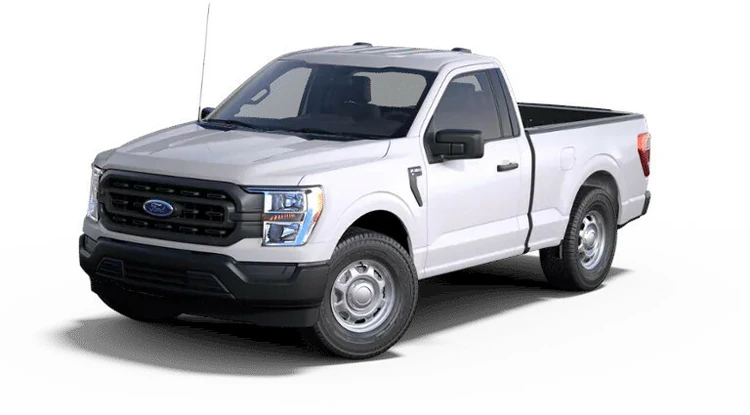
Ford recalls 18,000 model year 2022 F-150 pickup trucks

Ford Motor Company is recalling 18,527 model year 2022 F-150 pickup trucks.

The parking lights may flicker when the headlights are activated.

Flickering parking lights can reduce visibility, increasing the risk of a crash.

What to do

Dealers will update the LED driver module software free of charge.

Trucks with high series headlamps that were recalled in 2022 and received an incomplete remedy, or have not yet been repaired, will need to have the new remedy completed.

Letters notifying owners of the recall are expected to be mailed January 14, 2024.

Owners may contact Ford customer service at (866) 436-7332. Ford's number for this recall is 23C36.

Article Image

Ford recalls 5,100 F-150 Lightning pickup trucks

Ford Motor Company is recalling 5,118 model year 2022-2023 F-150 Lightning pickup trucks.

The SYNC software may fail to activate the electronic stability control (ESC) system at the beginning of each ignition cycle.

Failure of the ESC to reset to active may result in the driver unknowingly operating the vehicle without electronic stability control, increasing the risk of a crash.

What to do

The Accessory Protocol Interface Module (APIM) software will be updated by a dealer or through an over-the-air (OTA) update free of charge.

Owner notification letters are expected to be mailed December 18, 2023.

Owners may contact Ford customer service at (866) 436-7332. Ford's number for this recall is 23C38.

Article Image

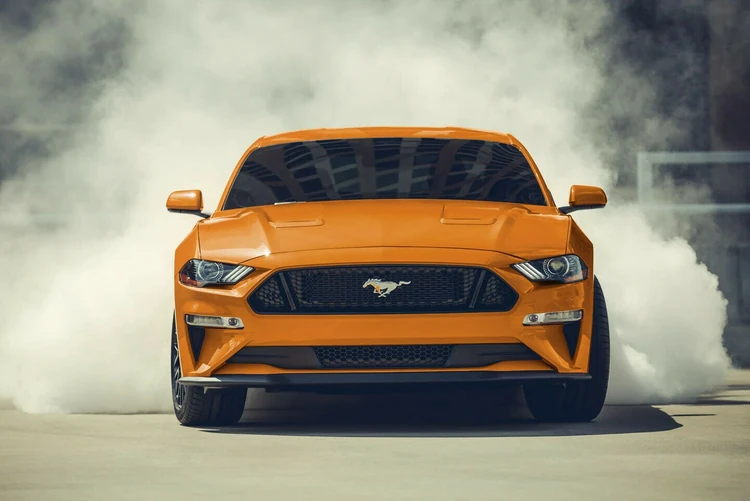
Ford recalls 188,000 model year 2020-2023 Mustangs

Ford Motor Company is recalling 187,922 model year 2020-2023 Mustangs.

The brake fluid level sensor may not activate the visual warning indicator when the brake fluid is low.

Without a low brake fluid warning light, the vehicle may be driven with low brake fluid, reducing braking performance and increasing the risk of a crash.

What to do

Dealers will update the body control module software free of charge.

Interim letters notifying owners of the safety risk are expected to be mailed December 4, 2023. Second letters will be mailed once the remedy is available.

Owners may contact Ford customer service at (866) 436-7332. Ford's number for this recall is 23C35.

Article Image

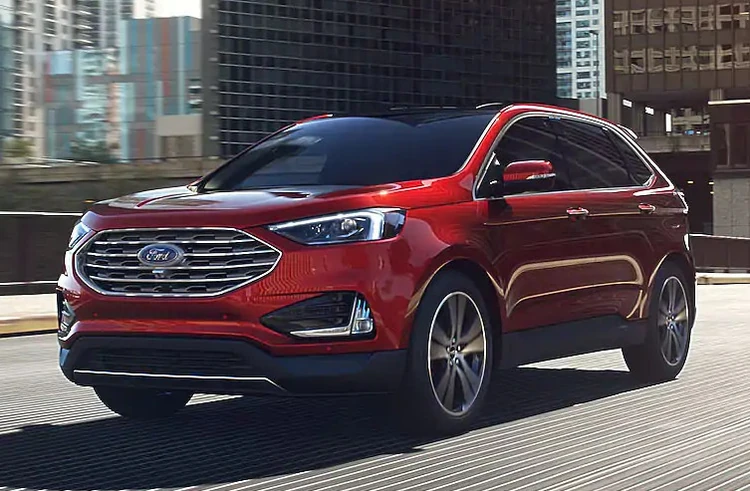
Ford recalls 8,500 model year 2023 Edge vehicle

Ford Motor Company is recalling 8,523 model year 2023 Edge vehicles.

The front right headlight may be too bright or aimed incorrectly.

A headlight that is too bright or aimed incorrectly may cause a glare to other road users, increasing the risk of a crash.

What to do

Dealers will inspect and replace the right headlight assembly -- as necessary -- free of charge.

Letters to owners notifying them of this issue are expected to be mailed October 9, 2023.

Owners may contact Ford customer service at (866) 436-7332. Ford's number for this recall is 23C26.

Article Image

Ford recalls 169,000 vehicles with faulty rear cameras

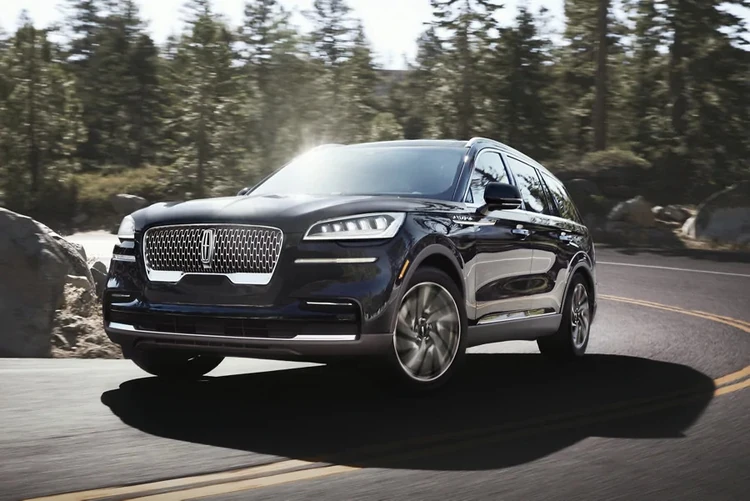
Ford Motor Company is recalling 169,277 model year 2020-2023 Lincoln Aviators, model year 2018-2021 Lincoln Navigators, model year 2022-2023 Ford Transits, and model year 2021 Ford Broncos.

The rearview camera, or 360-degree view camera -- if equipped -- may not display a rearview image when the vehicle is in reverse.

Loss of the rearview camera image can reduce the driver's rear visibility, increasing the risk of a crash.

What to do

Dealers will replace the rearview camera, and update the software and wiring -- as necessary -- free of charge.

Owner notification letters are expected to be mailed October 2, 2023.

Owners may contact Ford customer service at (866) 436-7332. Ford's number for this recall is 23S48.

Article Image

Ford recalls 38,000 Escapes and Super Duty pickup trucks

Ford Motor Company is recalling 38,695 model year 2023 Escapes and Super Duty F-250, Super Duty F-350, Super Duty F-450, and Super Duty F-550 pickup trucks with a digital instrument panel cluster.

The module may have been improperly soldered, preventing the instrument panel from illuminating.

An inoperable instrument panel cannot show critical safety information, such as the speedometer or warning lights, which may increase the risk of a crash.

What to do

Dealers will replace the module or instrument panel -- as necessary -- free of charge.

Notification letters to owners are expected to be mailed August 14, 2023.

Owners may contact Ford customer service at (866) 436-7332. Ford's number for this recall is 23C25.

Article Image

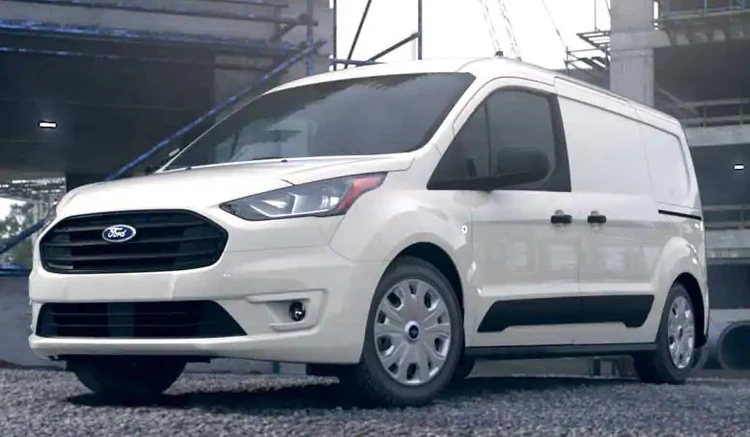
Ford recalls 112,000 model year 2014-2016 Transit Connects

Ford Motor Company is recalling 112,225 model year 2014-2016 Transit Connects.

The front door latch pawl may crack and prevent the door from latching.

An unlatched door can open while the vehicle is being driven, increasing the risk of injury.

What to do

Dealers will inspect and replace the front door latches -- as necessary -- free of charge.

Notification letters are expected to be mailed to owners August 28, 2023.

Owners may contact Ford customer service (866) 436-7332. Ford's number for this recall is 23S36.

Article Image

Can you afford an electric car? Ford has its doubts.

Electric vehicle (EV) sales have increased in the last couple of years but EVs still make up a small fraction of cars and trucks on the road. 

That disappoints automakers, as well as government policymakers who are pushing to phase out gasoline-powered vehicles. At government prodding, automakers have staked their financial futures on consumers embracing EVs.

When it reported second-quarter earnings last week, Ford predicted it would lose $4 billion on its EV division this year, double 2022’s losses. With that sober economic reality staring it in the face, Ford is slashing the number of EVs that will roll off its assembly line. 

The company has lowered its sights from producing 600,000 EVs by the end of this year to turning out that number by the end of next year.

‘Too expensive'

The problem, says Ford CEO  John Lawler, is not just competition from Tesla and other automakers. Lawler says EVs are “too expensive” for most car buyers. 

To underscore that point, Ford recently slashed the price of its top-trim version of the F-150 Lightning by nearly $10,000. In the used market, iSeeCars.com reported that used EV prices are "collapsing," falling nearly 30% in June.

According to a popular EV blog, the average cost of an EV in the U.S. is in the neighborhood of $64,000. At the low end is Chevy Bolt, at $27,495. Earlier this year GM announced it would eliminate the model – perhaps because of small profit margins – but recently gave the model a reprieve.

The most expensive Tesla model will set you back by more than $107,000. That compares to $48,000 for the average new car of any kind.

The price could be even higher

After doing a deeper dive into the number, FindMyElectric.com puts the average price of EVs in the U.S. at around $76,000. While some consumers can afford that, many more can’t. 

If only a portion of the population can afford an electric car it could make it politically unpopular to phase out the internal combustion engine. And expensive.

The Energy Information Administration, a federal agency, reports EVs made up 14% of U.S. car sales in 2022. You could speculate that the people who bought EVs are fairly affluent.

Ford seems to be saying it’s concerned about the people who aren’t.

Article Image

Ford recalls 870,000 model year 2021-2023 F-150 pickup trucks

Ford Motor Company is recalling 870,701 model year 2021-2023 F-150 pickup trucks with a single exhaust system.

Contact with the rear axle housing may damage the wiring harness, causing the electric parking brake to activate unexpectedly.

Unexpected activation of the electric parking brake while the vehicle is being driven increases the risk of a crash.

What to do

Dealers will install a protective tie strap, tape wrap, and replace the harness -- as necessary -- free of charge.

Owner notification letters are expected to be mailed September 11, 2023.

Owners may contact Ford customer service at 1-866-436-7332. Ford's number for this recall is 23S35.

Article Image

Ford cuts the F-150 Lightning price by nearly $10,000

Consumers who have waited to buy Ford’s all-electric F-150 pickup truck are being rewarded. The automaker has slashed the price of the base model by nearly $10,000.

Ford says it is able to sell the truck for less because it has increased its plant capacity and continues to work on scaling production and costs. It says it has also lowered the costs of battery raw materials and is passing the savings on to its customers.

“Shortly after launching the F-150 Lightning, rapidly rising material costs, supply constraints and other factors drove up the cost of the EV truck for Ford and our customers,” said Marin Gjaja, chief customer officer, Ford Model e. “We’ve continued to work in the background to improve accessibility and affordability to help to lower prices for our customers and shorten the wait times for their new F-150 Lightning.”

But the price cut comes at a time when new car sales have begun to stall. In particular, electric vehicles (EV) may be vulnerable. In the used car market, EV prices have “collapsed,” according to a recent study by iSeeCars.com.

In June, used EV prices dropped 29.5% from a year earlier, after falling 28.9% in May. Prices were down 24% in April and nearly 17% in March.

“A year ago, used EV prices were on the upswing, rising faster than the average used car,” said iSeeCars Executive Analyst Karl Brauer. “Electric vehicle prices are now falling at nearly 10 times the rate of the average used vehicle, reflecting a clear shift in EV supply and demand.”

Competition is increasing

But Ford may be reacting to competition as well as supply and demand. Tesla also recently announced some steep price cuts, a move attributed to a strategy to increase market share.

With the $9,979 price adjustment, the F-150 Lightning Pro has a sticker price of $49,995. The top trim level Platnum Extended Range now costs $91,995 – around $6,000 less than before.

With the lower price, Ford obviously expects to sell more of the electric trucks. It announced that its Rouge Electric Vehicle Center in Michigan is temporarily closed to complete final plant upgrades to triple the plant’s annual run rate to a targeted 150,000 F-150 Lightning trucks beginning this fall.

Article Image

Pre-recall Alert: Can your car’s brakes fail? Subaru, Ford, Lexus and Lincoln owners say yes.

The National Highway Traffic Safety Administration (NHTSA) studies consumer complaints as part of its process of asking an automaker to issue a recall. It can be a lengthy process.

ConsumerAffairs studied NHTSA’s database for recent complaints that NHTSA is now examining. In June we found a lot of problems, across multiple manufacturers, with brakes.

Subaru Outback Brake Failure Due to Corroded Junction Box

Multiple complaints have been reported regarding brake failure in various Subaru Outback models due to corrosion in the rear junction box near the fuel tank. This issue has led to brakes giving out without warning, posing a significant safety concern. Although Subaru has issued a recall for this issue in model years 2005 to 2009, the problem persists in later models as well. 

Lexus NX 2016 and 2022 Models Experience Brake Failures

Multiple complaints have been filed regarding brake failures in Lexus NX models from 2016 and 2022. Drivers report that their brakes stop working, feel loose, and require excessive force to slow down the vehicle. This issue poses a significant safety concern as it affects the driver's ability to control the vehicle and prevent collisions. Lexus has not yet issued a recall for the affected models.

2010 Mercury Milan Power Brake Failure Reported

Multiple complaints have been filed regarding the 2010 Mercury Milan, with the most common safety defect being power brake failure. This issue causes the brake pedal to go to the floor, and the vehicle to roll forward and backward while in park. Additionally, ABS warning, trac system warning, and brake service warning lights are illuminated. Other reported issues include fuel propulsion system, suspension, and steering problems in the 2010 Mercury Mariner, but the power brake failure in the Milan poses a greater safety concern.

Brake Issues Plague 2013-2014 Lincoln MKX Models

Multiple complaints have been reported regarding brake issues in 2013-2014 Lincoln MKX models. Drivers have experienced a lack of resistance on the brake pedal, resulting in slow braking and difficulty stopping quickly. In one case, the master cylinder for the brakes failed twice within a short period. The National Highway Traffic Safety Administration (NHTSA) has received at least two complaints related to this issue. 

2013 Ducati Monster Faces Braking Safety Concerns

A common safety defect reported among at least five complaints is related to the 2013 Ducati Motercycle. The issue involves inconsistent braking, extended stopping distance, and an unexpected soft rear brake pedal when applying the brakes. This defect poses a significant safety concern for riders, as it may lead to accidents and injuries. The National Highway Traffic Safety Administration (NHTSA) has assigned the ID 11527630 to this specific issue. 

Fuel leaks, power loss, fire hazard and exploding sunroofs

2007 Pontiac G5 Fuel Leak Poses Safety Concern

A common safety defect reported among at least five complaints is a fuel leak in the 2007 Pontiac G5. The issue appears to be on top of the fuel tank, causing a smell of gas both inside and outside of the vehicle. This defect poses a significant safety concern due to the risk of fire or explosion.

2022 Chrysler Pacifica Minivans Experience Dangerous Power Loss

Multiple complaints have been reported regarding the 2022 Chrysler Pacifica minivans experiencing dangerous power loss while driving, putting drivers and passengers at risk. The issue seems to be related to the vehicle's electrical system and engine, causing the vehicle to stall or lose power unexpectedly. In some cases, drivers had to reboot the 12v system to regain control of the vehicle. This defect has led to near-collisions and poses a significant safety concern. Chrysler has yet to issue a recall for this problem.

Ford Vehicles Experience Sudden Loss of Power Steering

Multiple Ford vehicles have reported a sudden loss of power steering, posing a significant safety concern for drivers. The issue has occurred in various models and years, including the 2013 Ford Escape and 2010 Ford Fusion. Drivers have experienced difficulty controlling their vehicles, increasing the risk of accidents. Despite numerous complaints, Ford has not issued a recall to address the problem. 

2017 Porsche Macan Fuel Injector Connection Poses Fire Hazard

A common safety defect has been reported in at least five complaints regarding the 2017 Porsche Macan. The issue involves the fuel injector connection at the fuel rail, which has been found to spray fuel onto the engine, creating a significant fire hazard. This defect poses a serious safety concern for drivers and passengers of the affected vehicles. It is crucial for owners of the 2017 Porsche Macan to be aware of this issue and take necessary precautions. The National Highway Traffic Safety Administration (NHTSA) is likely to investigate and address this safety defect. 

Sunroof Explosions Reported in 2013 Kia Optima and Soul Models

Several complaints have been filed regarding sunroofs exploding in 2013 Kia Optima and Soul models. Drivers reported hearing a loud noise similar to a gunshot while driving, followed by the sunroof shattering. The sunroofs were less than two years old and showed no prior signs of damage or wear. This safety issue poses a risk to drivers and passengers, as well as other vehicles on the road. 

If you have an issue with one of these vehicles or any other one, NHTSA would like to hear from you. Report the problem here.
Article Image

NHTSA probing the adequacy of a recent Ford recall

Ford recalls a lot of cars and trucks. In late May the automaker recalled 175,000 Broncos to address a seatbelt issue. Earlier this month it recalled 422,000 Explorers and Aviators to repair a problem with the rearview camera display.

The National Highway Traffic Safety Administration (NHTSA) has now opened an investigation into one of Ford’s previous recalls to determine whether the remedy was adequate. That recall, issued in March and April 2022, covered 710,000 Explorer SUVs and was meant to address reports of power loss.

According to NHTSA, the problem involved a rear axle horizontal mounting bolt that may fracture and cause the driveshaft to disconnect. The safety regulator is investigating to make sure the remedy Ford devised fixed the problem.

At the time, Ford said its remedy was focused on preventing so-called “roll-aways.” The remedy was designed to prevent vehicles from moving when left in “park” without the parking brake applied.

The issue popped up on NHTSA’s radar screen after the agency said it received two reports claiming a loss of power on the rear wheels in Explorer models that had undergone the remedy.

Did the remedy work?

According to NHTSA, Ford’s remedy involved updating the software that automatically applies the “electronic service parking brake” to keep the vehicle stationary. The agency said the automaker did not provide a remedy to address the failed rear axle horizontal mounting bolt "which is the basis of this safety issue and the cause of the impaired vehicle." 

"We are working with NHTSA to support their investigation as we always do," Ford said in a statement.

As ConsumerAffairs reported  last September, Ford was leading all other automakers at the time in the number of recalls in 2022 with 7.5 million. By way of comparison, GM only had 2 million at the time.

Article Image

There are more new cars for sale but affordability continues to decline

You may have noticed there are now more cars and trucks on the lots at auto dealerships. There are two reasons for that: supply chains have improved but consumers aren’t rushing out to buy a new car.

A new report from automotive publisher Edmunds might explain why. The average annual percentage rate (APR) on new financed vehicles in the first quarter climbed to 7%, compared to 4.4% in the first quarter of 2022.

Edmunds, which tracks such things, says that’s the highest average interest rate on new cars since the first quarter of 2008. After rising for 14 straight months, the rate stabilized at 7% last month, which Edmunds attributes to more automakers offering low-interest incentives. That’s something carmakers haven’t had to do much since before the pandemic.

Monthly payments hit a new high

With higher interest rates so far this year, monthly car payments are also rising. The average monthly payment for new vehicles hit a record high of $730 in the first quarter, compared to $656 in the first quarter of 2022.

Some car owners are paying a lot more than that. Edmunds reports that 16.8% of consumers who financed a new vehicle in the first three months of 2023 committed to a monthly payment of $1,000 or more — a new all-time high. The average down payment for a new vehicle climbed to a record high of $6,956 in the first quarter, nearly $900 more than a year earlier.

"Since inventory levels are improving, interest rates are now topping the list of the greatest obstacles that automakers will be facing in 2023 to move metal," said Jessica Caldwell, Edmunds' executive director of insights. "But with major challenges come great opportunities.”

For example, Caldwell thinks manufacturers and dealers will have to offer buyers more special incentives on interest rates – something consumers should look for.

Tapping into pent-up demand

“This could be a powerful marketing tool that would enable sellers to tap into the significant pent-up demand that has been building over the past few years and convert that demand into actual sales," she said.

But at the same time, new car prices are still rising. The average price of a new vehicle rose 0.4% in March while used car prices continued to fall. Rising prices and still-high interest rates are prompting many new car buyers to extend the term of their loans.

According to Edmunds, two-thirds of buyers in the first quarter took out loans with terms of between 67 and 84 months.