


Long-distance moving containers overview
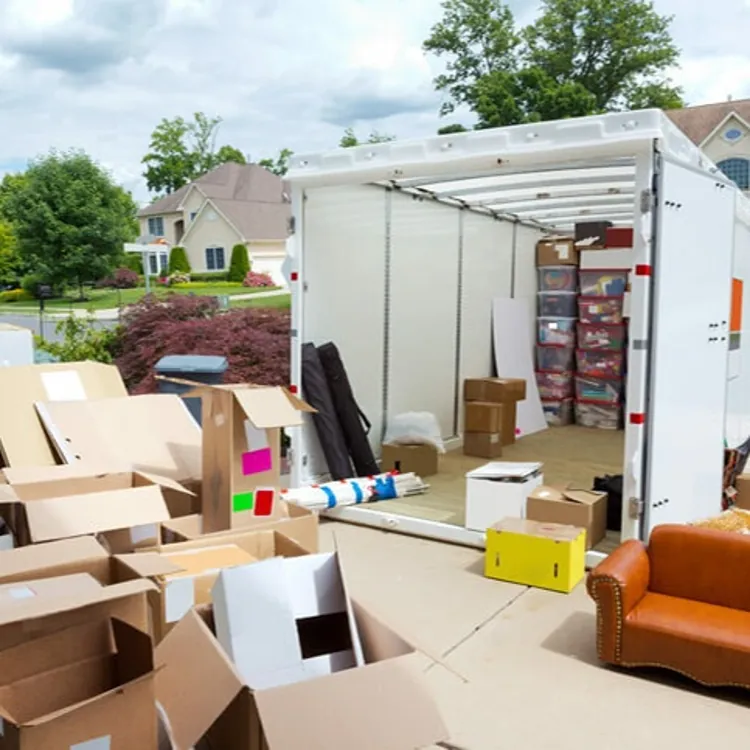
Long-distance moving containers, sometimes called moving pods, are basically small, weather-proof shipping containers for residential moves. A company delivers the container to your property, you pack it according to your schedule, then the company picks it up and transports it to your new home for you.
Moving pods can be more convenient than traditional moving trucks, primarily because they allow you as much time as you need to pack your belongings. They’re not realistic for homeowners or apartment-dwellers who don’t have space on their property for the container to sit, however. But if you have a place for the container to rest and your homeowners association doesn’t restrict it, they’re a great moving alternative.
Moving containers vs. rental trucks
Rental trucks are a popular option, especially if you plan on making the drive yourself and you don’t mind having a family member or friend drive your personal vehicle separately. You can rent trucks for multiple days. But people often rent them starting on the day of the move, which means limited time to pack the truck.
Moving containers give you days, weeks or even months in some cases, to organize and pack your belongings. Plus, you won’t need to coordinate someone to drive your personal vehicle separately.
Moving containers may be generally more convenient, especially if you don’t have a firm moving date, but there are some cases when a rental truck is a better option. You may want to rent a truck instead of a moving container if:
- You’re making a short-distance move within the same town or to a neighboring town.
- You don’t have much to pack and can complete the move in one day.
- You want to save money.
- You don’t have space on your property for a moving container.
Moving containers vs. full-service movers
Full-serve movers are significantly more expensive than rental trucks, and they still only give you a limited amount of time to pack. However, they’re convenient because you have a team of movers completing the heavy lifting for you. That’s not the case with rental trucks or moving pods.
Both moving containers and full-service movers are ideal for long-distance moves because you don’t have to have someone else drive your personal vehicle, and you don’t have to worry about routing the truck on appropriate roads. Because moving containers give you more time to pack, they can be a better option for staying organized during big moves.
Full-service movers might be the better option if:
- You don’t want to, or aren’t able to, move heavy furniture or bulky items yourself.
- You don’t have space on your property to store a moving container.
Moving containers vs. storage containers
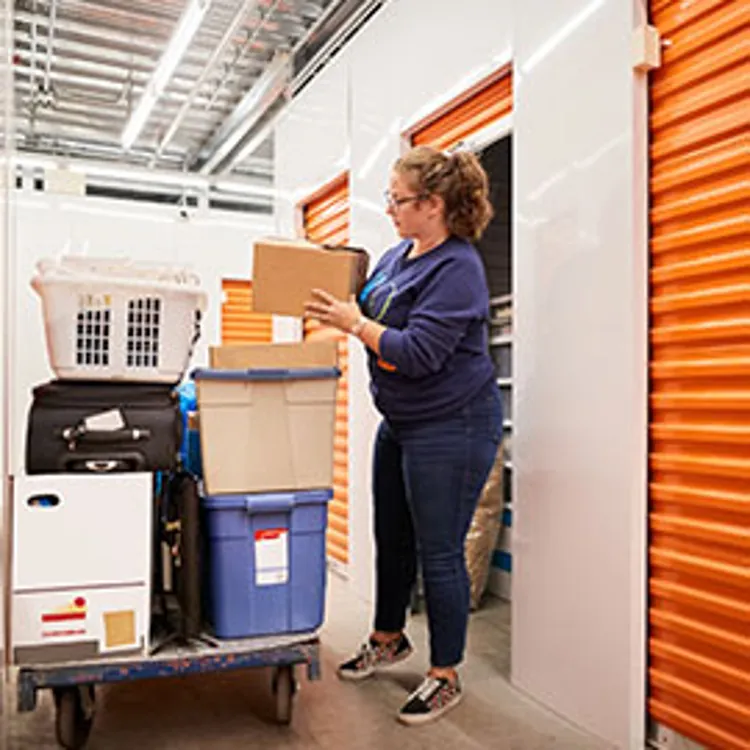
Some homeowners rent storage units to house some of their belongings until they’re ready to move them, in which case these units give some of the benefits of a moving container. Storage containers are ideal if you need long-term storage, but you’ll still need to move your belongings in and then out, effectively doubling your work over time since storage containers are stationary.
Storage containers are generally a better option than moving containers in the following scenarios:
- You need long-term storage prior to moving.
- You don’t have a big enough property to house a moving container.
- You live in an HOA or municipality that restricts moving container placement.
Long-distance moving containers: how it works
The specifics for long-distance moving container rentals depend somewhat on the company you choose, but the following process is generally what you can expect.
1. Choose your container size and set up delivery
First, you’ll choose what size moving container you need and set a delivery date. You should provide the company with placement instructions at your current home, and note that it needs to be a level surface. Newly-paved driveways aren’t suitable, but existing driveways are a good option.
2. Loading timeline and labor help
Most companies give you ample time with the container on your property to pack at your own pace. Usually this is between three and 30 days, but sometimes it’s longer. For example, PODS and 1-800-PACK-RAT both include 30 days of on-site storage and charge per month thereafter. Some providers may charge an additional fee for long-term container use.
Most moving container companies assume you’ll do your own packing, so labor isn’t included. However, these companies can usually recommend local pros if needed, and you can always call on professional movers yourself to help pack your container once it’s on site.
3. Pickup, transport and tracking
Next, you’ll set a pickup date for your moving container. A truck will come to retrieve the container and drive it to your destination. Most companies provide an option for tracking the pod while it’s en route so you can have up-to-date information on the arrival time. This can help you coordinate with movers, if necessary.
4. Storage options between homes
You can schedule your delivery days, weeks or even months after your pickup, which can be especially convenient if you have a gap between closings or lease agreements. You’ll likely have to pay an additional fee for storage based on how long you need to delay shipment, and depending on the provider, you may not have access to your pod while it’s stored.
Long-distance moving container sizes and fit
Standard moving container sizes are as follows:
- Length: 8 to 16 feet
- Height: 7 to 8 feet
- Width: 7 to 8 feet
The exact sizes available will depend on the moving container company you choose. You should base the size you need on how much you must pack inside it, but also note that you’ll need clearance on all sides of the pod for delivery and pickup. Check your provider’s clearance requirements to ensure that you have ample space to store your container.
You can use the table below to get an idea of the moving container size you need. Note that different providers have varying weight limits for their pod sizes, usually between 3,500 and 6,000 pounds based on container size. You may need to size up if you have a lot of heavy or bulky furniture.
| Length | Height | Width | Cubic feet | Best for |
|---|---|---|---|---|
| 8 feet | 7 to 8 feet | 7 to 8 feet | 392 to 512 | Small apartment or college dorm room |
| 10 feet | 7 to 8 feet | 7 to 8 feet | 490 to 640 | Large apartment or small condo |
| 12 feet | 7 to 8 feet | 7 to 8 feet | 588 to 768 | 2- to 3-bedroom home |
| 16 feet | 7 to 8 feet | 7 to 8 feet | 784 to 1,024 | 3- to 4-bedroom home |
If you can fit all of your belongings into a single moving container, you should; this will save you money as opposed to renting and shipping two. However, you can break up your belongings into two containers if you have more than will fit in the 16-foot container, or if you want to store some of your belongings long-term but not all of them.
Long-distance moving container costs and value
Moving container companies including PODS, 1-800-PACK-RAT and ZippyShell provide online pricing for local moves only. Costs range from $350 to $550 for the initial delivery, 30 days of on-site storage and shipping. These prices include all delivery fees. They charge an extra $250 to $270 per additional 30 days of storage you need.
This is more than you’d pay for a rental truck in most cases, which averages around $100 for a local move. But it’s less than you’d pay for professional movers, which average between $600 and $5,000.
For long-distance moves over 50 miles, you’ll likely need to speak with a representative to get custom pricing, which can depend on the following factors:
- Container size you need
- Volume of belongings you need to move
- Distance of your move
- Whether you need professional labor
- Whether you need add-ons such as dollies, ratchet straps and furniture blankets
- How much time you need between delivery, pickup and shipping
- Whether you need storage between moves
- Proximity of your initial delivery date
- Flexibility of your pickup and delivery dates
How to save on container moves
The best way to save on moving containers is to properly time your delivery. You usually get 30 days to pack your container, and if you run over that time, you’ll face additional monthly charges of around $250.
You can do a few other things for potential savings, as well.
- Donate or toss what you don’t need to reduce the volume of belongings and downsize your container.
- Stay flexible with drop-off and pick-up dates, if possible.
- Provide the moving container company with plenty of notice when scheduling the rental.
- Avoid storage fees between moves, if you can.
- Do all of the packing and loading yourself to save on labor costs.
Is a long-distance moving container worth it?
Long-distance moving containers provide a good balance between DIY moving and hiring professional help. You’ll pack and load everything yourself, but you won’t need to worry about driving a moving truck or coordinating to have someone bring your personal vehicle separately.
Because moving containers also give you more time to pack and cost close to the price of a rental truck, it’s usually worth the money, if it works for you logistically.
FAQ
Is it cheaper to use PODS or a moving company?
PODS is typically cheaper than hiring a moving company, largely because minimal labor is involved. You do all of the packing and loading with a moving container, whereas with a moving company, the movers help with packing, loading and shipping your contents to your new home.
Is it cheaper to do a pod or U-Haul?
It’s usually cheaper to rent a U-Haul than it is to rent a pod. On average, a pod for a local move costs between $350 and $550, while a rental truck costs closer to $100. However, a pod can end up being more affordable if you need multiple days to pack and load your belongings. The price for a container typically includes 30 days to load it, while you usually rent moving trucks by the day.
How long can you keep a moving container?
Most moving container companies give you a month to pack your pod, and that rental time is included in your cost. You can keep the container longer, but you’ll pay a monthly rental fee for each additional month you need. You may also have the option to store your container in the company’s warehouse, but this comes with additional fees.
Are moving containers waterproof?
Moving containers are weatherproof but not waterproof. Your belongings will be safe from rain, sleet and snow, but water can and will enter the container if it’s exposed to standing water, as in the case of a flood. Some moving container companies offer standalone insurance policies for your belongings before and during your move to protect against standing water and other potential issues.
Article sources
ConsumerAffairs writers primarily rely on government data, industry experts and original research from other reputable publications to inform their work. Specific sources for this article include:
- 1-800-PACK-RAT, "1-800-PACK-RAT's Portable Storage Containers." Accessed March 24, 2026.
- PODS, "Find your fit." Accessed March 24, 2026.
- Zippy Shell, "Zippy Shell's Portable Storage Containers." Accessed March 24, 2026.