

Home warranty division final notice, explained
A home warranty division final notice is more sophisticated than typical junk mail. It’s built around your name, lender and closing date pulled from public mortgage records that anyone can access and purchase.
Jamie E. Wright, founder of The Wright Law Firm in Los Angeles, California, described them as “mass-marketed literature pretending to be either a regulatory or lender-mandated disclosure.”
What the letter claims
These letters warn that your coverage is expiring, that you face liability for costly repairs or that the notice ties back to your lender or county deed records.
Natasha Jameson-Randolph, managing principal of Veterans Property Investment Group in Waldorf, Maryland, explained that headers like TIME SENSITIVE and IMMEDIATE RESPONSE REQUIRED appear despite no prior notice or coverage ever existing.
Why it references your mortgage
Most lenders require homeowners insurance — but no lender requires a home warranty. The two are separate products, and Wright said that confusion is intentional. Scammers use mortgage-adjacent language to make the letter feel like a compliance issue rather than a sales pitch.
» MORE: Homeowners insurance vs. home warranties
Common company name variations
To stay hard to trace, these operations cycle through vague, official-sounding names. Jameson-Randolph noted common variations include Home Warranty Direct, Home Protection Division and Lender Services.
They’re generic enough to sound credible, yet obscure enough to complicate any search for accountability.
Home warranty division final notice scam signs
In a home warranty division final notice, “there’s an element of urgency, an artificial sense of scarcity, a pseudo account number to create the illusion of an existing file and a subtle threat,” Wright said. No prior contract exists, but the letter is written as though one does.
Some sellers include home warranties in purchase agreements, but lenders do not require them.
The physical format is just as calculated. “These mailers are formatted to resemble government-issued documents, complete with bold headings, block formatting and barcodes,” Wright warned.
Yet the fine print at the bottom disclaims any affiliation with your lender or any government agency. That disclaimer protects the sender legally, while the rest of the letter works to mislead you.
Some mailers include physical props to prompt recipients to take action. Wright has personally seen letters with a detachable “$199 activation voucher” and checks marked “warranty credit” — neither of which constitutes a real payment.
Here are additional red flags to watch for:
- The letter shows up weeks after closing, often before you’ve had time to settle in.
- Language like FINAL NOTICE, LAST ATTEMPT or COVERAGE WILL LAPSE appears throughout.
- You have no memory of signing up for a warranty or receiving a first notice.
- The company name sounds official, but has no verifiable address, license or web presence.
- The letter pushes you to call before a tight deadline.
- Fine print warns you could be on the hook for expensive repairs if you don’t respond.
» RELATED: Worst home warranty scams
What to do if you get a home warranty final notice
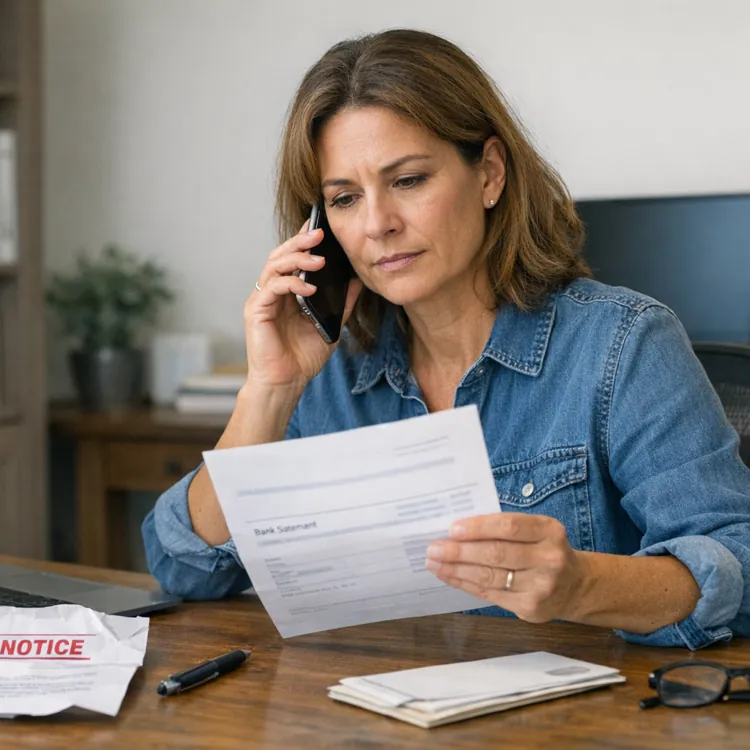
If a home warranty final notice lands in your mailbox, take these six steps to protect yourself:
- Don’t call the number on the letter
“Contacting the number confirms to the scammer that the letter reached a homeowner and that the number dialed is active,” Wright said. That one call is enough to confirm you’re a live target.
- Verify through official channels
Wright advised contacting your lender at the number on your monthly statement or via their confirmed website. “You’ll almost always be informed that there’s no such requirement,” she said.
- Check your warranty documents
If you have a home warranty, Jameson-Randolph advised contacting the provider using the number you have on file — not the one listed in the mailer.
- Destroy the letter
“If the mail includes your name, address, lender name or reference numbers, shred it,” said Jameson-Randolph. Scammers can use that information to target you again.
- Act fast if you already engaged
“If you made any payments or gave out payment information, contact your bank right away,” Wright urged. Acting fast gives you the best chance at reversing the charge and limiting further exposure.
- Document and report it
Filing a report with the Federal Trade Commission at ReportFraud.ftc.gov creates a paper trail — and complaints from enough homeowners may trigger a real investigation.
Who to report home warranty notices to
These mailers persist because most homeowners never report them. But “regulatory review does occur when the volume of complaints reaches a level that warrants an investigation,” Wright noted.
The California Department of Insurance, for example, issued cease-and-desist orders against Response Indemnity Company and other firms for selling home warranties without a license. It’s proof that reporting can lead to real consequences.
If you already paid for a scam home warranty, contact your bank or credit card company to dispute the charge.
Jameson-Randolph sees reporting as the mechanism that turns individual frustration into collective protection. “When homeowners document these mailers and share them with consumer protection agencies, the scheme loses its camouflage and becomes a trackable pattern of abuse,” she pointed out. “That shift — from isolated annoyance to documented evidence — is where accountability begins.”
When filing a report, include scans of the letter front and back, the envelope, any phone numbers or websites listed, reference numbers and a summary of what the letter claimed. If you paid or shared personal information, include transaction details and call logs as well.
File reports with any of these agencies
- Federal Trade Commission at ReportFraud.ftc.gov for deceptive marketing complaints
- U.S. Postal Inspection Service at postalinspectors.uspis.gov for mail fraud
- Your state attorney general's consumer protection division
- Your state insurance department, if your state regulates home warranties as service contracts
- Consumer Financial Protection Bureau at consumerfinance.gov/complaint
FAQ
Why am I getting a home warranty notice?
Home warranty notices usually arrive after you buy or refinance a home, because that transaction becomes part of the public record. Scammers purchase that data and send mailers that appear to be official correspondence from your lender. Most of these letters are unsolicited pitches dressed up to look urgent — they have nothing to do with your mortgage.
Should I respond to a home warranty final notice?
No, you shouldn’t respond to a home warranty final notice. These letters use panic-inducing language to pressure you into calling a number that may connect you to a high-pressure sales operation. If you receive one, verify with your lender through official channels and shred the letter.
Do mortgage lenders require home warranties?
No, mortgage lenders in the United States don’t require home warranties to keep your mortgage in good standing. Lenders do require homeowners insurance, but a home warranty is a completely separate, optional product. Any letter suggesting otherwise is misleading you.
What should I do if I already paid for a scam home warranty?
If you already paid for a scam home warranty, contact your bank or credit card company to dispute the charge. Also, report the fraud to the Federal Trade Commission at ReportFraud.ftc.gov. If you shared any personal information, visit IdentityTheft.gov to take prompt protective action.
Article sources
ConsumerAffairs writers primarily rely on government data, industry experts and original research from other reputable publications to inform their work. Specific sources for this article include:
- Office of the Attorney General, State of Connecticut, “Attorney General Tong Cautions Against Potentially Deceptive Home Warranty Advertisements.” Accessed Feb. 23, 2026.
- Federal Trade Commission, “Notice in the mail about your property? Here’s what to know.” Accessed Feb. 23, 2026.
- California Department of Insurance, “Cease and Desist Orders issued to four companies allegedly selling home warranties without a license.” Accessed Feb. 23, 2026.
- California Department of Insurance, “Investigation into misleading home warranty mailers results in refunds to consumers.” Accessed Feb. 23, 2026.
- California Department of Consumer Affairs, “Consumer Self-Help - Tips & Resources to Resolve Consumer Complaints.” Accessed Feb. 23, 2026.
- Federal Trade Commission, “What To Do if You Were Scammed.” Accessed Feb. 23, 2026.