


Key insights
Many home warranty plans include built-in microwaves.
Jump to insightMost home warranties have limitations and exclusions for microwave coverage.
Jump to insightMicrowaves have coverage caps in their contracts.
Jump to insightHome warranty microwave coverage
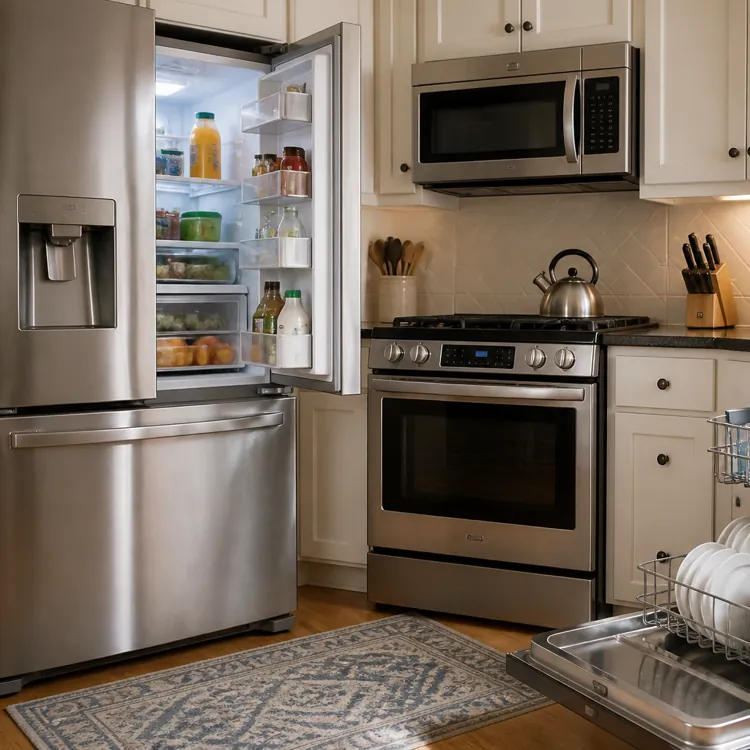
Home warranty companies typically cover a wide range of appliances, including built-in and over-the-range microwaves. Coverage is often found in the company’s appliance plan, though sometimes it’s an add-on.
Here are some things that a home warranty covers for microwaves:
- Components that affect the operation of the unit
- Total mechanical breakdowns
- Motors
- Compressors
- Heating elements
- Fuses
- Door seals
- Sensors
- Switches
- Bearings
What does a home warranty typically cover?
Home warranties usually cover large appliances, built-in microwaves, water heaters and systems like HVACs, plumbing, ductwork, pool heaters and well pumps. Some plans also cover additional items like pest control, septic systems, central vacuums, sump pumps and more.
Microwave warranty coverage exclusions
Many home warranty plans have limitations and exclusions that may lead to coverage denial. They usually only cover full mechanical breakdowns due to normal wear and tear and exclude things like weather damage.
Here are some other things home warranties don’t cover:
- Damage that doesn’t cause a full mechanical failure
- Consequential or secondary damage
- Commercial units
- Racks
- Runner guards
- Preexisting conditions
- Cosmetic damage
- Lights or light sockets
- Timers and clocks
- Knobs
- Interior lining
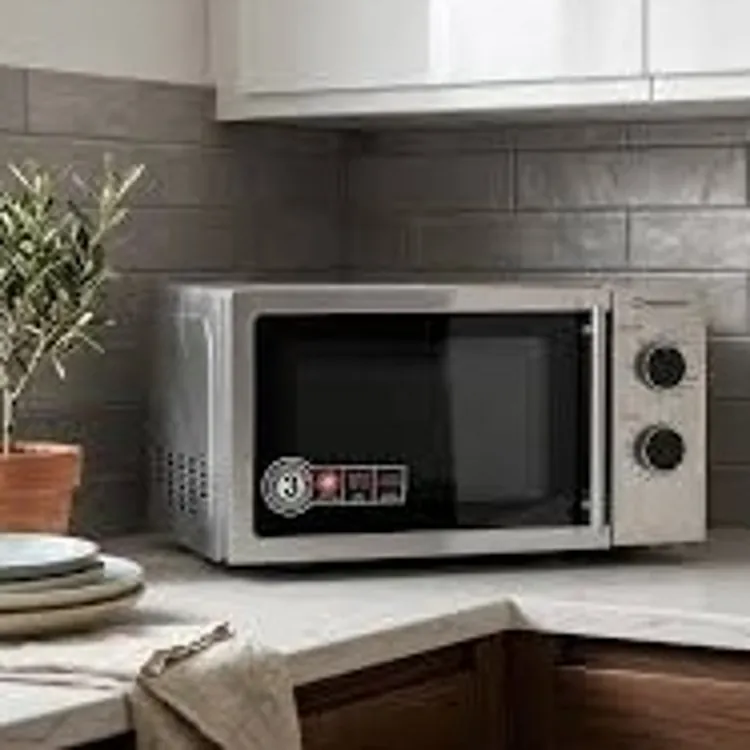
Most home warranty plans do not cover countertop microwaves. These portable appliances are usually excluded because home warranties focus on built-in systems and appliances that are considered part of the house. Standard contract language often says only built-in microwaves, which are installed as part of the cabinetry or over-the-range, are eligible for coverage. Countertop microwaves are considered personal property, not permanent fixtures, so they fall outside most home warranty agreements.
Coverage caps
Many home warranty plans have coverage caps on the amount they will spend on parts and repairs. If the cost of repairs exceeds the limit, you are liable for the remaining expenses.
Most home warranty companies cap the costs of repairs for built-in or over-the-range microwaves at around $1,500 to $3,000. For example, if your limit was $1,500 but the cost of repairs was $1,700, then you would be responsible for paying the remaining $200.
Home warranty claim process for microwaves
If your microwave stops working and you have warranty coverage, here’s how the repair process usually goes.
- Initiate a claim: Contact your home warranty provider online or by phone and report the issue. Be ready to provide details about the problem and your microwave model.
- Service fee payment: You’ll pay a service fee (also called a deductible), which usually ranges from $60 to $125, depending on your plan.
- Technician appointment: The warranty company assigns a licensed technician to visit your home. The technician inspects your microwave and diagnoses the issue.
- Repair or replacement: If the problem is covered, the technician will either fix the microwave or, if it can’t be repaired, recommend a replacement based on your contract.
- Resolution: Once the repair or replacement is done, the technician will confirm the issue is fixed. If the issue isn’t covered, you might have to pay the full repair cost in addition to the service fee.
Your warranty provider should keep you updated about your claim and next steps.
What to do if your home warranty doesn’t cover microwaves
If your home warranty plan doesn’t cover microwaves, you may be able to switch to a plan that does. If you can’t upgrade your plan, you may have some other options. Many companies offer microwave coverage with an additional appliance add-on. This will add to your home warranty costs but may be worth it.
Most microwave ovens or built-in or countertop microwaves also come with a one-year manufacturer warranty. So you may be able to contact the manufacturer for repairs.
Choosing a home warranty for microwave coverage
Selecting the right home warranty plan for microwave coverage requires careful research and comparison. It’s important to find a company that offers the right balance of coverage, cost and service quality. Start by reading through the plan details to ensure built-in or over-the-range microwaves are explicitly included.
When evaluating home warranty companies, look for the following:
- Clear coverage details: The plan should list built-in or over-the-range microwaves and describe what is included in the coverage.
- Reasonable coverage caps: Check the maximum payout amount for microwave replacements or repairs to ensure it fits your needs.
- Low service fees: Compare service call fees between companies, as these can add up over time.
- Fast response times: Look for companies known for handling claims quickly and efficiently.
- Strong customer reviews: Read feedback from current and past customers to gauge reliability and satisfaction.
- Flexible plan options: Consider providers that let you customize coverage or add optional appliances, like microwaves, to your plan.
- Good reputation for claim approvals: Choose a company with a track record of fairly approving claims rather than denying them unnecessarily.
Taking the time to compare these factors can help you choose a plan that offers reliable coverage and peace of mind.
» RELATED: Haier microwave extended warranty
When microwave coverage or a home warranty is worth buying
As with all warranty coverage, you'll want to decide if a home warranty or microwave add-on coverage is worth it to you.
If you have a higher-end microwave with a high replacement cost, a home warranty may make sense to help avoid paying the full price to replace it if something breaks. For example, some basic countertop models can cost as little as $150, but a high-end built-in microwave can cost as much as $2,800. On the other hand, if you have a cheaper microwave, it may not make sense to add extra coverage, since replacing the unit could actually be more cost effective than repairing it.
Consider your budget to determine if a warranty is a better option for you than paying to repair or replace your appliances on your own out-of-pocket. Don't forget to factor in that you'll likely need to pay a service charge for a technician to come to your home if you make a warranty claim.
And remember that if you buy a home warranty for microwave coverage, you'll get these benefits on many other appliances and home systems.
FAQ
Are countertop microwaves covered by a home warranty?
No, usually, home warranties only cover built-in or over-the-range microwaves. A manufacturer’s warranty may cover countertop microwaves.
How much does it cost to replace a microwave?
The cost of replacing your microwave varies based on its type. Built-in microwaves typically range from $275 to $2,800, countertop microwaves from $55 to $1,000, over-the-range microwaves from $120 to $1,000, and drawer or cabinet microwaves from $880 to $2,000.
What happens if my microwave isn’t repairable?
If your microwave can’t be repaired, many home warranty companies will cover a replacement or provide a cash payout up to your coverage cap. The exact process varies by provider, so check your plan to understand whether you’ll receive a new appliance or reimbursement for the cost of buying one yourself.
Bottom line
Unexpected breakdowns can be a hassle, but home warranties can help with parts and repairs. With the proper maintenance and coverage, your microwave could last around nine years. Also, double-check your policy to see if a manufacturer's warranty covers your microwave if your home warranty doesn’t provide coverage.