

How unemployment identity theft happens
Criminals can get your information to use to apply for unemployment benefits in a few ways, including:
Data breaches: Data breaches happen when hackers steal customers' personal information from companies or government entities. They can then use that information to commit identity theft, including unemployment identity theft.
Phishing scams: Phishing scams are when criminals send emails or texts that look legitimate, but contain links to fraudulent websites that ask for your personal data.
Malware: Criminals can trick you into installing malware onto your computer that then captures all your keystrokes. This allows them to see your login information that they can then use to commit identity theft.
Physical theft of data: Fraudsters can steal physical documents, such as your mail, that have your personal information.
Social media: Social media can provide criminals with a surprising amount of personal data, such as your address and birthday, even if you are careful.
Fake websites: Fraudsters sometimes set up fake websites that look like the official government sites in an attempt to get users' personal information. You may think you’re entering your information on a legitimate website when you’re really giving your information directly to scammers.
Warning signs of unemployment identity theft
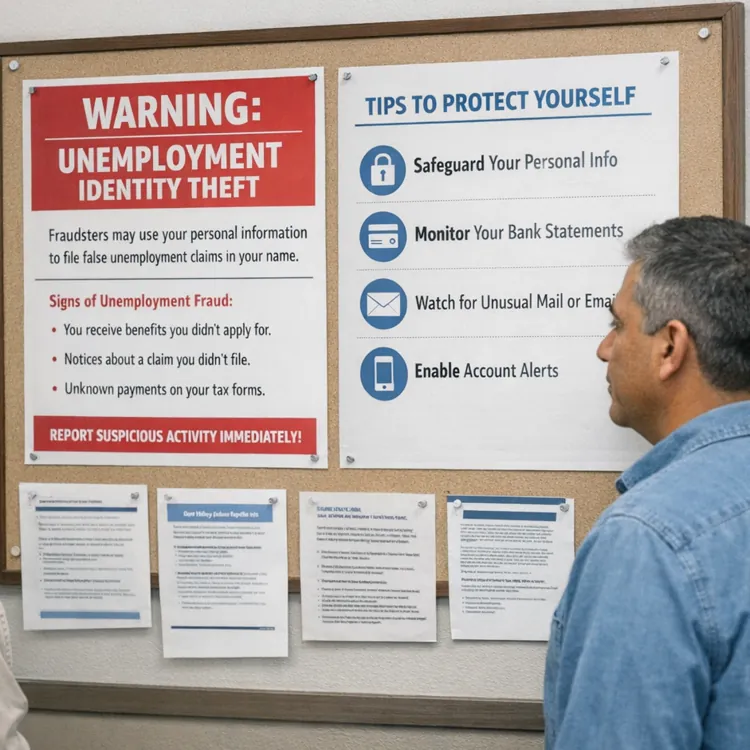
If someone uses your information to file an unemployment claim, you may:
- Receive mail from the state unemployment office
- Receive a change notice regarding your legitimate benefits
- Receive a 1099-G at tax time
- Be notified about the claim from your employer
You get mail from the state about unemployment claims you didn’t file. When you file for unemployment, you will receive information in the mail from the state regarding your claim. However, if someone files with your information, you may receive the notices they would have otherwise received.
Jenna Bailey, founder and lead trial attorney at Bailey Law Firm in Arizona, said, “The first indication is often government mail that just doesn't make sense — an approval of benefits, a debit card, or instructions on how to certify for payments while you're still employed.”
If you get a letter from your state’s unemployment agency that doesn’t make sense, don’t ignore it. Call the state and figure out what’s going on. It could be that someone else has filed using your information.
You receive notice that the payment of your legitimate benefits is being sent to a new bank account, or your payments stop for no reason. Fraudsters will sometimes try to take over your legitimate unemployment claim by changing the bank information on your claim. They will then start receiving the benefits instead of you.
If you get a letter about a change of bank account, or your benefits don’t arrive when you’re expecting them, follow up and make sure the state has your correct information.
You receive an IRS 1099-G form showing unemployment benefits you didn’t receive. At tax time, you will receive forms showing the income you received, such as a W-2 from your employer or 1099s from your clients.
If you received unemployment benefits, you will receive a Form 1099-G showing the amount you received. So if you get one of these forms but didn’t receive unemployment benefits, or if it’s for an amount that is more than you actually received, you may be a victim of unemployment insurance identity theft.
You get information from your employer about an unemployment benefits claim in your name. Employers are notified when someone who works for them makes an unemployment claim. The employer has a short window to dispute the claim, so if they receive claim information for a current employee, they may reach out to see if an error occurred.
» MORE: Safeguarding your identity
Steps to take if you're a victim
If you find out you’ve been a victim of unemployment identity theft, you should report the fraud to your state’s unemployment department. The state will have a procedure for dealing with unemployment identity theft claims. They may ask you and your employer for additional information.
You can find contact information for each state’s unemployment identity theft department on the Department of Labor’s website.
If you received a 1099-G showing benefits that you didn’t receive, you don’t need to include the incorrect income on your tax return. If you have already done so, contact the IRS directly.
Bailey said, “Handle it just as you would handle a fraudulent credit account and handle it now. Lockdown email; question about requests for payroll information; and read government mail carefully.”
You may also want to check your credit report and freeze your credit. If the fraudster has the information they need to file an unemployment insurance claim, they also have what they need to open bank accounts in your name.
If you have additional identity theft, go to Identitytheft.gov and report the identity fraud to the FTC. It can help you create a recovery plan to address identity theft more quickly.
Preventing unemployment identity theft
It’s important to take precautions so that scammers don’t get hold of your personal information.
TIP: Fraudsters can use your information to apply for benefits in your name, but with their bank information. Don’t click on links sent in a text message or an email.
Phishing awareness: Phishing scams involve criminals tricking you into giving them your information. This often happens through scam emails or texts that contain links to fake websites where you are asked for your personal information. You think you’re providing the necessary information to a legitimate entity, but in fact, you’re giving your data to fraudsters.
When dealing with unemployment, go directly to the state unemployment agency website. Avoid links in an email or a text message.
Strong passwords: Using strong passwords will help prevent bots from breaking into your account. Password managers can help you create complex passwords and store them for you, so you don’t have to remember long strings of numbers and letters.
This helps prevent using the same simple password for every login you create.
Two-factor authentication: Two-factor authentication is when you receive a code via email or text to enter when logging in to a website. This prevents someone without access to your email or phone from logging in.
This makes it more difficult for fraudsters to log in as you and change your information on the unemployment department website.
Follow up on suspicious notifications: If you receive a suspicious letter about benefits you didn’t claim, follow up immediately. Don’t assume it’s a mistake, or that the state will figure it out on its own.
The sooner you can catch fraud, the easier it is to clean up.
» DISCOVER: How to prevent identity theft
Impact of unemployment identity theft on victims
If someone claims unemployment benefits in your name, you will likely receive tax form 1099-G. This means that the government believes you received income that you didn’t, which can impact the taxes that you owe.
Your tax return shouldn’t include this fraudulent income; you don’t actually owe taxes on it, but you do need to notify the government so the error can be corrected.
Also, if someone is claiming fraudulent benefits and you become unemployed, it could delay the filing of your legitimate claim while the fraud is cleared up. This could cause financial hardship since you aren’t able to receive your benefits in a timely fashion.
FAQ
How does unemployment identity theft work?
Unemployment identity theft is when thieves get your personal information and file for unemployment benefits without your knowledge. They use your information but then receive the funds into their bank accounts.
What is employment identity theft and how does it happen?
Employment identity theft occurs when someone uses your Social Security number to earn wages. It happens when they obtain your SSN and then fill out employment forms, such as a W-4, with your information. Their wages are then fraudulently attributed to you.
What if someone is using my SSN for employment?
If someone is using your Social Security Number for employment, you should contact the Social Security Administration, the FTC at identitytheft.gov and the IRS.
How to report someone abusing unemployment anonymously?
If someone you know is abusing unemployment, you can contact your state’s unemployment insurance department and report them. You will need their name and as much information as you can provide, such as their birthday, address and SSN. You don’t need to provide your name or contact information.
Article sources
ConsumerAffairs writers primarily rely on government data, industry experts and original research from other reputable publications to inform their work. Specific sources for this article include:
- Federal Trade Commission, “Protect Your Personal Information From Hackers.” Accessed Feb. 11, 2026.
- Federal Trade Commission, “Unemployment benefits fraud puts workers at risk of more ID theft.” Accessed Feb. 11, 2026.
- IRS, “Identity Theft and Unemployment Benefits.” Accessed Feb. 11, 2026.
- Department of Labor, “Report Unemployment Identity Fraud.” Accessed Feb. 11, 2026.
- Social Security Administration, “What Should I Do if I Think Someone is Using My Social Security Number?” Accessed Feb. 11, 2026.