


Why do lenders look at credit reports before approving loans?
When you apply for a loan, you’re borrowing money with the promise of paying it back over time in monthly payments, often with interest. And the best way for your lender to be sure that you’ll truly make the payments you’re pledging to make is by examining how you’ve handled borrowing money in the past. The best way to do that is to pull your credit report.
Lenders look at credit reports for clues about the likelihood of repayment, says Michael Sullivan, a personal finance consultant with Take Charge America, a nonprofit housing and credit counseling agency.
Your credit report serves as a blueprint for your financial history. On it, you’ll find a summary of each creditor you have, whether student loans, a mortgage or car loan, right down to the smallest credit card or store card you may have opened.
The report shows a month-by-month history of your payment behavior, and tracks if payments are made on time or exactly how late — 30 days, 60 days, 90 days. Along with your credit report, your lender will be interested in seeing your credit score.
What is a credit score?
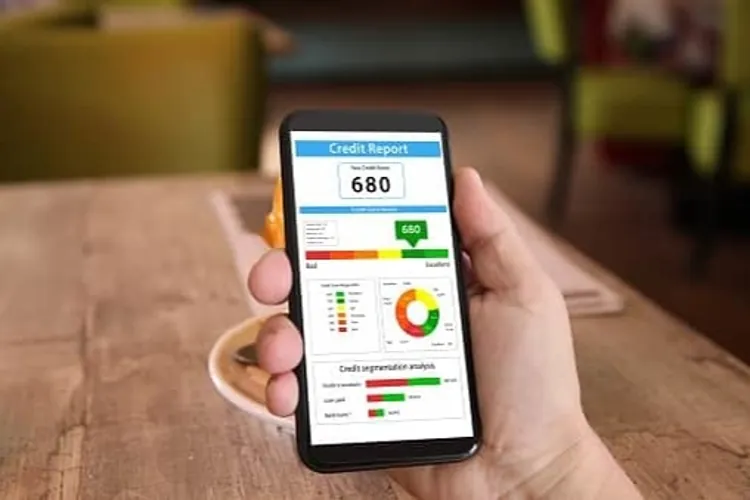
A credit score is a three-digit summation of your credit report, says Sullivan. Ranging from about 300 to 850, your credit score is reported by each of the three major credit reporting agencies.
While slight variations exist among the three, typically a “good” credit score is considered to be 670 or above, and a score above 740 is viewed as “excellent.” If your credit score is 620 or below, though, you’ll likely have a difficult time securing just about any type of loan. And if you do, you’ll face high interest rates.
» RELATED: How to check your credit score
How to prepare to apply for a loan
Potential lenders will want to see both your credit score and your credit report. That’s because a credit score alone can miss things like if someone filed for bankruptcy or had an account written off six years ago, for example, says Sullivan.
Lenders seldom need indicators of positive behavior, Sullivan says, but often seek out potential issues hidden in the full report. “These issues always pertain to payments, credit availability, and debt since that really constitutes a credit report.”
Here’s a checklist that can help you determine whether your credit history will be viewed favorably by a lender.
- Review all three credit reports — from Experian, Equifax and TransUnion — for accuracy.
- Confirm your payment history is free of late payments in the past 24 months.
- Keep your credit utilization ratio less than 30% on each revolving account.
- Ensure your oldest account is at least seven years old for optimal score strength.
- Limit new credit applications to fewer than five hard inquiries in 12 months.
- Remove or address any public records (like bankruptcies or liens).
What credit report details do lenders evaluate for approval?
How much scrutiny a lender places on your credit report and score depends largely on what type of loan you’re applying for. Different lenders may place more weight on a certain item, Sullivan says. The table below serves as a summary of the different factors lenders most often review when considering loan approval.
| Credit factor | Ideal for approval | Red flags |
|---|---|---|
| Payment history | 100% on time | Any recent 30-plus day late payment |
| Utilization ratio | Less than 30% | More than 50% |
| Credit age | 7-plus years | Less than 2 years |
| Hard inquiries | 2 to 5 in 12 months | More than 6 in 12 months |
| Public records | None | Bankruptcy, liens |
Payment history is always crucial, says Sullivan. “Consumers who do not pay their bills in full and on time are, by definition, risky.” And paying late can hurt your credit score too.
Credit utilization ratio refers to how much of your available revolving credit you’re using. “This can be a factor, especially if there has been a significant recent increase in borrowing,” Sullivan said, adding that banks like to see a utilization ratio of 30% or less.
Consumers applying for more credit may appear financially distressed, Sullivan says. “For example, some consumers facing bankruptcy will actually try to borrow more so as to get more debt forgiven.” That’s why lenders often get scared off by numerous hard inquiries to your credit. These indicate you may have been trying to open new credit accounts.
Lenders like to see a credit report with a mix of different accounts. “This provides assurance that the consumer has managed different types of credit successfully. It could be viewed negatively if, for example, the consumer had never had a secured loan,” Sullivan shares.
How do lenders use credit reports for different types of loans?
Mortgage lenders are often the most cautious because they are taking the greatest risk. A borrower who cannot make payments and requires foreclosure, Sullivan explains. Mortgage lenders have to compute the debt-to-income (DTI) ratio as well as other specifics that go beyond credit reports to verify income, savings and employment history.
Here’s what mortgage lenders will use your credit report and application material to verify:
- Minimum credit score of 640
- No late payments in the last 12 months
- Debt-to-income ratio less than 43%
- Proof of stable employment
Auto lenders have somewhat less risk since an automobile typically costs much less than a home. Here’s what lenders might require for a car loan:
- Credit score above 620
- Proof of stable employment
- Favorable payment history with no repossessions
Credit cards often require the least amount of scrutiny for approval. After all, says Sullivan, lenders are only risking the balance owed and can frequently recover some or all delinquent payments through legal action. Here’s what lenders might require for a credit card:
- Credit score above 620
- Proof of current income
- Credit utilization ratio below 30%
- Limited recent inquiries
If you find your credit isn’t quite where it needs to be, you can improve your credit in several ways. If a relative with strong credit will allow you to be an authorized user on an account, this can help boost your score. And if you have a solid history of on-time payments for utilities, services like Experian Boost can be helpful as well.
Here are some other ways to boost your credit:
- Check for errors on your credit report.
- Make on-time payments.
- Pay down a particular debt to help your credit utilization.
- Raise a limit on a particular account to decrease your credit utilization.
How credit reports impact loan approval, interest rates and terms
Most credit applications are likely to involve at least a check of your credit score along with your credit report. A poor credit report will result in a poor credit score and increase the odds of denial. The best way to deal with a poor credit score is to review your credit report and identify the problem, then take steps to fix it.
A low credit score and/or a credit report full of issues will make lenders wary of approving a loan application. Lenders assume that consumers will demonstrate any poor behaviors previously demonstrated, says Sullivan. “Defaults, bankruptcies and liens are the most likely red flags,” he said. “Although regular late payments and excessive credit availability can also give lenders pause.”
Any negative factor can cause rejection or an offer of less favorable terms, even if no problem is clearly stated. Borrowers with negative marks on their credit can expect possible loan rejections, higher interest rates and unfavorable requirements like a co-signer, money down or lower credit limits.
Credit report regulations
Federal laws help maintain the safety of your personal information, and this includes when a lender pulls your credit or income information in order to make a decision about whether or not to approve your loan request.
The Fair Credit Reporting Act (FCRA) is the primary law governing the use of information and strictly controls the use of consumer information, but readily permits all lenders, insurance companies and others to collect and use personal information.
Many states have similar laws that are often stricter and provide more protection, Sullivan says. Although there are other consumer laws, such as the Fair-Trade Collection Act, the Fair Debt Collection Practices Act and the Truth in Lending Act, that offer some protection to consumers, they don’t govern the use of credit reports.
In the U.S., you’re entitled to a free credit report from each bureau every 12 months — use this to check for errors.
FAQ
What specific information do mortgage lenders look for in a credit report?
When applying for a mortgage, you can expect your entire credit history — and your income — to be closely scrutinized. Lenders will use your credit report to review your payment history, DTI ratio and credit utilization ratio. They will also require income verification and even tax records to ensure you’re able to repay the loan.
How do negative marks on my credit report impact my loan terms?
Negative marks on your credit like late payments, delinquent accounts, accounts that were closed for nonpayment or high credit utilization can cause a lender to reject your loan request altogether.
Does checking my own credit report hurt my credit score?
No, it does not. Checking your own credit is considered a “soft inquiry,” which has no effect on your credit.
Article sources
ConsumerAffairs writers primarily rely on government data, industry experts and original research from other reputable publications to inform their work. Specific sources for this article include:
- Consumer Financial Protection Bureau, “What is a credit report?” Accessed Dec. 23, 2025.
- Federal Trade Commission, “Understanding Your Credit.” Accessed Dec. 23, 2025.
- Federal Trade Commission, “Credit and Your Consumer Rights.” Accessed Dec. 23, 2025.