

Access your IRS online account
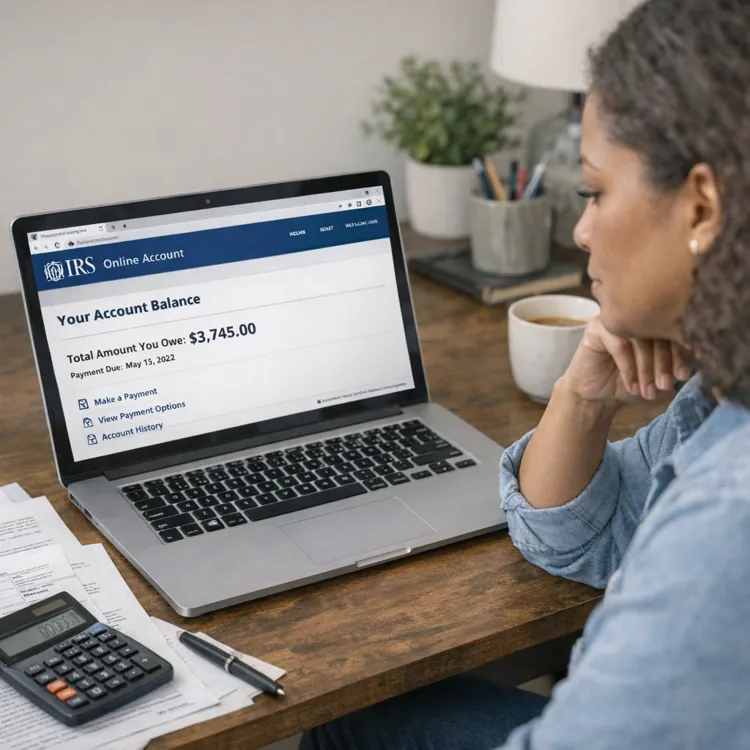
The easiest way to find out whether you owe back taxes is by pulling IRS internal transcripts online through your IRS Online Account. It shows how much you owe, penalties and interest, payment history and whether returns are missing. Plus, you can access your account at any time.
“Though IRS notices are helpful, these transcripts are more accurate,” said Weisberg.
To access your account:
- Visit the IRS online account portal.
- Create an account or sign in using ID.me.
- Verify your identity with a photo ID and personal information.
- Log in to view your tax details.
Your online account will show details related to your back taxes, including:
- Current tax balance by year
- Payment history and pending payments
- Notices or letters issued by the IRS
- Tax transcripts and prior-year records
- Filing status and adjusted gross income
If you see a balance listed for a previous year, that confirms you owe back taxes. The account also shows whether interest and penalties are accruing.
Be aware of tax scams
The IRS will only send notices by mail, not email or text.
Recognizing IRS notices and letters
The most common IRS letters related to unpaid taxes include intent to levy and missing tax return notices.
| IRS notice | What it means |
|---|---|
| CP14 | Initial notice alerting you to a balance due |
| CP501 / CP503 | Reminder notices for outstanding balances |
| LT11 | Final Notice of Intent to Levy, which gives you 30 days to pay what’s owed or negotiate a resolution |
| CP2000 | Notice that discrepancies found between the income you made and the taxes you paid |
| CP59 | IRS has no record of you filing a required tax return |
Each notice details the tax year involved, the amount you owe and next steps.
How should you respond to IRS notices?
If you receive a notice, don’t ignore it, since that could make the situation worse. Take these steps immediately to understand your IRS notice and avoid penalties or collections:
- Confirm the tax year and amount listed.
- Compare it to your records or online account.
- Pay the balance if it’s accurate.
- Respond by the deadline if you disagree.
- Keep copies of all correspondence.
Contacting the IRS directly
If the notice doesn’t fully answer your questions, contact the IRS directly to clarify whether you owe back taxes and what to do next.
The IRS offers several contact methods depending on your situation:
- In person: You can get in-person help at your local IRS Taxpayer Assistance Center. Call 844-545-5640 to schedule an appointment.
- Online: The IRS offers many self-service options online on its Let Us Help You page.
- Phone: Help lines are open Monday through Friday. For individual taxes, call 800-829-1040 (available 7 a.m. to 7 p.m. local time). For businesses, call 800-829-4933.
Before contacting the IRS about your tax return, have this information ready:
- Social Security number or Individual Taxpayer Identification Number
- Filing status
- Prior-year tax returns, if available
- IRS notices or letters you received
- Bank records showing payments made
Consulting a tax professional
If your tax situation feels too overwhelming for you to handle alone, you may want to consult a tax professional, especially if you owe multiple years of back taxes.
Professionals such as certified public accountants (CPAs), enrolled agents and tax attorneys can review your IRS account and tax transcripts to confirm what you owe and why. They can also do the following:
- File missing or amended returns
- Request penalty abatement when appropriate
- Communicate with the IRS on your behalf
- Help you explore tax relief programs
Though hiring a tax professional does cost money upfront, it can end up saving you more in the long run by stopping back taxes from continuing to grow.
» DISCOVER: How much does tax relief cost?
Reviewing past tax returns
Checking your past tax returns can also help you find out whether you owe back taxes, and if so, where the problem started. Many tax balances don’t come from a single big mistake but from small errors, missing information or returns that were never filed at all. Reviewing your old returns could help you spot issues before the IRS does.
If a return is missing, the IRS may have filed a substitute return on your behalf using only income information it received from employers or banks. Those substitute returns often result in higher tax bills because they don’t include deductions or credits.
Reviewing your past returns could also help you catch underreported income, miscalculated credits or estimated tax payments that may not have been applied correctly.
What should you look for in past returns?
When you’re reviewing older tax returns, pay attention to:
- Whether all income sources were reported, including freelance, side gig or investment income
- Whether your filing status and dependents were listed correctly
- Whether withholding and estimated tax payments match your bank records and pay stubs
- Any IRS notices showing changes or adjustments made after you filed
- Signs that a return may be missing or incomplete for a given year
If you don’t have copies of your old returns, you can request tax transcripts from the IRS. These transcripts summarize what the IRS has on file for each year.
FAQ
How do I find out if I owe back taxes?
The easiest way to find out if you owe back taxes is to log into your IRS online account and check your tax account balance. Check for any amounts owed for the previous year.
You can also call the IRS directly at 800-829-1040 to ask about any back taxes you may owe.
Will the IRS let me know if I owe taxes?
Yes. The IRS sends notices and letters by mail when it believes you owe taxes. If you do get an official letter or notice from the IRS, don’t ignore it.
What happens if you don't pay your taxes?
If you don’t pay your taxes, your unpaid taxes will accrue interest and penalties over time. If you ignore them, the IRS could take collection actions, such as liens, levies or wage garnishment.
How far back can the IRS collect taxes?
The IRS generally has 10 years from the date your tax was assessed to collect the tax and any associated penalties and interest from you.
Article sources
ConsumerAffairs writers primarily rely on government data, industry experts and original research from other reputable publications to inform their work. Specific sources for this article include:
- IRS, “Understanding Your IRS Notice or Letter.” Accessed Feb. 1, 2026.
- IRS, “Time IRS Can Collect Tax.” Accessed Jan. 17, 2026.
- IRS, “Topic no. 651, Notices – What to Do.” Accessed Feb. 1, 2026.
- Tax Relief Counsel, “Why Does the IRS Send Letters?” Accessed Feb. 1, 2026.