Alzheimer's

This topic covers the various factors influencing Alzheimer's disease, including lifestyle choices, environmental exposures, and medical treatments. It discusses how diet, exercise, and managing chronic conditions can help reduce the risk of Alzheimer's, while also examining the impact of pollutants and medications. Recent advancements in diagnostic methods, such as blood tests, and new treatments like Kisunla and Leqembi, are highlighted. The content emphasizes the importance of early detection and lifestyle interventions in managing and potentially preventing Alzheimer's disease. Additionally, the role of stress, anxiety, and sleep in cognitive health is explored, alongside new research linking flu vaccinations and air quality to Alzheimer's risk.

Latest

Analysis suggests doctors are falling short in treating dementia patients

The Alzheimer’s Association recommends routine monitoring of cognitive decline

Featured Health News photo

Many physicians are failing to perform recommended annual cognitive assessments for dementia patients, according to new data from Motive Medical Intelligence.

An analysis of more than 100 million U.S. insurance claims found wide variation by state, with failure rates as high as 80%.

Experts warn that skipping routine assessments can delay critical interventions and worsen outcomes for millions of patients.

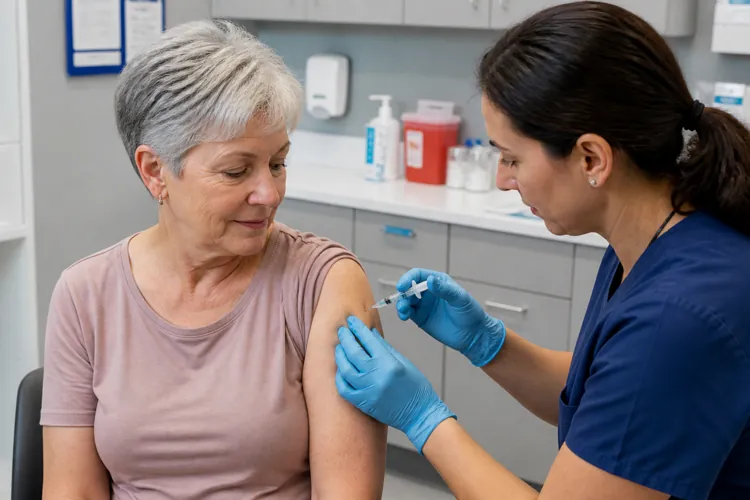
A new analysis highlights a significant gap in dementia care across ...

Read Article
Featured Health News photo
2025
Article Image

New study finds even small amounts of alcohol may raise dementia risk

  • Even light drinking (under seven drinks a week) showed no protective effect in the largest combined study to date.

  • Genetic analyses suggest the more alcohol you’re predisposed to consume, the higher your dementia risk.

  • The drop in drinking before diagnosis hints that earlier studies showing benefits may have been misled by reverse causation.


If you’ve ever heard that a glass of wine a day is good for your brain, recent research suggests it’s time to pause and reconsider. 

A new large-scale study combining observational data and genetic methods argues that any amount of alcohol might increase the risk of dementia. What looked like a protective effect of light or moderate drinking in past studies could, in fact, be a misleading artifact. 

The findings challenge a long-held assumption: that low levels of alcohol are harmless — or even beneficial — for cognitive health.

“Our study findings support a detrimental effect of all types of alcohol consumption on dementia risk, with no evidence supporting the previously suggested protective effect of moderate drinking,” the researchers wrote. 

The study

To tackle this question, researchers used two main strategies:

  1. Observational data. They drew from two major biobank projects — the U.S. Million Veteran Program and the U.K. Biobank — to examine real-world drinking habits and incidence of dementia. Participants between 56 and 72 years old were followed over time until they developed dementia, died, or reached the end of follow-up (2019 for MVP, 2022 for UKB). Alcohol intake was self-reported (frequency, volume) and supplemented with the AUDIT-C screening tool for risky drinking behaviors (like binge drinking). In total, 559,559 people entered the observational analyses, and 14,540 developed dementia during the follow-up.

  2. Mendelian randomization (genetic analysis). This method treats genetic variants associated with alcohol consumption as proxies (or “instruments”) for long-term drinking behavior. In this study, they considered three different genetic measures: predisposition toward average weekly drinks, risky drinking, and alcohol dependence. The goal: to minimize confounding (other factors influencing both drinking and dementia) and test whether a causal link might exist. For the genetic analyses, they drew on genome-wide association study (GWAS) data covering millions of people.

By combining both approaches, the researchers hoped to triangulate evidence: observations can show patterns, and genetics can help clarify whether those patterns suggest causation.

The results

In the observational analyses, the relationship between alcohol and dementia looked U-shaped. This means that both low and high levels of something are linked to worse outcomes, while moderate levels are linked to the best outcomes.

For this study, that looked like: both abstainers and heavy drinkers (40+ drinks/week) had about a 41% higher risk of dementia, compared with light drinkers (less than seven drinks per week). That figure climbed to 51% higher for those with alcohol dependence. That pattern might look like light drinking is protective — but observational data alone can be misleading.

The genetic (Mendelian randomisation) analyses told a different story: there was no protective effect at low levels. Instead, dementia risk rose steadily with greater genetically predicted alcohol intake across all categories. For example, each additional one to three drinks per week (by genetic risk) was linked to a 15% higher dementia risk. Doubling the genetic propensity for alcohol dependence was tied to a 16% increased risk. In short, more drinking (genetically indicated) = more risk, in a roughly linear fashion.

One particularly telling insight: many individuals who were later diagnosed with dementia had gradually reduced their alcohol consumption in the years before diagnosis. That suggests that early (preclinical) brain changes might lead people to cut back — a phenomenon called reverse causation. If so, earlier observational studies that found benefits from light drinking may have been capturing that effect, rather than a true benefit of alcohol.

The authors do note limitations: the strongest associations came from those of European ancestry (because of sample sizes), and Mendelian randomization depends on certain assumptions that can’t be fully tested. Nonetheless, they conclude that their findings oppose the idea of a “safe” or beneficial low dose of alcohol for brain health and argue that reducing alcohol intake could be a meaningful strategy for dementia prevention.

“Our findings highlight the importance of considering reverse causation and residual confounding in studies of alcohol and dementia, and they suggest that reducing alcohol consumption may be an important strategy for dementia prevention,” the team wrote. 

Article Image

Mediterranean diet may reduce Alzheimer’s risk, study finds

  • Genes and diet interact: People with two copies of the APOE4 gene, the strongest genetic driver of Alzheimer’s, show unique biological changes tied to dementia risk.

  • Metabolic fingerprints identified: Researchers found 57 metabolites in the blood linked to Alzheimer’s risk in ways that vary by genetics.

  • Mediterranean diet protective: A diet rich in vegetables, fish, nuts, and olive oil countered risk in people at highest genetic vulnerability.

A major new study suggests that what we eat could help offset even the strongest genetic risk for Alzheimer’s disease.

Published in Nature Medicine, the research shows that people who inherit two copies of the APOE4 gene — long recognized as a powerful driver of Alzheimer’s — have distinct metabolic signatures that raise their risk. But following a Mediterranean diet appears to protect them by shifting the body’s balance of fats and other compounds that influence dementia development.

Tracking diet, genes, and brain health

The findings come from more than 5,700 participants in two large, decades-long health studies: the Nurses’ Health Study and the Health Professionals Follow-Up Study. Scientists analyzed genetic data, blood samples, and dietary records to map how biological pathways interact with dementia risk.

They identified 57 metabolites — small molecules formed as the body processes food and energy — that were linked to Alzheimer’s in ways that varied by genetic background. For example, certain fats known as cholesteryl esters and sphingomyelins were strongly tied to higher risk in people with two APOE4 copies, while other compounds such as glycerides seemed protective in that same group.

Diet’s role in protecting the brain

Researchers highlighted the Mediterranean diet as especially effective in countering these risks. Rich in fruits, vegetables, fish, nuts, and olive oil, the diet reduced harmful metabolites and boosted protective ones. Nearly 40% of its benefit for high-risk individuals could be traced to these metabolic effects, the authors wrote.

“Targeted dietary strategies may help offset even the strongest genetic risks for Alzheimer’s disease,” the study concluded.

Broader health benefits

Health experts note that the Mediterranean diet has been linked to improved longevity and reduced risk of heart disease, stroke, diabetes, and certain cancers. Its emphasis on fiber, slow-digesting carbohydrates, and healthy fats such as olive oil and fatty fish also supports overall metabolic health.

Article Image

Your father’s Alzheimer’s may affect your brain more than you think

  • Adults with a father who had Alzheimer’s showed greater tau buildup, a key marker of the disease.

  • Women in the study had more widespread tau in their brains than men.

  • Findings could help guide personalized prevention strategies before memory loss begins.


We’ve all heard how having a parent with Alzheimer’s could bump up our own risk of developing the disease — but what if it matters which parent? 

A recent study by the American Academy of Neurology reveals something surprising: it might actually be your dad’s history, not your mom’s, that correlates more strongly with a specific Alzheimer’s marker in the brain. While previous research often pointed to maternal inheritance, this study flips the narrative, focusing on how tau protein — not just memory decline — might have its own “family story.”

“We were surprised to see that people with a father with Alzheimer’s were more vulnerable to the spread of tau in the brain, as we had hypothesized that we would see more brain changes in people with affected mothers,” study author Sylvia Villeneuve, Ph.D. said in a news release. 

The study

Researchers tracked 243 cognitively healthy adults, all around 68 years old, who had at least one parent (or two siblings) with Alzheimer’s. Importantly, none of the participants had any thinking or memory issues when the study began. 

They underwent brain scans and memory testing, then were followed for almost seven years. Over that time, 71 people developed mild cognitive impairment — often seen as an early step toward Alzheimer’s. 

The team measured two key protein markers in the brain: beta-amyloid and tau. Tau buildup is especially linked to Alzheimer’s disease.

The results

The researchers discovered a paternal pattern throughout the study. 

Participants whose fathers had Alzheimer’s showed a greater spread of the tau protein in their brains. This was a surprising finding— especially since the team expected maternal influence to be stronger. 

Additionally, gender mattered too. Women in the study had a heavier tau buildup than men — and were more likely to show widespread tau protein spread.

It’s important to note that these findings are associations, not proof of direct cause. Additionally, the study participants were mostly white, so the findings may not apply equally across all races and ethnicities.

However, the researchers explained that these insights might help health care professionals design personalized interventions that protect those at higher risk before symptoms even surface.

“Better understanding these vulnerabilities could help us design personalized interventions to help protect against Alzheimer’s disease,” Dr. Villeneuve said.

Article Image

Can the shingles vaccine lower your risk of dementia?

• A shingles vaccine was tied to a 20% drop in new dementia cases over seven years.

• The U.K. rollout created a natural experiment using birthdate eligibility.

• Reduction was especially strong in women, beyond the effects on shingles itself.


Researchers at Stanford Medicine dove into health records from older adults in Wales to explore the link between the shingles vaccine and the risk of dementia. 

They focused on those eligible for the live-attenuated shingles vaccine (Zostavax) based on an exact birthdate cutoff: anyone born on or after September 2, 1933 was eligible, while those born just before weren’t. 

Because both groups were nearly identical in age, health, and behavior — except for vaccine eligibility — this setup acted like a “natural randomized trial.” 

The result? Receiving the shingles vaccine was associated with a 20% lower chance of developing dementia over the next seven years, even after accounting for who actually got vaccinated.

“All these associational studies suffer from the basic problem that people who get vaccinated have different health behaviors than those who don’t,” researcher Pascal Geldsetzer, M.D., Ph.D., said in a news release. “In general, they’re seen as not being solid enough evidence to make any recommendations on.”

The study

For the study, the researchers used a regression discontinuity design — it allows them to compare people who are alike except for being eligible for vaccination. By looking at those born just before and after the September 1933 cutoff, they ensured both groups were very similar. One group had a 47.2% vaccination rate, while the other had only 0.01%.

Health records were tracked for seven years, noting new dementia diagnoses. To make sure the vaccine itself was the key difference, they checked that the groups didn’t differ in other diseases, doctor visits, or preventive health behavior. They even used alternative analyses to confirm the findings held up no matter how they looked at the data .

The study

The researchers found that there were fewer dementia cases overall. Being eligible for the vaccine cut new dementia diagnoses by 1.3 percentage points, or about 8.5% fewer cases.

In participants who actually got the shot, the reduction jumped to 3.5 points, a 20% drop in dementia risk.

“It was a really striking finding,” Dr. Geldsetzer said in the news release. “This huge protective signal was there, any which way you looked at the data.”

The team also learned that women had greater protective cognitive benefits than men. Though the vaccine lowered dementia risk for both sexes, the effect was significantly stronger in women.

What this means for you

The findings highlight a bonus to getting your shingles vaccine: the potential to protect your brain. Scientists are still trying to figure out why it works — whether it’s because the vaccine stops inflammation-causing shingles outbreaks, or if the vaccine primes the immune system in a way that wards off dementia.

While the study is robust, with careful methods that reduce bias, it’s still observational. That means it can show a strong connection, but not absolute proof. The researchers stress the need for randomized clinical trials before making firm claims. 

Article Image

There are four new ways to predict the onset of Alzheimer’s disease

  • UCLA Health researchers mapped four distinct pathways leading to Alzheimer’s disease using electronic health records.

  • The findings suggest that tracking diagnostic sequences predicts Alzheimer’s risk better than analyzing isolated conditions.

  • The study, validated with a nationally representative cohort, could transform early detection, personalized prevention, and intervention strategies.


Who is most at risk of developing Alzheimer’s disease? If doctors knew the definitive answer, it might lead to earlier treatment and diagnosis. Researchers at UCLA may have uncovered some helpful clues.

Writing in the journal eBioMedicine, the researchers at UCLA Health said they have identified four unique diagnostic pathways that can lead to Alzheimer's disease, offering a more nuanced understanding of how the neurodegenerative condition develops over time. 

By analyzing electronic health records from nearly 25,000 patients, the study sheds light on how specific sequences of medical conditions – not just individual risk factors – can influence a person’s likelihood of developing Alzheimer’s. The research marks a significant departure from traditional approaches that focus on isolated risk conditions. 

Instead, UCLA scientists mapped the step-by-step clinical trajectories that precede an Alzheimer’s diagnosis, offering new tools for early detection and prevention.

Patterns, not just risk factors

“We found that multi-step trajectories can indicate greater risk factors for Alzheimer’s disease than single conditions,” said first author Mingzhou Fu, a medical informatics pre-doctoral student at UCLA. “Understanding these pathways could fundamentally change how we approach early detection and prevention.”

The study identified four primary diagnostic trajectories:

  1. Mental Health Pathway – Psychiatric conditions such as depression or anxiety that eventually lead to cognitive decline

  2. Encephalopathy Pathway – Disorders involving brain dysfunction that worsen progressively

  3. Mild Cognitive Impairment Pathway – A gradual decline in memory and cognitive functions, often preceding Alzheimer's

  4. Vascular Disease Pathway – Cardiovascular conditions like hypertension that heighten the risk of dementia

Each pathway was linked with distinct demographic and clinical features, suggesting that different subgroups of the population may be predisposed to different disease routes.

Chronology of conditions

The researchers found that 26% of all diagnostic sequences showed a consistent, directional order. For instance, patients with hypertension frequently developed depressive episodes before being diagnosed with Alzheimer’s. These patterns, according to the team, may be key to identifying at-risk patients earlier in their disease progression.

“Recognizing these sequential patterns rather than focusing on diagnoses in isolation may help clinicians improve Alzheimer’s disease diagnosis,” said Dr. Timothy Chang, the study’s senior author and assistant professor of Neurology at UCLA Health.

The team validated their findings using the All of Us Research Program, a diverse and nationally representative database. The confirmation of these patterns across a wide population enhances the study’s relevance and applicability to clinical practice nationwide.

The study concluded that the innovative use of longitudinal electronic health data signals a promising shift in Alzheimer’s research, moving toward predictive and personalized care models that could significantly improve patient outcomes.

2024
2023
2022