Best and Worst Cities for Retirement (2026)

+1 more


If you’re thinking about where to live in retirement, Florida might be the first to come to mind. After all, it’s warm, has a high percentage of residents over 65 and low taxes. But what if you take into account other factors that can improve quality of life?
Fortunately, there are a number of other options throughout the U.S. to consider that aren't in the Sunshine State. In fact, according to our rankings, no city in Florida even makes the top 40.
Key insights
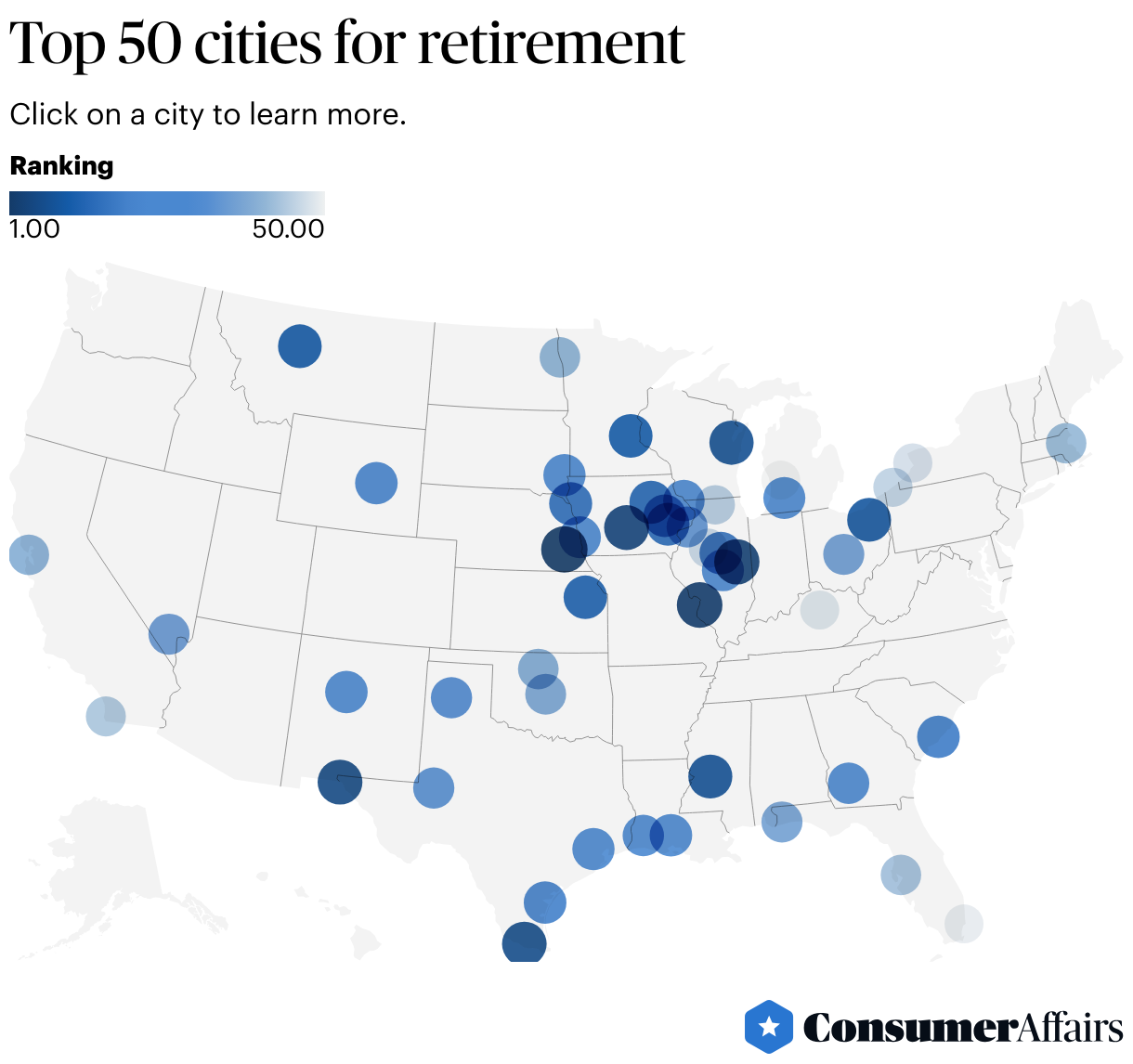
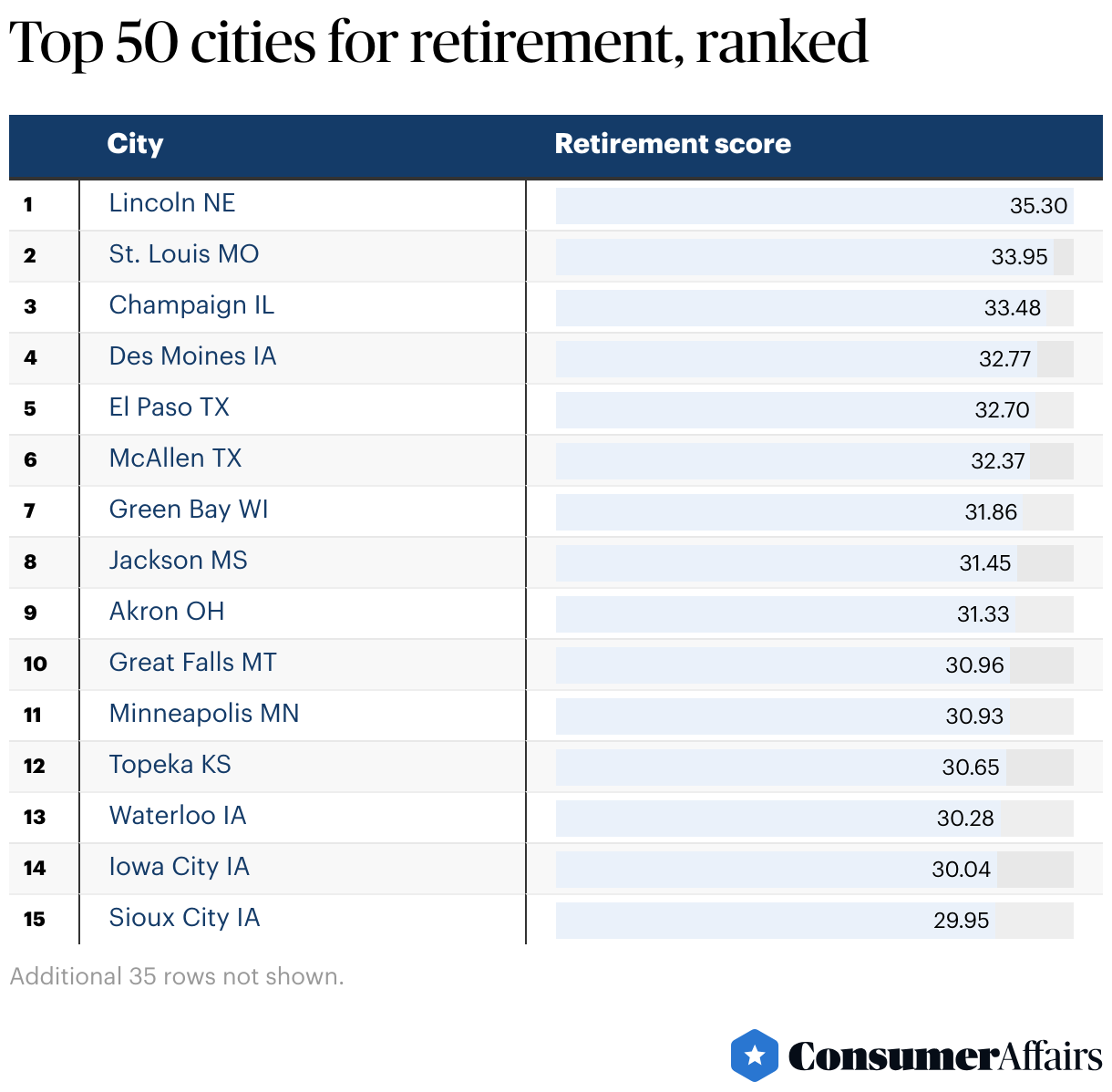
Lincoln, Nebraska, tops our list as the best city for retirement thanks to its healthy older population and access to parks.
Jump to insightLake Havasu City, Arizona, earns the lowest spot on the list as the worst city for retirement because of its higher cost of living and low score on a community well-being index.
Jump to insightNo matter what city you choose for retirement, the key is developing a strategy for stretching your income and taking advantage of resources for greater quality of life.
Jump to insightHow we chose the best and worst cities for retirement
By 2030, all baby boomers, numbering around 73 million in the U.S., will have turned 65, according to the U.S. Census Bureau. As many start to think about retirement, they will also consider the best place in which to live out life’s later years.
”Where you live plays a critical role in not only how long you live, but in your quality of life,” said Jennifer Tripken, associate director for the Center of Healthy Aging at the National Council on Aging. “Communities that are age-friendly are ones that promote health and are designed to meet the needs of diverse populations, including having inclusive and equitable policies, practices and services.”
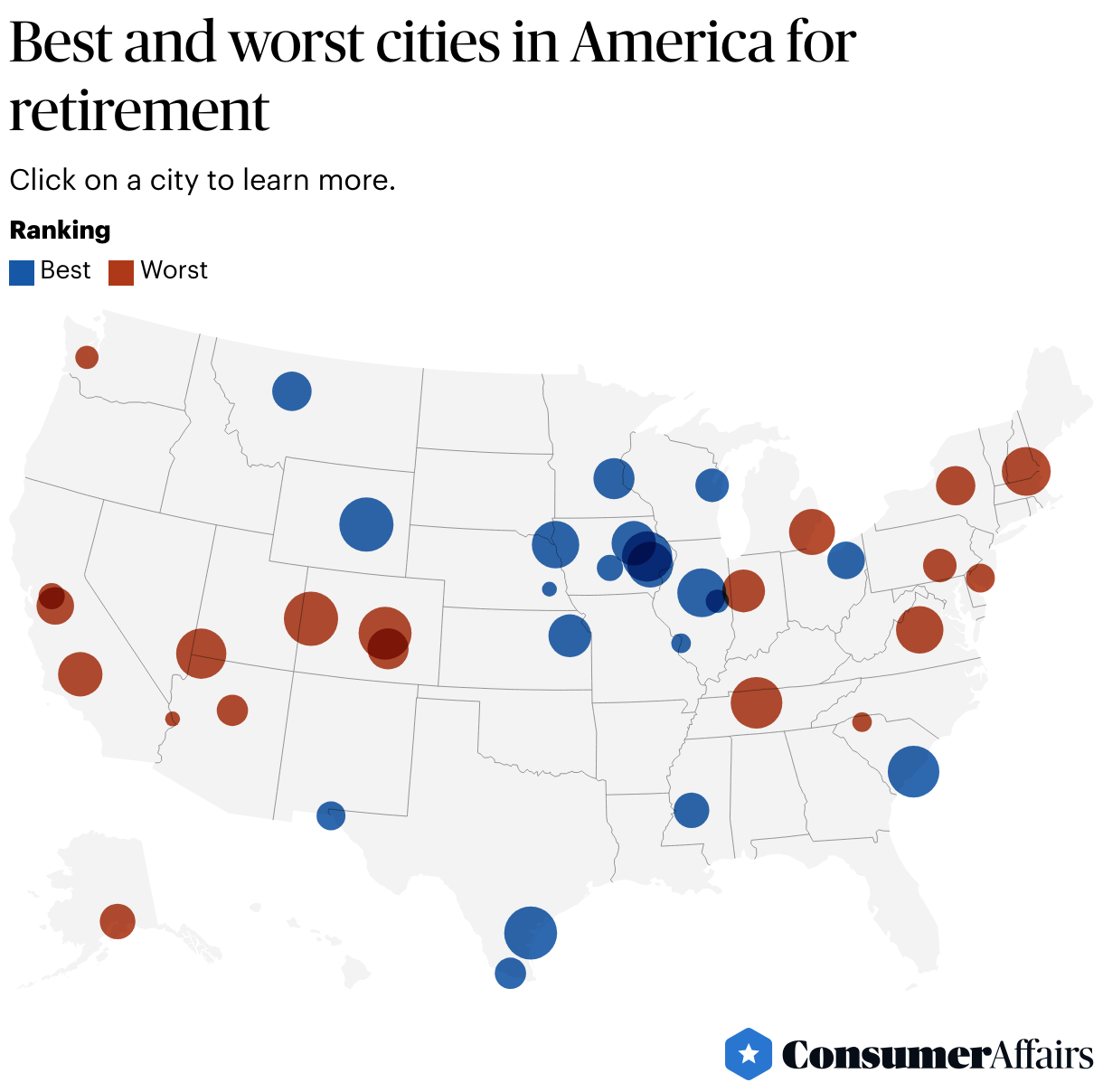
To help you decide the best place for retirement, the ConsumerAffairs Research Team examined a range of factors, including financial (cost of rent, food, utilities and transportation) and quality of life (weather and temperature, walkability, access to green spaces) factors, as well as elements like the percentage of population 65 and older, crime rates, cultural and physical activities and access to health care.
With Social Security checks averaging $1,704 per month at the time of publishing, according to the latest Social Security Administration data, and the cost of living exceeding that in many areas, we weighed the cost of living highest, as finances are often the dominant deciding factor. All other factors were given the same weight, leading to the overall retirement score and rankings (read our full methodology below for complete information).
Worst cities for retirement
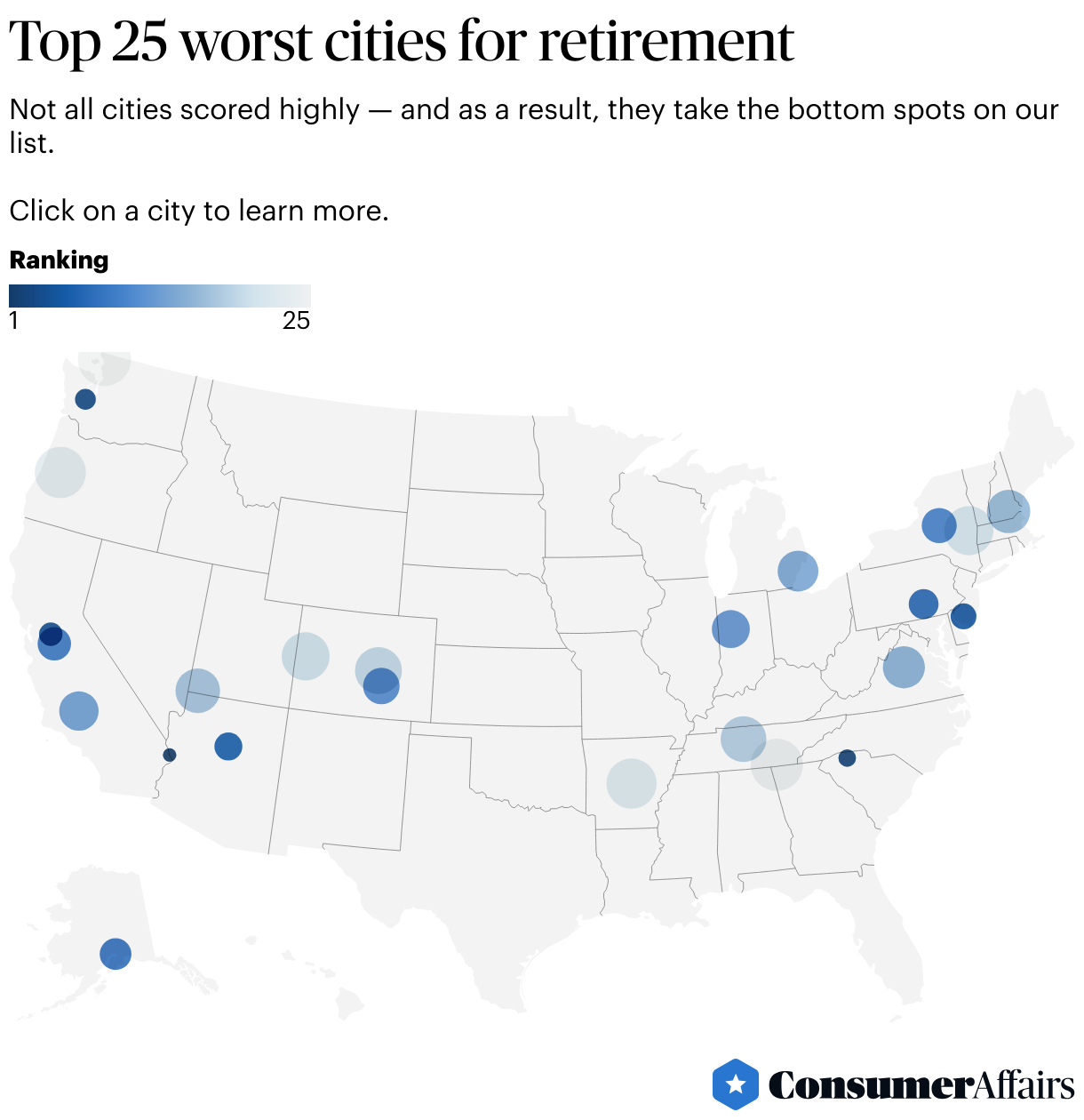
Not all cities scored highly — and as a result, they take the bottom spots on our list. For example, Lake Havasu City, Arizona, has the highest 65-and-over population and a low crime rate, but its last-place ranking in access to healthy foods, low community well-being score and high cost of living contribute to it being No. 1 on our list of worst cities for retirement. Spartanburg, South Carolina, and Olympia, Washington, second- and third-worst, earned low marks for limited park access and the lack of neighborhood walkability, so if those are important considerations for you, then you may want to look elsewhere for retirement.
Preparing your income (and lifestyle) for retirement
No matter when you start planning for retirement, whether it’s your 20s, 30s, 40s or beyond, there are a few steps you can take to strengthen your overall financial picture.
Focus on financial planning
Retirement requires a different money mindset versus your younger and midlife years. Consider these steps before you officially retire:
- Assess your finances: Take a serious, honest look at your savings, spending and what your true expenses will look like in your retirement age. Once you have all the facts, you can adjust where necessary.
- Budget with your post-retirement income: The budget you have in your younger years will likely look quite different from retirement. Develop a budget with your realistic retirement income in mind, eliminating expenses you’ll no longer have but including new ones you anticipate.
- Create an emergency fund: If you don’t already have one, an emergency fund in an easily accessible savings account can be a financial lifesaver for unexpected expenses. Plus, it can keep you from taking unnecessary withdrawals from your investment portfolio.
- Reevaluate insurance policies: Retirement is an ideal time for adjusting insurance policies, such as life insurance policies and auto insurance, including deductibles, beneficiaries and coverage options.
- Work with a trusted financial advisor: If you haven’t started working with a trusted financial advisor, it’s never too late to start. The right advisor can help you navigate your questions and gain confidence as you enter retirement territory.
READ MORE: Learning from financial hindsight
Consider relocation to stretch your dollars
Moving cities can be a part of your retirement strategy, having a major impact on both your wallet and your well-being.
“Some areas may have a lower cost of living, which can stretch your retirement savings further, while others might be more expensive and require careful financial planning. It's crucial to assess whether your retirement income, including pensions, savings and Social Security, will be sufficient to maintain your desired lifestyle in the new location,” advised Derek R. DiManno, a certified financial planner and the founder of Flagship Asset Services in Towson, Maryland.
DiManno expanded on the idea of moving cities further: “Research the local customs, climate, cost of living, safety and amenities available in the area. Visit the prospective retirement location before making a decision to get a feel for the community and lifestyle. It's also valuable to connect with locals, both retirees and residents, to gain insights into the daily life and challenges of the area.”
Know your available resources
Tripken also provided a list of resources offering support for the physical, mental, emotional and social well-being of aging adults, including:
- Health care services: Access to quality health care is fundamental to the well-being of older adults. Regular checkups, screenings and consultations with health care professionals help manage chronic conditions, detect health issues early and provide preventive care. Many of these are covered by Medicare and Medicaid.
- Senior centers: These centers serve as hubs for social interaction, recreational activities and educational programs tailored to older adults. They offer a sense of community, combat social isolation and keep older adults engaged and mentally active. Many senior centers also offer intergenerational programming.
- Nutrition programs: Senior nutrition programs are available in all communities. Programs such as Meals on Wheels deliver nutritious meals to seniors who may have difficulty shopping or cooking for themselves.
- Home care services: Older adults who prefer to remain in their homes can benefit from home care services. These services offer assistance with daily activities, medication management and medical care while allowing seniors to maintain their independence.
- Fitness and exercise programs: Staying physically active enhances mobility, strength and overall health. Exercise programs designed for seniors, such as low-impact aerobics, yoga and tai chi, help maintain physical well-being.
- Transportation services: Access to transportation is essential for maintaining independence and engaging in social activities. Transportation services tailored to older adults ensure they can attend appointments, visit friends and participate in events.
READ MORE: How much do I need to retire?
Methodology
To determine the best and worst cities for retirement, we gathered data from multiple sources, including the U.S. Census Bureau, the FBI, NYU Langone Health’s City Health Dashboard and Sharecare, and compared metrics including the percentage of the population who are of retirement age, the cost of living adjusted for retired individuals, crime and community well-being.
We calculated each score by assigning the metric a positive or negative value and comparing each city to the city with the highest value in the category, which was assigned a score of 10 or -10. We then combined the scores to create a retirement score. All 11 score factors shared equal consideration except for cost of living, which was given three times the weight. The factors included the following:
- Cost of living index
- Percentage of people 65 and over
- Total crime (violent and property crimes) per 100,000 people
- Rent burden (percentage of households spending 30% or more of household income on rent)
- Preventive services (percentage of people 65 and older up to date on core set of clinical preventive services)
- Access to healthy foods (percentage of people living more than half a mile from the nearest grocery store
- Access to parks (percentage of population living within a 10-minute walk of a green space)
- Physical inactivity score (percentage of population with no leisure-time physical activity in the past month)
- Walkability (Walk Score)
- Community well-being score (Sharecare index)
- Temperature (Whether average temperature from February 2022 to January 2023 was between 65 and 86 degrees Fahrenheit)
Article sources
ConsumerAffairs writers primarily rely on government data, industry experts, and original research from other reputable publications to inform their work. Specific sources for this article include:
- U.S. Census Bureau, “Data.” Accessed Aug. 21, 2023.
- The Council for Community and Economic Research, “C2ER Cost of Living Index.” Accessed Aug. 21, 2023.
- Social Security Administration, “Monthly Statistical Snapshot, July 2023.” Accessed Aug. 21, 2023.
- Sharecare, “Sharecare Community Well-Being Index.” Accessed Aug. 21, 2023.
- FBI, “Crime in the U.S.” Accessed Aug. 21, 2023.
- NYU Langone Health, “City Health Dashboard.” Accessed Aug. 21, 2023.
- National Centers for Environmental Information, “City Mapping.” Accessed Aug. 21, 2023.
Figures