Tax Relief Statistics (2026)

+1 more


Tax relief is the use of government programs and policies designed to help people and businesses reduce their tax burdens and resolve tax debts. Universal tax cuts and targeted programs, such as the Child Tax Credit, lower tax bills through tax deductions and credits. The IRS gave tax penalty relief on nearly 5 million tax returns and provided more than $814 million in economic impact payments (EIPs) from 2020 to 2021.
Key insights
A total of $814,404,900 in tax relief was given to U.S. taxpayers through the EIPs issued in 2020 and 2021.
Jump to insightAfter adjusting for inflation, state tax revenues increased by 9.3% from 2017 to 2022.
Jump to insightTax relief initiatives were implemented in 43 U.S. states from 2021 to 2022. State income tax cuts were utilized by 21 of those 43 states.
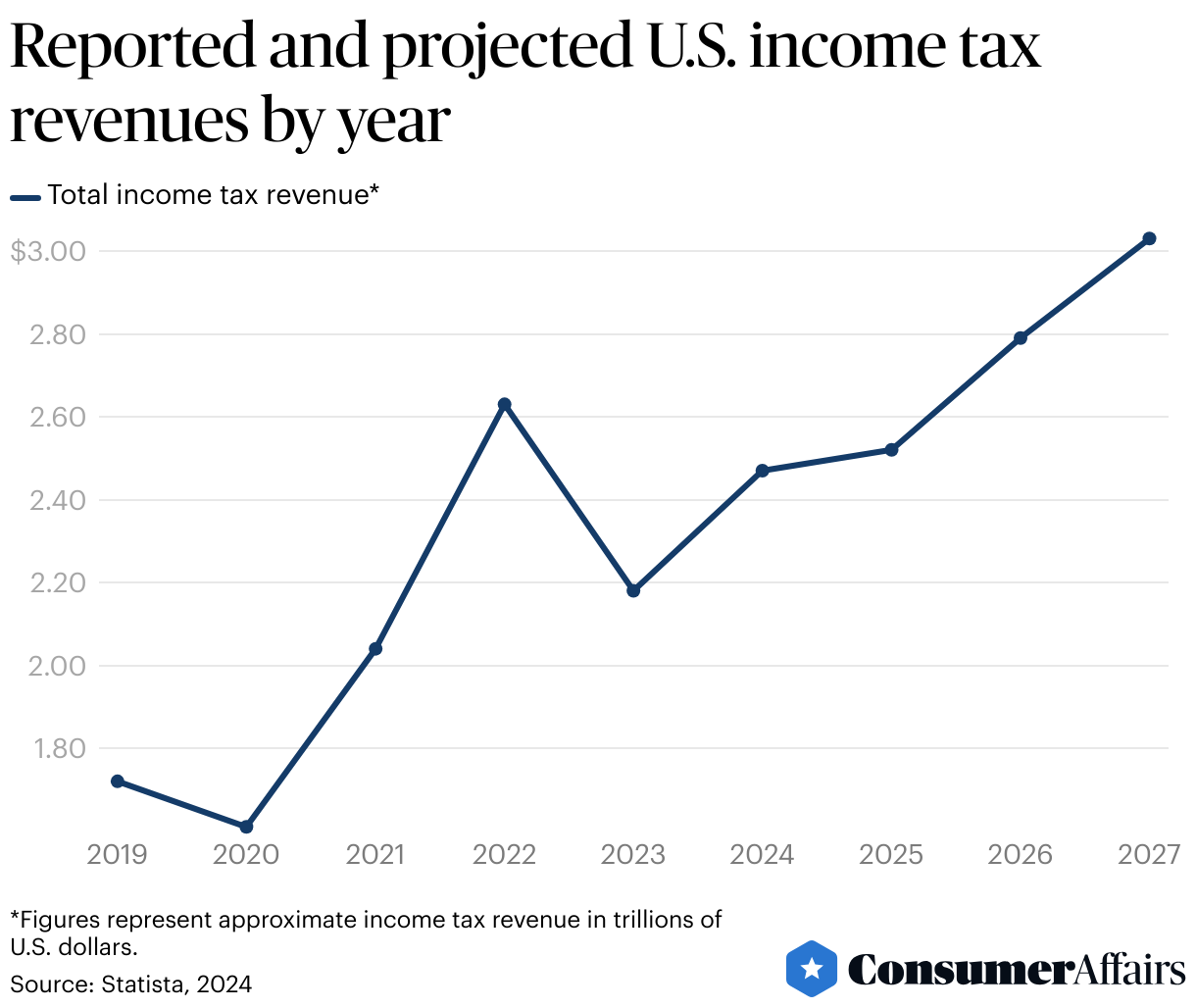
Jump to insightU.S. income tax revenue is expected to grow from about $2.18 trillion in 2023 to about $3.03 trillion in 2027.
Jump to insightTax relief background
There are four main types of tax relief, each with different use cases and levels of eligibility.
- Tax deductions reduce a taxpayer’s taxable annual income, which in turn reduces the amount of taxes owed. Itemized deductions include mortgage interest, charitable donations and capital losses.
- Tax credits directly reduce the amount of taxes owed, dollar for dollar. The Child Tax Credit, Saver’s Credit and American Opportunity Tax Credit are examples of tax credits for parents, those contributing to retirement plans and individuals continuing education, respectively.
- Tax exclusions render certain portions of income nontaxable, thereby reducing taxable income and the overall amount of tax due. Child support, life insurance death benefits and employer-paid health insurance premiums can be used as tax exclusions.
- Tax debt relief paths are offered by the IRS to help taxpayers catch up on back taxes and avoid tax liens and wage garnishments. Some taxpayers may be eligible to pay their debts off over time via installment plans, settle their debts for less than they owe via an offer in compromise or temporarily delay their payments, among other options.
State tax relief trends
From 2021 to 2022, 43 U.S. states implemented tax relief initiatives, 21 of which utilized state income tax cuts. Some states are considering expanding existing state tax cuts further, citing state revenue surpluses and inflationary concerns. In 2022, state tax revenues were 9.3% higher than they were in 2017, even after adjusting for inflation. Despite the median top state income tax rate declining from 2017 to 2022, tax collections in real dollars still increased.
With remote work creating a more mobile environment, many states are reducing income tax rates in an attempt to keep residents. Tax relief is unsurprisingly on the agenda in many conservative states, including North Dakota, Oklahoma and West Virginia.
The graph below shows how states’ individual income tax rates have declined since 2010.
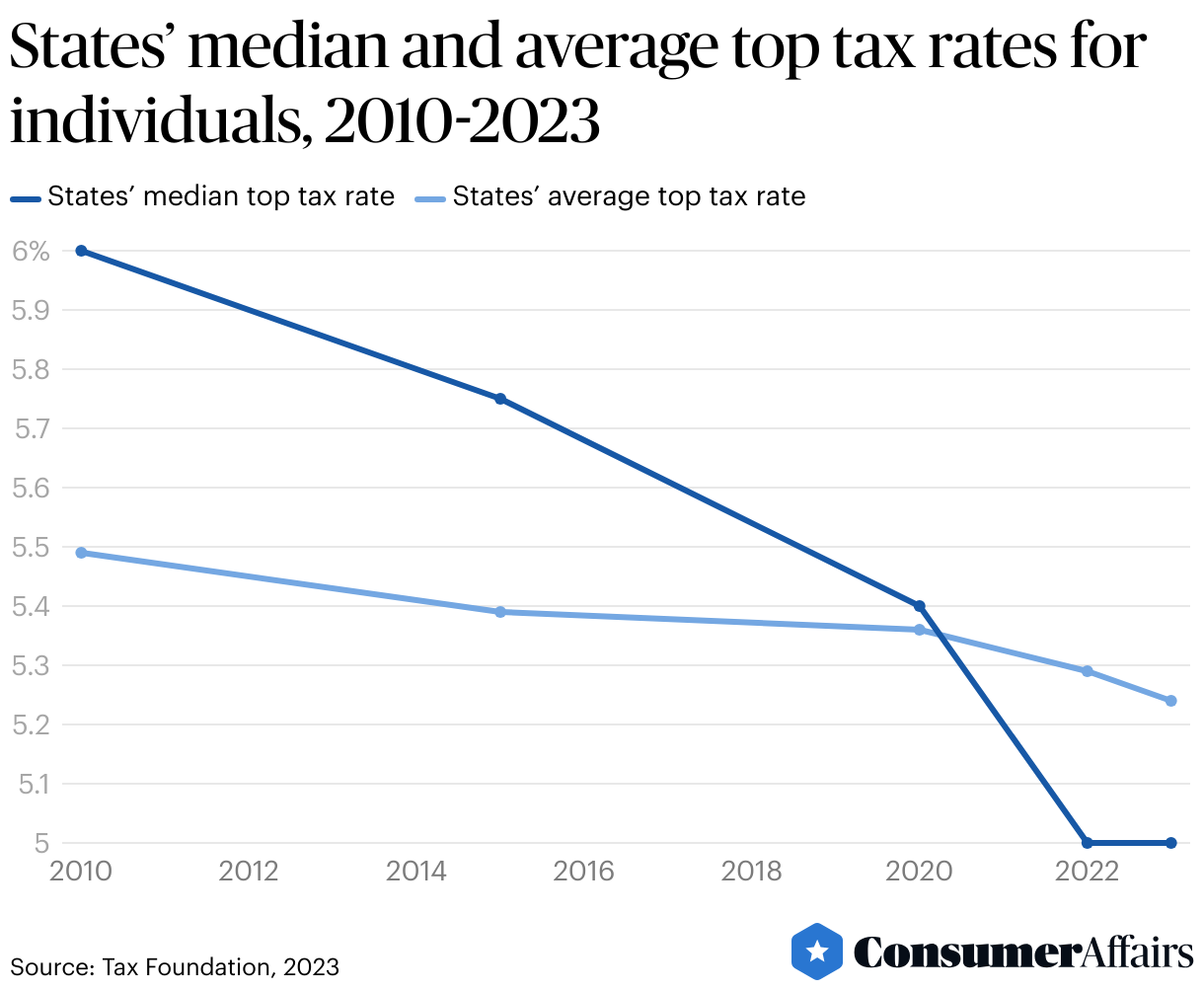
The Tax Foundation, a tax policy research nonprofit, predicts that states’ median and average tax rates will continue to decline in the near future.
How has COVID-19 affected tax relief?
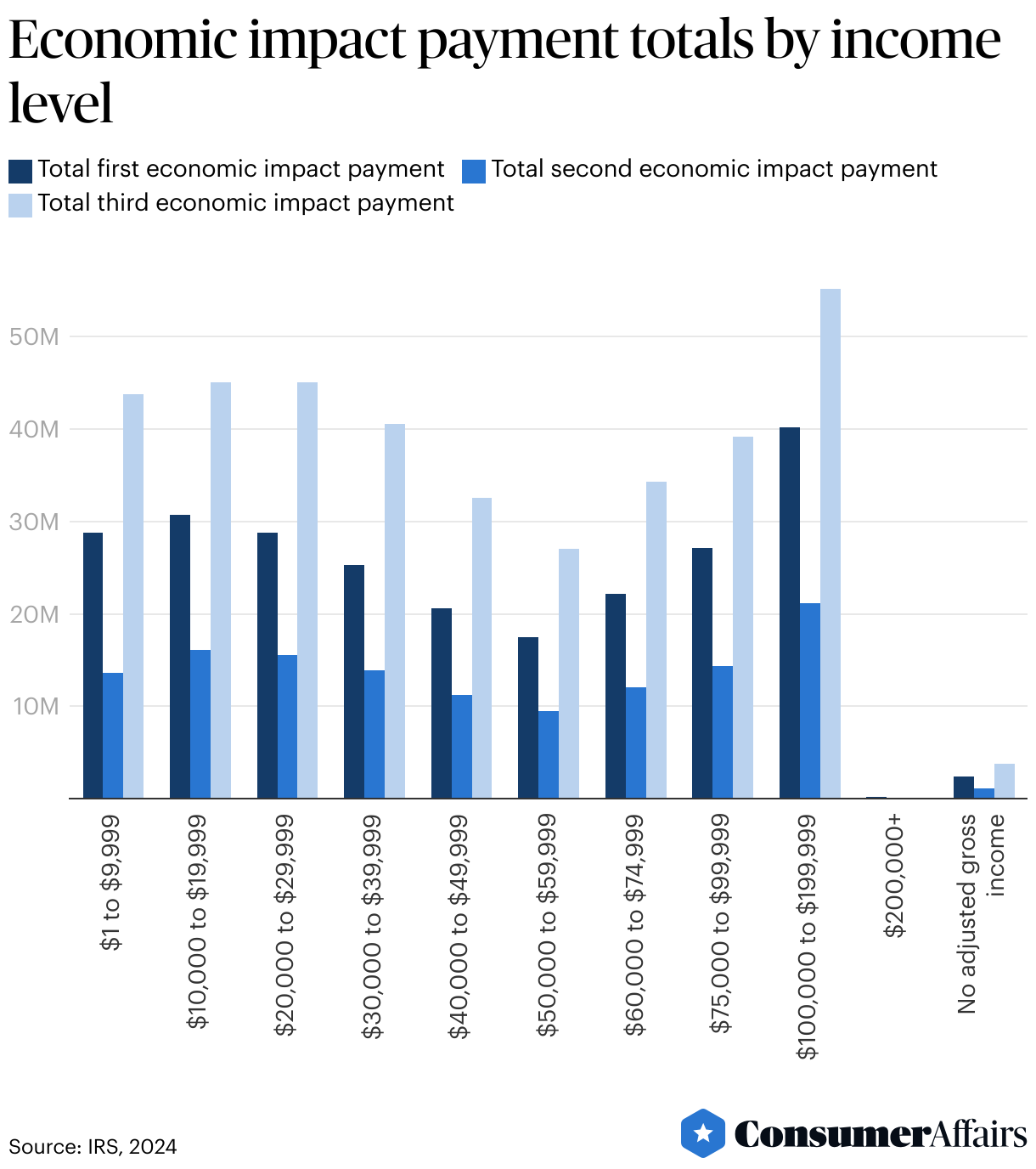
The Coronavirus Aid, Relief, and Economic Security (CARES) Act was enacted in March 2020 to provide eligible Americans with EIPs. The first round of these EIPs took the form of a refundable tax credit of up to $1,200 for U.S. taxpayers’ first taxable year starting in 2020. Individuals filing jointly were eligible for up to $2,400 plus $500 for each qualifying child. A total of $271,421,554 was given in relief to U.S. taxpayers during the first EIP. Full eligibility for the first EIP was granted to those with an adjusted gross income (AGI) at or below $150,000 for joint returns, $112,500 for heads of household and $75,000 for individual filers.
The Coronavirus Response and Relief Supplemental Appropriations Act was enacted in late December 2020 to issue a second round of tax refund credits before Jan. 15, 2021. A total of $141,471,824 was given in relief to U.S. taxpayers during this second EIP. The second EIP was phased out at a rate of 5% for taxpayers with an AGI above the same income thresholds that applied for the first EIP.
While the first and second EIPs were advance payments of the 2020 Recovery Rebate Credit, the third EIP was an advance payment of the 2021 Recovery Rebate Credit, as part of the American Rescue Plan Act of 2021. Individuals were eligible for a tax credit of up to $1,400, while those filing jointly were eligible for up to $2,800. Both filer types were eligible for an additional $1,400 per qualifying dependent.
A total of $401,511,522 was given in relief during the third EIP, which was the highest total amount distributed among all three payments. Filers with AGIs above these thresholds were ineligible for the third EIP:
- $80,000 for individual filers
- $120,000 for heads of household
- $160,000 for joint filers or qualifying widows/widowers
The below chart shows the total EIP amounts that were made from 2020 to 2021 for different AGI ranges.
Tax relief safety
It’s important to vigilantly safeguard sensitive tax-related personal data. There are several tax-related scams that U.S. taxpayers should be aware of, including the following:
- Unclaimed refund scams mislead people into thinking they’re owed an unclaimed tax refund. The fake notification typically comes in the mail and includes a letter with the IRS masthead and contact information that does not actually correspond with the IRS.
- W-2 wage information scams encourage people to misrepresent personal wage information on a tax return in order to claim false credits.
- Charity fraudsters pose as charitable organizations to solicit donations. The collected money goes to those behind the scam instead of people in need, and because the charity isn’t real, a deceived taxpayer can’t deduct the donation on their return.
- Educational institution scams target educational institutions’ students and staff who have “.edu” email addresses. Fraudsters may impersonate the IRS and ask people with these email address types to submit a form (including personal data) in order to claim a tax refund that doesn’t actually exist.
- IRS impersonation scams may target particularly vulnerable taxpayers, like recent immigrants, the elderly and those who are deaf or hard of hearing. Criminals may pose as IRS agents using fake names and fake IRS identification numbers. Victims are told they owe the IRS money and that their debts must be paid quickly via wire transfer or gift cards.
Finally, one of the most common tax relief scams in practice today occurs when misleading actors claim that they can help a taxpayer settle their IRS debt through an offer in compromise (OIC), even if that taxpayer is unlikely to qualify for an OIC. These bad actors may be referred to as OIC “mills,” and they often charge excessive upfront fees that significantly outweigh the amount of money their victims will save from their services.
There are, however, legitimate and accredited tax relief companies that can help qualifying taxpayers negotiate with the IRS or state tax bodies and reduce their tax liabilities for a reasonable fee.
Property tax relief options
Property taxes are determined by a home’s value, so taxes owed can increase regardless of a homeowner’s ability to pay. In neighborhoods with rapidly increasing property value, homeowners may face tax foreclosure or housing displacement if they cannot pay their property taxes. There may be, however, programs in place available to homeowners who are at risk of displacement due to property taxes.
A property tax circuit breaker limits the amount of property tax that a homeowner has to pay to a share of their income. These programs may be administered by local or state governments.
Eligibility for circuit breakers can be restricted to specific demographics, such as senior citizens, those with disabilities or veterans. Circuit breaker credits and rebates can be distributed in different ways:
- Refundable tax credits allow a property tax credit to be included when filing state and local taxes. This approach simplifies the tax credit process and makes it easy for the government to process a homeowner’s claim. However, this also typically means the taxpayer must pay their property tax in full and then receive their credit at a later date.
- Direct rebate checks are issued after a homeowner’s income eligibility is determined, requiring a separate application and refund process.
- Property tax bill reductions are issued directly based on a homeowner’s previous year’s income.
Tax projections for the future
U.S. income tax revenue is projected to grow by about 39% from 2023 to 2027, increasing from nearly $2.18 trillion to more than $3.03 trillion. This projected income tax revenue for 2027 is nearly double the $1.72 trillion in U.S. income tax revenue that was reported in 2019.
FAQ
What’s the average tax refund for 2023?
The average tax refund for the 2023 tax year was $3,207 as of Feb. 16, 2024.
How many U.S. citizens have received tax debt relief?
The IRS provided tax penalty relief for nearly 5 million tax returns between 2020 and 2021.
Why am I getting tax debt relief calls?
You may be getting tax debt relief calls because you owe the IRS or a state tax authority money. You can check if you have a balance with the IRS by logging in to your online IRS account, and you can contact your state tax authority to determine if you owe taxes to your state.
If you don’t have a balance due with either the IRS or your state tax authority, the tax debt relief calls you’re receiving are likely scams that you should ignore.
Article sources
ConsumerAffairs writers primarily rely on government data, industry experts, and original research from other reputable publications to inform their work. Specific sources for this article include:
- IRS, “Credits and deductions for individuals.” Accessed Apr. 11, 2024.
- Tax Foundation, “There’s Still Room for Responsible State Income Tax Relief in 2023.” Accessed Apr. 3, 2024.
- IRS, “SOI Tax Stats - Coronavirus Aid, Relief, and Economic Security Act (CARES Act) Statistics.” Accessed Apr. 4, 2024.
- IRS, “Tax scams/Consumer alerts.” Accessed Apr. 4, 2024.
- Statista, “Income tax revenues and forecast in the United States from 2000 to 2034.” Accessed Apr. 4, 2024.
- Local Housing Solutions, “Property tax relief for income-qualified homeowners.” Accessed Apr. 7, 2024.
- IRS, “IRS helps taxpayers by providing penalty relief on nearly 5 million 2020 and 2021 tax returns; restart of collection notices in 2024 marks end of pandemic-related pause.” Accessed Apr. 7, 2024.
- IRS, “Question: Are child support payments or alimony payments considered taxable income?” Accessed Apr. 11, 2024.
- IRS, “Life Insurance & Disability Insurance Proceeds.” Accessed Apr. 11, 2024.
- Tax Policy Center, “How does the tax exclusion for employer-sponsored health insurance work?” Accessed Apr. 11, 2024.
- IRS, “Get help with tax debt.” Accessed Apr. 11, 2024.
- IRS, “Filing season statistics for week ending Feb. 16, 2024.” Accessed Apr. 12, 2024.
- IRS, “Here’s how the third Economic Impact Payment is different from earlier payments.” Accessed Apr. 12, 2024.
Figures