It's too bad about Windows 10. Millions of people loved it, or at least were more or less oblivious and probably remain so today, even though it has been declared officially obsolete by Microsoft. Although it's hard for computer nerds to understand, most consumers are about as interested in their operating system as they are in their water heater. Basically, if it works, that's pretty much the end of the story for them.
But while it's possible to just go merrily along ignoring the end of Windows 10, it's not really advisable. That's because Microsoft pronounced it dead on October 14 and is no longer issuing periodic updates, you know those things many people never bother to install.
Like changing the oil in your car, you can ignore software updates for awhile but it's dangerous. The updates are issued to add protections against viruses and other nasty hazards that didn't exist when earlier versions of the software were written. Doing without is like locking some of the doors to your house but leaving others open. Not a good idea.
Technically, Windows 10 could run indefinitely if Microsoft would continue to support it, but it won't. And unfortunately, older computers often can't run Windows 11, its anointed successor. This leaves most consumers facing the expense and inconvenience of buying a new computer.
There are some options but a little caution is advised. Poke around the web a little and you'll find articles advising you to switch to Linux, a free operating system that is battle-tested and runs most of the major web servers and many heavy-duty industrial applications. I have personally used Linux for decades and consider it by far the best system out there. It has many fervent fans who are always eager to convert new followers.
But there is one big problem with Linux. Whether anyone will admit it or not, it's made by geeks for geeks and keeping it updated and running smoothly isn't for the computer novice. Oh sure, you can fix just about any problem that crops up but it may take an entire afternoon of researching obscure help forums and trying to navigate the command-line, the bare bones interface you see when all the pretty pictures go away.
Like a lot of experienced Linux users, I always have Linux fired up and standing by but these days I do most of my work on Macs, which you might call the Toyotas of the computer worlds. Just as gearheads call Toyota the car for people who don't care much about cars, Macs are computers for people who don't care much about computers. They just work, even if you don't much care for them.
In the past, I have talked acquaintances into switching to Linux and instantly regretted it. I really don't need to get phone calls at 10 p.m. because someone's printer suddenly stopped responding, so it's no longer something I freely recommend. But don't take my word for it. Read on!
What to do?
So what are the options?
An organization called PIRG has for years been advocating for "right to repair" rules for consumer goods, including computers. They are now organizing "Fix-a-thon" events where volunteers retrofit older computers, either through alternative software or hardware upgrade, so that they can run Windows 11.
"For our “Fix-a-thon” events, we recruited 64 volunteers in six cities — New York, Boston, Cambridge, MA, Worcester, MA, Madison, WI and Chicago – to install alternative software on older computers, and otherwise refurbish and troubleshoot any issues, the group said in a recent update. "We partnered with local refurbishers and other groups to acquire computers and commenced a marathon of fixing and laptop rescue. All in all, our cross-country fixers rescued 103 computers. Most of these computers will be donated to various partner groups across the country, including youth groups and charitable nonprofits."
Partner organizations held similar events around the globe. In total, the Open Repair Alliance tracked 3,400 repair events during this year’s International Repair Day — 55% more than last year, PIRG said.
"While many older, Windows 10-compatible computers won’t be able to upgrade to Windows 11, there are ways of keeping these devices in use. One option is to install alternative software such as Ubuntu Linux, Linux Mint and Chrome OS Flex. These software options can keep older devices secure and usable," PIRG said.
If you are still running Windows 10 and trying to decide what to do, PIRG has a useful guide that will walk you through the options. And don't take my bad-mouthing Linux as gospel. It's an excellent system but you need a person or organization to help you through the learning curve.
Chrome OS
An excellent but often overlooked option for consumers who mostly use their computer for web browsing is Chrome OS, the Linux-based system that powers the very cool little Chromebook laptops that cost a fraction of a full-fledged Windows or Mac model. There's also something called Chrome OS Flex, a free Google product you can install on just about any existing computer. It is very simple to use and, unlike the full-bore Linux, has excellent built-in support.
The options
So here in the simplest form are your options if you are still running Windows 10 on an older computer:
- Buy a new computer with Windows 11. Minimum cost: $600 or so for a very basic system.
- Buy a fairly new used computer that will run Windows 11. Minimum cost: a few hundred for the computer and $139 to Microsoft for a Windows 11 license.
- Grab a free copy of Ubuntu Linux, Mint Linux or other relatively easy to use Linux system.
- Give Chrome OS Flex a try. It's free and easy to use and has excellent built-in support.
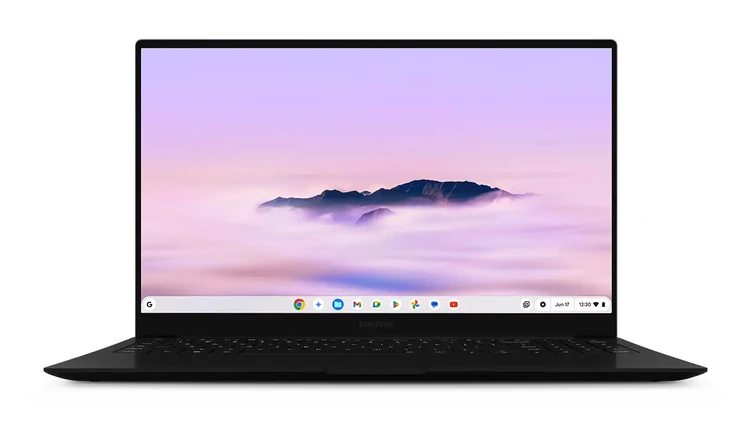
- Buy a Chromebook. Prices start in the low few-hundreds. These are excellent little machines that are probably all anyone needs for personal use.
Anyone of these options will work. For someone who isn't technically inclined and just needs to safely check email and browse the web, the Chromebook is the no-fuss, no-muss solution. It's easy to use, keeps itself updated and shouldn't ever cost you anything beyond the purchase price.