Consumers have a guarded outlook of the coming months as stress levels rise, employment remains flat and financial difficulties increase according to the Consumer Reports (CR) Index for February.
The CR Trouble Tracker Index is up for the third straight month (58.7), revealing increasing financial difficulty for consumers. The index, which tracks the depth and breadth of financial difficulties among households, has climbed from 54.2 last month and from 53.4 one year ago.
The gains in retail activity coupled with increased financial difficulty may lead to a credit crunch for some consumers, especially as missing payments on major bills (9.7 percent) or missing a mortgage payment (3.2 percent) are up from a year ago. Also, compared with last month, the number of consumers facing negative changes to their credit card terms (e.g., interest rates, penalty fees, credit limit) was up.
The Consumer Reports Employment Index shows no sign of improvement, as it was unchanged from the prior month at 49.2 and on par with a year prior (49.0). In the past 30 days, 6.7 percent of those surveyed have lost their jobs, but only 5.2 percent have found new positions.
“February’s Employment Index is indicative of an economy shedding more jobs than it is creating and this kept sentiment in negative territory, despite other measures that have shown gains,” said Ed Farrell, a director of the Consumer Reports National Research Center. “While the share of those starting a new job was up nominally from January, growth is insufficient to seriously address the expanding pool of unemployed or fresh job seekers.”
Stress rising
The compounding of these various negative factors may be reason for the rise in the magazine's Stress Index -- a measure of the stress consumers feel in their everyday lives versus a year ago. Despite a significant drop in January, in February the index is up to 59.3 from 55.4 the prior month and is on par with one year ago (59.9).
Despite the negative factors, some green shoots remain particularly when it comes to retail. The retail outlook is improving as the CR Past 30-Day Retail Index is up to 11.6 from last year (10.9). Similar signs of improvement are revealed in the Next 30-Day Retail Index, which rose to 8.3, from 6.9 a year ago. Major home electronics and personal electronics are helping to fuel the retail gains for both indexes.
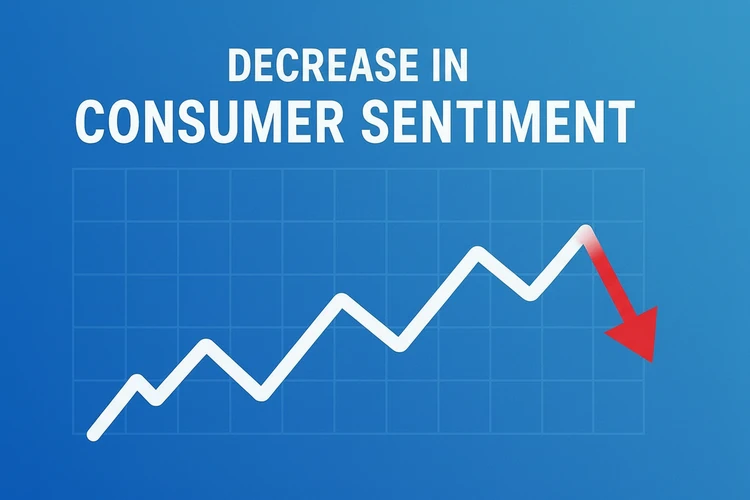
After reaching its highest level in two years at 48.7 in January, the Sentiment Index held steady, matching the highest level recorded since October 2008. An index below 50 represents negative consumer sentiment.
The Consumer Reports Index report is made up of five key indices: the Sentiment Index, the Trouble Tracker Index, the Stress Index, the Retail Index, and the Employment Index. Here are the key findings:
Sentiment Index
Consumer sentiment held steady, maintaining its gain from last month and stands at 48.7 -- its highest level in two years.
The most optimistic consumers: Age 18-34 at 55.5 (versus 57.2 the prior month), and households with income of $100K or more at 61.5 (compared with 57.4 a month earlier). The most pessimistic consumers: Households with income less than $50,000 at 44.2 (it was 42.7 the prior month), and those age 65 and older at 41.9 (versus 44.1 a month earlier).
The index captures respondents’ attitudes regarding their financial situation, asking them if they are feeling better or worse off than a year ago. When the index is greater than 50, more consumers are feeling positive about their situation. When it is below 50, more consumers are feeling worse. It can vary from a high of 100 to a low of 0.
Trouble Tracker Index
Consumers faced more troubles this month than the month before. The index increased to 58.7 in February from January’s 54.2 as well as one year ago (53.4).
Negative developments were led by an increase in consumers that were unable to afford medical bills or medications in the past 30 days to 17.0 percent, from 15.6 percent in January and 14.7 percent one year ago; and an increase in those that have lost or face reduced health-care coverage (9.3 percent), compared with 8.6 percent last month and 7.5 percent the prior year.
Overall, the most prevalent consumer troubles include: Unable to afford medical bills or medications (17 percent); Missed payment on a major bill -- not mortgage (9.7 percent); Lost or reduced health-care coverage (9.3 percent).
Lower-income households, earning less than $50,000 a year, have been disproportionately affected. In the past 30 days: 26 percent unable to afford medical bills or medications; 14.1 percent missed payment on a major bill (not a mortgage); 12.9 percent Lost or reduced health-care coverage; and 11.7 percent lost job, versus 6.7 percent among all consumers.
The Trouble Tracker focuses on both the proportion of consumers that have faced difficulties as well as the number of negative events they have encountered. The negative events include: the inability to pay medical bills or afford medication, missed mortgage payments, home foreclosure, interest-rate increase, penalty fees, reduced lines of credit or other changes in credit card terms, job loss or layoffs, reduced health-care coverage or the denial of personal loans. The index is then calculated as the proportion of consumers that have experienced at least one of the negative events comprising the index multiplied by the average number of events encountered.
Retail Index
Retail continues its recovery. The Past 30-Day Retail Index (reflective of January activity) is 11.6, up from 10.9 last year. Similarly the Next 30-Day Retail Index, reflecting planned purchasing for February, is 8.3, up from 6.9 one year ago.
Looking in detail at the categories in the Past 30-Day Retail Index (major appliances, small appliances, major home electronics, personal electronics, major yard/garden equipment), gains are attributable to several categories, including major appliances (7.1 percent, versus 6.3 percent a year ago), major home electronics (15.0 percent, compared with 13.9 percent last year), and personal electronics (25.5 percent as opposed to 23.6 percent last year).
The Next 30-Day Retail Index for February -- reflecting February activity -- is 8.3, compared with one year ago (6.9), with personal electronics (17.5 percent, versus 13.2 percent) and major home electronics (9.8 percent, compared with 6.8 percent) accounting for the gains. Planned purchasing for personal electronics is anticipated to be up in February versus the prior month as well (15.9 percent).
Among the non-index categories (new car, used car, home), past 30-day purchasing -- reflecting January activity -- was soft versus one year ago. Past 30-day purchasing for new cars was 1.8 percent, for used cars 4.3 percent, and 1.9 percent for homes. Planned purchasing in February reflects increasing confidence among consumers, with small gains versus one year ago for new cars 3.0 percent, up from 2.7 percent; used cars 5.1 percent, up from 3.7 percent; homes 2.2 percent, up from 1.7 percent.
The Retail Index looks at consumer purchases in the past 30 days as well as the outlook for planned purchases in the next 30 days across several categories. It represents the proportion of respondents that made a purchase in the following categories: major home appliances, small home appliances, major home electronics, personal electronics, and major yard and garden equipment. The Retail Index is a weighted calculation. For example, a major appliance is of greater value than a small appliance. Because of their size and frequency, car and home purchases are tracked separately.
Employment Index
The Consumer Reports Employment Index remains weak in February (49.2) and is unchanged from January. In the past 30 days, the proportion of consumers that have lost their job is 6.7 percent, virtually unchanged from a month earlier (6.5 percent). The share of those that have started a job in the past 30 days (5.2 percent) is comparable to a month earlier (4.9 percent), but is much improved from one year ago (3.8 percent). The Index points to two groups that have fared worst this month: adults 35 to 64 years of age (47.8), and those in households earning less than $50,000 (46.6).
The Employment Index examines the change in employment of those that reported starting a new job versus those that have lost their job or were laid off in the past 30 days. An index below 50 indicates more jobs were lost than gained, while a score more than 50 indicates more jobs were gained than lost in the past 30 days.
Stress Index
The level of stress consumers feel they are under is up to 59.3 from the prior month (55.4), but is on par with one year ago (59.9).
The Stress Index captures attitudes regarding the amount of stress consumers feel compared to a year ago. It asks whether they are feeling more stressed or less stressed. When the index is more than 50, consumers are feeling more stress and when it is below 50 they are feeling less stress compared to a year ago. It can vary from 100 (Total Stress) to a low of 0 (No Stress).