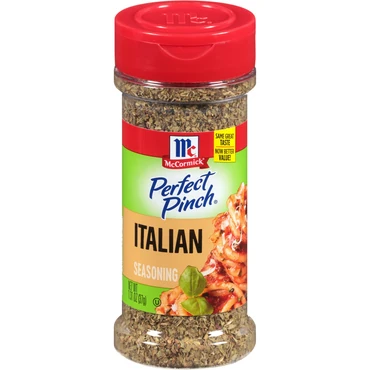
McCormick & Company is recalling McCormick Perfect Pinch Italian Seasoning, McCormick Culinary Italian Seasoning and Frank’s RedHot Buffalo Ranch Seasoning.
The products may be contaminated with Salmonella.
No illnesses have been reported to date.
The four products subject to this recall include:
- McCormick Perfect Pinch Italian Seasoning 1.31-oz bottle UPC 052100049731, item number 901582629, best by MAY 26 24 K, best by MAY 27 24 K, best by JUN 04 24 K, best by JUN 05 24 K.
- McCormick Perfect Pinch Italian Seasoning 2.25-oz bottle UPC 052100038254, item number 901455463, best by JUN 30 24 H, best by JUL 01 24 H
- McCormick Culinary Italian Seasoning 1.75-lbs. Bottle, UPC 52100325743, Item number 932574, best by Jun 12 24 H
- Frank’s RedHot Buffalo Ranch Seasoning 153-g bottle UPC 066200021047, item number: 901543520, best by MA 2022, SEP 06
The recalled products were shipped from June 20, 2021, through July 21, 2021, Alabama, California, Colorado, Connecticut, Delaware, Florida, Georgia, Illinois, Indiana, Kansas, Kentucky, Louisiana, Massachusetts, Maryland, Maine, Michigan, Minnesota, Missouri, Mississippi, North Carolina, Nebraska, New Hampshire, New Jersey, New York, Ohio, Oklahoma, Pennsylvania, South Carolina, Tennessee, Texas, Virginia, Wisconsin, Bermuda and Canada.
What to do
Consumers do not need to return the recalled product to the store where it was purchased. Instead, they should discard it along with the container.
For a replacement or full refund, and general inquires consumers may contact McCormick at (800) 635-2867, weekdays from 9:30 AM to 8:00 PM (ET).
McCormick & Company is recalling McCormick Perfect Pinch Italian Seasoning, McCormick Culinary Italian Seasoning and Frank’s RedHot Buffalo Ranch Seasoning.
The products may be contaminated with Salmonella.
No illnesses have been reported to date.
The four products subject to this recall include:
The recalled products were shipped from June 20, 2021, through July 21, 2021, Alabama, California, Colorado, Connecticut, Delaware, Florida, Georgia, Illinois, Indiana, Kansas, Ken...