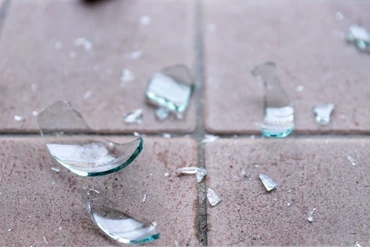
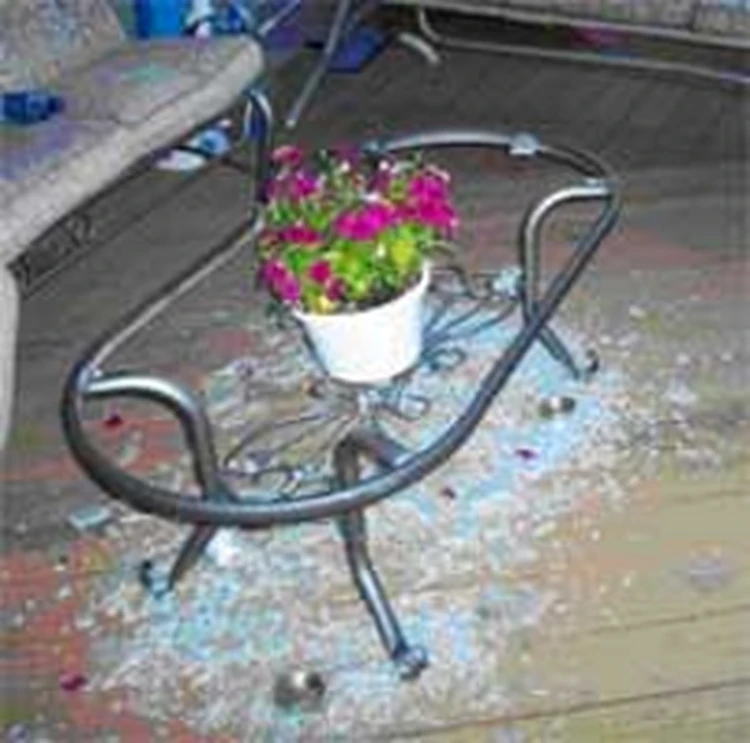
As winter turns to spring, consumers across the country are once again waking up to the sounds of their Martha Stewart Everyday glass tabletops exploding into thousands of tiny pieces. The tables, sold at Kmart, have a long history of spontaneously shattering, and they dont show signs of stopping anytime soon, not that anyone in authority seems to care.
Months after a federal court dismissed a class action lawsuit alleging that the tabletops are defectively manufactured, owners of the product remain without recourse and several hundred dollars poorer, as they are left to clean the glass off of their patios and sometimes dig it out of their skin.
Late last year, a federal court in Illinois rejected class certification in the action, ruling that the court would have to decide individual issues of causation for each plaintiff, making a class action impracticable.
The suit, originally filed in 2005 on behalf of lead plaintiff Michelle Ronat, alleged that Kmart refused to give aggrieved customers refunds or replacements, since the tabletops werent covered under warranty. Martha Stewart Living Omnimedia (MSLO) — named after convicted felon and media darling Martha Stewart — when confronted by consumers, passed the buck to JRA Manufacturing, the Chinese company that produced the tables. The manufacturer, in turn, said the problem lay in a design defect attributable to MSLOs designers.
The suit, prosecuted by Horwitz, Horwitz & Paradis, a New York class action firm, sought replacement tabletops for an estimated 300,000 consumers. With tabletops potentially costing as much as $500 apiece, the action threatened to leave MSLO liable for up to $150 million.
The glass replacements cost so much because JRA, the manufacturer, declared bankruptcy in 2007, leaving consumers unable to obtain factory replacements. Instead, they have been forced to have glass custom-made to fit their tables. In some cases, individuals could end up paying more for the replacement top than they did for the entire table set in the first place.
Although MSLO contends that a relatively small number of consumers were affected, ConsumerAffairs.com has received hundreds of complaints over the past five years, as have other Internet sites. Like the swallows returning to Capistrano, the complaints increase predictably each spring, as tables are brought back outside and exposed to the sun's rays.
Additionally, according to the lawsuit, because the tabletops werent covered under warranty, Kmart didnt keep records of most complaints. As a result, the complaints Kmart does have on file likely represent only a fraction of actual incidents.
Similar complaints
Affected consumers experiences are strikingly similar, and the most common and disturbing thread is that there is no way to know when a table is about to explode.
My Martha Stewart Glass topped patio table exploded after only one year of use, writes Marylou of Brockton, Ma. I am left with a set of six chairs and no table to use. I received minor cuts from cleaning up all of the exploded glass which is fine but emotionally I was very upset after spending all that money on something that is now useless to us.
In a similar vein, Judy of Unionville, Oh., writes, Table shattered into a million pieces. Paid good money for poor quality. It is so sad especially with the economy like it is. Who can afford this[?].
A considerable number of consumers have had more than one table shatter. Some bought a set and ended up having several shatter over time, as happened to Lisa of Austintown, Oh.
Two years after I purchased this set, the glass on the leaf design coffee table shattered into a hundred pieces, writes Lisa. The following year, the glass on the round table shattered ... The damage was not due to abuse by the owner. A defect in the product is obviously the cause.
Others replaced tables that exploded, only to relive the experience months or years later. Thats what happened to Margaret of Cedar Rapids, IA.
[We] have now had TWO patio tables from the Victoria Collection explode, writes Margaret. The first time it was over a year since we had it and our Kmart replaced it with a new table. It just happened again and it has been over [a] year or more.
CPSC mulls the problem
Martha Stewart Tabletops |
|
Trina Harris' visiting family was sitting at this table when it exploded in Yakima, Wash. |
|
Stephanie Green's "Lazy Susan" portion of her table exploded after less than two years of ownership in Van Nuys, Calif. |
|
Karen Dozier's local Kmart in Bakersfield, Calif., told her that it was probably vandalism that caused her table to shatter while she vacationed in Cancun, Mexico. |
More about Martha ... |
The Consumer Product Safety Commission (CPSC) looked into the problem in 2006. The Commission asked MSLO to redesign the tables which MSLO has supposedly done but never issued a recall.
Even after years of complaints, the official cause of the problem remains a mystery. In 2006, ConsumerAffairs.com contacted glass experts to get their opinions, but many were at a loss.
Ken Toney of the Custom Glass Corporation in Kittanning, Pa., told ConsumerAffairs.com that he ha[d] no idea what would cause that. He speculated that, because the glass was made overseas, a defect in the molecular compound could have caused it to shatter.
However, William Lingnell, an expert who testified in the Ronat action, had a different theory. He hypothesized that the glass tabletop bumps against the tables metal frame, creating microcracks in the glass. According to Lingnell, these cracks eventually cause the glass to explode entirely. Lingnell noted that the edges of the glass are not dressed, or smoothed over; rather, theyre jagged and rough. This makes it easier for the glass to bump up against the metal edges of the table, form hairline cracks, and eventually explode.
The JRA tabletops are made from tempered glass, which breaks into very small pieces, making it less dangerous than glass that breaks into larger shards. Nonetheless, a number of consumers have reported cuts and other injuries caused by the tabletops.
A few days ago, the table shattered right in front of me and on top of my feet and legs, describes Tracy of South Park, Pa., in a representative complaint. My son, thank God, had just gotten up less than a minute before it shattered. I was covered in blood and slivers of glass. It was quite frightening.
Some injuries were even more startling. Pam of Beavercreek, Oh., described the scene after her table exploded with her granddaughter sitting underneath.
Glass was all over her. One big chunk stuck in her calf. She had blood everywhere. We ended up ... [at the h]ospital. She had glass all over. She had stitches in her leg and she has tiny scars various places from the little [shattered] pieces.
Martha's not in
Customer service has been virtually nonexistent.
Kmart refuses to cover the glass under consumers warranties and routinely directs them to MSLO. Martha Stewarts conglomerate, in turn, blames Kmart and JRA, and essentially refuses to assist customers.
In November 2008, when Martha Stewart herself was confronted by New York reporter Arnold Diaz, she was adamant that, We are not the liable party. Kmart is responsible for the tables. She also insisted that, I have not heard of one reported injury. With Kmart and MSLO pointing fingers at each other, JRA long gone from the marketplace, and Ronats suit dead in the water, consumers are left to fend for themselves.
The Diaz incident was highly unusual. The daily press, which spends much time and energy complaining about Internet bloggers supposedly poaching on its turf, looks down its nose at consumer journalism and spends more time planning the table arrangement for the annual Gridiron Show or Radio-TV Correspondents Dinner than it does confronting Martha Stewart about her exploding tables.
One consumer did manage to get MSLOs attention. David Potts of Marietta, Ga., called Kmart in 2005 to report that his tabletop had shattered. At first, Kmart was characteristically unresponsive, until Potts told them something that grabbed their attention: he was also known in some circles as Dave Michaels, the 1990s-era CNN anchor. Kmart relayed the inquiry to MSLO, which promptly took care of Potts.
Potts himself was injured as he tried to clean up the broken glass. As Potts told ConsumerAffairs.com, I was sitting at my computer when I heard this tremendous crash. I went outside to see what it was and it looked like my patio was covered in ice. It was the glass from the table top. I got a couple of slivers of glass in my fingers while I was cleaning it and here I am a year later and I can still feel pain in the tips of my fingers.
Causation questions
The class action suit was felled by individual issues of causation. Specifically, the court noted that some table tops may have been broken because of human error, such as a flower pot being dropped on the glass, rather than by spontaneous shattering. The court also said that differences in state laws made the class unmanageable.
Individual causation factors are often used to justify the dismissal of consumer class actions. Just last week, a class action involving Microsoft Vista was tossed on similar grounds.
The court also noted that it would be difficult to fashion a uniform remedy for all class members. Since some plaintiffs tables were practically brand new when they shattered, while others had been around for years, it would be impossible for the court to decide how to distribute a settlement award.
Despite the run of bad luck, owners of Martha Stewart tables are not completely out of options. They can file a complaint on ConsumerAffairs.com, or can report their experience to the CPSC. Consumers could theoretically file their own suits, although the costs of doing so would likely outweigh the amount recovered from MSLO.