1. Skip to navigation
  2. Skip to content
  3. Skip to sidebar

Consumer Affairs

Air Travel Security Screening Gets More Intimate

Passengers subjected to body scans, pat-downs


Since late last week, when new security screening measures went into effect at several of the nation's largest airports, passenger have been subjected to full body scans and, in some cases, intimate pat-downs.

Despite complaints from travelers that the revealing scans, touching and probing are inappropriate, the Transportation Security Administration says it's something passengers will just have to learn to live with.

"As always, the safety and security of the American public is our highest priority, said Homeland Security Secretary Janet Napolitan. "The threats of terrorism we face are serious and evolving, and these security measures reflect our commitment to using current intelligence to stay ahead of adversaries " working closely with our international, federal, state, local and private sector partners every step of the way."

The new security measures were put in place, in part, in response to the failed attempt to bomb cargo planes, using explosives-laden printer toner cartridges. Some of the measures aren't seen by the public. They include "adapting inbound cargo targeting rules to reflect the latest intelligence and ordering a ground halt on all cargo coming from Yemen."

Virtual strip search

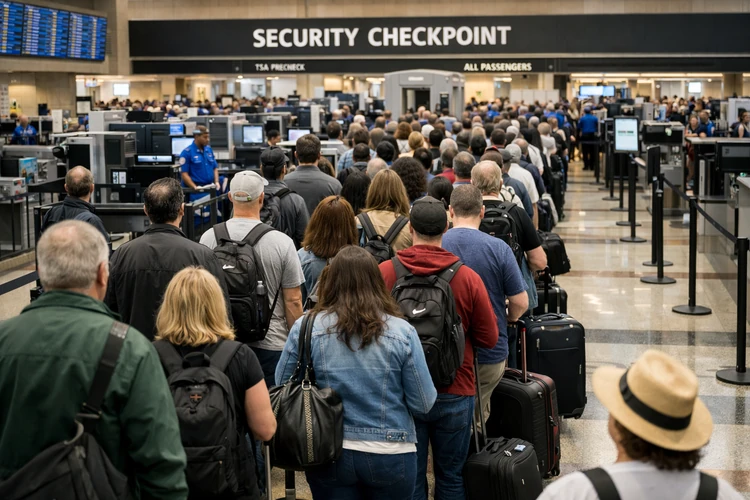
But it's the measures at the security gate that are causing tempers to flare and more modest passengers to blush. Passengers are ask to walk through a scanner that, in effect, sees right through their clothing, leaving little to the imagination.

It a passenger refuses to be scanned, or if the scan reveals an unidentifiable object beneath their clothing, they then undergo a new, more thorough pat-down, the type one might expect when entering prison or meeting a Mafia don.

For example, the Washington Post reports the new security measures now in place at the city's three airports routinely involve touching breasts and genitals. The searches are performed by security officers of the same sex as the passenger.

ConsumerAffairs.com's Truman Lewis encountered nothing out of the ordinary as he traveled through Washington Dulles International Airport Sunday.  He found security lines no longer than usual and said that if full body scans were being conducted, there was no visible sign of it.

The TSA says it understands how passengers might not like the new up-close and personal approach, but says it's essentially for everyone's own good.

"The weapons and other dangerous and prohibited items we've found during pat-downs speak to this," the agency said on its website.

Disputing passenger's account

Last week a female passenger in Los Angeles told a radio talk show that she had been handcuffed to a chair during an encounter with TSA screeners, after refusing a full body scan. TSA posted video of the woman entering and exiting the screening area, disputing the account.

"We diligently review claims of improper conduct," TSA said on its blog. "But when inaccurate passenger accounts are made either via media outlets or on the blogs, TSA works to resolve them and present both sides of the story.

Consumer advocate Ralph Nader told the Post he thinks the new screen procedures are "extremely voyeuristic and intrusive." He predicts TSA will be forced to back down.

The agency, meanwhile, shows no sign of that yet. It says only a small percentage of passengers end up getting a pat-down.

"The best way to be prepared at the checkpoint is to remove everything from your pockets prior to screening, the agency advises. "Also, if you have a hidden medical device, you may want to bring it to the officer's attention before screening. We'll be better able to help expedite your screening that way.

However, there appears to be a backlash movement, and according to media reports, it includes pilots and flight attendants, who must also undergo the enhanced security check, on a daily basis.

A newly launched protest website, WeWontFly.com, is organizing a national screener opt-out day for November 24, the day before Thanksgiving, which happens to be one of the busiest travel days of the year.

Quantcast