This living topic covers the various aspects of debt management, including the challenges and strategies of dealing with different types of debt such as credit card debt, student loans, and medical bills. It highlights the stress and financial burden debt can cause, the illegal practices by some debt collectors and companies, and the legal protections available to consumers. The topic also provides insights into debt settlement options, federal and state interventions to protect consumers, and practical advice for managing and reducing debt. Additionally, it discusses the implications of national debt on individual finances and the economy, and includes personal stories and expert advice to help consumers navigate their financial challenges.
U.S. household debt rose by $18 billion in the first quarter of 2026 to a record $18.8 trillion, according to the Federal Reserve Bank of New York.
Credit card balances declined seasonally, while mortgage, auto loan, and home equity borrowing all increased.
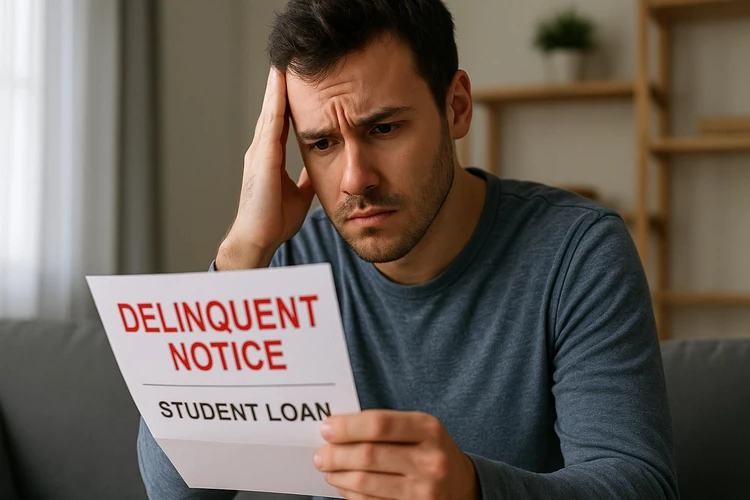
Student loan delinquencies continued returning to pre-pandemic levels, with more than 2.6 million borrowers transferred to the Education Department’s default resolution program.
Student loan delinquencies surge, lowering credit scores for millions of borrowers
Seriously delinquent student loans surged in the first three months of 2025, harming the credit scores of millions of borrowers.
Nearly one in four student loan borrowers were behind in their payments in the first quarter of 2025.
Outstanding student loan debt grew slightly to $1.63 trillion in first quarter of 2025.
The share of student loan debt that is seriously delinquent, or more than 90 days past due, surged to around 7.7% in the first quarter of 2025, up from just 0.5% in the fourth quarter of 2024, according to the Federal Reserve Bank of New York.
The staggering jump follows a 43-month pause on student loan payments due to the pandemic. Starting in Sept. 2023, borrowers had a year to resume payments before being reported to credit bureaus, a grace period that expired in Oct. 2024.
"The first batch of past due student loans were reported in the first quarter of 2025, resulting in a large jump in seriously delinquent borrowers,” said Daniel Mangrum, research economist at the New York Fed, in a statement.
More than 20 million federal student loan borrowers weren't in repayment and 5 million had a zero dollar monthly payment as of end of the first quarter of 2025, according to The New York Fed.
Missing a monthly student loan payment makes the borrower delinquent and after 90 days of not making a payment, the borrower is at risk of default and will be reported to credit bureaus, according to Federal Student Aid.
More than 2.2 million student loan borrowers who became newly delinquent saw their credit scores drop by more than 100 points and more than 1 million saw drops of at least 150 points, The New York Fed said.
Credit scores can fall by as little as an average of 74 points to as much as 177 points, depending on the borrower's creditworthiness, The New York Fed said.
Seriously delinquent student loan borrowers with the best credit see the biggest drops.
Poorer credit scores means borrowers will have lower credit limits and higher interest rates for other debt.
"It is unclear whether these penalties will spill over into payment difficulties in other credit products," The New York Fed said.
How missing student loan payments affects your credit score
Missing student loan payments can lower credit scores by varying amounts depending on a borrower's credit.
Reduced credit scores lower credit limits and raise interest rates.
Student loan borrowers with the best credit who miss payments can see their scores drop the most.
Collections restarted on millions of defaulted student loans this month, but millions of other student loan borrowers are at risk of default and will see their credit scores lowered.
Starting in Sept. 2023, borrowers had a year to resume payments before being reported to credit bureaus, a grace period that expired in Oct. 2024. Due to the pandemic, requirements to make student loan payments paused for 43 months.
Missing a monthly student loan payment makes the borrower delinquent and after 90 days of not making a payment, the borrower is at risk of default and will be reported to credit bureaus, according to Federal Student Aid.
The impact is already widespread: More than 9 million student loan borrowers of the nation's nearly 43 million are expected to have seen "substantial declines" in their credit in the first three months of 2025, according to the Federal Reserve Bank of New York.
"This would result in reduced credit limits, higher interest rates for new loans, and overall lower credit access," The New York Fed said.
A student loan borrower who has missed a payment for 90 days or more can see their credit scores drop by as little as an average of 42 points to as much as 175 points, depending on their current creditworthiness, according to a May report from credit bureau TransUnion.
Student loan borrowers with the best credit are the hardest hit.
For example, a student loan borrower with "subprime" credit would see their credit score drop by an average of 42 points, but a "super prime" borrower would see their credit score fall 175 points.
Still, TransUnion said that it is mostly student loan borrowers with poor credit that are at risk of defaulting and will see their credit scores lowered.
Nearly 51% of student loan borrowers with "subprime" credit were at risk of seeing their credit scores drop for not making a payment for 90 days or more, TransUnion said.
Student loan debt and borrowers at risk of default have ballooned in recent years after payments have been missed and more loans have been taken out.
Around 21% of student loan borrowers were 90 days or more late on their payments in February 2025, compared with around 12% a year prior, TransUnion said.
And student loan debt grew to around $1.77 trillion at the end of 2024, up from around $960 billion in 2011, according to the Education Data Initiative.
There is now more student loan debt than credit card or auto loan debt, the Education Data Initiative said.
What happens if a student loan goes into default?
After 270 days of not making a student loan payment, the borrower goes into default, according to Federal Student Aid.
The first Trump administration paused the collections of defaulted student loans during the pandemic in March 2020, a pause the Biden administration extended. Collections then restarted on May 5, 2025 under the second Trump administration.
More than 5 million student loan borrowers haven't made a payment in more than 360 days, according to the Education Department.
Federal Student Aid said these are the consequences for defaulted student loan borrowers:
Loan acceleration: The entire unpaid balance of your loan and any interest you owe will become due immediately.
Wage garnishment: We can begin collecting on your loan by taking money from your wages.
Treasury offset: Your tax refunds and federal benefit payments will be withheld and applied toward repaying your loan.
Loss of options: You will no longer be able to change repayment plans and will no longer be eligible for temporary relief options such as deferment or forbearance.
As a result of a Federal Trade Commission lawsuit, a federal court hastemporarily halted the operations and frozen the assets of a phantom debt collection scheme and its operators.
The scheme has operated under numerous names, including Blackrock Services, Blackstone Legal Group, Capital Legal Services, Quest Legal Group, Viking Legal Services, and others.
According to the FTC’s complaint,debt collectors working for the scheme’s operators and their affiliated companies have sent consumers deceptive warning and collection letters or called them directly, claiming that consumers owed a debt of some kind and threatening legal action, wage garnishment, negative impacts to consumers’ credit, and even arrest if they don’t pay.
The debts described in these letters and calls never existed, according to the complaint, and the defendants have no basis to make legal threats toward consumers.
The complaint further alleges that the defendants have sent letters and made phone calls to consumers claiming they owed money to a payday lender, and that the purported “law firm” contacting the consumer will imminently be filing suit against the consumer if the consumer does not pay up.
The letters and calls also claim that consumers’ credit will be damaged by the fictitious debt, and that if consumers agree to pay to settle that debt, the harm to their credit could be lessened.
All of the claims in these letters and calls are false, according to the complaint.
Sensitive personal information
The complaint notes that the letters sent by the operators often contain a wealth of sensitive personal information about the consumer, including the last four digits of their Social Security number, leading consumers to believe the letter may be legitimate.
When consumers visit the websites set up by the defendants for the bogus debt collection companies, they are again faced with false warnings that failure to pay these fake debts could result in garnishment of the consumer’s wages, along with lawsuits and impacts to their credit.
In follow-up calls, the threats increase, with collectors falsely telling consumers that they have defrauded a financial institution, could be arrested at their workplace, or that their homes could be seized if they do not settle, according to the complaint.
According to the complaint, the scheme has operated under a wide variety of names, including the names of unaffiliated existing businesses and law firms, in violation of the FTC’s Rule on Impersonating Government and Businesses. In addition, the complaint alleges that the defendants have regularly failed to follow numerous requirements set out by the Fair Debt Collection Practices Act, including disclosing that they are debt collectors when their collectors contact consumers.
Car repossessions spike, passing pre-pandemic levels
Car prices and the resulting monthly payments have been rising rapidly in recent years. As of the third quarter of 2024, the average monthly payment in the United States was $737, according to Lending Tree.
And now, the Consumer Financial Protection Bureau (CFPB) reports that the rate of auto repossessions at the end of 2022 surpassed pre-pandemic levels.
To make matters worse, lenders were increasingly more likely to use third parties, called forwarders, to manage the repossession process. The use of a third party generally increases consumer costs.
“Supply chain shocks and higher interest rates drove up costs to purchase and finance a car,” said CFPB Director Rohit Chopra. “With outstanding auto loans exceeding a trillion dollars, it’s critical that borrowers can avoid the costly consequences of repossession.”
The CFPB analyzed data from nine major auto lenders covering accounts with activity between 2018 and 2022. The data show increasing consumer risk in the $1.64 trillion auto loan market.
Second-biggest purchase
Cars are the second-biggest purchase most consumers make and, not surprisingly, represent one of the largest sources of consumer credit outside of mortgage lending, with more than 100 million active auto finance accounts and $63 billion in new monthly originations as of April 2024.
When vehicles are repossessed, consumers often lose their primary transportation to work, may be required to repay outstanding balances plus repossession fees, and may see additional negative impacts to their credit scores.
Key findings in the report include:
Vehicles eligible for repossession exceeded pre-pandemic levels: In the month of December 2022, 0.75% of all outstanding vehicle loans were assigned to repossession – a 22.5% increase from December 2019 (0.61%).
Repossessions completed using forwarders had higher costs charged to borrowers: Lenders’ use of third-party repossession forwarding companies increased from 31% in January 2018 to 66% in December 2022. Average repossession costs charged to consumers were higher when a forwarder was used.
Consumers still owed thousands after repossession: Consumers can continue to owe money on their vehicle even after it is repossessed and sold by the lender. The average outstanding balance for consumers that had an outstanding balance after repossession in December 2019 was more than $10,000. Following a brief drop, the average outstanding balance sharply increased and was more than $11,000 in December 2022.