

Recent findings of piles of manure, rodents, and other unsanitary conditions on the Iowa farms linked to the massive salmonella-tainted egg recall are disgusting, but not surprising to the Humane Society of the United States (HSUS).
The conditions on farms owned by Wright County Egg and Hillandale Farms Inc. mirror those found on four other Iowa egg producing farms during a Humane Society investigation earlier this year.
The findings are shocking and disgusting, but unfortunately they are the same as weve documented repeatedly, and as recently as February and March of this year, Dr. Michael Greger, the HSUSs director of public health and animal agriculture told ConsumerAffairs.com. This is an industry-wide problem.
These practices are the same as we found in our investigations in Iowaand in other investigations across the country.The Food and Drug Administration (FDA) in the past week inspected the Iowa farms now blamed for the countrys largest egg recall and, according to their reports, found such deplorable conditions as:
Doors to hen laying houses blocked by excessive amounts of manure;
Dark liquid that appeared to be manure seeping though the foundations of hen laying houses;
Employees working in hen laying houses who did not wear or change protective clothing when moving from house to house. One employee walked out of a hen house with a metal scraper and went to another house without cleaning or sanitizing the equipment;
Live mice in egg laying houses;
Live and dead flies too numerous to count inside egg laying houses;
Live and dead maggots too numerous to count in a manure pit;
Liquid manure streaming out of a 6 inch gap in a manure pit door;
Nearly 50 un-caged hens tracking manure from the pit to the hen house areas;
Scores of unsealed rodent holes.

The FDA reports also revealed that several samples collected during the inspections tested positive for Salmonella Enteritidis, the strain of bacterium that has sickened people in 10 states. Those samples were taken from manure and the feed mill at Wright County Egg facilities and from water at an egg washing station on a Hillandale farm.
According to the Centers for Disease Control and Prevention (CDC), this outbreak is the largest Salmonella Enteritidis (SE) epidemic in U.S. history. The outbreak has triggered a recall of more a half-billion eggs and sickened approximately 1,470 people from May 1 to August 25, 2010, the CDC said.
But the Humane Societys Dr. Greger said these widespread health problems might have been prevented if the industry and government regulators would have investigated the deplorable conditions his organization exposed earlier this year on other Iowa egg producing farms.
The FDA seemed shocked by our findings back in April, he said. But we have not gotten word that they (FDA inspectors) have gone to the four farms we investigated; we certainly hoped they would.
The Humane Society said it discovered such rampant abuses and appalling conditions inside Iowas Rose Acre Farms and Rembrandt Enterprises, the nation's second-and third-largest egg producers, as:
Manure pits that hadnt been maintained. One worked said a manure pit under a pullet shed hadnt been cleaned in two years;
Abandoned and starving hens found in manure pits;
Trapped hens that couldnt reach food or water. The Humane Society said battery cages can trap hens by their wings, necks, legs and feet in the wire;
Hens with broken bones. The HSUS said it documented workers who yanked young hens from their cages or slammed battery cage doors shut on the birds' wings, legs and necks. Those treatments caused the hens bones to break;
Hens with eye and beak infections. In some cases, the hens had abscesses that caused their eyes to close and beaks and mouths to swell;
High death rates.
The HSUS said its undercover investigator pulled dead young hens, some of them mummified and rotting for weeks, from cages every day;
Inhumane depopulation methods. The HSUS said it documented workers who grabbed hens by their legs and crammed them into gassing carts. The birds were then killed with carbon dioxide.
The Iowa egg producing farms highlighted in the HSUSs investigation house about 10 million caged hens, the organization said. One facility had 18 structures that each confined approximately 300,000 birds.
Deeply troubling
"Our investigation is a deeply troubling indictment of the battery cage egg industry in America, specifically implicating two of its top three egg producers," said Wayne Pacelle, president and CEO of The HSUS. "Misery and suffering are standard at these facilities, and this investigation reveals that animals simply cannot be properly cared for in facilities of this size and type.
Humane Society officials advocate switching from these caged living conditions for hens nationwide to cage-free environments a move they say will reduce the likelihood of salmonella contamination in the egg industry and increase the humane treatment of the birds.
On egg producing farms across the country, the Humane Society said there are now about 280 million hens confined to cages so small the birds cant spread their wings, walk, or even lay eggs in nests.
The extreme confinement enables farms to cram hundreds of thousands of birds under a single roof, Dr. Greger told us. And when you have hundreds of thousands of birds you have a high volume of contaminated fecal dust, which is one way that salmonella spreads.
The massive manure pits (on these farms) are also breeding grounds for flies and maggots and are implicated in the spread of salmonella.
Properly cleaning and disinfecting the cages in these facilities is all but impossible, Dr. Greger said.
The problems were now seeing (with salmonella) are intrinsic to caging, he said. You cant disinfect between flocks so when you put in a new flock (in the cages) they are instantly re-infected.
Imagine a football field-sized shed filled with rows of cages that are stacked high, Dr. Greger added. How do you clean all that equipment? Even with gold standard equipment, you cant sterilize all the cages and the facilities. There are too many nooks and crannies.
Ten studies have also found that hens forced to live in confined cages have much higher rates of salmonella than birds in cage-free environments, the Humane Society said. A 2010 study revealed that caged flocks are 20 times more likely to have salmonella infections than cage-free hens.
Cage-free movement
The cage-free alternative movement is gaining support from consumers, politicians, and even religious leaders across the country and around the world.
Michigan and California have passed legislation to phase out cages for laying hens, the Humane Society said. Agriculture leaders in Ohio have also agreed to a moratorium on the construction of new cage egg facilities. And the European Union will ban barren battery cages starting in 2012.
On Tuesday, His Holiness the 14th Dalai Lama, condemned caged facilities for laying hens.The abuse we inflict on hens has always been particularly disturbing to me and I have always been particularly concerned toward how these animals are treated in industrial food production, he wrote in a statement. I am troubled to learn about the practice of confining egg laying hens in tiny cages. In these cages, birds cannot engage in their natural behaviours, such as spreading their wings, laying eggs in a nesting area, perching, scratching at the ground, even standing on a solid surface. Each hen has less space to live than the very sheet of paper I have written this letter on.
Turning these defenseless animals into egg-producing machines with no consideration for their welfare whatsoever is a degradation of our own humanity, the Dalai Lama added. Switching to cage-free eggs would reduce the suffering of these animals.
But how can consumers ensure theyre buying eggs produced on cage-free farms?
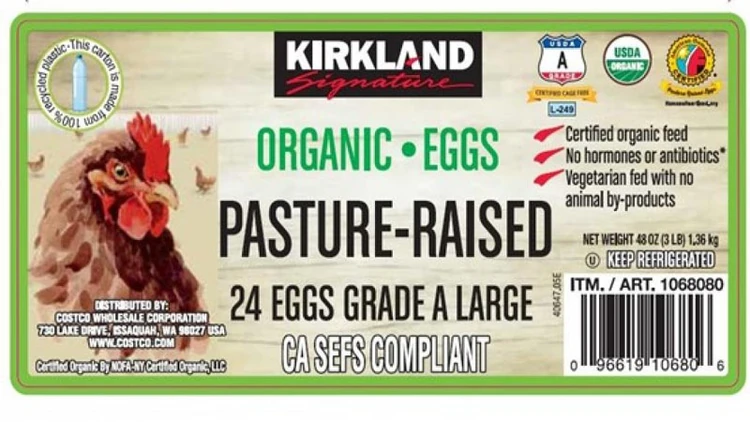
Check the labels on the cartons, Dr. Greger said. Consumers can be assured the eggs didnt come from hens confined to unsanitary conditions if the cartons states theyre USDA organic eggs, he said.
Consumers should also buy from local farmers. Go to your local farmers markets and establish a relationship with the farmers, Dr. Greger said. They should welcome you to their farms. If they dont want you there, that should tell you something.
Many retailers, restaurants, and supermarkets across the country are now switching to cage-free eggs, Dr. Greger said. Those businesses include Sara Lee, Hellmann's mayonnaise, Starbucks, Wolfgang Puck, Burger King, Denny's, Carl's Jr., Hardee's, Subway, Quiznos, Wal-Mart, Costco, Harris Teeter and Safeway.
What we say to consumers is they can vote with their wallets and choose to support the more hygienic and humane cage-free producers, Dr. Greger said.
Back in Iowa, Hillandale Farms said it is committed to addressing all issues raised by the FDA and plans to be "in full compliance as soon as possible."
Wright County Egg said most of the issues tagged by FDA inspectors have been addressed or will be soon. "We anticipate the expeditious completion of nearly all remaining items by mid-September," the company said in a statement.